On this page
- What wood burning fireplace cleaning covers and who needs it
- Signs your fireplace is due for cleaning
- What happens during a cleaning visit
- What gets checked and cleaned
- Cleaning options and what decides between them
- What affects the scope of the job
- How to prepare for the visit
- Fireplace help when something goes wrong
- Fireplace accessories that improve efficiency
- Protecting a fireplace accent wall
- Thinking about adding a second fireplace?
- Why a maintained fireplace adds value
A fireplace that burned well last winter can slowly fall behind. The fire takes longer to catch, smoke curls out under the opening, and the room smells like a campfire long after the ashes go cold. Most of the time the cause is buildup you can't see from the hearth. Wood burning fireplace cleaning takes care of it before it turns into a safety problem.
What wood burning fireplace cleaning covers and who needs it
Burning wood gives off smoke, water vapor and unburned particles. As they rise and cool, they stick to the firebox walls, the damper, the smoke chamber and the flue liner as soot and creosote. Creosote can be a light powder, a crusty flake or a hard, shiny glaze. All three forms burn, and the glazed form is the hardest to remove.
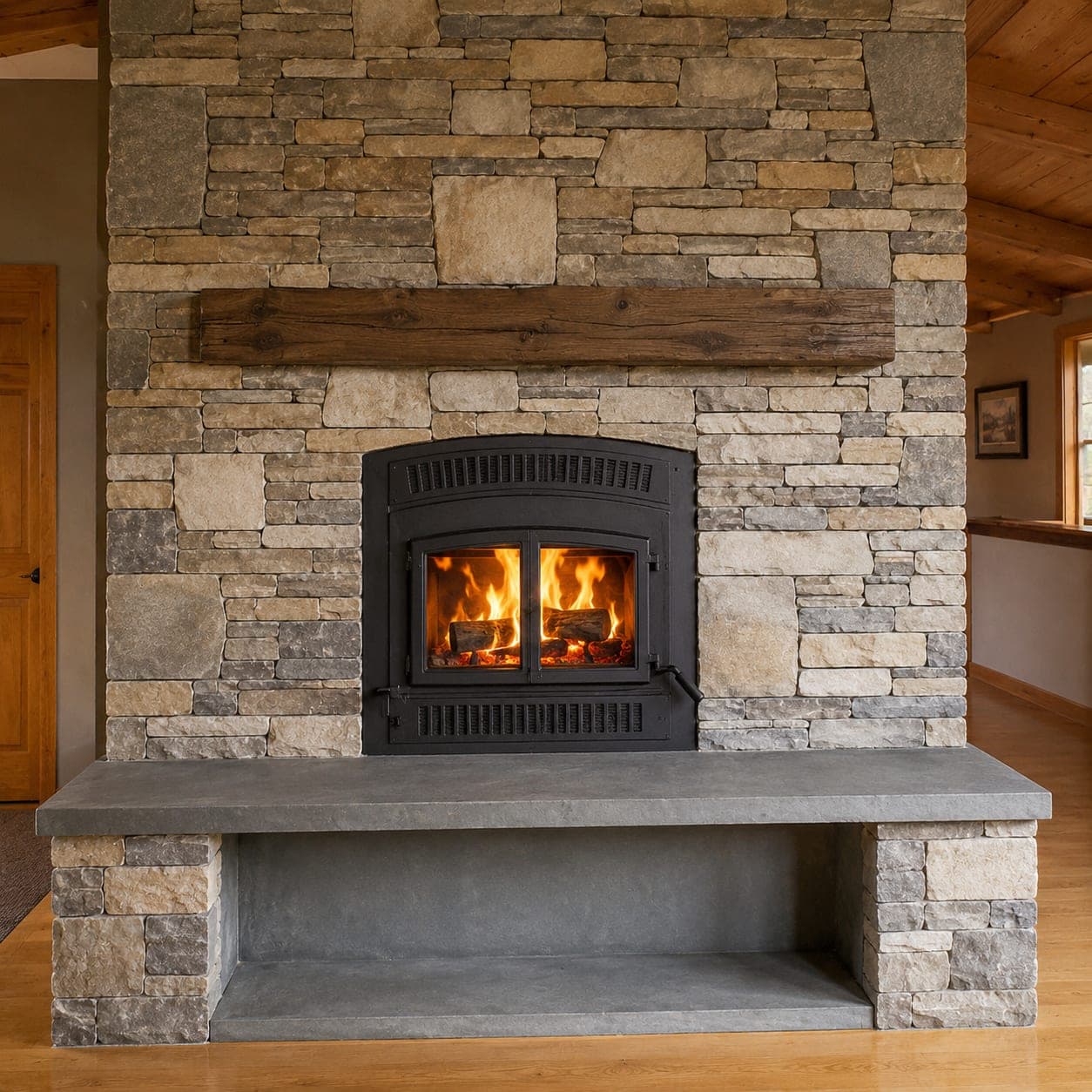
Cleaning a wood burning fireplace makes sense if you use it regularly, if it sat unused for a season or more, if you just bought a home with a fireplace, or if you burned wood that wasn't fully seasoned. If you have a closed unit rather than an open fireplace, see our wood-burning fireplace inserts service. Inserts are cleaned a little differently.
Signs your fireplace is due for cleaning
- Smoke spills into the room, or the fire struggles to draft even with the damper fully open.
- Black, flaky or tar-like deposits on the firebox walls or on the damper plate.
- A heavy, sour odor, especially on humid days or when the air conditioning runs. Our page on what causes a lingering fireplace smell explains the usual sources.
- Debris, flakes or small pieces of masonry falling onto the grate.
- Soot streaks on the face of the fireplace above the opening.
- It has been a full burning season or longer since the last cleaning.
Some of these signs can also point to damage, not just dirt. If buildup is collecting in the sloped area above the damper, read about smoke shaft problems. If the firebox or surround shows gaps, see why fireplace tile cracks.
What happens during a cleaning visit
How the visit works
Talk through the history
We ask how often you burn, what wood you use and what you've noticed, such as smoke, odor or drafting trouble.
Protect the room
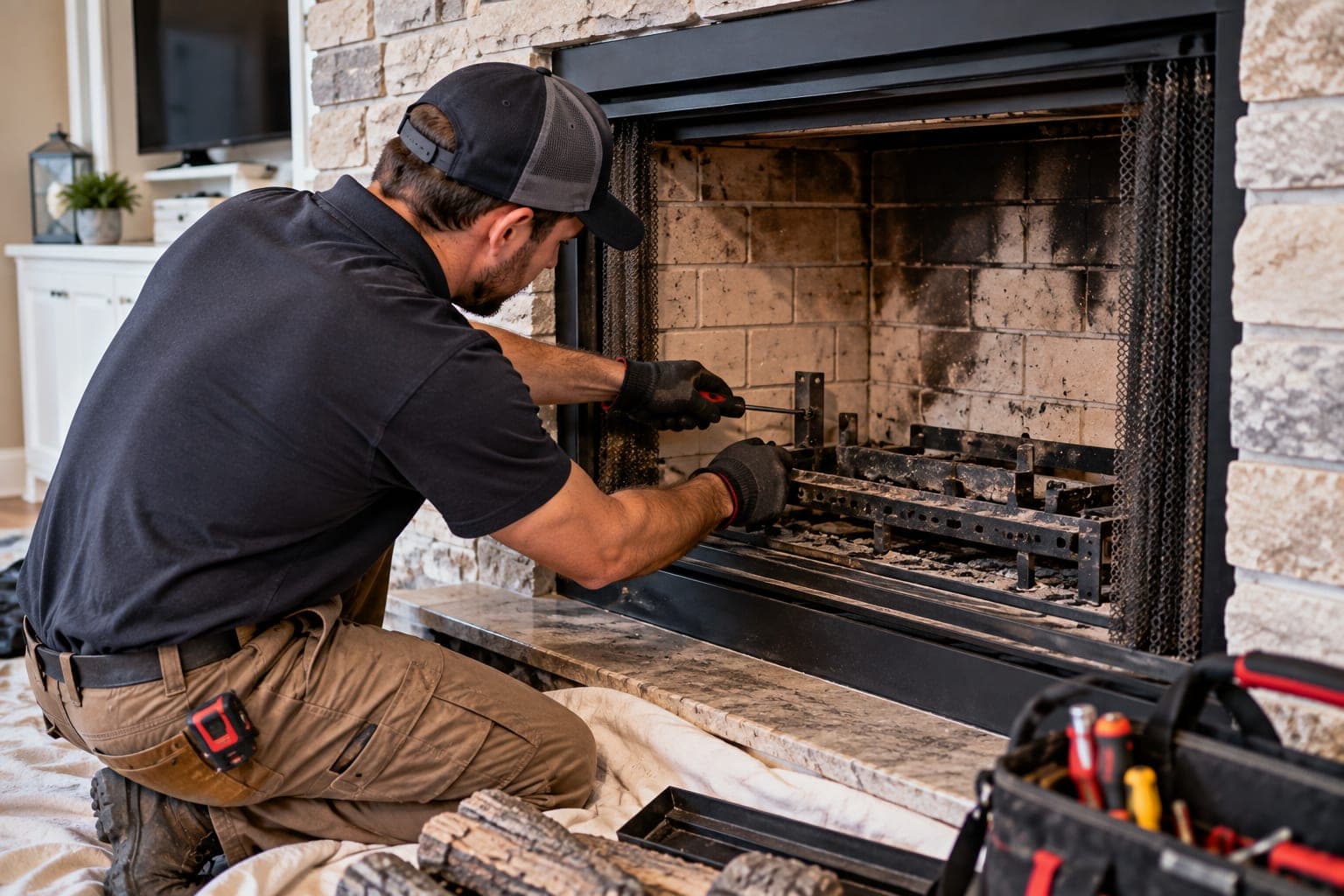
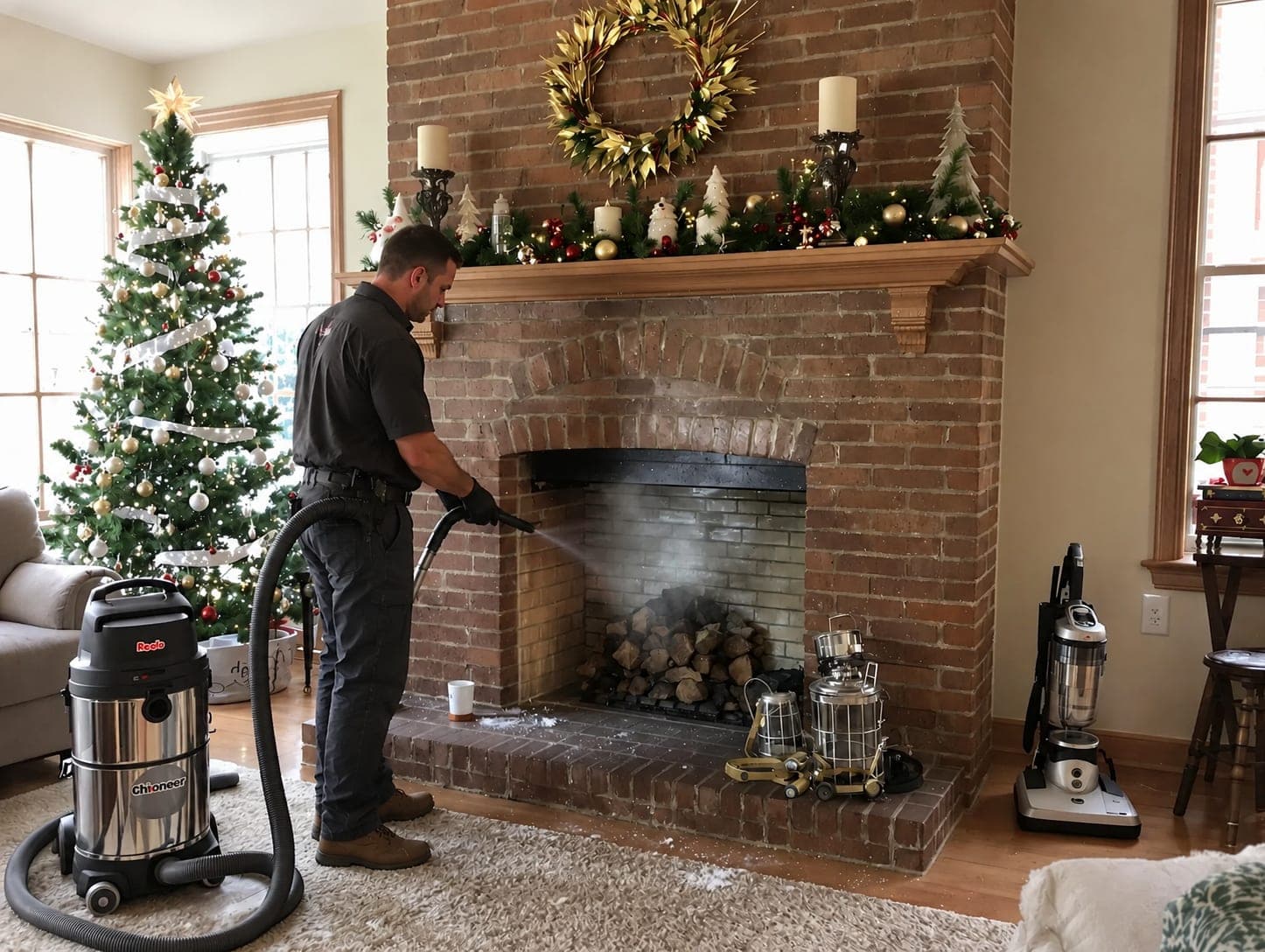
Drop cloths go down around the hearth, and the opening is sealed so soot stays out of your living space.
Clear the firebox
Ash, leftover wood and loose debris come out first, so the walls and floor of the firebox can be seen.
Brush the damper, smoke chamber and flue
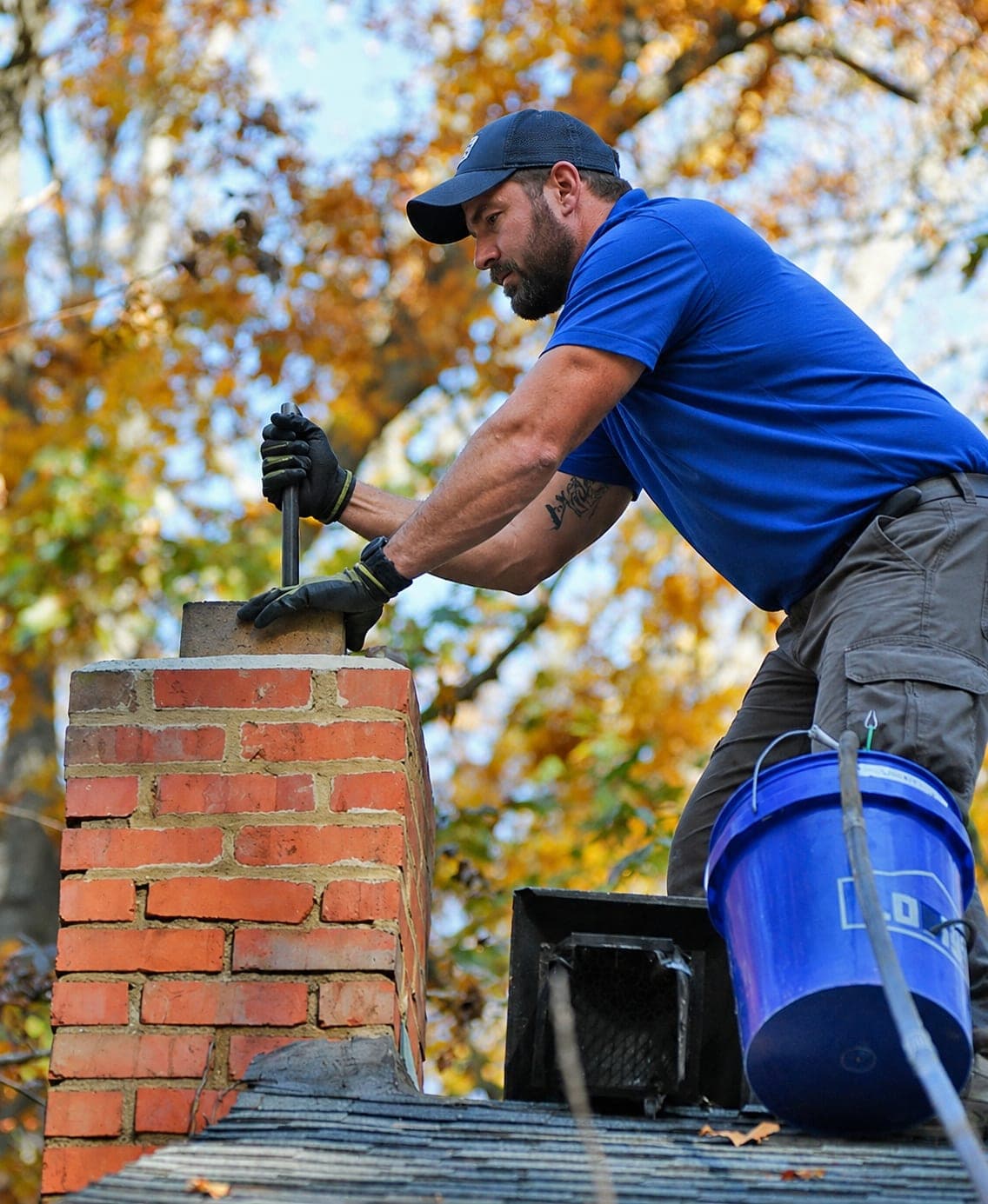
Brushes and rods sized to the flue scrub off soot and creosote. Negative-pressure vacuum equipment captures the dust.
Look over what was cleaned
With the surfaces clean, we can see cracks, gaps, damper wear or liner damage that buildup was hiding.
Explain the findings
You get a plain summary of what came out, what condition things are in, and whether anything needs repair.
What gets checked and cleaned
Cleaning checklist
- Firebox floor, back wall and side walls
- Grate area and ash removal
- Damper plate, frame and operation
- Smoke shelf and smoke chamber
- Flue liner, top to bottom as access allows
- Chimney cap screen, for debris or nests
- Visible mortar joints and firebox panels or brick
- Hearth and fireplace face, for heat or smoke staining
Cleaning options and what decides between them
| Feature | Routine cleaning | Cleaning plus deeper work |
|---|---|---|
| Best for | Fireplaces used regularly with normal soot buildup | Glazed creosote, long gaps between cleanings, or a suspected problem |
| Main work | Brushing and vacuuming the firebox, damper, smoke chamber and flue | Creosote removal, a camera inspection of the flue, or blockage removal |
| What tips the decision | Light, flaky deposits and a fireplace that drafts well | Hard, shiny buildup, odor, poor draft, or a nest or debris in the flue |
Best for
- Routine cleaning
- Fireplaces used regularly with normal soot buildup
- Cleaning plus deeper work
- Glazed creosote, long gaps between cleanings, or a suspected problem
Main work
- Routine cleaning
- Brushing and vacuuming the firebox, damper, smoke chamber and flue
- Cleaning plus deeper work
- Creosote removal, a camera inspection of the flue, or blockage removal
What tips the decision
- Routine cleaning
- Light, flaky deposits and a fireplace that drafts well
- Cleaning plus deeper work
- Hard, shiny buildup, odor, poor draft, or a nest or debris in the flue
You don't have to choose before we arrive. The condition of the flue usually makes the choice clear, and we explain the reason before doing anything beyond the cleaning you asked for.
What affects the scope of the job
- How much creosote has built up, and which form it is in
- The height of the chimney and how easy the top is to reach
- The flue's shape and size, and whether it has a liner
- Blockages such as nests, leaves or fallen masonry
- Whether repairs are needed once the surfaces are clean
How to prepare for the visit
- Skip fires for at least a day before the appointment, so the firebox and ashes are completely cold.
- Clear a path to the fireplace and move furniture, rugs and decor a few feet back from the hearth.
- Take fragile items off the mantel.
- Keep pets and children in another room while we work.
- Write down anything you've noticed, such as when smoke spills or when the odor is worst.
Safety notes for wood-burning fireplaces
Ashes can hold live embers for days. Never vacuum ashes with a household vacuum. Put them in a metal can with a tight lid and store it outside, away from the house, deck and anything that burns. If you hear a loud roar from the chimney or see flames or heavy sparks at the top, get everyone out and call 911.
Fireplace help when something goes wrong
Fireplace problems don't keep business hours. We take calls 24 hours a day, Sunday through Friday and accept emergency calls, such as smoke pouring into the house or an animal trapped in the flue. When the schedule allows, we offer same-day service. Estimates are free, so you can find out what's needed before deciding anything.
Fireplace accessories that improve efficiency
An open fireplace sends much of its heat up the chimney. The right fireplace accessories won't turn it into a furnace, but they can help it burn cleaner and lose less warm room air. Our guide to a more efficient fireplace goes deeper. Here are four accessories worth considering:
- Glass fireplace doors. Closing them once the fire dies down limits how much heated room air gets pulled up the flue. We do fireplace door installation.
- A chimney cap. It keeps rain, leaves and animals out of the flue, which means fewer blockages and less moisture mixing with soot. We install and replace chimney caps, including models with a spark arrestor.
- A raised grate. Lifting the wood lets air reach the fire from below, so it burns hotter and cleaner. A hotter fire leaves less creosote.
- A fireplace insert. This is the biggest step up in efficiency. It turns an open opening into a closed, controlled burn. We install inserts as well.
Customizing with fireplace accessories
Doors, screens and caps come in many finishes, so you can match them to your room. Function comes first, though. Accessories should fit the opening and flue correctly, and they should never block the airflow the fire needs.
Protecting a fireplace accent wall
A stone, brick or tile fireplace accent wall is often the centerpiece of a room, and smoke stains show quickly on light surfaces. Dark streaks above the opening usually mean the fireplace isn't drafting well. Cleaning often fixes it. If staining continues after a cleaning, it may be a draft or smoke chamber issue, and we can repair that. Surface cracks in a surround are worth checking too. Our page on cracked fireplace repair covers what they can mean.
Thinking about adding a second fireplace?
Some homeowners love their main fireplace and want another one in a den, bedroom or finished basement. Before adding a second fireplace to your home, it helps to weigh fuel types. Our comparison of gas and wood fireplaces covers the tradeoffs. If wood is the right choice, our traditional wood fireplace installation page explains how that project works.
Why a maintained fireplace adds value
Buyers and home inspectors look closely at fireplaces. A clean firebox, a working damper and a flue without heavy creosote suggest the house has been cared for. Heavy buildup, cracked masonry or a stuck damper raises questions. Keeping up with cleaning won't set a home's price on its own, but it keeps the fireplace something buyers see as a plus rather than a project. If you're selling, we also offer real estate chimney inspections.