On this page
- What fireplace installation covers and who needs it
- Signs it's time for a New or replacement fireplace
- Fireplace options and what decides between them
- What the installation visit involves
- What we check and do
- What affects the scope of the job
- How to prepare your home
- Safety notes
- Fireplace installation across Connecticut
Fireplace installation is more than setting a unit into a wall. Every fireplace needs a safe way to vent combustion gases, enough clearance from wood framing and trim, a floor or hearth that can handle heat and weight, and, for gas units, a properly run fuel line. We handle the installation work, from the first measurements to the final test fire, and we start with a free estimate so you know what your home needs before any work begins.
What fireplace installation covers and who needs it
This service is for homeowners who want to add a fireplace where there isn't one, replace a worn-out unit, or change how an existing fireplace burns. Common situations include:
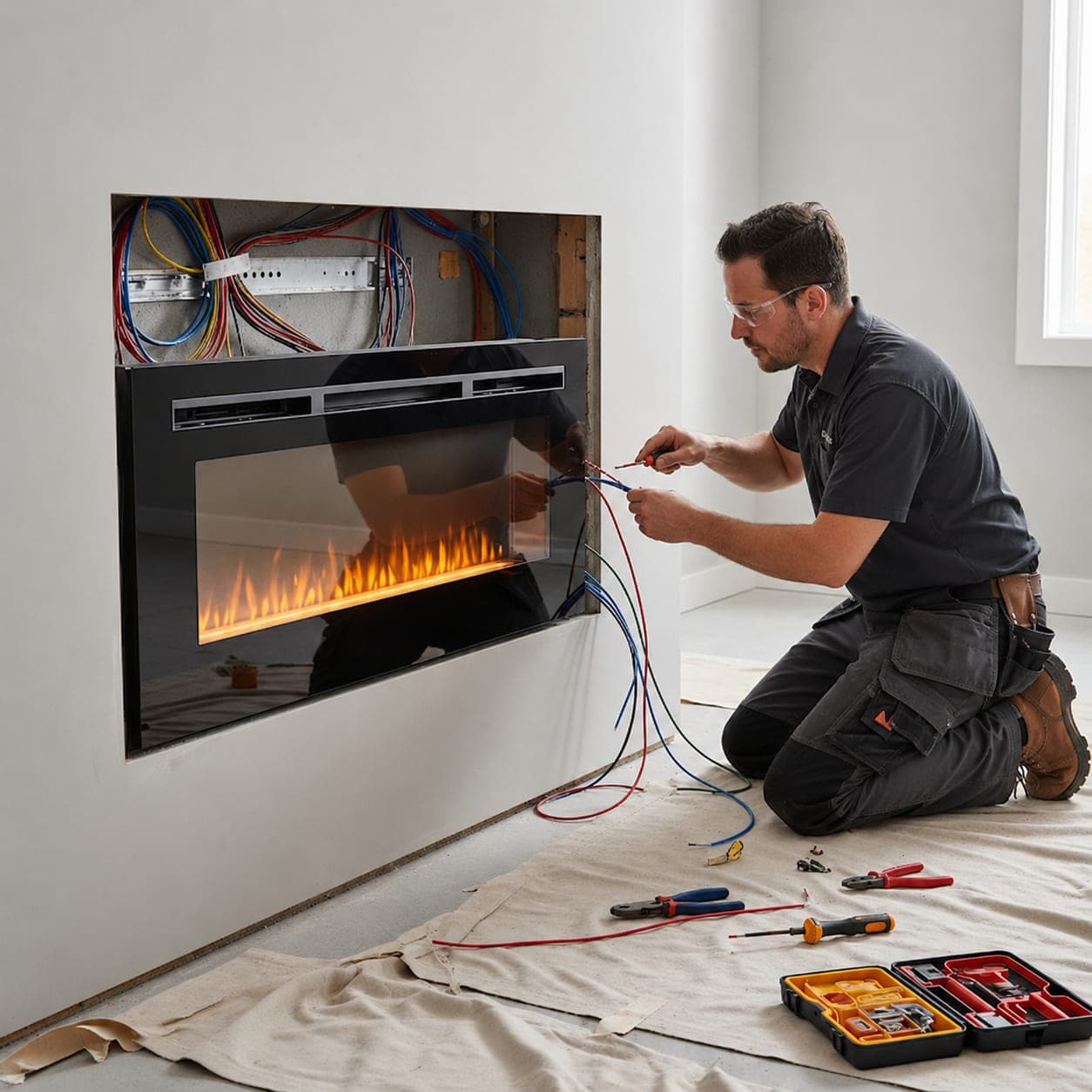
- Adding a gas fireplace to a room with no chimney, using direct venting through an outside wall
- Placing an insert into an open masonry fireplace to get more heat and less draft
- Replacing a factory-built (prefab) fireplace that is cracked, rusted or no longer safe to use
- Converting a wood-burning fireplace to gas logs or a gas insert
- Finishing a renovation where the fireplace is part of a new layout
If you're not sure how the firebox, smoke chamber, damper and flue fit together, our guide to fireplace anatomy explains each part in plain terms.
Signs it's time for a New or replacement fireplace
- Cracked or warped panels, a rusted firebox or a failing chimney chase on a prefab unit
- An open fireplace that sends most of its heat up the chimney and pulls cold air into the room
- Smoke spilling into the room even after cleaning and draft adjustments
- Hauling and storing wood has become more work than you want
- An older gas unit that is hard to light, shuts off often or has been discontinued
- A remodel where you want heat and a focal point in a room that has neither
Fireplace options and what decides between them
| Type | How it vents | Best fit when |
|---|---|---|
| Wood-burning fireplace | Through a masonry or factory-built chimney | You want a real wood fire and have, or can add, a suitable chimney |
| Fireplace insert (wood or gas) | Through a liner run up the existing chimney | You have an open masonry fireplace and want more heat with less draft |
| Gas fireplace | Direct vent through a wall or roof, or through a lined chimney | You want push-button heat with no wood to haul or ash to clean |
| Gas logs | Through an existing working chimney | Your wood fireplace is sound and you mainly want the look of a fire |
| Prefab (factory-built) replacement | Through the listed pipe system it was designed for | An existing prefab unit has failed and the framing can be reused |
Several things narrow down the right choice: whether you have a working chimney, whether gas is available at the house, how much heat you want versus how much you just want ambiance, and how much space the room allows for a hearth and clearances. If heat output matters most, read up on what makes a fireplace efficient before you decide. Glass doors are another option for open fireplaces; see how fireplace door installation works if a full insert is more than you need.
What the installation visit involves
From estimate to first fire
Free estimate and site check
We look at the room, the existing chimney or venting route, the floor and the wall, and talk through how you plan to use the fireplace.
Choosing the unit and venting
We match a unit to the space and fuel, and confirm the venting path, clearances and hearth size it requires under the manufacturer's instructions.
Preparing the opening
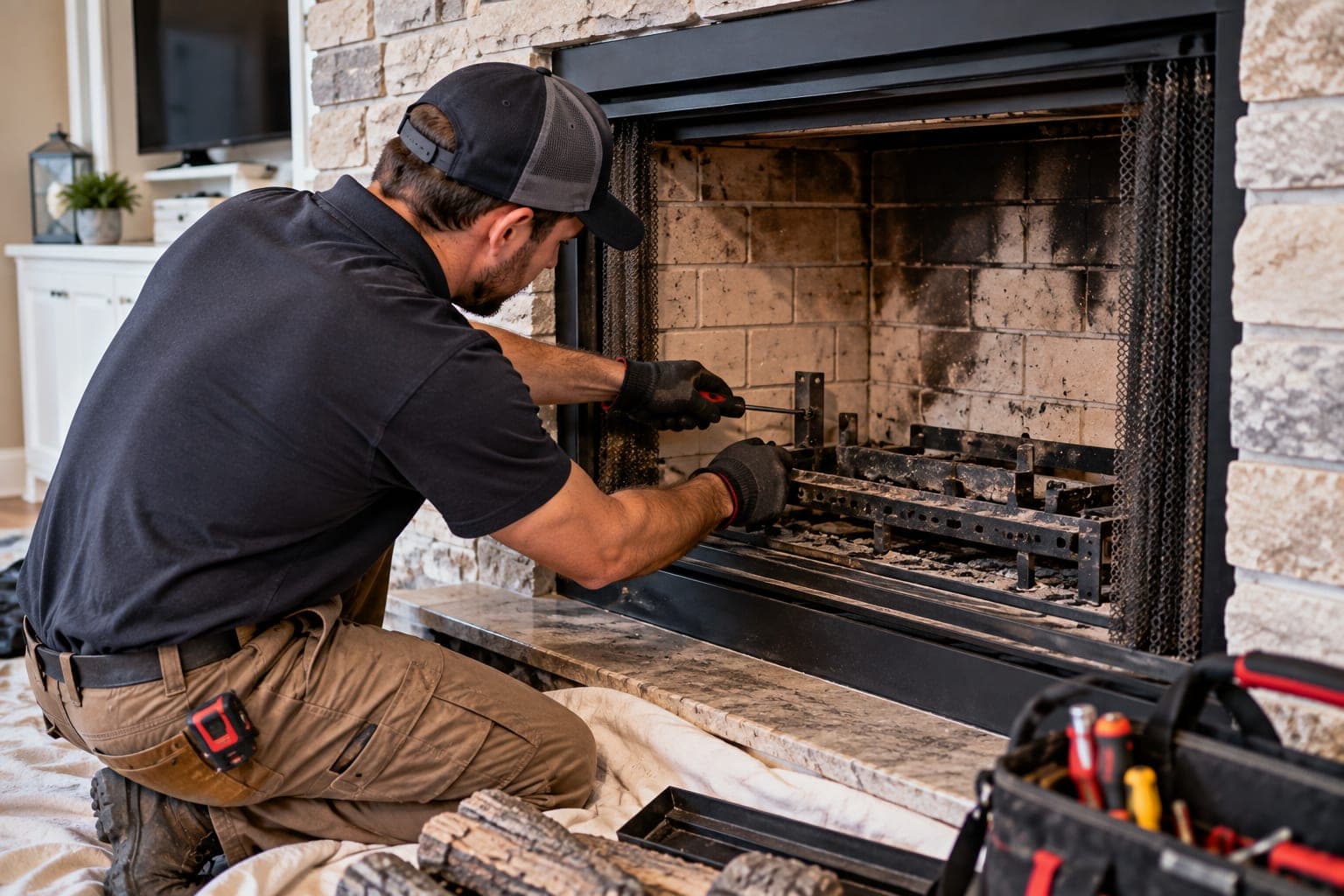
Old components are removed if needed, framing or the firebox opening is prepared, and protection goes down over floors and furniture.
Installing the unit and venting
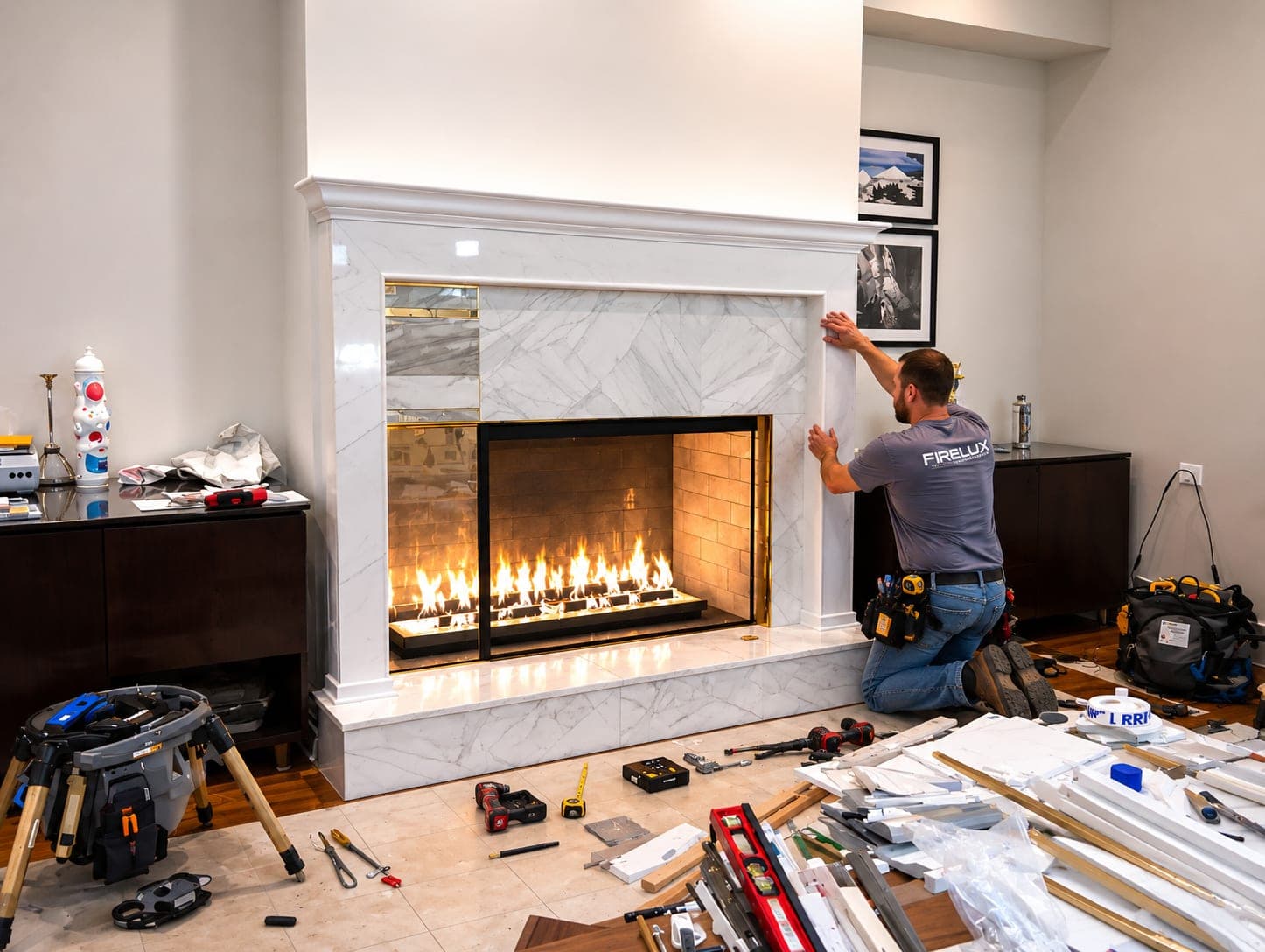
The fireplace or insert is set, leveled and secured, and the chimney liner or vent pipe is installed and connected.
Fuel and controls
For gas units, the gas line is run and connected and the controls are set up. For wood units, the damper, doors and hearth are fitted.
Testing and walkthrough
We test draft, ignition and operation, check for leaks, and show you how to run and care for the new fireplace.
What we check and do
Installation checklist
- Condition of the existing chimney, flue and smoke chamber before anything new is connected
- Correct liner or vent pipe size for the unit
- Clearances from framing, mantels, trim and nearby furnishings
- Hearth extension size and floor protection
- Secure, level placement of the unit
- Gas line sizing, connections and leak testing on gas installations
- Damper, doors or glass seated and sealed properly
- Chimney cap or vent termination installed to keep out water and animals
- Draft and ignition test before handover
What affects the scope of the job
- Existing chimney condition: cracked flue tiles, a damaged crown or loose masonry may need repair or a new liner first.
- Venting route: a short run through an outside wall is simpler than a route through several floors or the roof.
- Fuel supply: adding a gas line from the meter or an existing appliance adds work.
- Wall and hearth finishing: surrounds, mantels and hearth extensions vary widely in effort.
- Removal of old equipment: taking out a failed prefab unit or old insert adds steps.
- Access: tight attics, steep roofs or finished ceilings can change the approach.
How to prepare your home
- Clear furniture, rugs and decor several feet back from the fireplace area.
- Make a path from the door to the work area so equipment can come through without bumping walls.
- Let us know where your gas meter or existing gas appliances are if you're adding gas.
- Keep pets and children out of the room during the work.
- If the old fireplace has been used recently, give it at least a day to cool fully.
- Have any product manuals or model numbers from the existing unit handy.
Safety notes
Don't skip the venting and clearance details
Most fireplace hazards come from improper venting or too little clearance to combustible materials, not from the unit itself. Install a carbon monoxide alarm near the room and on each sleeping level, and never use a fireplace that smokes into the room. If you smell gas, leave the house and call your gas utility right away. Many towns require a permit for fireplace and gas work, so check with your local building department. For everyday habits, see our guide to fireplace safety.
Fireplace installation across Connecticut
We install fireplaces in homes across Connecticut, starting from Hartford. If you're in a nearby town, you can read more about fireplace installation in Farmington, fireplace installation for homes in West Hartford and fireplace installation in Rocky Hill. We're available 24 hours, Sunday through Friday, take emergency calls, and offer same-day service when the schedule allows.