Most people start with a picture in their head: logs, smoke and the smell of a real fire, or a clean flame that turns on with a remote. Both are reasonable goals. The trouble starts when the choice is made on looks alone and the day-to-day reality is a surprise. Below, we walk through what actually changes when you pick one fuel over another.
Gas vs wood fireplaces: Key differences
The biggest differences are not about the flame. They are about effort, venting, heat delivery and ongoing care. A wood fireplace asks more of you every time you use it. A gas fireplace asks less day to day but depends on a gas supply, working controls and correct venting.
| Feature | Gas | Wood |
|---|---|---|
| Starting a fire | Switch, wall control or remote | Kindling, paper, dry seasoned wood and some practice |
| Ambiance | Steady flame; realism depends on logs and burner design | Crackle, scent and shifting flame that many people prefer |
| Heat control | Adjustable on many models; can be turned off instantly | Managed by fuel load and air; a fire must burn down on its own |
| Fuel handling | None once the gas line is in | Buying, splitting, stacking, carrying and storing wood |
| Cleanup | Minimal; glass may need periodic cleaning | Ash removal and soot on surrounding surfaces |
| Chimney byproducts | Little soot, but moisture and combustion gases still need proper venting | Creosote builds up in the flue and must be removed |
| Power outage | Depends on ignition type; check the manual | Works without electricity |
Starting a fire
- Gas
- Switch, wall control or remote
- Wood
- Kindling, paper, dry seasoned wood and some practice
Ambiance
- Gas
- Steady flame; realism depends on logs and burner design
- Wood
- Crackle, scent and shifting flame that many people prefer
Heat control
- Gas
- Adjustable on many models; can be turned off instantly
- Wood
- Managed by fuel load and air; a fire must burn down on its own
Fuel handling
- Gas
- None once the gas line is in
- Wood
- Buying, splitting, stacking, carrying and storing wood
Cleanup
- Gas
- Minimal; glass may need periodic cleaning
- Wood
- Ash removal and soot on surrounding surfaces
Chimney byproducts
- Gas
- Little soot, but moisture and combustion gases still need proper venting
- Wood
- Creosote builds up in the flue and must be removed
Power outage
- Gas
- Depends on ignition type; check the manual
- Wood
- Works without electricity
Heat and efficiency
An open masonry wood fireplace is wonderful to sit by, but much of its heat goes up the chimney, and it can pull warm room air out with it. Sealed gas units and wood or gas inserts generally deliver far more of their heat into the room. If staying warm is the main goal rather than atmosphere, read our guide to getting more from an efficient fireplace before deciding.
Installation and venting
A wood-burning fireplace needs a properly sized chimney and flue, a sound firebox and clearances to combustibles. A gas fireplace needs a gas line plus a vent system that matches the appliance, often direct vent through a wall or a liner up an existing chimney. Vent-free gas logs exist, but they release combustion byproducts into the room and are restricted in some places, so check the manufacturer's instructions and your local code before considering one. If you are building new, it helps to understand how a traditional wood fireplace installation comes together and compare that with the steps for a gas unit.
Gas vs wood fireplace maintenance and safety guide
Neither type is maintenance-free. The national fire safety standard for chimneys, NFPA 211, calls for chimneys, fireplaces and vents to be inspected once a year, with cleaning as needed. What that care looks like differs by fuel.
Wood fireplace care checklist
- Burn only dry, seasoned hardwood; never trash, cardboard boxes or treated lumber
- Remove ash regularly and store it in a metal container with a lid, away from the house
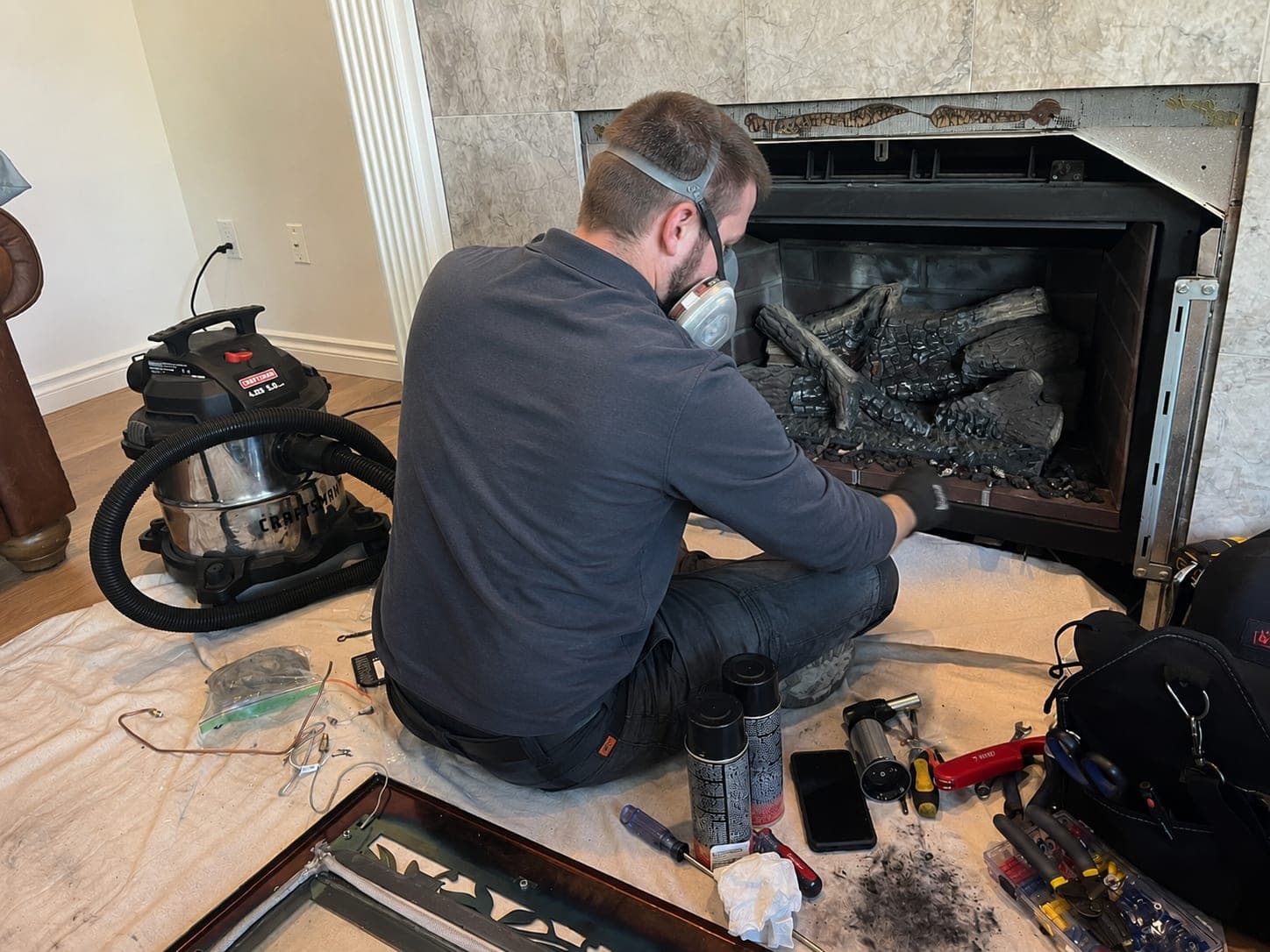
- Have the flue checked for creosote and swept when buildup is found
- Keep the damper working and closed when the fireplace is cold
- Make sure a chimney cap keeps out rain, animals and debris
- Watch for cracked firebox brick or mortar gaps
- Use a screen or doors to keep sparks in. Check your fireplace's manual first: some glass doors must stay fully open while a fire burns.
Gas fireplace care checklist
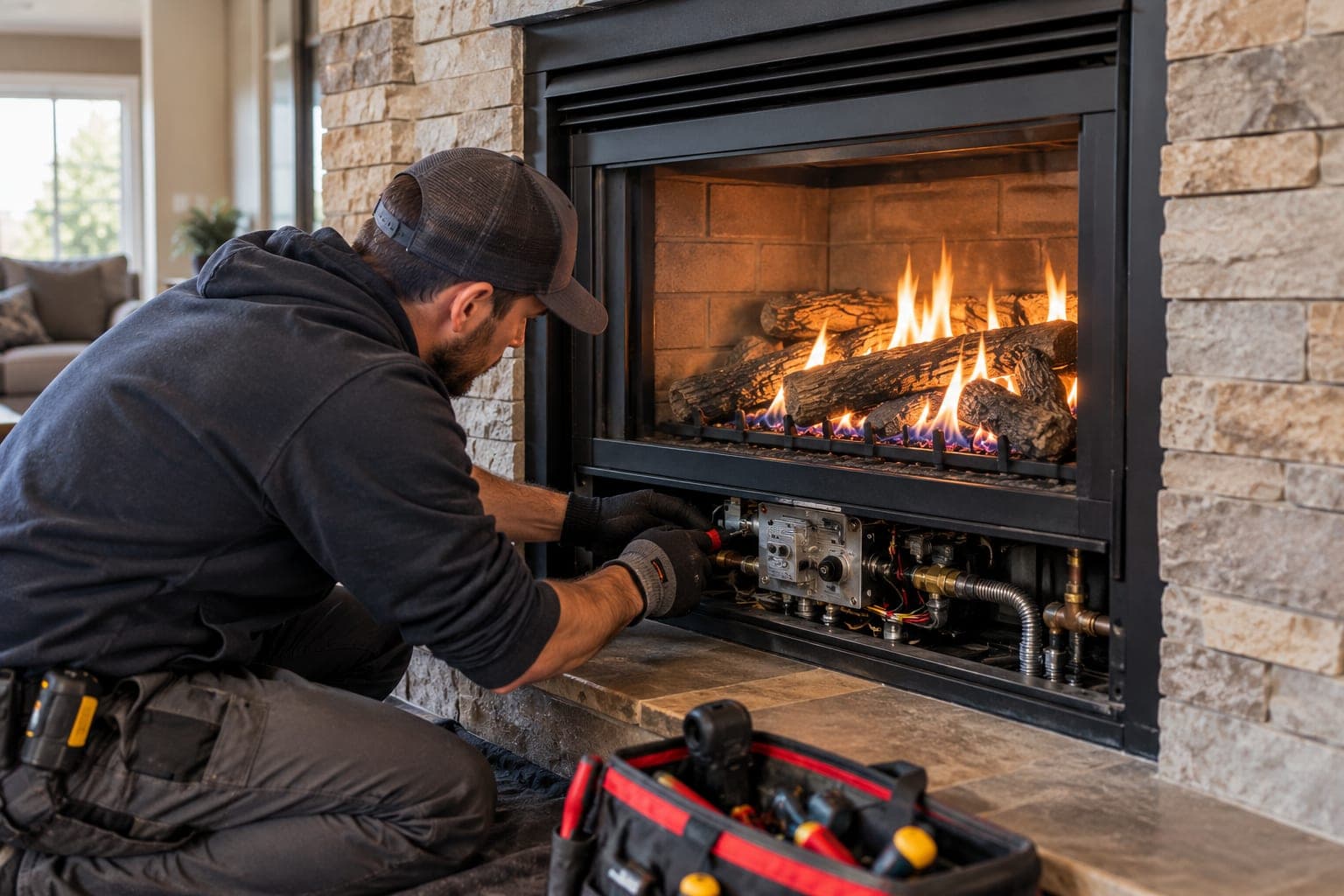
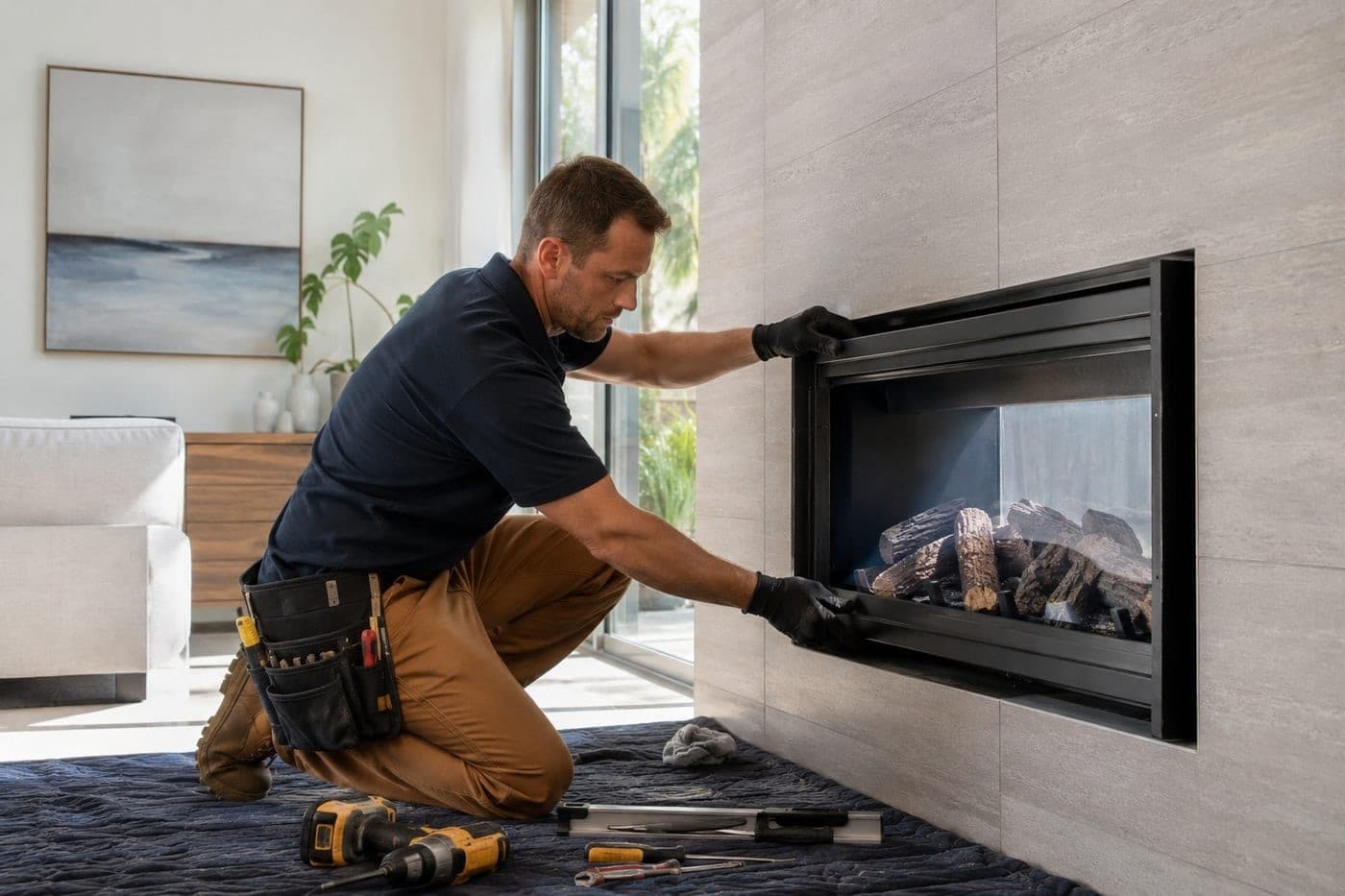
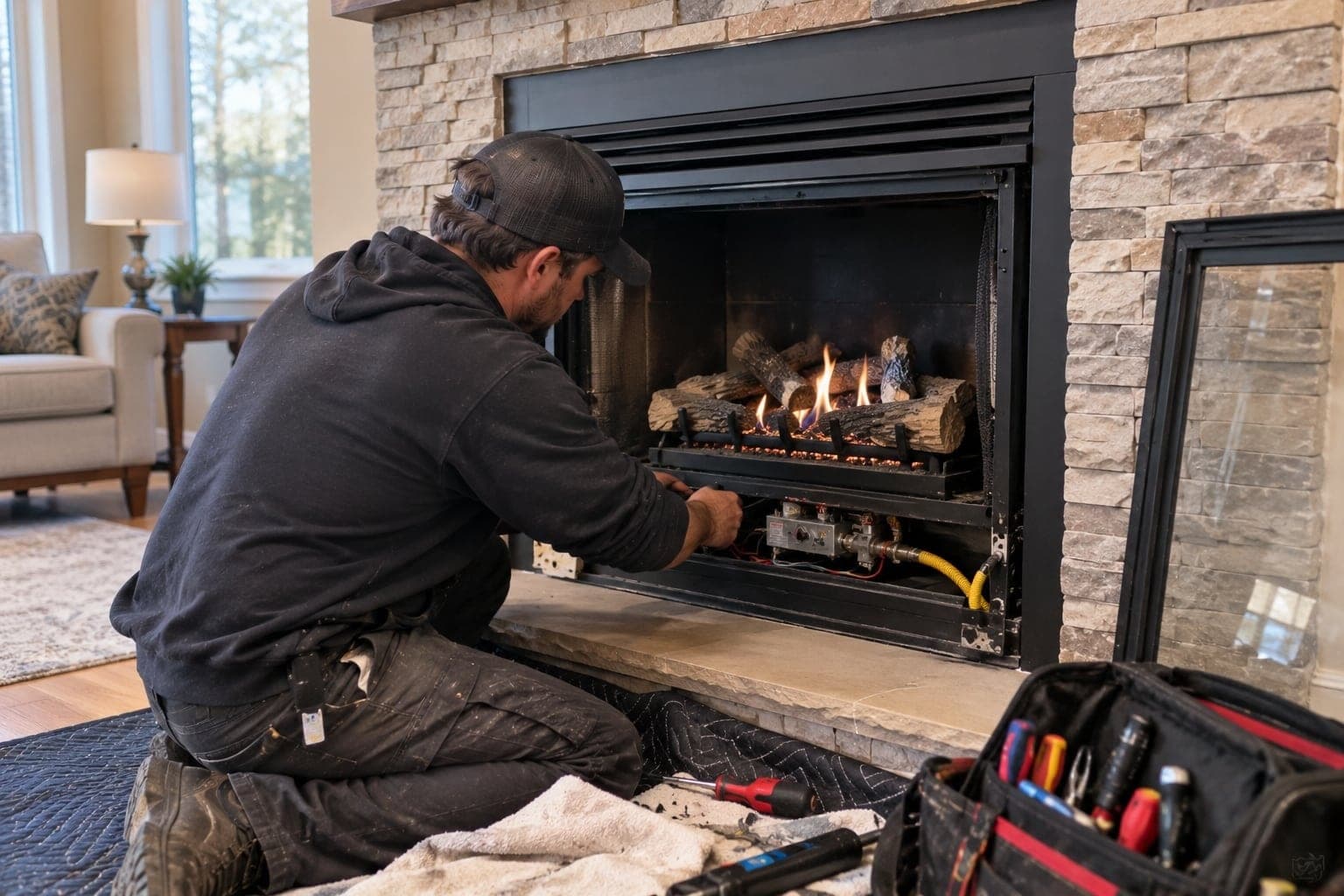
- Have burners, pilot, valve and ignition checked by a qualified technician
- Confirm the vent is clear of nests, debris and corrosion
- Keep logs positioned exactly as the manufacturer shows to avoid soot and poor combustion
- Inspect the glass and gaskets; replace a cracked glass panel before using the unit
- Never use the fireplace if you smell gas; leave the house and call your gas utility
- Keep the area in front of the glass clear; it gets very hot
Carbon monoxide applies to both
Any fuel-burning fireplace can produce carbon monoxide if venting fails. Install working CO alarms on every level of the home and near sleeping areas, and test them regularly.
For wood burners, routine wood burning fireplace cleaning is the single most important habit, because creosote in the flue is what fuels chimney fires.
Wood fireplaces vs wood stoves
If you love wood but want real heat, a wood stove often makes more sense than an open fireplace. A stove is a closed, controlled firebox that burns longer on a load of wood and radiates heat into the room. The tradeoff is a smaller visible flame and a more utilitarian look.
| Factor | Open wood fireplace | Wood stove |
|---|---|---|
| Heat output to the room | Modest; much heat is lost up the chimney | Substantially higher for the same wood |
| Burn time per load | Short; needs frequent tending | Longer, with adjustable air control |
| View of the fire | Wide and open | Through a glass door |
| Placement | Built into a wall with a masonry or prefab chimney | Freestanding, with its own pipe and clearances |
| Upkeep | Annual inspection, sweeping as needed | Annual inspection, sweeping as needed, gasket and door checks |
There is a middle path: a wood insert placed into an existing fireplace opening behaves much like a stove while keeping your hearth and mantel.
Fireplace vs insert: Upgrading what you already have
If your home already has a masonry fireplace, you may not need to choose between building something new and living with an inefficient opening. An insert is a sealed firebox that slides into the existing fireplace and vents through a liner in the chimney. Inserts come in both fuels, so you can keep wood or switch to gas. Look over the options for wood and gas fireplace inserts to see how a conversion compares with replacing the fireplace entirely.
Electric vs gas fireplaces
Electric fireplaces are the simplest of all to place: many plug into a standard outlet, need no vent and can go on almost any wall. Their flame is an LED or light effect, and most include a small heater. Gas produces a real flame and much more heat, but needs a gas line and venting.
| Feature | Electric | Gas |
|---|---|---|
| Flame | Simulated with lights | Real flame |
| Venting | None | Required for vented models |
| Heat | Supplemental, room-sized at most | Can meaningfully heat a room or more |
| Installation | Often plug-in; some hardwired | Gas line, venting and qualified installation |
| Works in an outage | No | Some models can; check the manual |
| Combustion risks | None from fuel; normal electrical care applies | CO and gas leaks if poorly maintained |
Flame
- Electric
- Simulated with lights
- Gas
- Real flame
Venting
- Electric
- None
- Gas
- Required for vented models
Heat
- Electric
- Supplemental, room-sized at most
- Gas
- Can meaningfully heat a room or more
Installation
- Electric
- Often plug-in; some hardwired
- Gas
- Gas line, venting and qualified installation
Works in an outage
- Electric
- No
- Gas
- Some models can; check the manual
Combustion risks
- Electric
- None from fuel; normal electrical care applies
- Gas
- CO and gas leaks if poorly maintained
Electric vs gas fireplaces: market trends
Manufacturers have put a lot of effort into making electric flames look more convincing, and electric units now appear in apartments, condos and bedrooms where venting a gas appliance would be impractical. Gas remains a common choice where a real flame and stronger heat matter. Because product lines change quickly, compare current models side by side rather than relying on older impressions of either type.
Electric vs wood fireplaces
This is the widest gap of any pairing. A wood fire offers the full experience: sound, scent, radiant heat and independence from the power grid. An electric fireplace offers zero smoke, zero ash, no chimney and almost no effort, but it is a decorative appliance with a modest heater. People who want ambiance in a room without a chimney tend to land on electric; people who want a hearth to gather around and are willing to handle wood tend to stay with wood.
Which size fits my fireplace?
If you are adding an insert or gas logs to an existing fireplace, size is the first thing to check, and it trips up a lot of buyers. An insert has to fit the firebox, not just the visible opening, and it has to connect to a flue liner of the right diameter. Most masonry fireboxes taper toward the back, so a unit that fits the front can still hit the rear wall.
Measurements to take before shopping
- Width of the opening at the front
- Width of the firebox at the back wall
- Height of the opening, and height at the back if the rear wall slopes forward
- Depth from the front edge to the back wall at the floor
- Hearth depth in front of the opening, for clearance to the floor and rug
- Distance from the opening to the mantel and any wood trim
- Inside dimensions of the existing flue, which affect liner sizing
- Whether the damper is in the way of a liner or insert
Gas log sets are sized by the firebox too; a set that is too large can crowd the burner and smoke up the glass or the face of the fireplace. A professional measurement takes the guesswork out, and the wood and gas fireplace inserts service page explains how fit and venting are matched to an existing opening.
Wood fireplaces vs gas conversions: Check the existing firebox first
Whether you keep burning wood or convert, the structure behind the flame has to be sound. Problems that seem cosmetic can affect both draft and safety.
Common issues to rule out before you decide
01Damaged firebox brick
- What you may notice
- Cracks, loose or spalling brick, gaps in mortar joints
- How it’s confirmed
- Visual inspection of the firebox and joints with a light
02Deteriorated smoke chamber
- What you may notice
- Smoke rolling into the room, rough or crumbling walls above the damper
- How it’s confirmed
- Inspection from the firebox and camera inspection of the chamber and flue
Learn what causes cracked fireplace brick and why a damaged smoke chamber matters before investing in new logs or an insert. For a shorter decision walkthrough, see which fireplace type suits your household.
A simple way to decide
Name your main goal
Atmosphere, real heat, convenience, or a mix. Rank them honestly.
Check what you have
An existing chimney, a gas line nearby, or neither changes which options are practical.
Be realistic about effort
If hauling and storing wood will not happen, wood will not get used.
Get the structure inspected
Have the chimney and firebox checked before buying anything new.
Compare quotes and fuel costs
Fuel and electricity prices vary, so compare current local rates for your own home.
If you would like a professional look at your chimney or fireplace before choosing, estimates are free and we can usually fit in same-day visits when the schedule allows.