On this page
What the liner does and why damage matters
The liner is the inner skin of the chimney, and it has three jobs. It keeps heat from passing through the masonry to nearby wood framing. It moves smoke and combustion gases up and out of the house. It also protects the brick and mortar from the acidic moisture that forms when exhaust cools inside the flue. A liner with a gap or crack can quietly fail at all three, often with no sign from inside the room.
If you'd like more background on materials and sizing before talking repairs, our guide to understanding chimney liners covers the basics.
Signs a liner needs attention
- Pieces of clay tile or shards collecting in the firebox, smoke shelf or cleanout
- Flaky or crumbling material that clearly isn't soot
- Poor draft or smoke odor in a chimney that used to work well
- Rust flakes, holes or separated sections in a metal liner
- Any chimney fire, even a short one. The liner should be checked before the next fire.
Repairing clay, metal and poured liners
The right fix depends on what your chimney is lined with and how widespread the damage is. Most liner damage is hidden, so we look inside the flue with a camera inspection before recommending anything.
| Liner type | Typical damage | Usual approach |
|---|---|---|
| Clay tile | Cracked tiles, eroded or missing mortar joints | Joint and crack repair when damage is limited. Relining when tiles are broken or displaced. |
| Stainless steel or aluminum | Corrosion, holes, crushed or separated sections | Repair of a damaged section, or a new liner when corrosion is widespread |
| Cast-in-place | Cracks or deteriorated coating | Patching localized damage. Relining when cracking runs through the flue. |
When repair isn't realistic, for example a clay flue with many broken tiles or a metal liner corroded along its length, replacement is the safer answer. You can read how chimney liner installation works if that turns out to be your situation.
Choosing a professional chimney liner service
A good liner repair starts with a clear explanation. You should know what was found, where it is, and why one option makes more sense than another. Estimates are free, so you can understand the problem before deciding anything. Liner trouble often shows up alongside other issues like a worn damper or deteriorated firebox, and those can be handled through our chimney and fireplace repair service.
If something goes wrong in the middle of the burning season, such as smoke backing up or debris falling into the firebox, we accept emergency calls and are available 24 hours, Sunday through Friday. See our Sunday–Friday 24-hour chimney service for those situations. Same-day visits are offered when the schedule allows.
How liner work is done
An appliance needs a liner sized to its outlet to draft properly and limit buildup. A cracked or separated liner lets heat reach the masonry and nearby framing, and exhaust can leak through.
Scan the flue
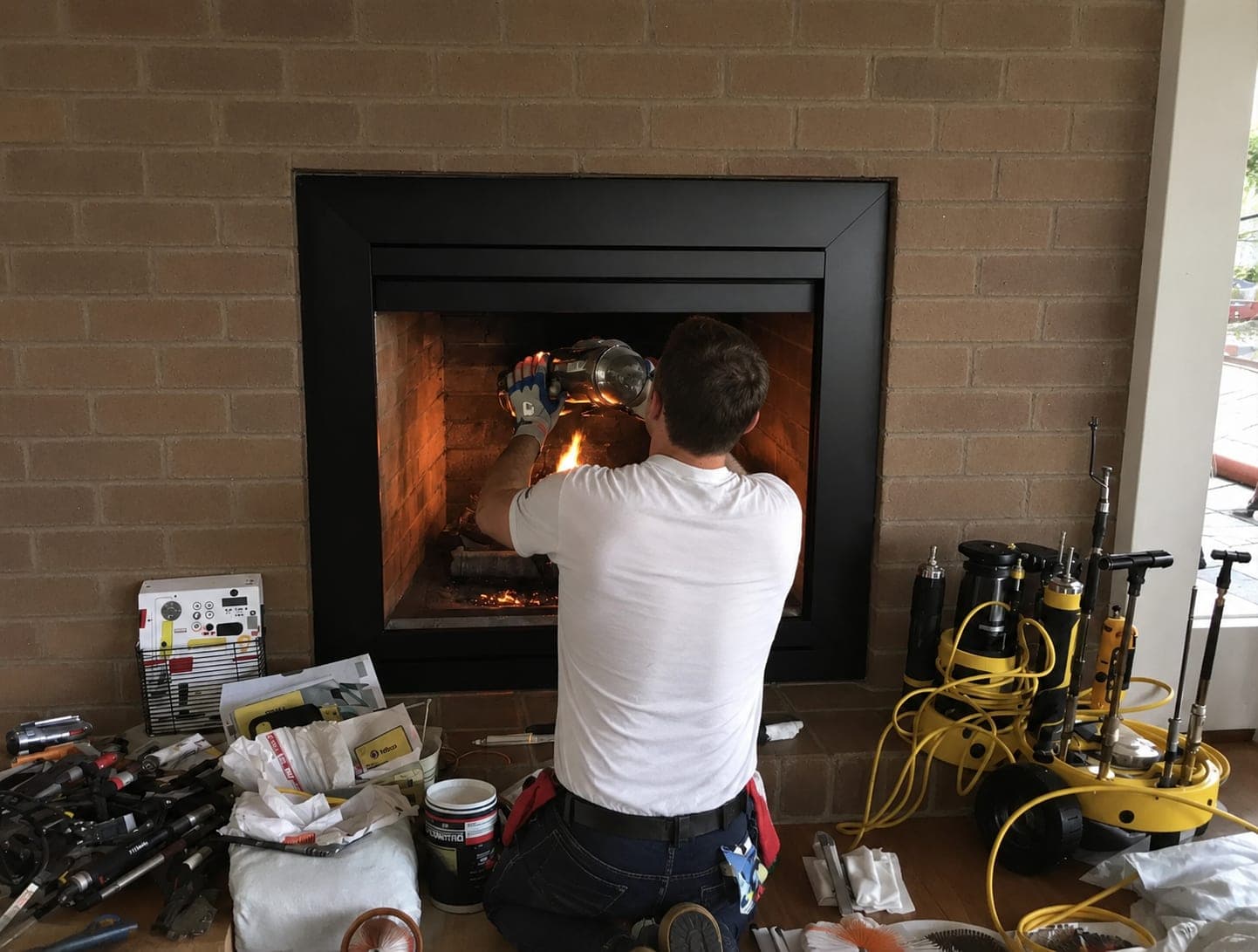
A camera shows cracks, gaps and missing sections along the full length.
Size the liner
The appliance and the flue decide the liner type and diameter.
Install
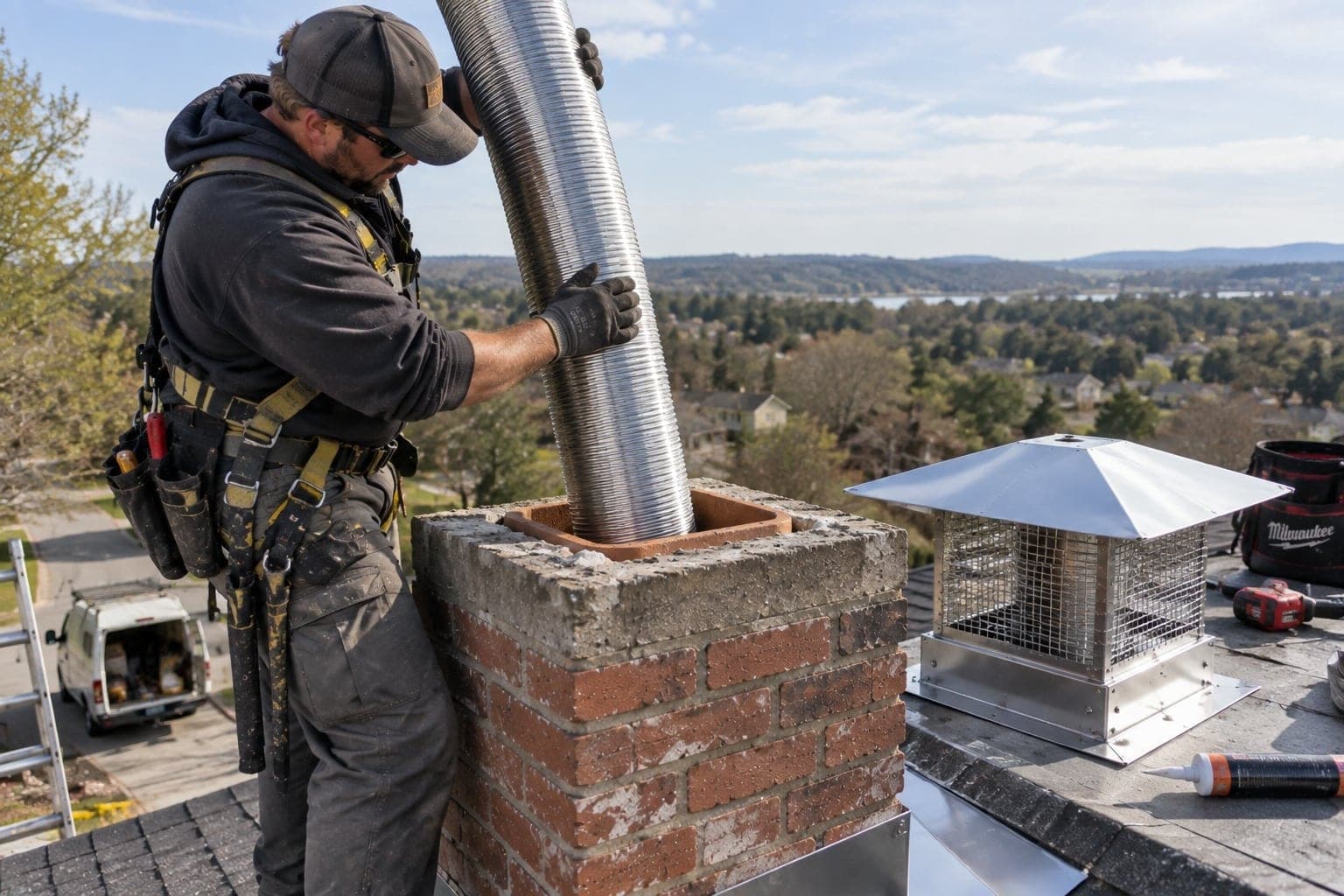
The liner is fed from the top, connected at the bottom, and capped and sealed at the top.
Confirm
Draft is checked and you're shown the scan and the finished work.
What the technician checks
- Signs of a past chimney fire
- Tile cracks and joint gaps
- Liner size against the appliance
- Connection at the appliance or smoke chamber
- Top plate, cap and seal
- Missing or displaced sections
How to prepare
- Clear access to the fireplace and to the roof or attic.
- Let the fireplace or stove cool completely — no fire the day before.
- Have the appliance's make and model handy.
Signs to watch for
- A chimney fire in the past
- Pieces of clay tile in the firebox or at the bottom of the flue
- Cracks or open joints seen in a camera scan
- Smoke or a smell in rooms next to the chimney
- A new insert or stove that needs a matched liner
Stop using it until it's checked
Pieces of flue tile in the firebox or a known crack mean the liner can't be trusted to contain heat and exhaust. Don't use the fireplace or stove until it has been inspected.