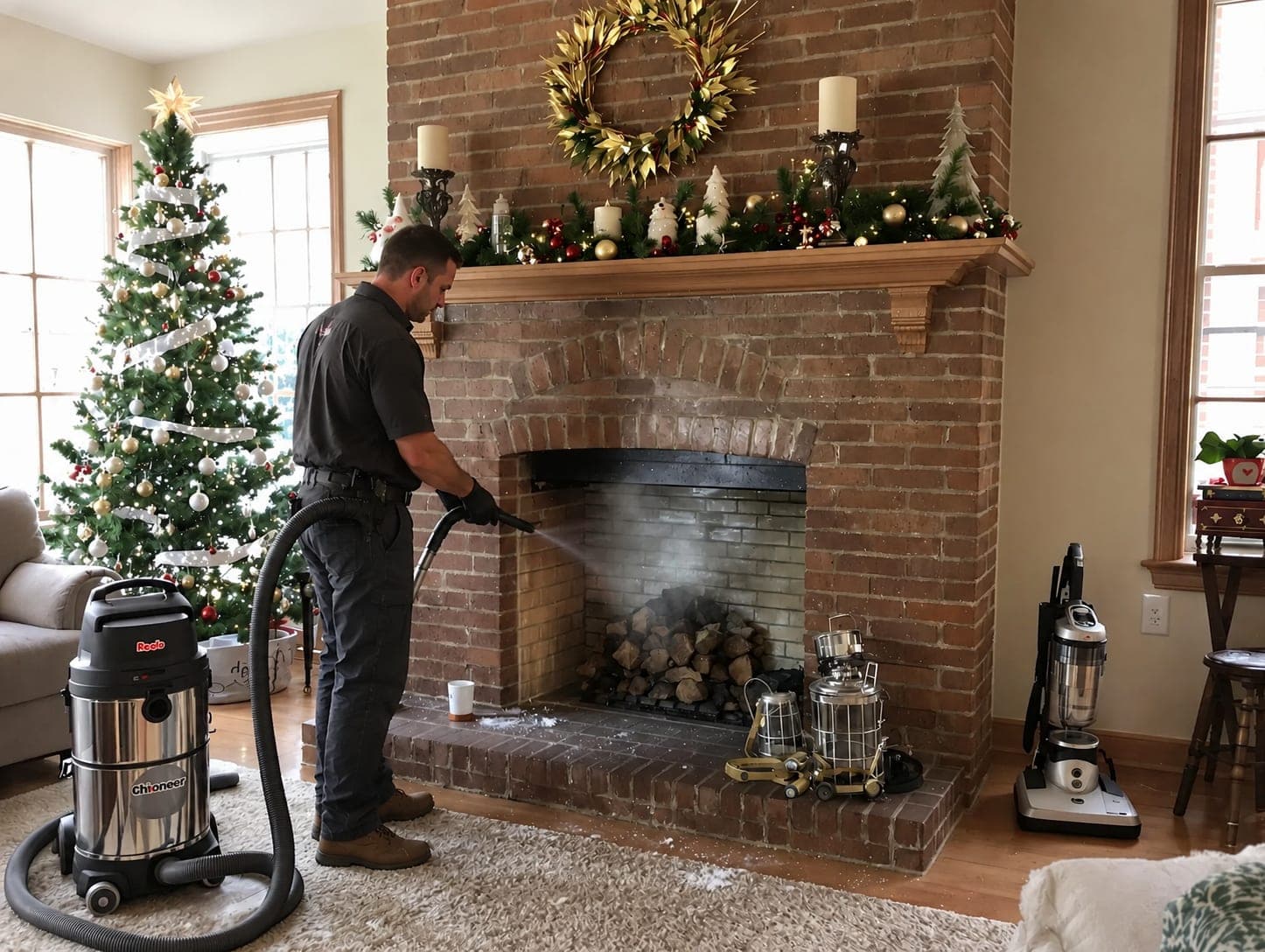
Possible reasons for drafty fireplace woes
In cold weather, warm air escapes through the upper parts of a house. Cold air gets pulled in low to replace it. An unsealed fireplace is one of the easiest ways for that air to get in. The usual openings are:
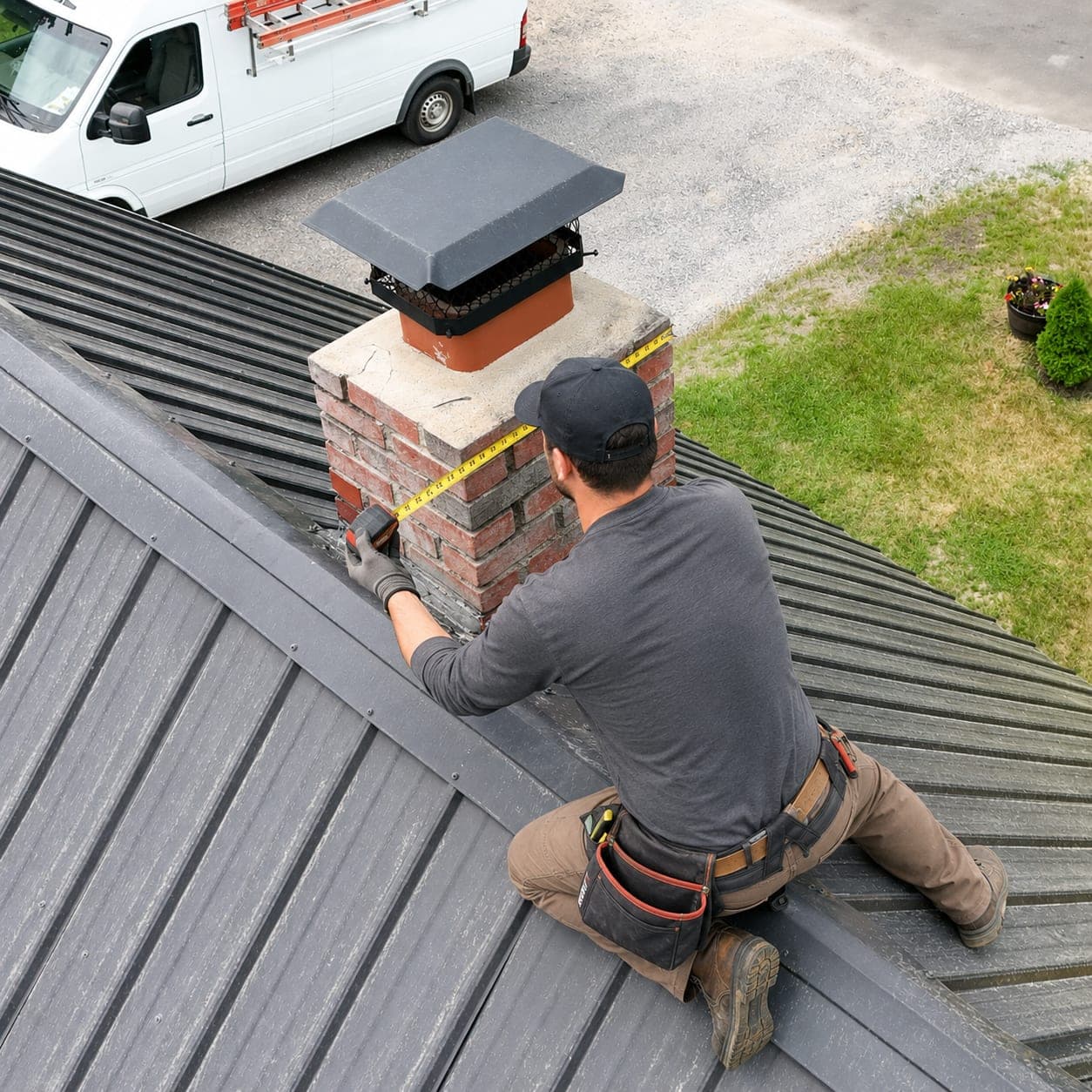
- A damper that no longer seals. Throat dampers warp from heat and rust from moisture. Soot also builds up on the frame, so even a closed damper can leave a gap you can feel.
- A damper stuck open or missing. Broken handles, seized pivots, or a damper removed years ago leave the flue open around the clock.
- Cracks and open joints inside the fireplace. Gaps in the firebox or smoke chamber let air move between the chimney and the wall cavities. See what causes cracked fireplace brick and problems with a broken smoke chamber.
- Gaps around a prefab fireplace. Factory-built units sit in a framed chase. Gaps around the unit, the chase or the chase cover can let outside air in.
- An open fireplace with nothing in front of it. Without doors or an insert, the damper is the only barrier.
How the visit works
Cracks in the firebox let heat reach the framing behind it. A damaged smoke chamber is a common cause of smoke spilling into the room.
Find the cause
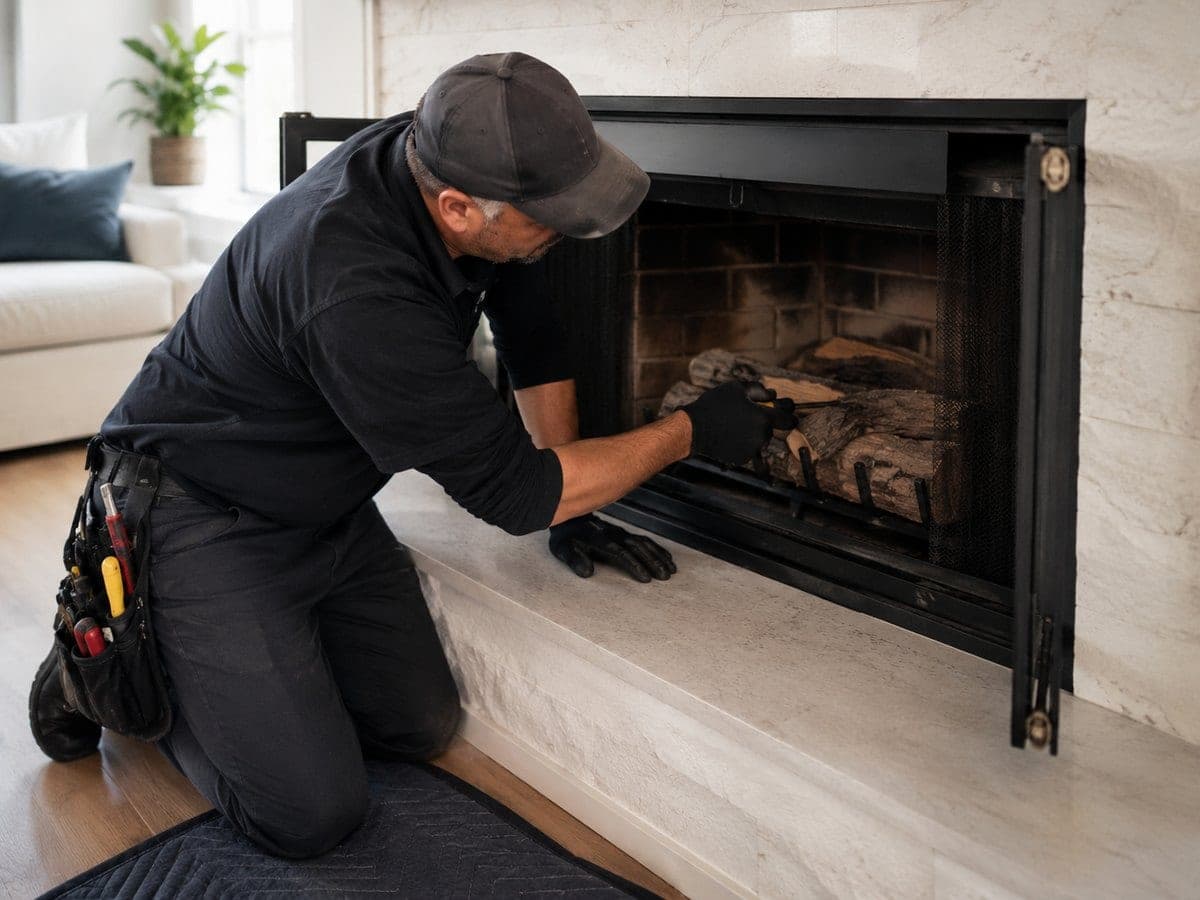
The firebox, damper, smoke chamber and any doors, glass or panels are checked.
Confirm the type
Masonry or factory-built — the repair has to suit the system.
Explain the fix
You hear the options and what each involves before work starts.
Repair and test
The work is done and the fireplace is checked before you use it.
When to book wood-burning fireplace repair
- Cracked or missing firebrick or refractory panels
- A damper that won't open or close
- Smoke coming into the room
- A fireplace that is hard to light or won't stay lit
Carbon monoxide
A blocked or damaged flue can push carbon monoxide into the home. If an alarm sounds or anyone feels dizzy or sick near the fireplace, get everyone outside and call 911.
Checked on every visit
- Damper operation
- Mortar joints inside the firebox
- Firebrick or refractory panels
- Smoke chamber and smoke shelf
- Hearth and surround
- Draft from the opening
Sorting out drafty fireplace woes
A few simple checks help pin down the source. Hold the back of your hand near the closed damper, along the edges of the surround, and around any doors. Note when the draft is strongest.
| What you notice | Likely source | Typical fix |
|---|---|---|
| Cold air even with the damper closed | Warped, rusted or soot-caked damper | Cleaning, then chimney damper repair |
| Draft along the edges of the surround | Open joints or cracks in the firebox | Firebox repair |
| Chill around a factory-built fireplace | Gaps in the prefab enclosure or chase | Prefab chimney and chase repair |
| Cold air worst on windy days | Wind at an uncapped chimney top | Chimney cap installation |
| A cold room around an open fireplace you rarely use | Large opening with no barrier | Fireplace doors or a fireplace insert |
| Cold air plus a sooty smell | Air sinking through a dirty flue | Cleaning and chimney odor removal |
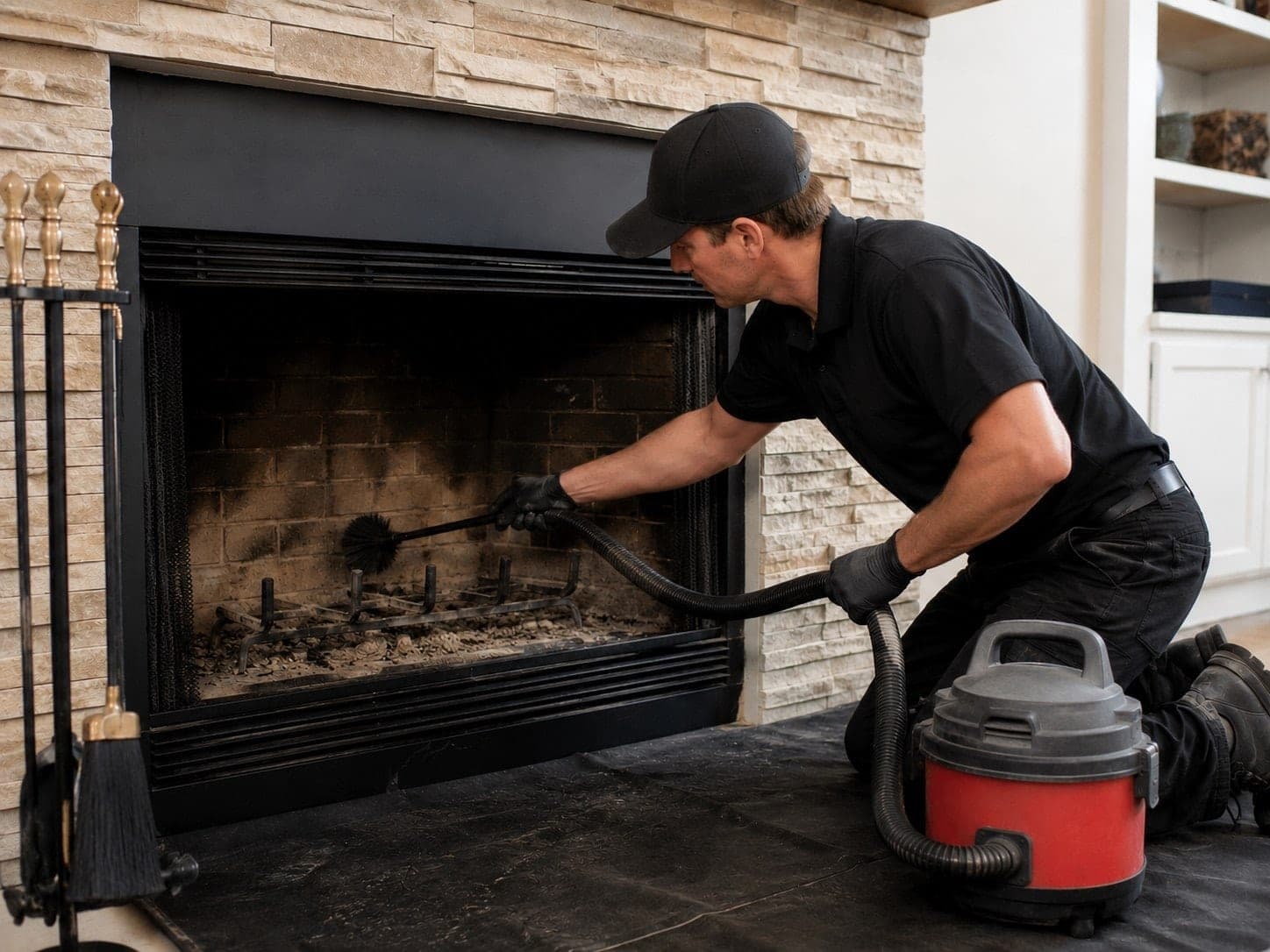
Soot on a damper frame can keep it from closing. That's why a thorough wood-burning fireplace cleaning often comes before deciding the damper needs repair. If you rarely light fires anymore, converting the opening may make more sense. A electric fireplace installation is one option to discuss during your free estimate.
A drafty fireplace or wood stove: what's different
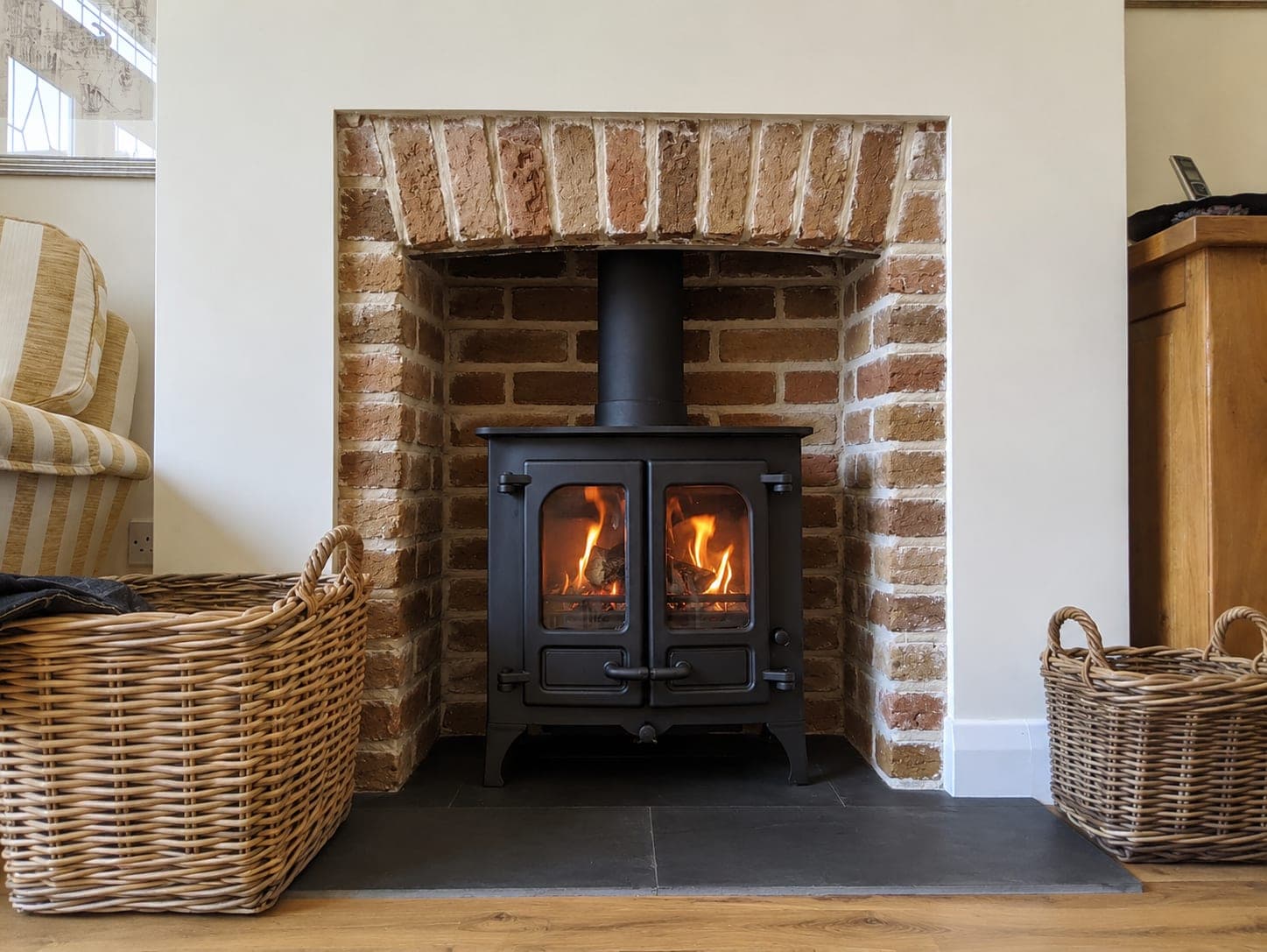
Wood stoves are closed appliances, so they rarely pour cold air into a room the way an open fireplace does. When a stove feels drafty, the usual suspects are: - worn door or glass gaskets - loose joints in the stovepipe - a stovepipe damper left open These are the kinds of problems that get noticed and pointed out during a wood stove cleaning.
It also helps to separate the two meanings of draft. A cold draft is air coming in when you don't want it. Chimney draft is the upward pull that carries smoke out, and you want plenty of that. A tight damper and good doors fix the cold draft without weakening the chimney draft. Our guide to an efficient fireplace covers this in more detail. A stove or fireplace that smokes or struggles to stay lit has weak chimney draft, which is a separate problem with its own causes.