On this page
- What annual chimney cleaning is and who needs it
- Signs it's time to book
- What the visit involves
- Before and after chimney cleaning: What changes
- Cleaning options and what decides between them
- Factors affecting chimney cleaning cost
- After creosote cleaning
- Cleaning after chimney wildlife removal
- Invest in a chimney cap and annual cleaning
- Annual chimney service for cold, snowy winters
- Why annual service is essential for homes across Connecticut
- Add chimney sweeping to your spring cleaning list
- How to prepare for your sweep
- Our chimney cleaning advice
- Benefits of regular chimney cleaning
- Act now: Schedule your chimney cleaning
What annual chimney cleaning is and who needs it
Annual chimney cleaning is a scheduled, once-a-year sweep of the whole venting system: the flue, the smoke chamber, the smoke shelf, the damper area and the firebox. Every fire leaves behind soot and creosote, a tar-like byproduct of burning wood that sticks to the flue walls. Left alone, it narrows the flue, hurts draft and can ignite.
It makes sense for anyone who burns wood in an open fireplace, a fireplace insert or a freestanding wood stove, even occasionally. Homeowners who just bought a house with an unknown chimney history, or who are lighting a fireplace that has sat unused for a few years, should also book a sweep before the first fire. If you want the full picture of the process itself, see how a full chimney cleaning works.
Signs it's time to book
- Black, flaky or shiny glazed deposits on the flue or damper
- A smoky smell in the room, especially on humid days or when the fireplace is cold
- Smoke spilling into the room instead of rising up the flue
- Fires that are hard to start or keep going
- Debris, twigs or nesting material falling into the firebox
- Scratching or chirping sounds inside the chimney
- It has been a full burning season or longer since the last sweep
For a deeper walk-through of each warning, read our guide to signs that your chimney needs cleaning.
What the visit involves
A typical annual sweep, step by step
Protect the room
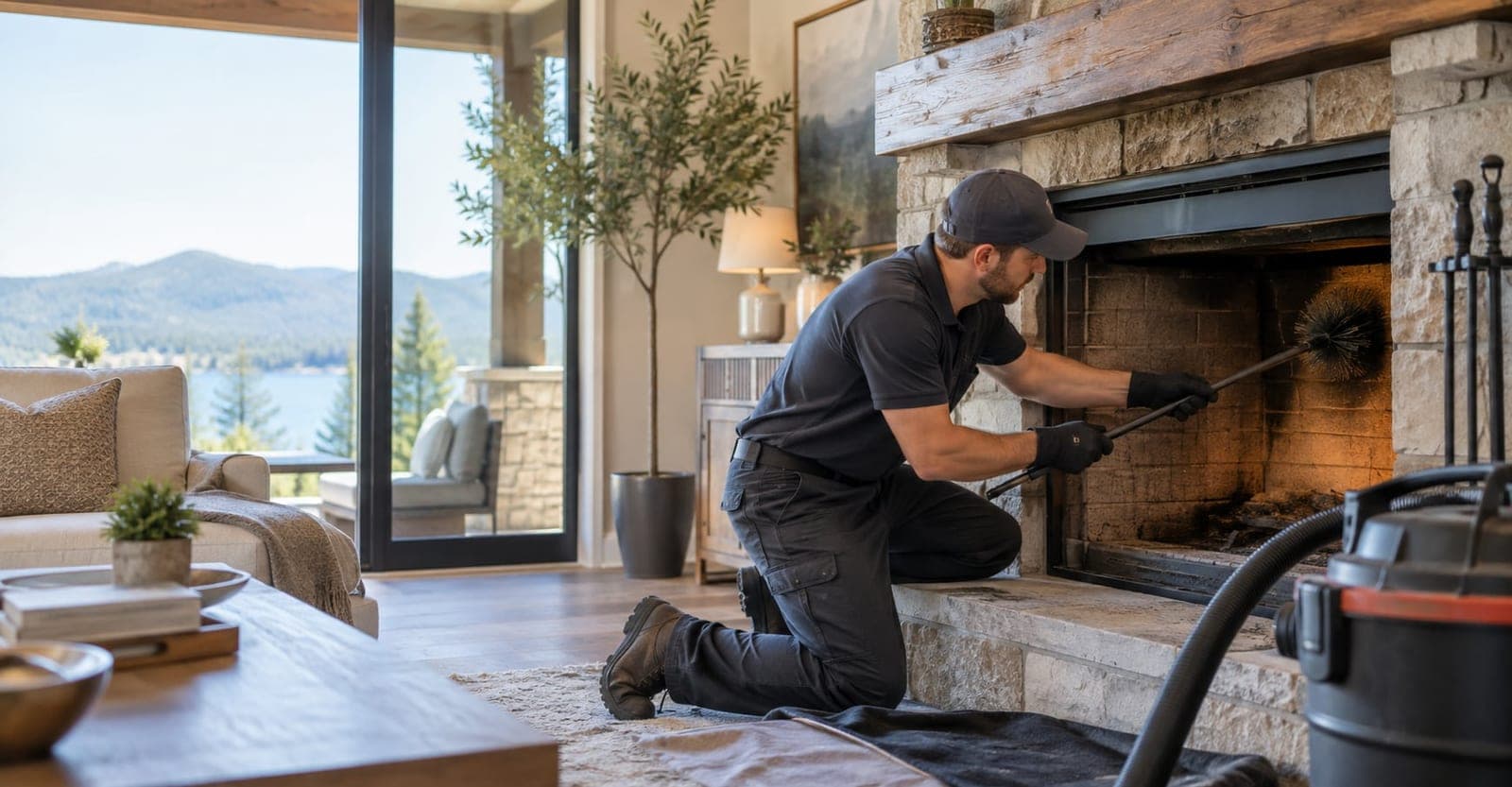
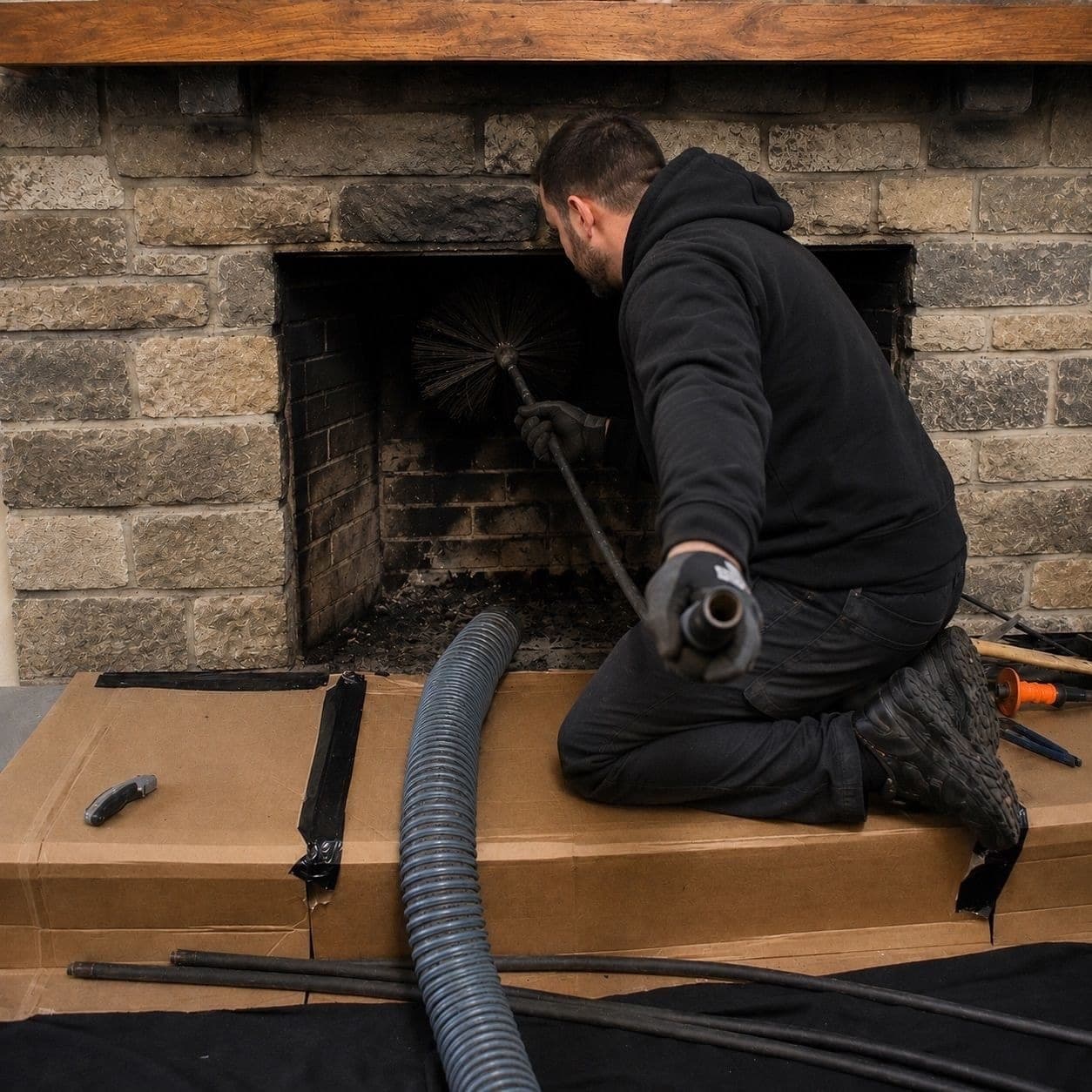
Drop cloths go down around the hearth, and the fireplace opening is sealed so soot stays out of your living space.
Look before cleaning
The technician checks the firebox, damper and visible flue to see how much buildup there is and what type it is.
Sweep the flue
Brushes sized to your flue are run through its full length to loosen soot and creosote, with vacuum containment collecting the dust.
Clean the lower parts
The smoke chamber, smoke shelf, damper and firebox are brushed and vacuumed, since debris collects there too.
Check the top
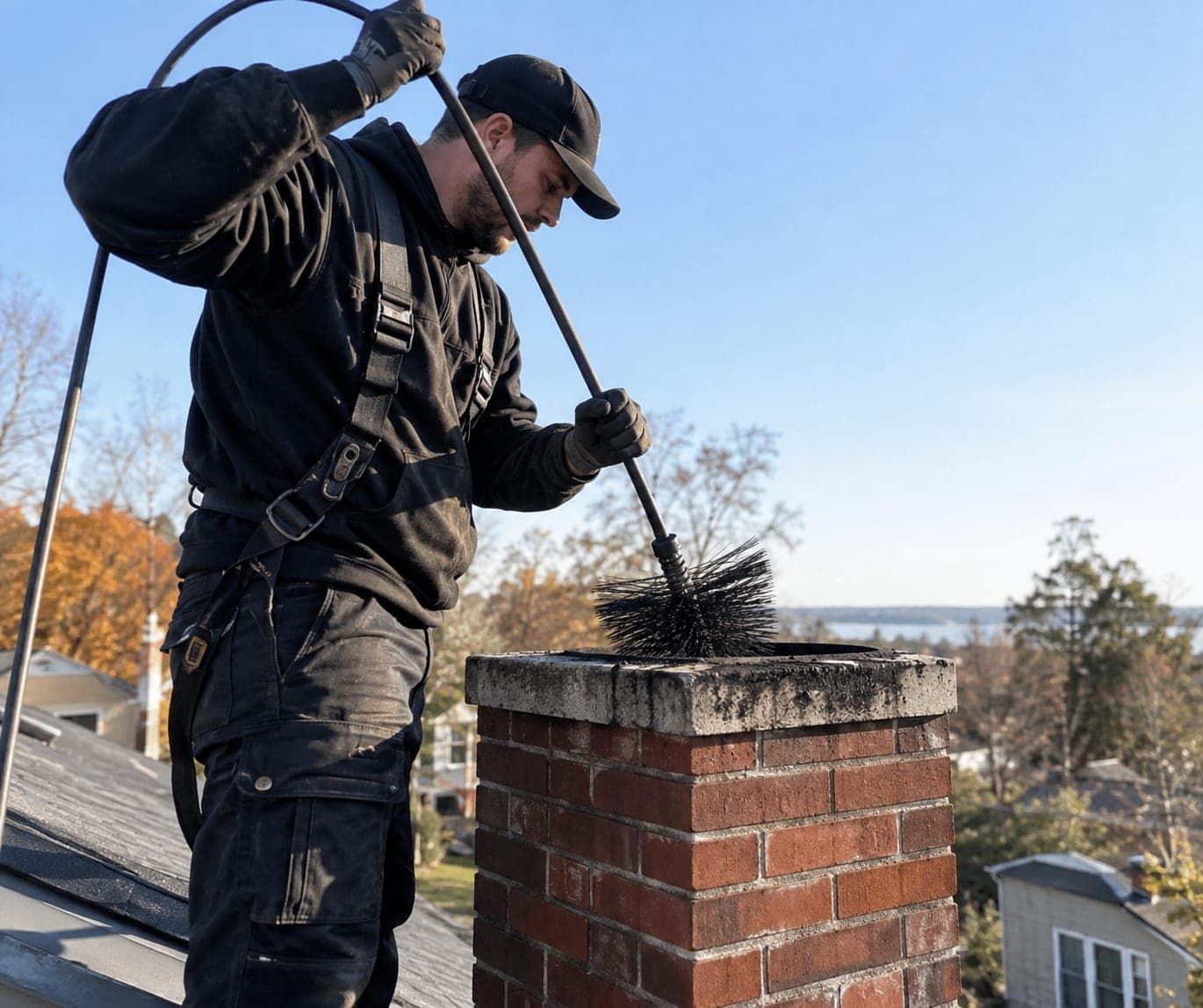
Where it's safe to do so, the cap, crown and flue opening are looked over for blockages, nesting or damage.
Walk you through findings
You hear what was found, what was removed, and whether anything needs repair or a closer look, such as a camera inspection.
What gets checked or cleaned
- Flue walls from bottom to top
- Smoke chamber and smoke shelf
- Damper operation and seal
- Firebox walls and floor
- Chimney cap and screen, if one is present
- Signs of animal entry or nesting
- Draft and any obvious obstructions
- Visible cracks, gaps or deteriorated mortar
Before and after chimney cleaning: What changes
Before a sweep, a flue with a season of buildup has a dark, crusty lining that narrows the passage for smoke. After cleaning, the flue walls are close to bare, the smoke shelf is clear of fallen debris, and the damper opens and closes freely. Most homeowners notice easier starts and less smoke smell. You may still see some staining on brick or tile, which is normal and is not leftover buildup.
Cleaning options and what decides between them
| Feature | Routine annual sweep | Heavier creosote removal |
|---|---|---|
| Best for | Chimneys swept regularly with light, sooty buildup | Chimneys with thick, tarry or glazed deposits |
| Methods | Brushing and vacuum containment | Specialized tools or treatments to break down hardened creosote |
| What decides it | Buildup brushes off easily | Buildup won't come off with brushing alone |
Best for
- Routine annual sweep
- Chimneys swept regularly with light, sooty buildup
- Heavier creosote removal
- Chimneys with thick, tarry or glazed deposits
Methods
- Routine annual sweep
- Brushing and vacuum containment
- Heavier creosote removal
- Specialized tools or treatments to break down hardened creosote
What decides it
- Routine annual sweep
- Buildup brushes off easily
- Heavier creosote removal
- Buildup won't come off with brushing alone
Glazed creosote is the most stubborn form and usually needs more than a standard brush. Our page on what causes creosote and how it's removed explains the different stages. If the technician can't see enough of the flue to judge its condition, a chimney camera inspection may be suggested.
Factors affecting chimney cleaning cost
No two chimneys take the same amount of work, so the scope is set after a look at your system. Estimates are free. The main things that affect the scope are:
- How much buildup there is, and whether it is soft soot or hardened glaze
- Number of flues and appliances being cleaned
- Chimney height and how safely the top can be reached
- Type of appliance: open fireplace, insert or wood stove
- Whether nesting material or other blockages must be removed
- Whether a camera inspection or follow-up repair is needed
After creosote cleaning
Once heavy creosote is cleared, the flue lining can be seen clearly, so this is a good moment to note any cracks or gaps. To slow future buildup, burn dry, seasoned wood, avoid long smoldering fires with the air closed down, and keep the damper fully open while burning.
Cleaning after chimney wildlife removal
Birds, squirrels and raccoons sometimes move into chimneys. After the animals and nests are removed, the flue and smoke shelf still hold nesting material, droppings and debris that can block airflow and cause odors. A full sweep after removal clears that out. A cap with a screen is the usual way to keep animals from coming back.
Don't light a fire over a nest
If you hear animals or see nesting debris, don't start a fire to drive them out. It can trap smoke in the house and set the nesting material burning. Call for removal and cleaning instead.
Invest in a chimney cap and annual cleaning
A cap and a yearly sweep work together. The cap keeps rain, leaves and animals out of the flue, which cuts down on the debris and moisture that mix with creosote. The annual cleaning removes what still builds up from normal burning. If your chimney has no cap, or the screen is rusted or bent, ask about cap installation or replacement during your visit.
Annual chimney service for cold, snowy winters
Homes that lean on a fireplace or wood stove for heat through long winters burn far more wood than homes that light a fire a few times a year, and buildup grows with use. A heavily used stove may need a check partway through the season. A clean flue matters most when you're burning daily and windows stay shut.
Why annual service is essential for homes across Connecticut
We provide annual chimney cleaning in Connecticut, including Hartford. Whether your home has an older masonry chimney or a newer prefab unit, the case for yearly service is the same: buildup happens every season, and a clean, checked system is far less likely to cause a fire, a smoke problem or a carbon monoxide risk. If you also use a gas or vented appliance, ask about fireplace vent cleaning at the same visit.
Add chimney sweeping to your spring cleaning list
Many homeowners book right after the last fire of the season. Scheduling in spring has practical benefits: creosote is easier to deal with before summer humidity brings out odors, any needed repairs can be done before fall, and the chimney is ready the first cold night. You can pair it with our fireplace cleaning service to clear the firebox, glass doors and hearth at the same time.
How to prepare for your sweep
Before the technician arrives
- Let the fireplace or stove go cold; no fire for at least a day if possible
- Move furniture, rugs and decor a few feet back from the hearth
- Clear a path from the door to the fireplace
- Keep pets and children out of the room during the work
- Note any smells, smoke issues or noises you've noticed to share
Safety notes
Never climb onto the roof to check your chimney yourself. If you smell smoke with no fire burning, see smoke pouring into the room, or hear a roaring sound from the flue, put out the fire if safe, leave the house and call 911. Keep working carbon monoxide detectors on every floor.
Our chimney cleaning advice
- Have the chimney swept and checked at least once a year if you burn wood
- Burn only dry, seasoned hardwood; never trash, cardboard or treated wood
- Open the damper fully before lighting and keep it open until the fire is out
- Keep the cap and screen in good condition
- Watch for the warning signs above between visits, and read up on common chimney problems so you know what to look for
Benefits of regular chimney cleaning
Creosote builds up in layers. Thin, sooty deposits brush out easily. Left for several seasons, they can harden into a glazed coating that is much harder to remove and burns very hot if it ignites. Cleaning on a schedule keeps buildup in that easy early stage.
- Better draft: a flue at its full diameter pulls smoke up instead of letting it roll into the room
- Fewer odors: creosote and soot are the usual source of that summer campfire smell
- Early warnings: regular visits catch cracked crowns, missing caps and loose mortar before they turn into leaks
- Cleaner glass and fireboxes in inserts and stoves
Not sure it's time yet? Our guide to signs that your chimney needs cleaning covers what to look and listen for.
Benefits of regular sweeping over one-off cleanings
| Feature | Regular sweeping | Occasional cleaning |
|---|---|---|
| Creosote | Removed while soft and sooty | May harden into glaze |
| Blockages | Nests and debris found early | Often found when smoke backs up |
| Repairs | Small issues flagged early | Damage has longer to spread |
| Scheduling | Booked ahead of heating season | Often booked in a hurry |
Creosote
- Regular sweeping
- Removed while soft and sooty
- Occasional cleaning
- May harden into glaze
Blockages
- Regular sweeping
- Nests and debris found early
- Occasional cleaning
- Often found when smoke backs up
Repairs
- Regular sweeping
- Small issues flagged early
- Occasional cleaning
- Damage has longer to spread
Scheduling
- Regular sweeping
- Booked ahead of heating season
- Occasional cleaning
- Often booked in a hurry
Act now: Schedule your chimney cleaning
Don't wait for a smoky room or a chimney fire to find out the flue needs attention. Same-day service is offered where the schedule allows, and we accept emergency calls 24 hours a day, Sunday through Friday.