On this page
- What gas fireplace cleaning covers and who needs it
- The anatomy of a gas fireplace
- Signs it's time for a cleaning
- What happens during the visit
- Annual gas fireplace cleaning and inspection
- Choosing between cleaning, vent service and repair
- What affects the scope of the job
- Popular gas fireplace parts and Add-Ons
- Buying a gas fireplace with all the necessary sensors
- Advantages of natural gas as a fireplace fuel
- Fireplace gas appliance services across Connecticut
What gas fireplace cleaning covers and who needs it
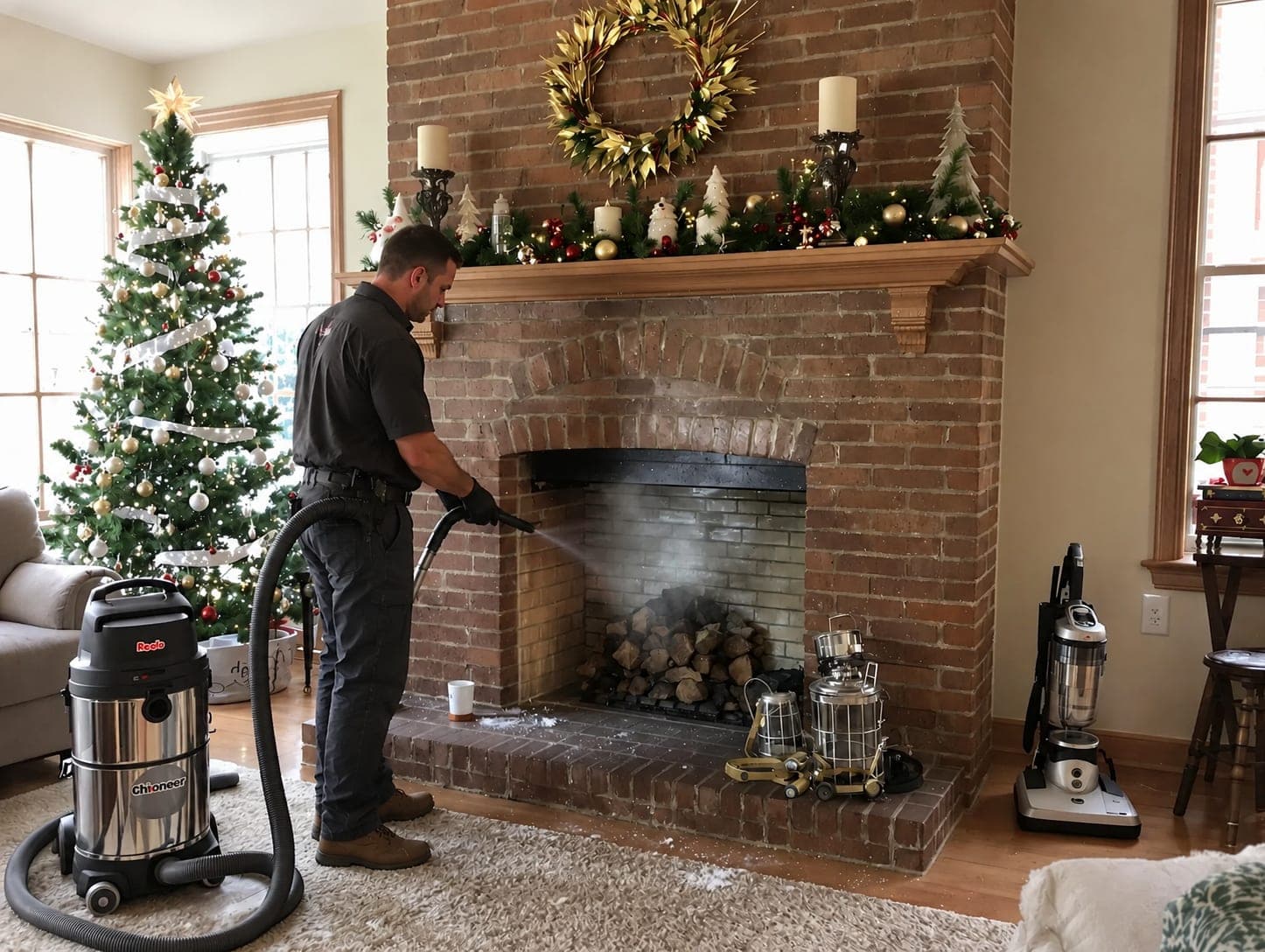
Gas fireplace cleaning is hands-on maintenance for a gas appliance: removing the glass, cleaning the firebox, logs and embers, clearing dust and lint from the burner and pilot area, and checking that the vent is open. It is different from a wood-burning fireplace cleaning service, where the main job is sweeping creosote out of a masonry flue. Gas units make little creosote, but they still need regular attention.
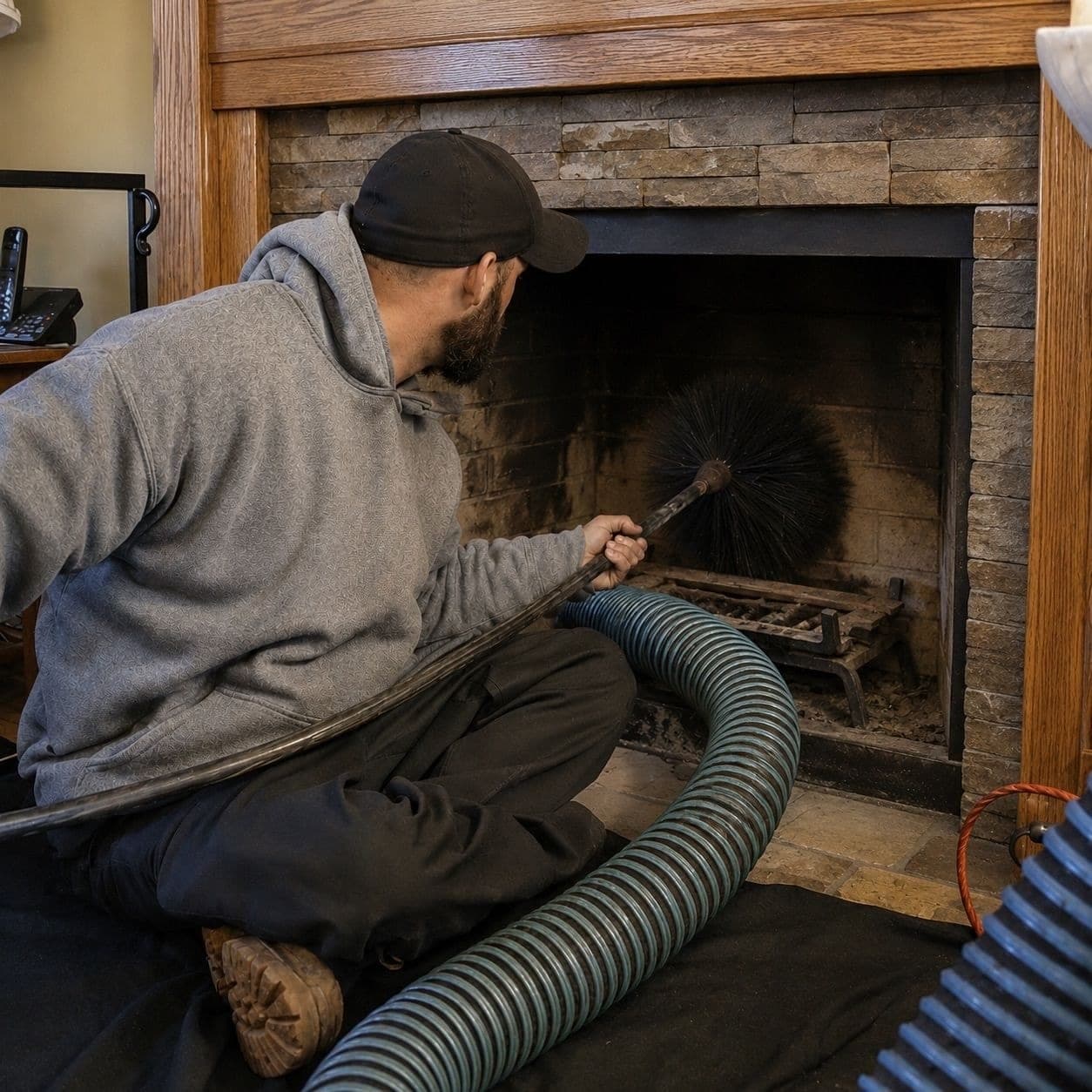
You likely need it if you have a direct-vent gas fireplace or insert, a set of gas logs in an older masonry fireplace, or a gas stove, and you can't remember the last time someone opened it up. Homeowners preparing a house for sale or turning the unit back on after a long break are also good candidates.
The anatomy of a gas fireplace
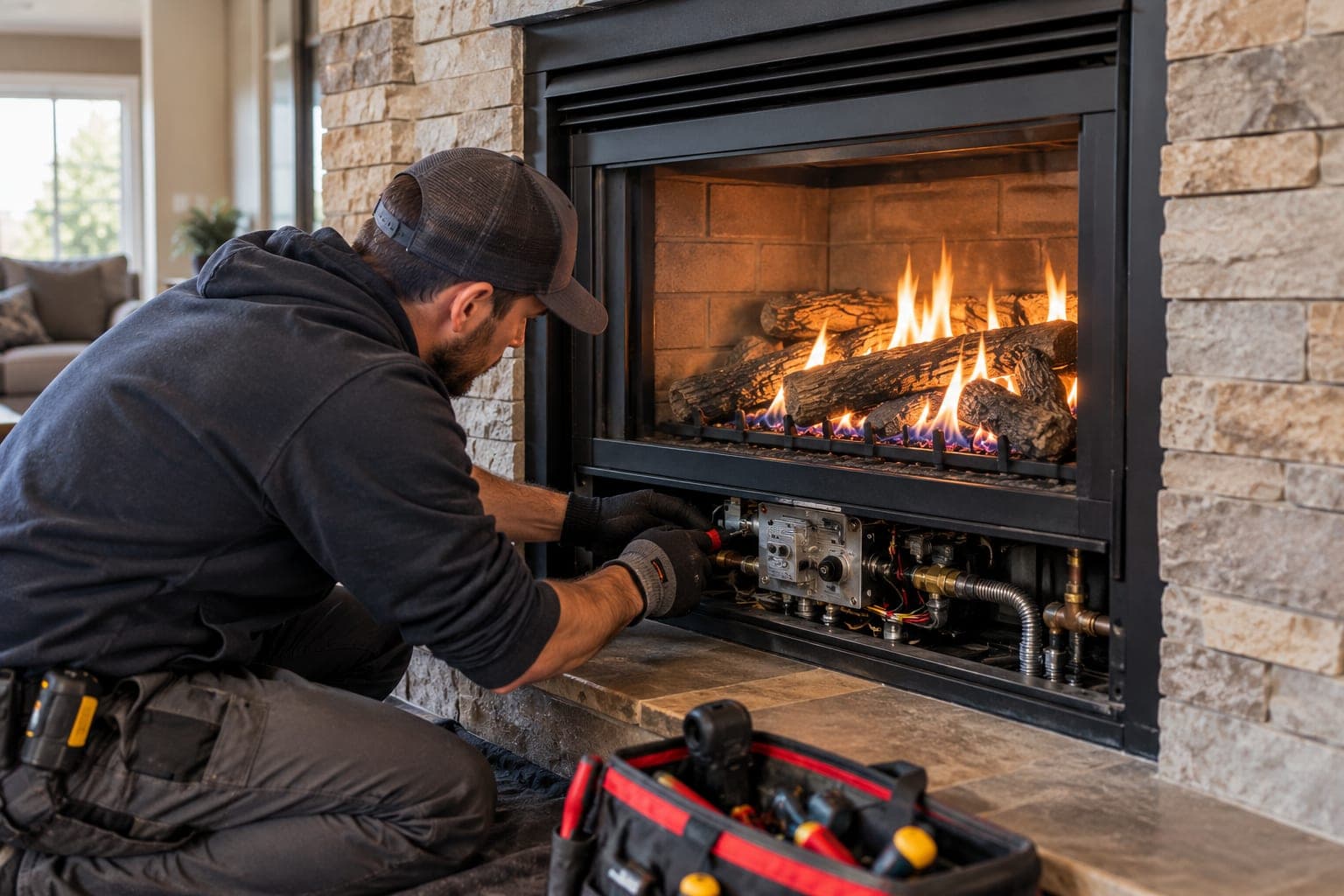
Knowing the main parts helps you understand what a cleaning actually touches:
- Burner: the tube or pan where gas mixes with air and burns. Clogged ports cause uneven or lazy flames.
- Pilot assembly: the small standing or intermittent flame that lights the burner, plus its thermocouple or thermopile.
- Gas valve and controls: the valve, wall switch, remote receiver or thermostat that tell the unit when to fire.
- Logs, embers and media: ceramic or refractory pieces arranged in a specific pattern so flames don't hit them wrong.
- Glass front and gasket: seals the firebox on direct-vent units and lets heat radiate into the room.
- Vent system: the pipe that brings in outside air and carries exhaust out, or the chimney liner on units vented through masonry.
Signs it's time for a cleaning
Call for service if you notice:
- A white or gray haze on the glass that won't wipe off
- Pilot that goes out, struggles to light or won't stay lit
- Flames that are mostly yellow, tall and sooty, or that lift off the burner
- Black soot on the logs, glass or the wall above the unit
- A dusty, burning smell that lingers past the first few minutes of a burn
- Clicking or a delay before the burner catches
- Debris, nests or blockage visible at the outside vent cap
An odor that keeps returning deserves a closer look; our page on what causes a gas fireplace smell walks through the usual sources. For a broader overview, see our guide to warning signs that your chimney needs cleaning.
If you smell gas
A rotten-egg smell is not a cleaning issue. Don't light anything or flip switches. Leave the house and call your gas utility or 911 from outside. Once the line has been checked, we can come out for the fireplace itself.
What happens during the visit
How a gas fireplace cleaning visit runs
Shut off and cool down
We confirm the unit is off and cool, turn off the gas supply to the fireplace and note its make and model.
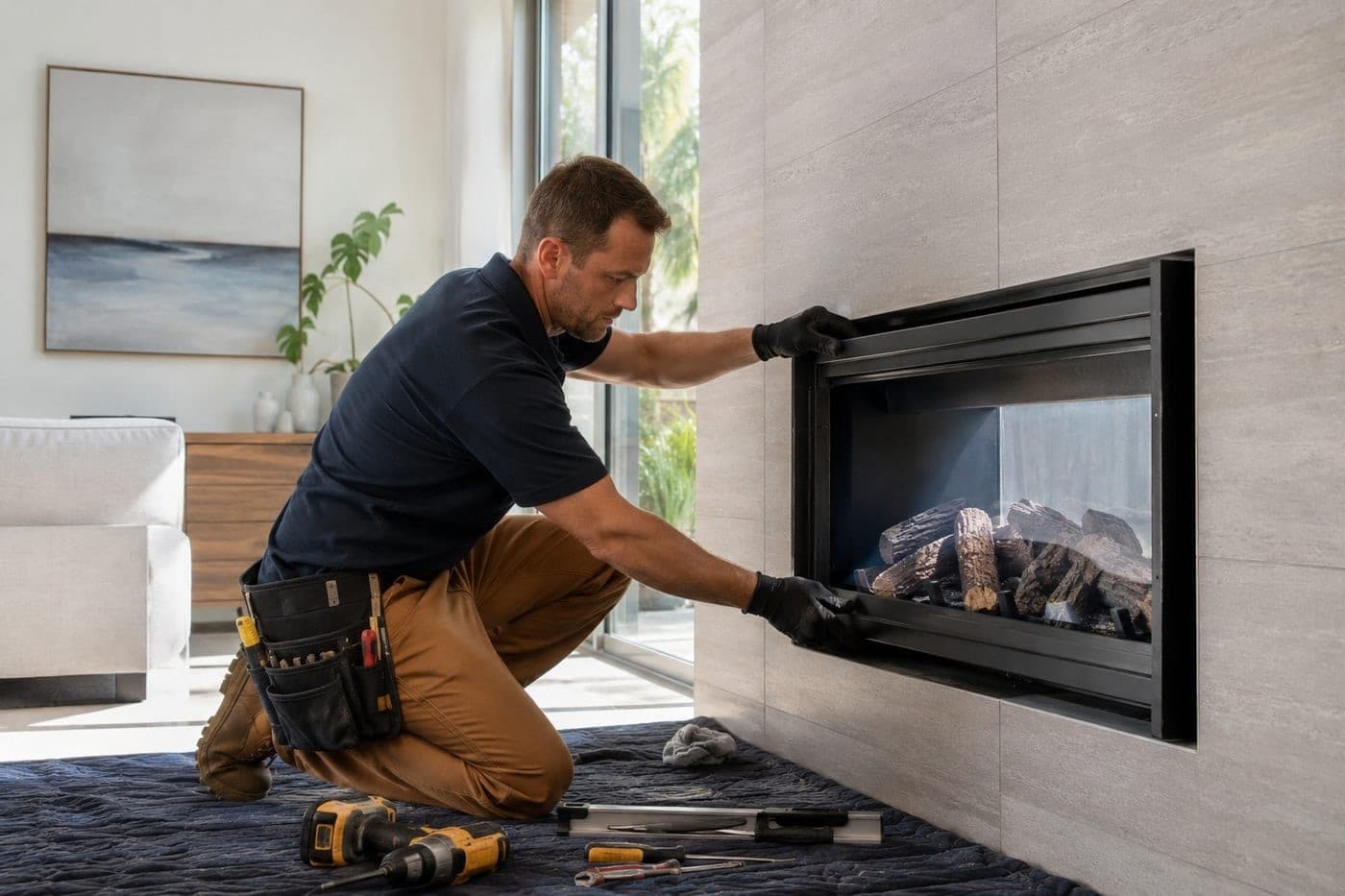
Remove the glass and media
The glass front comes off, and logs and embers are photographed or noted so they go back in the correct positions.
Clean the glass
Film and soot are removed with a cleaner suited to fireplace glass, and the gasket is checked for gaps or wear.
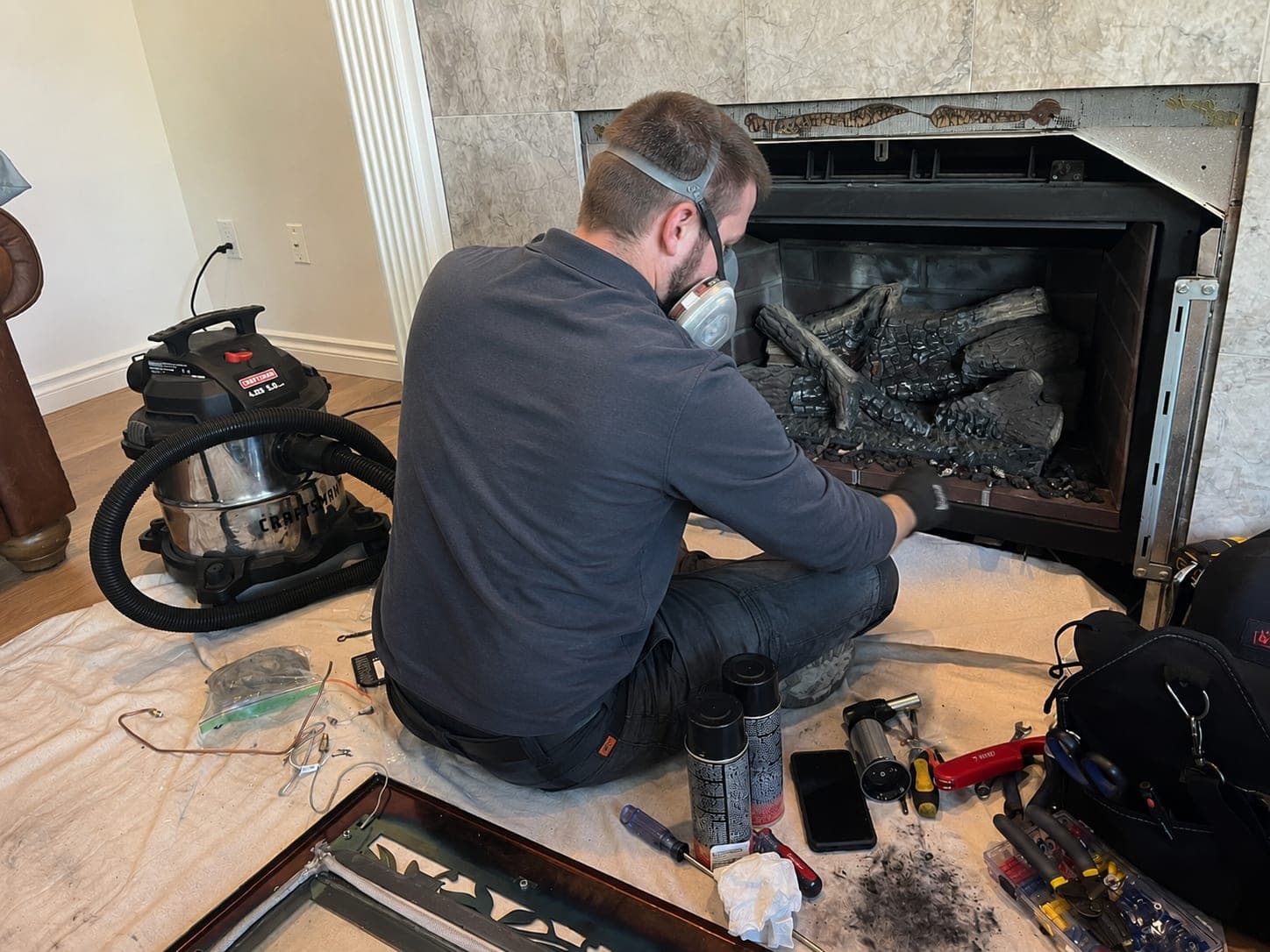
Clean the firebox and burner
Dust, lint, spider webs and debris are vacuumed from the firebox, burner ports and pilot area.
Check the pilot and sensors
The pilot flame, thermocouple or thermopile, and igniter are looked over for buildup and proper position.
Look at the vent
We check the vent termination and visible pipe for blockage, damage or loose connections.
Reassemble and test-burn
Everything goes back in place, and we run the fireplace to watch flame color, pattern and ignition, then review what we found with you.
Annual gas fireplace cleaning and inspection
Most gas fireplace manufacturers recommend service once a year, and pairing annual gas fireplace cleaning with an annual gas fireplace inspection makes sense: the unit is already open, so it's the right time to look at parts that wear. Before heating season is the most practical time, since problems show up before you rely on the fireplace.
The inspection side focuses on the venting and safety components rather than appearance. If the vent shows heavy debris or a blockage, our gas fireplace vent cleaning handles that part of the system in more depth.
Benefits of regular fireplace and gas appliance service
- Steadier, cleaner flames and fewer pilot outages
- Clear glass so you actually see the fire
- Early notice of worn gaskets, cracked logs or vent damage
- Fewer surprise odors when the unit is turned on for the season
- A record of service that's helpful when selling the home
Choosing between cleaning, vent service and repair
| Feature | Routine cleaning | Cleaning plus vent or repair work |
|---|---|---|
| Best for | Units that run normally but are due for yearly care | Units with lighting problems, soot or vent blockage |
| What decides it | Clean flame and a clear vent at the test burn | Debris in the vent, failed parts or damaged components |
| Typical outcome | Clean glass, burner and logs; test-burn confirmed | Vent cleared or parts repaired before normal use resumes |
Best for
- Routine cleaning
- Units that run normally but are due for yearly care
- Cleaning plus vent or repair work
- Units with lighting problems, soot or vent blockage
What decides it
- Routine cleaning
- Clean flame and a clear vent at the test burn
- Cleaning plus vent or repair work
- Debris in the vent, failed parts or damaged components
Typical outcome
- Routine cleaning
- Clean glass, burner and logs; test-burn confirmed
- Cleaning plus vent or repair work
- Vent cleared or parts repaired before normal use resumes
When a cleaning uncovers a failed part, such as a worn thermocouple or a cracked panel, we explain it and you decide whether to go ahead with gas fireplace repair.
What affects the scope of the job
- Type of unit: direct-vent, B-vent, vent-free or gas logs in a masonry fireplace each have different parts and access.
- Time since last service: years of dust and film take longer to clear.
- Glass condition: light haze cleans easily; etched glass may not come fully clear.
- Vent condition: nests, debris or a damaged termination add work.
- Access: tight surrounds, built-ins or high roof terminations affect how the unit is reached.
Popular gas fireplace parts and Add-Ons
While the unit is open, many homeowners ask about upgrades. Among the services we offer are gas log installation, refractory panel replacement and fireplace glass replacement and door repair. Remote controls, blowers and decorative media vary by manufacturer, so we check what your model supports before recommending anything.
Buying a gas fireplace with all the necessary sensors
If you're shopping for a new unit, look for one with a flame-sensing safety system (a thermocouple or thermopile that shuts off gas if the pilot fails) and, on vent-free models, an oxygen depletion sensor. A working carbon monoxide alarm on every level of the home is a smart addition regardless of fireplace type. Keep the owner's manual; it lists the cleaning and service intervals for your model.
Advantages of natural gas as a fireplace fuel
Natural gas lights instantly, needs no wood storage or ash removal, and produces far less soot and creosote than wood. Heat output is adjustable on many units, and direct-vent models keep combustion air sealed off from the room. Those advantages hold up best when the burner and vent are kept clean.
Fireplace gas appliance services across Connecticut
We serve homeowners in Hartford and across Connecticut with gas fireplace cleaning, service and maintenance, and repair. Estimates are free, same-day visits are offered when the schedule allows, and we're available 24 hours, Sunday through Friday, including for emergency calls.
How to prepare and schedule annual gas fireplace service
- Turn the fireplace off several hours before the visit so it's fully cool.
- Clear a few feet in front of the unit and remove items from the mantel.
- Find the owner's manual or the model plate if you can.
- Keep pets and kids out of the room during the work.
- Note any symptoms you've seen, such as smells or slow lighting, to share with the technician.
For context on other issues we see in the field, our guide to common chimney problems is a useful read.