On this page
Top 3 benefits of wood burning fireplace inserts
- More of the heat stays in the room. An open fireplace draws room air up the chimney along with the smoke. An insert's sealed firebox and doors cut that loss and radiate heat forward.
- Longer, controlled burns. An air control lets you slow the fire down, so a full load can last through the evening instead of burning out in an hour.
- A cleaner-running chimney. A liner sized to the insert keeps flue gases warm all the way up. That leaves less creosote than the same fire would in a large, cold masonry flue.
For more ways to get heat from the fireplace you already have, see our efficient fireplace guide.
A wood burning fireplace blower insert guide
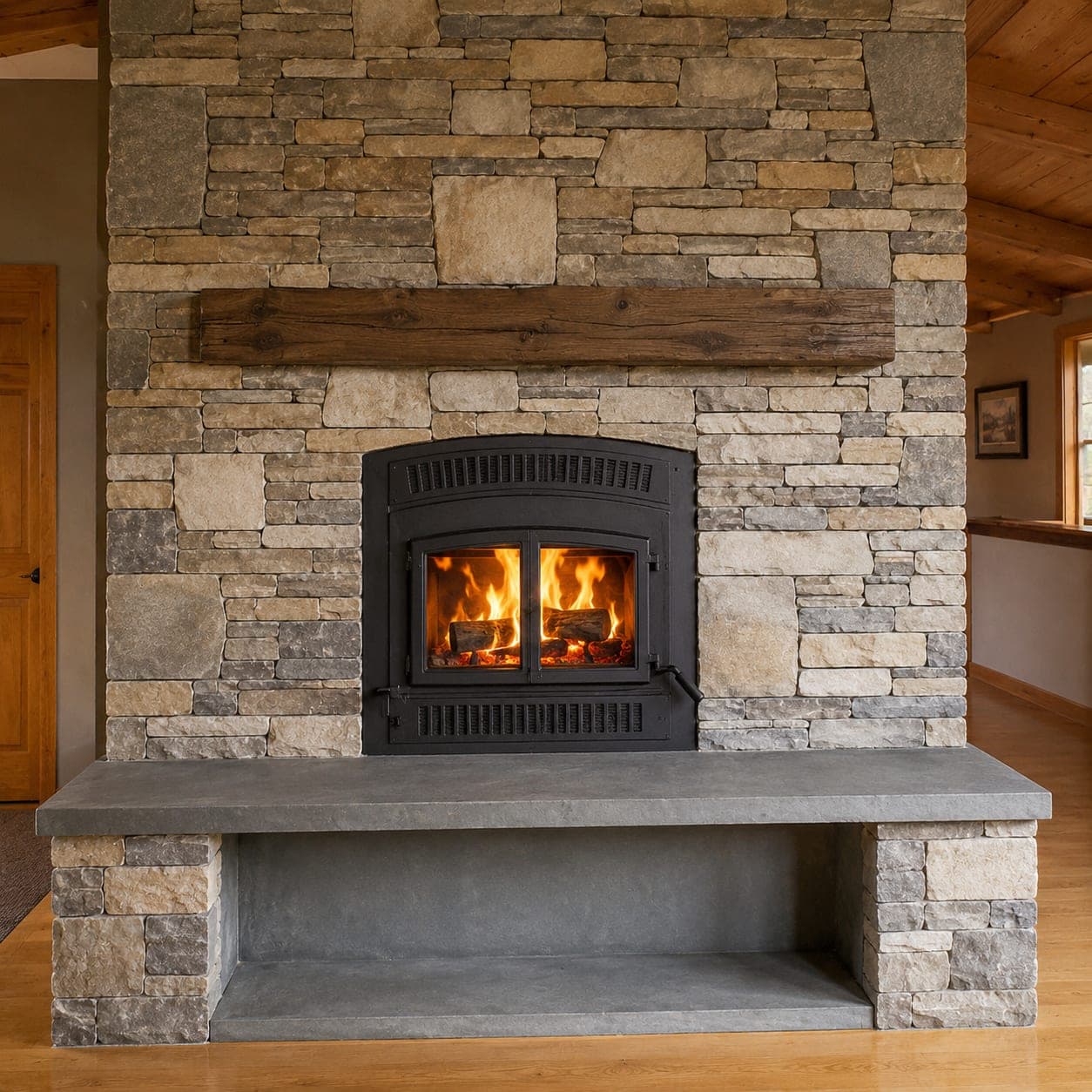
Most inserts sit inside a steel jacket. A blower, usually tucked below the firebox, pulls room air through the gap between the firebox and the jacket. It then pushes that air out through louvers above the doors. Without a blower, the insert still heats by radiation and natural convection, but the warmth tends to stay near the hearth.
| Feature | With a blower | Convection only |
|---|---|---|
| Heat reach | Moves warm air into the room and beyond | Stays concentrated near the fireplace |
| Power | Needs a nearby outlet | None needed |
| Noise | A low fan hum that varies with speed | Silent |
| Power outage | Insert keeps burning, but the fan stops | No change |
Heat reach
- With a blower
- Moves warm air into the room and beyond
- Convection only
- Stays concentrated near the fireplace
Power
- With a blower
- Needs a nearby outlet
- Convection only
- None needed
Noise
- With a blower
- A low fan hum that varies with speed
- Convection only
- Silent
Power outage
- With a blower
- Insert keeps burning, but the fan stops
- Convection only
- No change
Top 5 wood burning fireplace blower inserts of 2024: what to check instead
Ranked lists go out of date as manufacturers change their model lines, and the right insert depends on your fireplace opening. Instead of relying on a brand ranking, check any model against five points:
Five checks for a blower insert
- EPA certified under the current standard
- Firebox and surround fit your fireplace's width, height and depth
- Variable-speed blower with a thermostatic switch, so it doesn't blow cold air
- Blower can be reached for cleaning or replacement without pulling the insert
- Flue collar size matches an insulated liner your chimney can accept
Burning fireplace inserts and the chimney they depend on
An insert is only as sound as the masonry around it. Cracked firebrick, a deteriorated smoke chamber or a damaged crown should be fixed first, and the flue needs a full sweep. We handle that inspection and repair work, along with chimney liner installation and fireplace insert installation. If you're weighing fuels, compare this page with inserts built for wood or gas, or read which fireplace type suits your household. Keeping the original open hearth instead? Start with care for a wood burning fireplace.
What the visit covers
An insert needs a liner sized to its outlet; venting into a large masonry flue drafts poorly and builds creosote. Door and glass gaskets keep the fire controllable and the exhaust inside the unit.
Identify the unit
Wood, the make and model, and how it vents.
Check the insert
Door or glass seal, firebox or burner, controls and surround.
Check the liner
The connection at the insert, the liner's condition and the top of the chimney.
Explain
What needs cleaning, adjusting or replacing, before any work starts.
Carbon monoxide
A stove or insert that vents poorly can push carbon monoxide into the home. If an alarm sounds or anyone feels dizzy or sick near it, get everyone outside and call 911.
Getting ready for the visit
- Have the make and model handy; it's usually on a plate on the back or under the ash lip.
- Let the stove or insert go out and cool completely — ideally no fire for a full day before the visit.
- Make sure the roof or the attic access can be reached if the flue needs to be checked from above.
- Clear a few feet around the unit and the area under any connector pipe.
What the technician checks
- Firebrick and baffle on wood units
- Door or glass gaskets
- Liner connection and condition
- Clearances to the mantel and trim
- Surround panel and seal
When to book wood-burning fireplace inserts
- Gaskets that are flat, hard or loose
- Glass that clouds or soots quickly
- Smoke or exhaust smell around the insert
- Rattling or a loose surround panel