On this page
What a chimney cap actually does
A cap is a small part that prevents a long list of problems. On an uncapped chimney, every rainstorm wets the flue and the smoke chamber. Water mixed with soot causes odors and wears down mortar and damper parts. A cap with mesh sides handles several jobs at once:
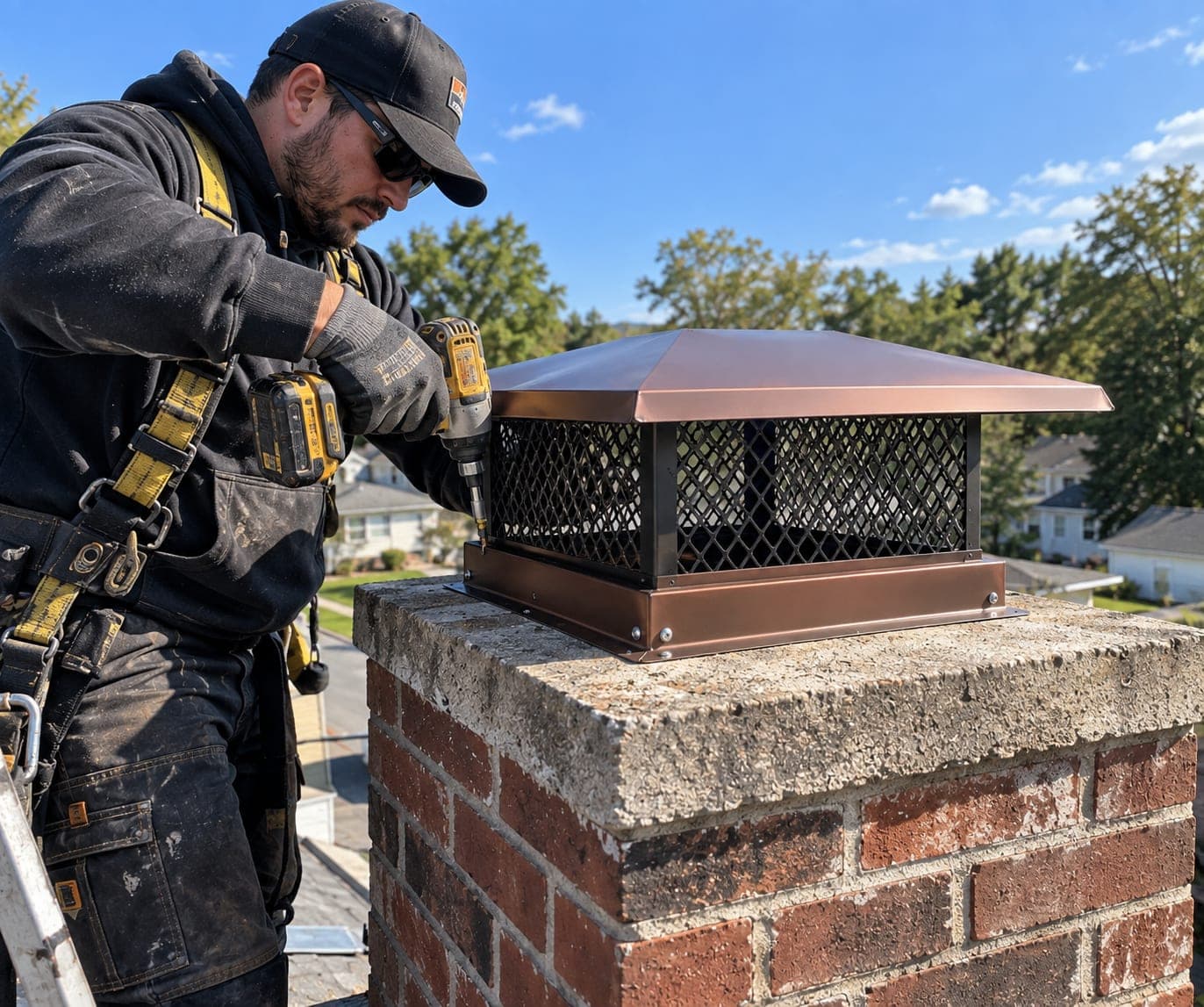
- Keeps rain and snow from falling straight down the flue
- Stops birds, squirrels and raccoons from moving in
- Keeps leaves and twigs out, so they can't block the flue
- Catches embers before they land on the roof
- Helps cut down on wind blowing directly into the flue opening
A cap won't fix a cracked crown or loose brick. If water is getting in around the flue rather than down it, repairs to the chimney and fireplace need to be part of the plan. If the stack itself is crumbling, rebuilding it in brick may come first.
Choosing the right cap for your chimney
| Cap type | Fits | Good to know |
|---|---|---|
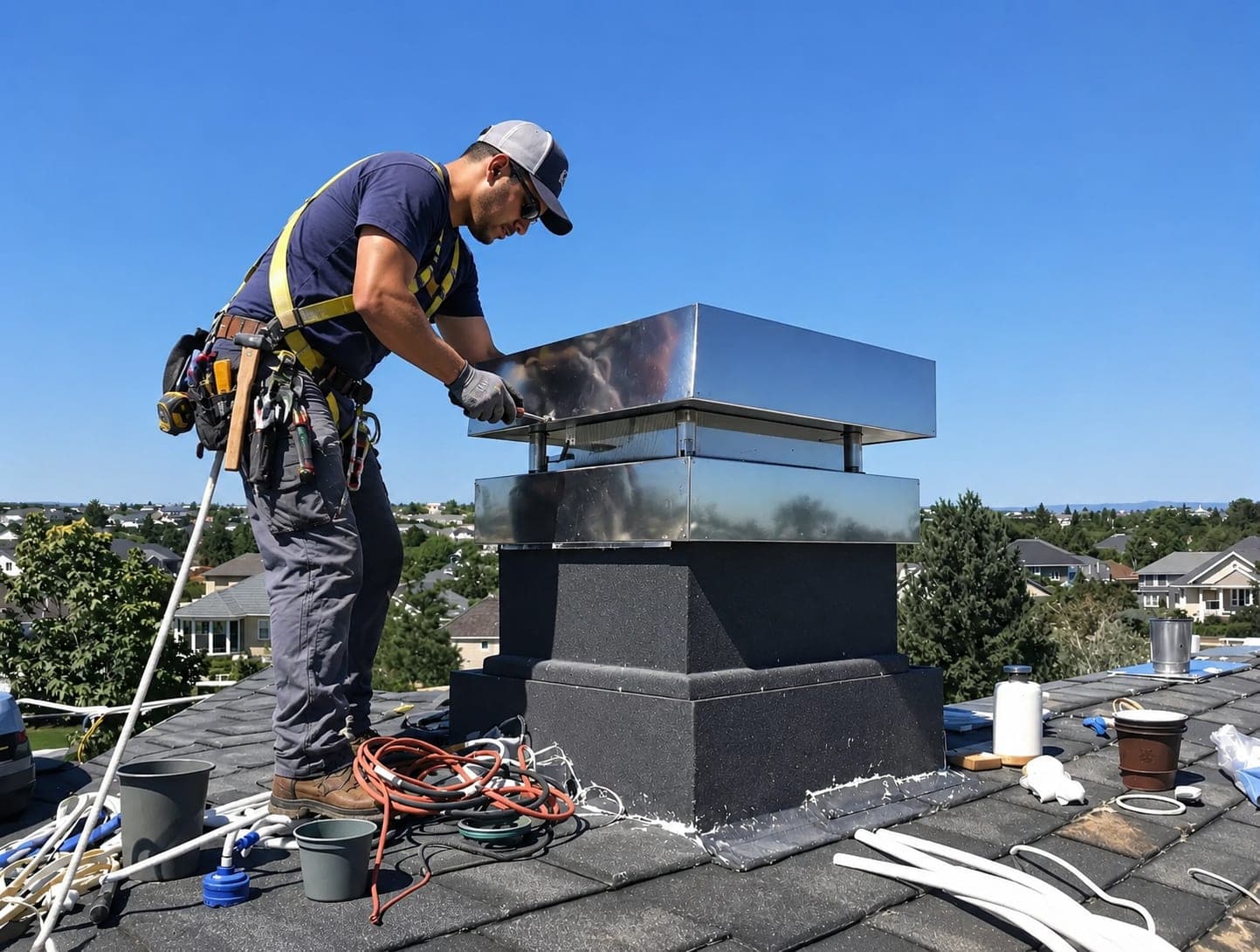
| Single-flue cap | One flue tile or liner | Must clear the flue top so smoke isn't trapped |
| Multi-flue cap | Whole crown with several flues | Covers flues that sit close together |
| Spark arrestor cap | Wood-burning flues | Mesh needs to stay clear of creosote |
| Liner-mounted cap | Relined flues | Sized to the liner, not the old tile |
| Prefab termination cap | Factory-built chimneys | Must match the chimney system's listing |
If your chimney was recently relined, the cap usually has to change too. Our guide to liner types explains why.
When a cap needs replacing, not just cleaning
Replace the cap when it's rusted through, the mesh is torn or bent open, the fasteners have loosened, or a storm has knocked it off or tilted it. A cap that clogs with creosote over and over may be the wrong mesh for how you burn. If a cap blew off and animals or debris got in, our Sunday–Friday 24-hour chimney service takes emergency calls.
What happens during the visit
The mesh keeps birds, squirrels and raccoons out and stops embers from leaving the chimney. Without a cap, rain runs straight into the flue and the damper, and rusts or soaks what's below.
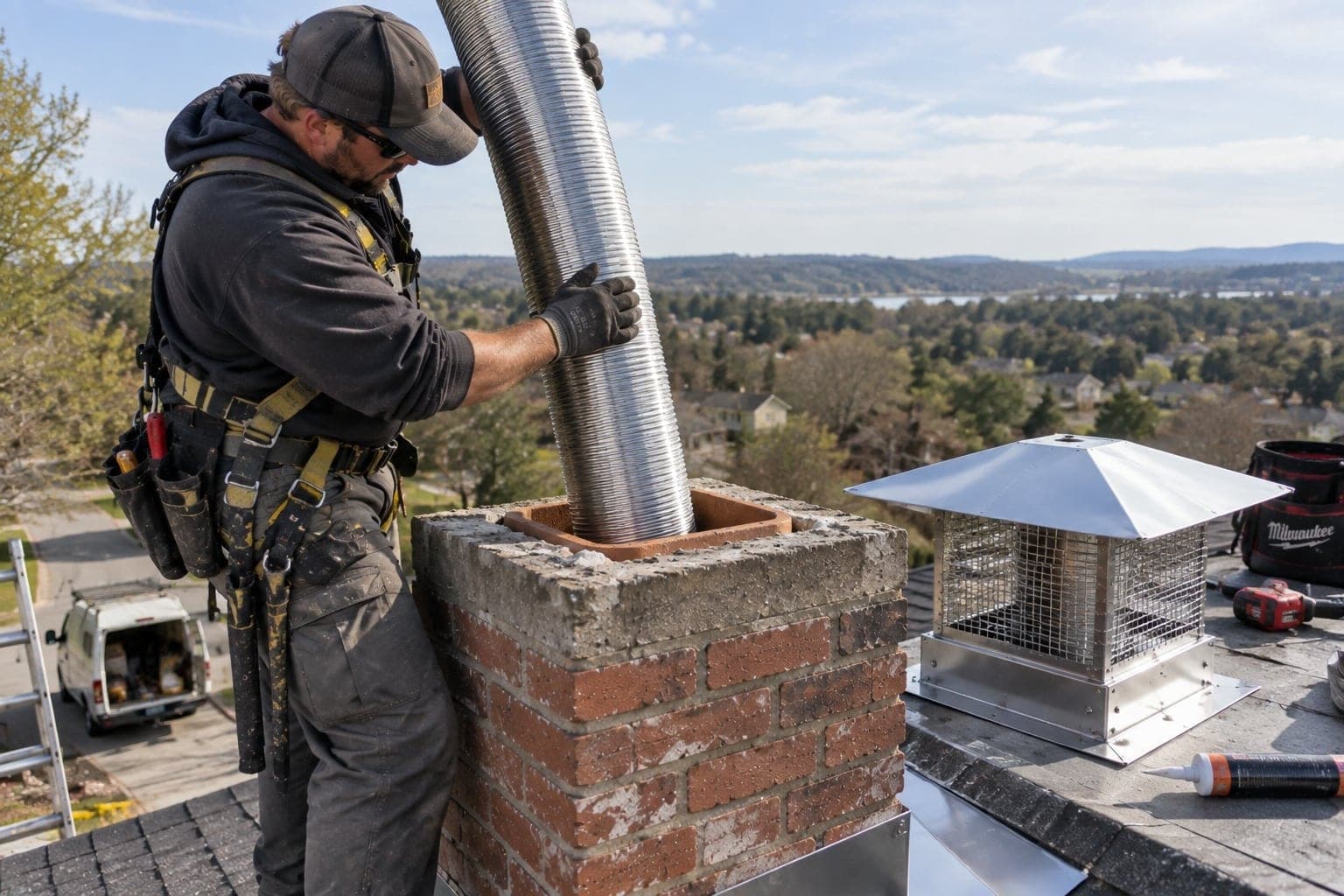
Measure the flue
Flue size, how far the tile sticks up, and whether a single-flue or a full-width cap suits the chimney.
Check the top
The crown and flue tile the cap mounts to, and any damage from water or animals.
Fit and fasten
The cap and mesh are secured to the flue or crown so wind can't lift them.
Confirm
Draft is checked and you see what was installed.
Signs it's time for chimney cap
- Animals or nesting material in the flue
- Rain dripping into the firebox
- A cap that's missing, bent, rusted or leaning
- Rust stains running down the chimney
Getting ready for the visit
- Make sure the roof can be reached from the driveway or yard.
- Note any animal sounds or debris in the firebox.
- Keep the fireplace unused the day of the visit.
Stay off the roof
Looking from the ground or with binoculars is safe. Climbing a steep or wet roof to reach a chimney is not — leave that to someone with the right equipment.
What gets checked
- Rust or corrosion
- Crown under the cap
- Mesh size and condition
- Flue size and tile condition
- Clearance between the hood and the flue
- Fasteners and mounting