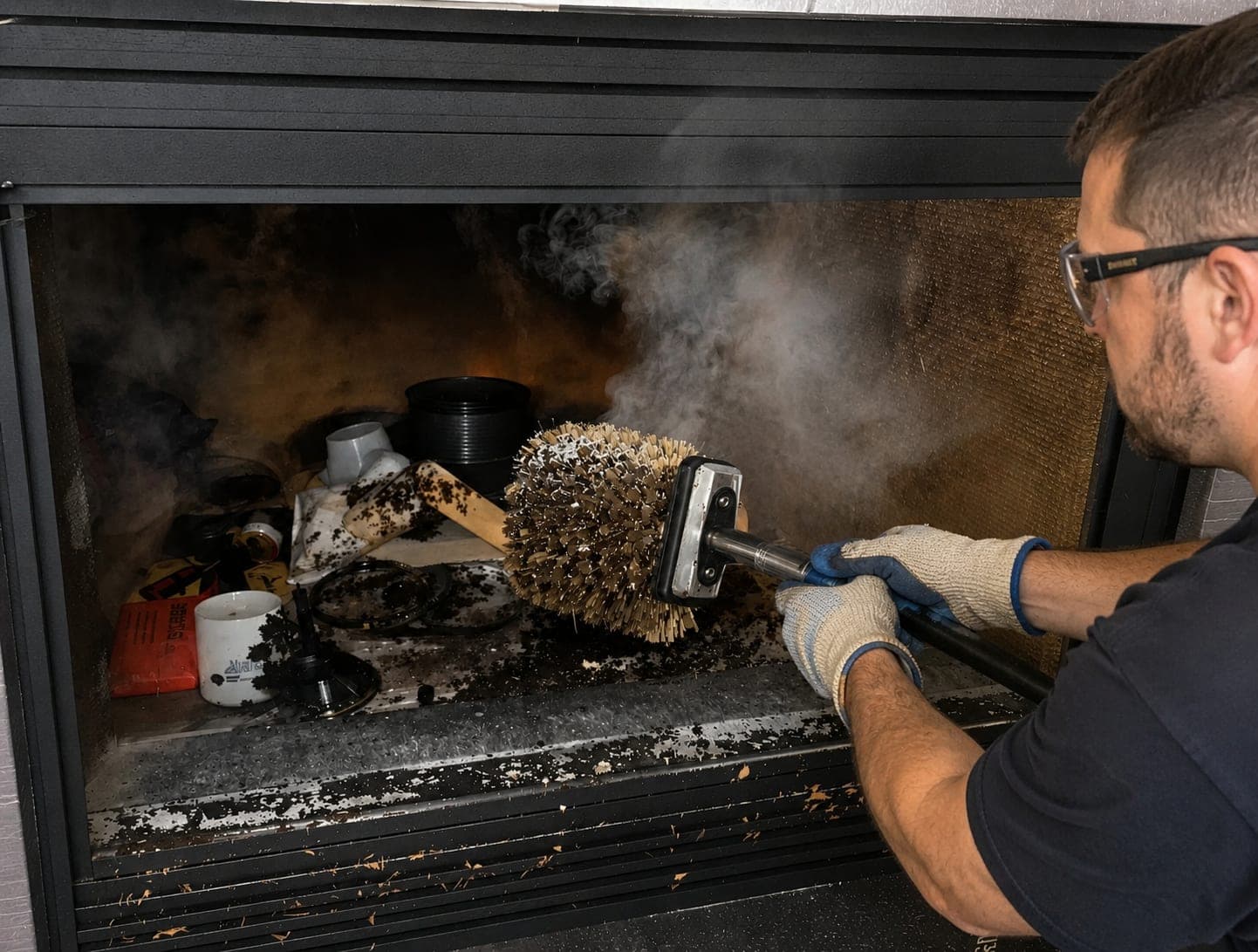
Creosote accumulation: why some chimneys build up faster
Every wood fire leaves some residue. How fast it builds up depends on conditions inside the flue:
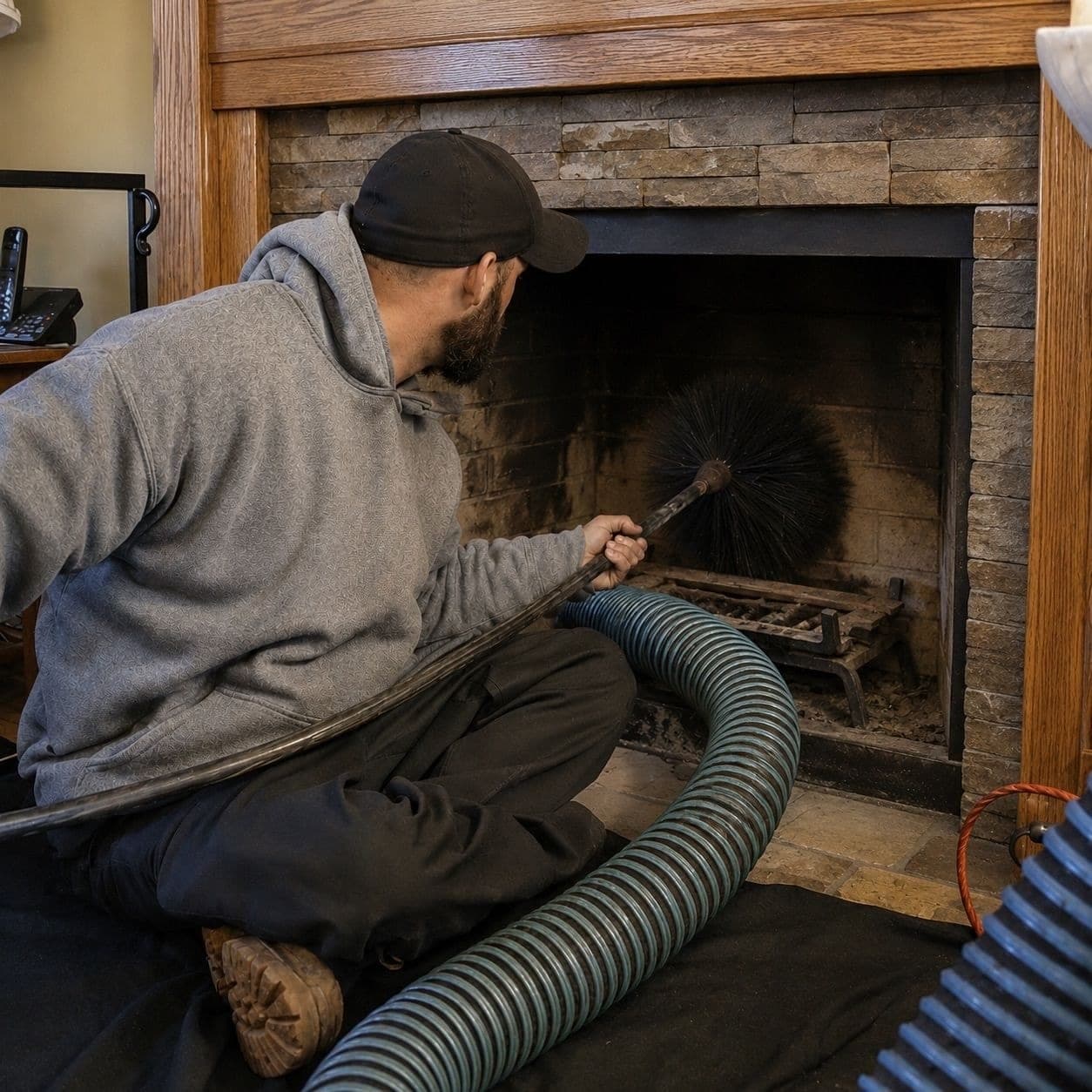
- Cool flue temperatures: exterior chimneys, oversized flues and short fires let smoke condense before it escapes
- Restricted airflow: a partly closed damper, a stove air control turned too low, or a blockage near the top slows the smoke down
- Unseasoned wood: moisture in the wood cools the fire and carries more tar up the flue
- Liner mismatches: a liner too big for the appliance, or a stove vented into an unlined masonry chimney, keeps smoke slow and cool
Liner mismatches matter most for wood stoves and inserts. An appliance vented into a flue sized for an open fireplace can build up creosote quickly. More on the mechanics is in what's behind creosote building up.
Signs of creosote accumulation
Visible deposits
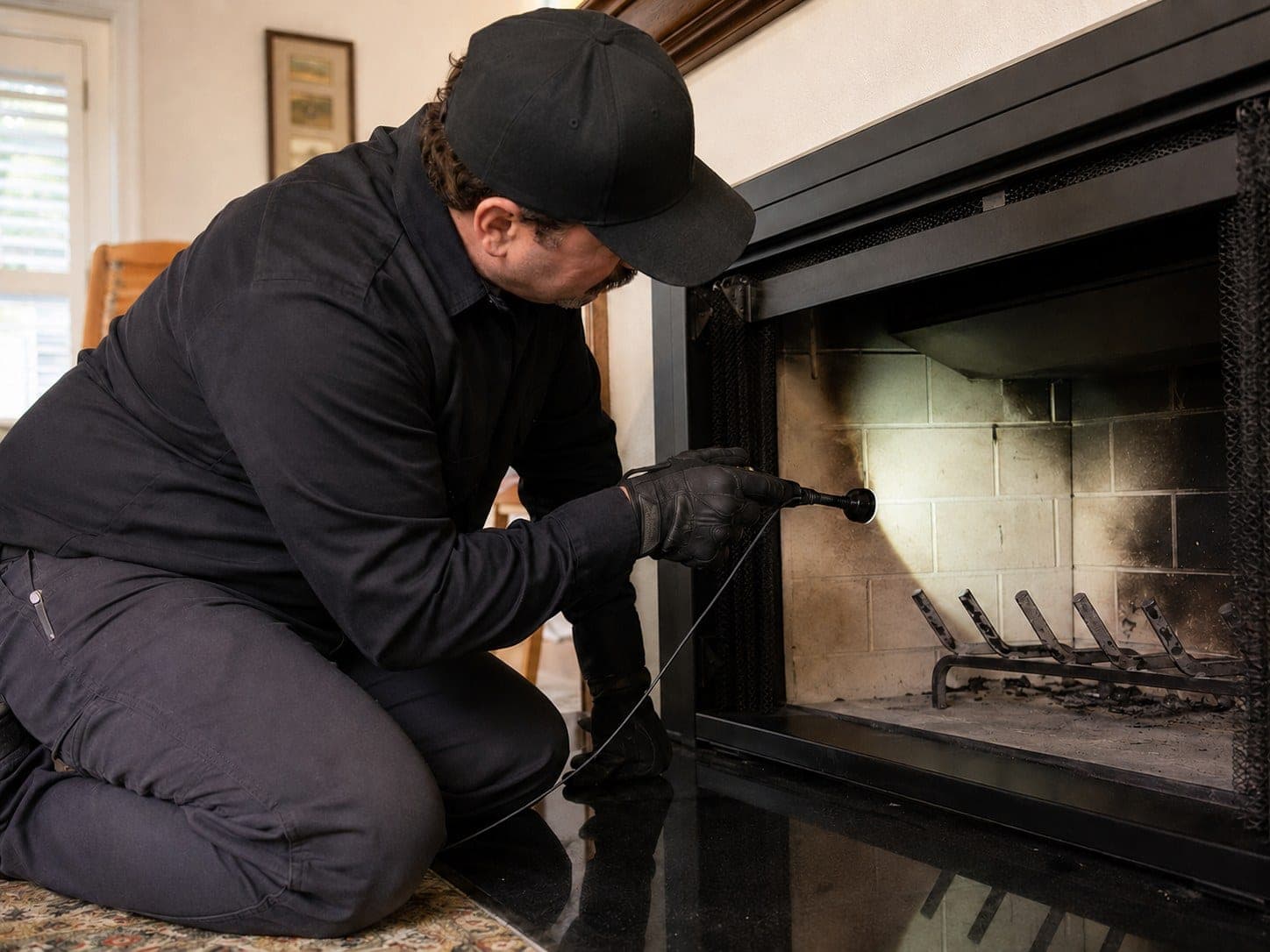
With the fireplace cold, open the damper and shine a flashlight up the flue. Light, dull soot is normal. Crunchy flakes or bubbled, tar-like deposits you can scrape with a fingernail mean the buildup has progressed. A shiny, glassy coating is glazed creosote, which is the hardest form to remove and the most flammable.
Other signs worth noticing
What you notice and what it may mean
01Black flakes in the firebox
- What you may notice
- Crumbly bits falling onto the grate or into the ash
- How it’s confirmed
- A flashlight look at the damper and smoke shelf, plus a camera inspection if the upper flue can't be seen
02Smoky, tar-like smell
- What you may notice
- Odor in the room, often worse in humid weather or when exhaust fans run
- How it’s confirmed
- Inspection of the flue, the damper seal and any signs of water getting in
03Poor draft
- What you may notice
- Smoke rolls into the room, or fires are hard to start and keep going out
- How it’s confirmed
- Checks for a narrowed flue, blockages and cap problems
04Glass that blackens fast
- What you may notice
- Stove or door glass darkens after only a few fires
- How it’s confirmed
- A review of burning habits plus a look at the flue
How to address creosote buildup
If the deposits look shiny, thick or tar-like, stop using the fireplace or stove. Then work through these steps:
- Get the flue inspected so you know the type and depth of the buildup. A camera inspection shows the full height.
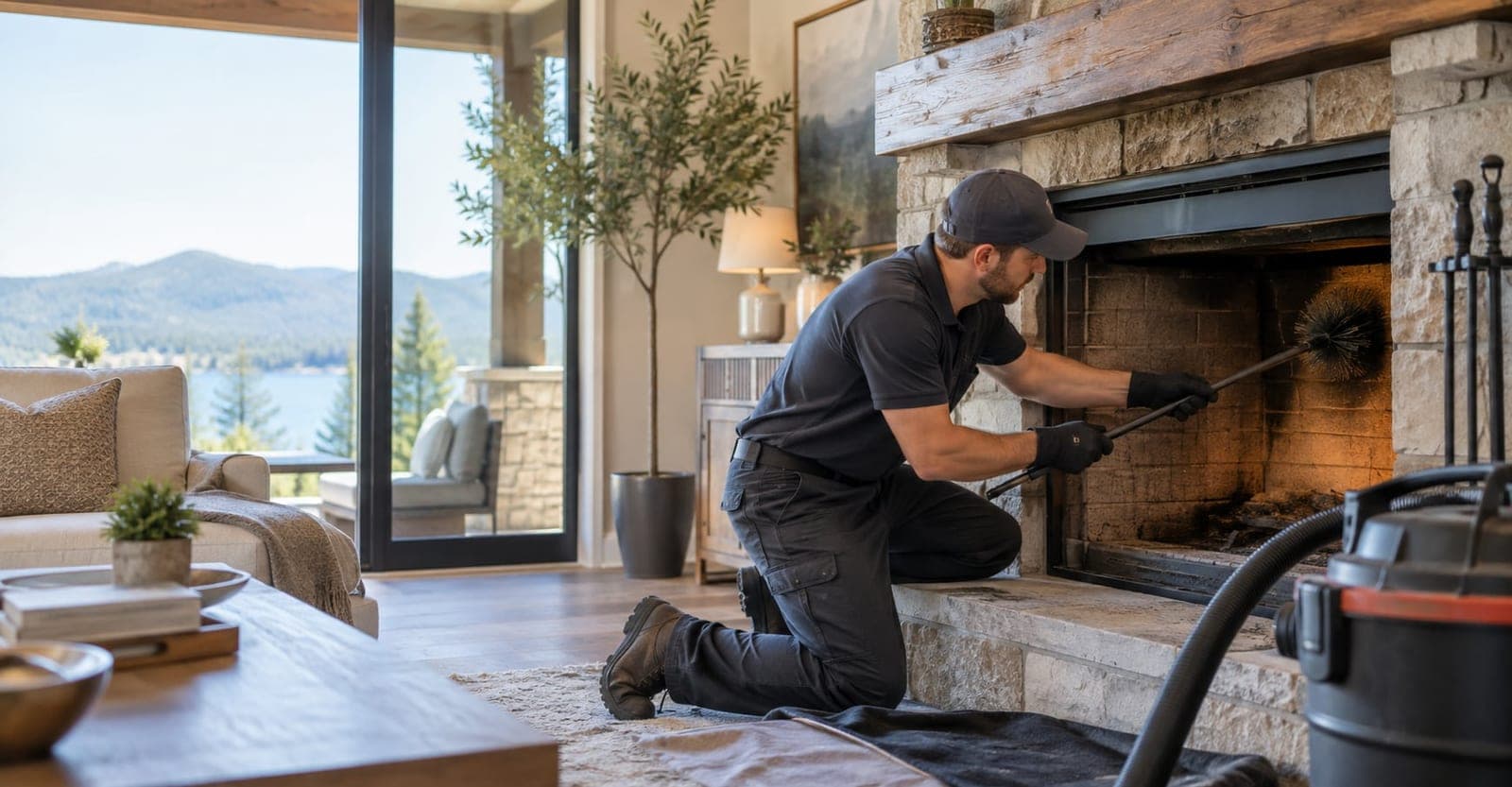
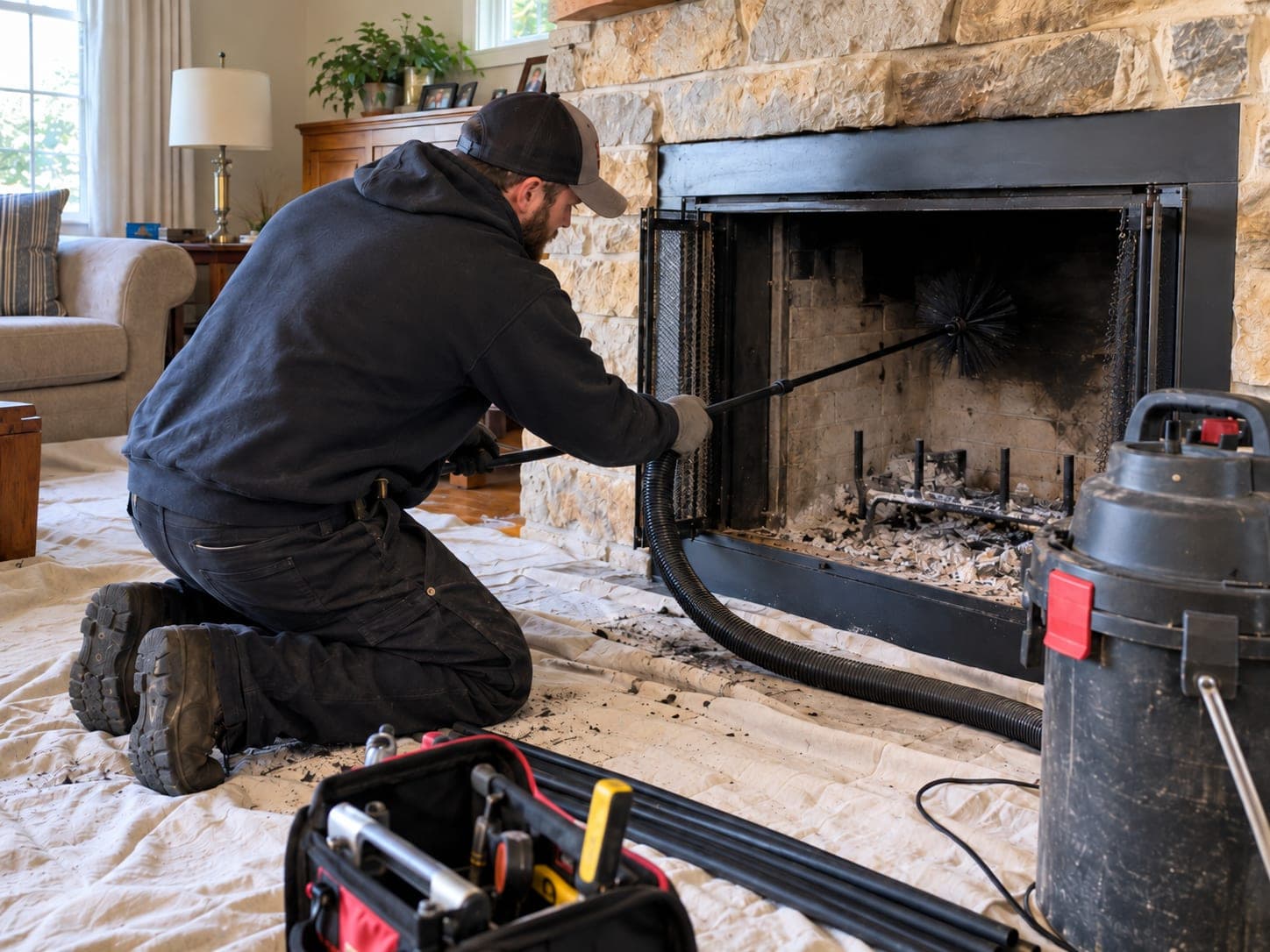
- Have it removed: brushing for soot and flaky deposits, or chemical treatment plus mechanical removal for glaze.
- Fix the cause, whether it's a liner sized wrong for the appliance, a damaged cap or a damper that won't open fully.
- Prevent a repeat with drier fuel, hotter fires and a yearly cleaning if you burn regularly.
We work with homeowners in Hartford and throughout Connecticut. We accept emergency calls, we're available 24 hours, Sunday through Friday, and estimates are free.