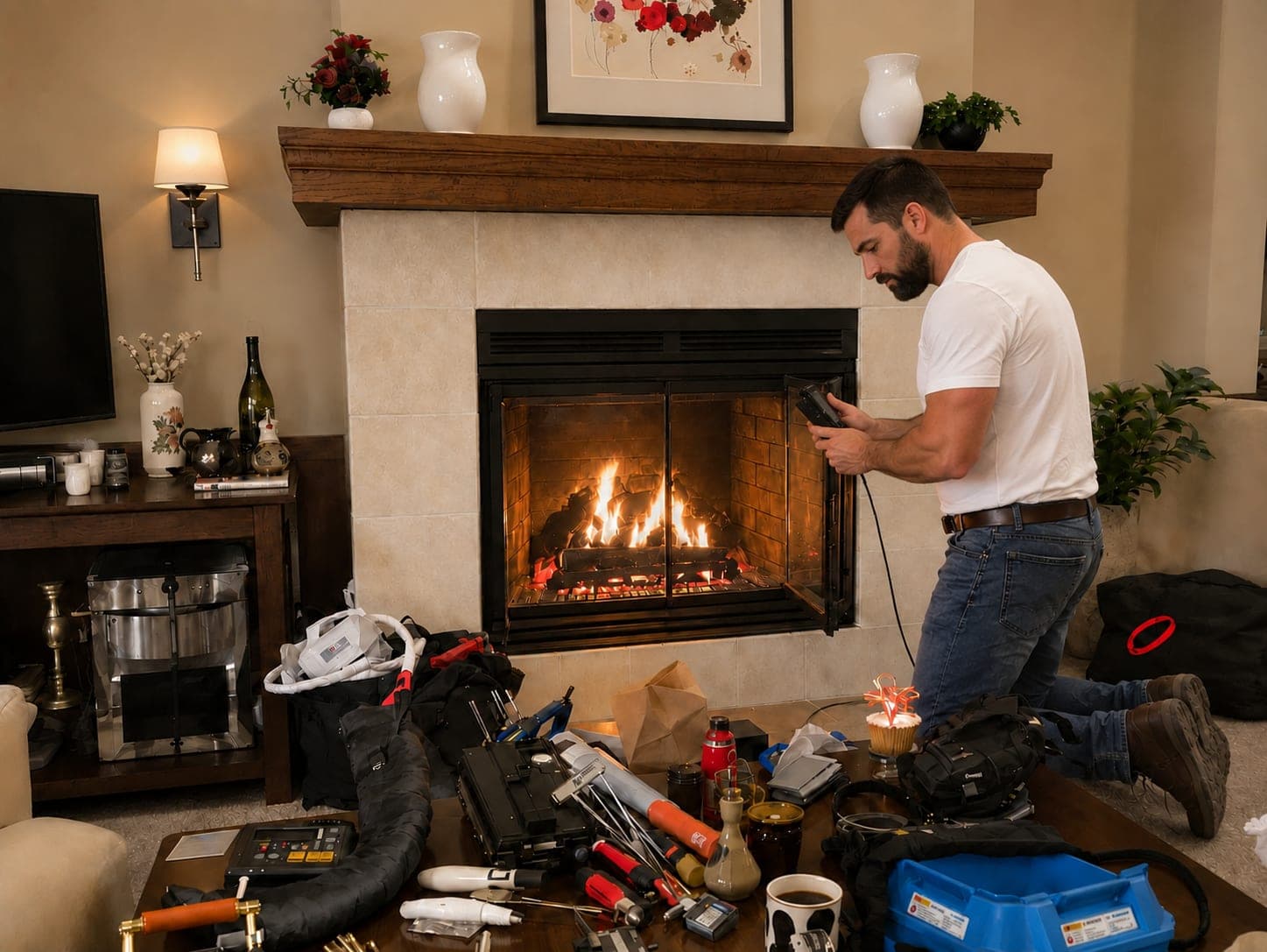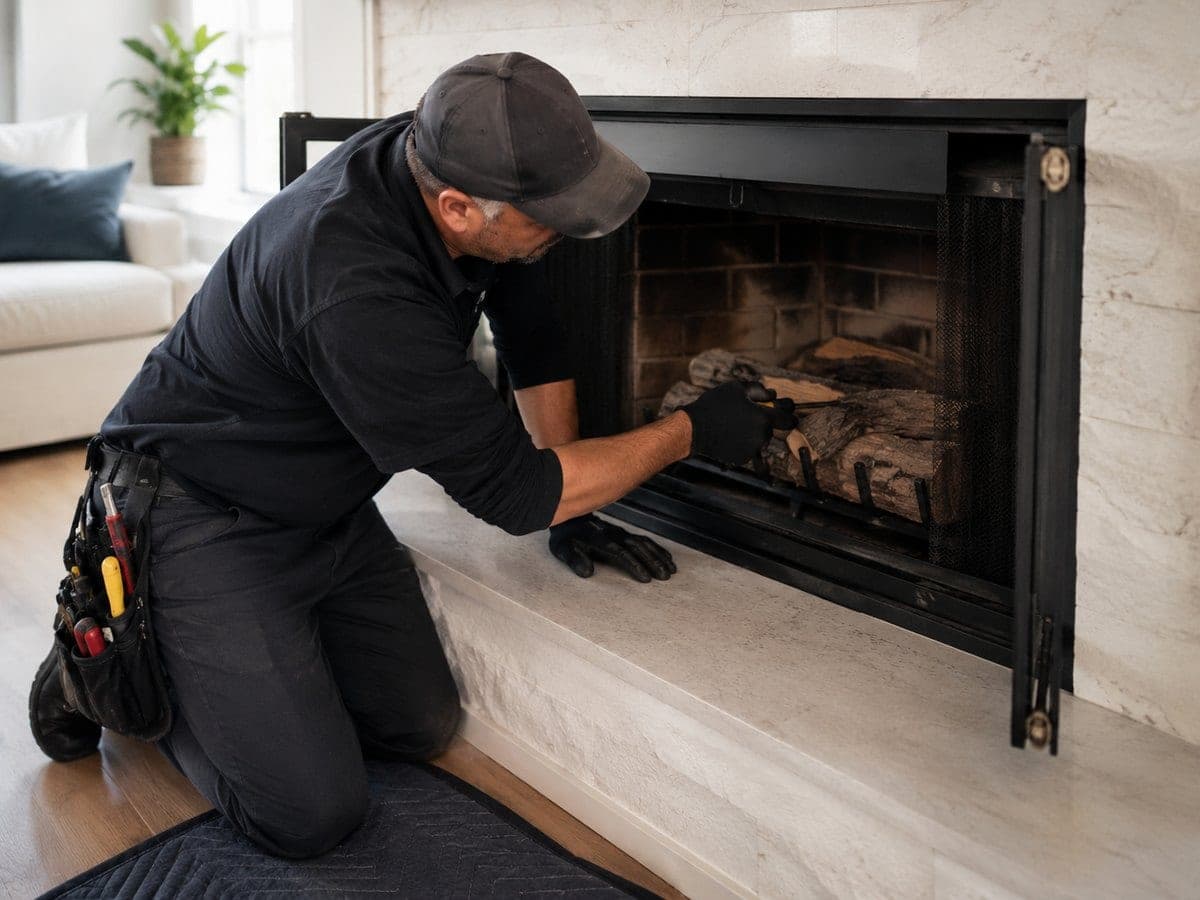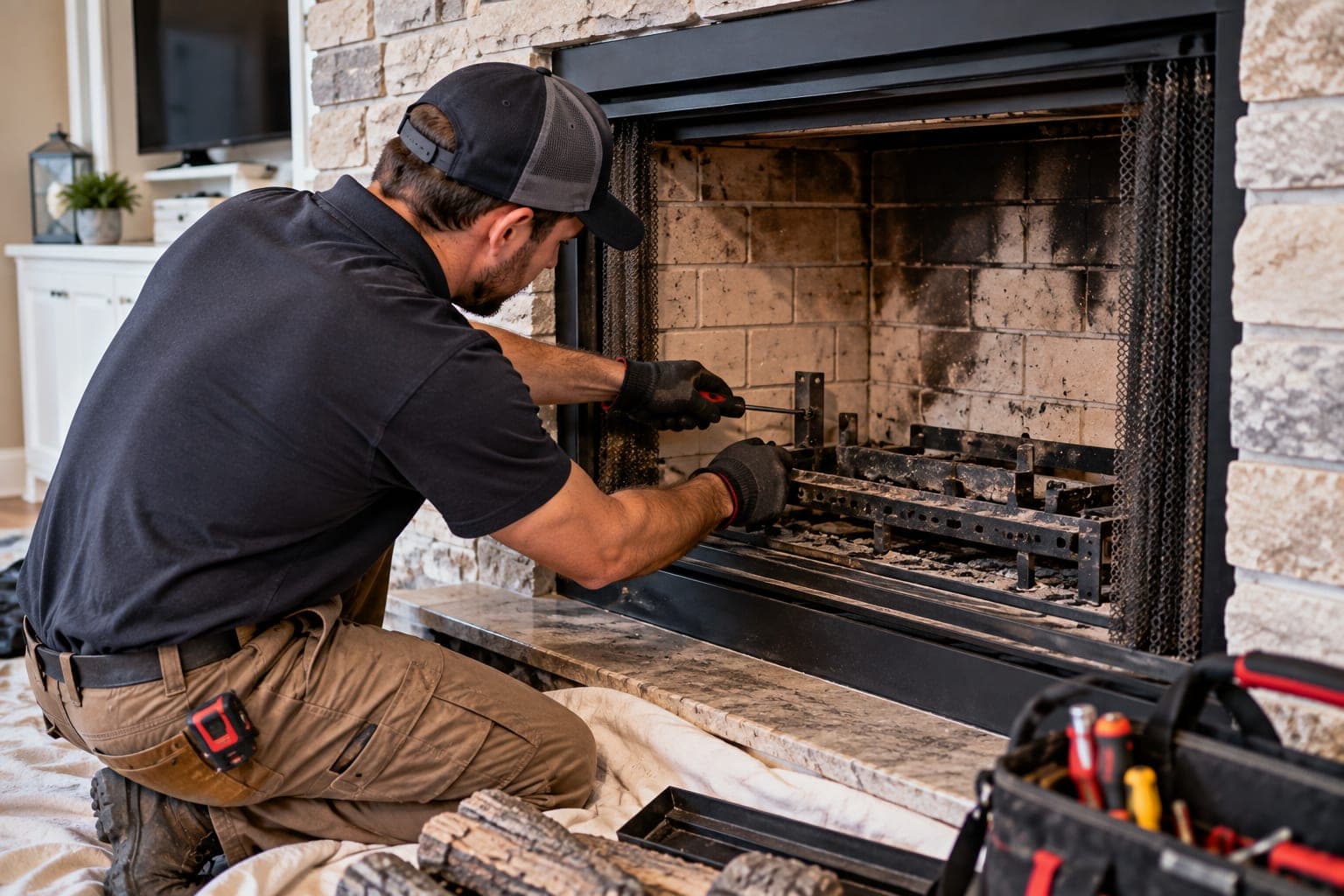
Most homeowners see only the opening, the mantel and maybe the glass doors. The parts that matter most for safety sit behind the brick and above the damper. This guide to fireplace anatomy follows the path smoke takes, from the floor of the firebox to the top of the chimney, and explains what each component does, what it is usually made of and how it tends to fail.
Anatomy of a fireplace: What's inside
A traditional masonry fireplace has three zones: the fireplace itself (where the fire burns), the transition (where smoke is gathered and funneled), and the chimney (which carries exhaust outside and shields the house from heat and weather). Factory-built units, inserts and stoves follow the same logic with different materials.

The hearth
The hearth is the noncombustible floor of the fireplace. The inner hearth is the floor of the firebox, where the fire sits. The hearth extension projects into the room to catch sparks and rolling embers before they reach flooring or rugs. Building codes set minimum sizes for hearth extensions, so if you are remodeling around a fireplace, ask your installer to confirm the requirements before changing flooring.
The firebox
The firebox is the chamber that holds the fire. In masonry fireplaces it is lined with firebrick set in heat-resistant refractory mortar, because ordinary brick and mortar break down under repeated high heat. Factory-built fireplaces use refractory panels instead. Hairline cracks, missing mortar joints and spalling (flaking brick faces) are the common warning signs. Have any firebox crack checked before you keep burning. Our page on what causes cracked fireplace brick covers when a crack is cosmetic and when it lets heat reach framing behind the wall.
The lintel, surround and mantel
The lintel is the steel angle or masonry span across the top of the opening that carries the weight of the brick above. The surround is the decorative face around the opening, and the mantel is the shelf above it. These are mostly about looks and structure, but a sagging lintel or a mantel set too close to the opening is a safety concern, not just a cosmetic one.
The damper and throat
Just above the firebox, the opening narrows into the throat, where most older fireplaces have a cast-iron throat damper. Open, it lets smoke rise; closed, it keeps conditioned air from escaping and outside air from dropping in. Some homes have a top-sealing damper at the chimney top instead, which seals tighter and doubles as a rain cover. A warped plate, a rusted hinge or a handle that will not latch are the usual failures.
The smoke shelf and smoke chamber
Behind and above the damper sits the smoke shelf, a flat ledge that helps turn back downdrafts and catches debris falling down the chimney. Above it, the smoke chamber is the funnel-shaped space that gathers smoke from the wide firebox and squeezes it into the narrower flue. Its walls should be smooth, ideally coated with a heat-resistant parge. Stepped, rough brick here slows the draft and collects creosote. A deteriorated chamber often shows up as smoke rolling into the room; see signs of a broken fireplace smoke chamber for what to look for.
The flue and flue liner
The flue is the passage that carries smoke and gases up and out. In most masonry chimneys it is lined with clay tiles, a stainless steel liner, or a poured cast-in-place liner. The liner protects the surrounding brick and wood framing from heat and corrosive combustion byproducts, and its size has a direct effect on draft. Cracked tiles, gaps between tiles and heavy creosote buildup are the main concerns, and most of them can only be seen with a camera inspection.
The chimney exterior: crown, cap, spark arrestor and flashing
- Crown: the sloped concrete or mortar slab that seals the top of a masonry chimney and sheds water away from the flue. Cracks let water into the brick.
- Chimney cap: a metal hood over the flue that keeps out rain, leaves and animals.
- Spark arrestor: the mesh screen on the cap that stops embers from landing on the roof.
- Flashing: the metal strips that seal the joint where the chimney meets the roof. Failed flashing is one of the most common sources of leaks around a fireplace.
- Chase and chase cover: factory-built fireplaces often run their flue inside a framed, sided box called a chase, topped by a metal chase cover that plays the same role as a crown.
Ash dump and cleanout door
Some masonry fireplaces have an ash dump, a small hinged door in the inner hearth that drops ashes into an ash pit below. A metal cleanout door in the basement or on the outside wall gives access for removal. Never assume ashes in the pit are cold; embers can stay live for days.
| Part | Job | Typical warning signs |
|---|---|---|
| Hearth | Protects the floor from embers and heat | Cracked tiles or stone, loose hearth extension |
| Firebox | Contains the fire | Cracked firebrick, open mortar joints, spalling |
| Damper | Opens for smoke, seals when not in use | Sticks, won't close, drafts or rust flakes |
| Smoke chamber | Funnels smoke into the flue | Smoke spilling into the room, crumbling brick |
| Flue liner | Carries exhaust safely and protects the structure | Tile fragments in the firebox, poor draft, strong odor |
| Crown | Seals the chimney top from water | Cracks, crumbling edges, water stains below |
| Cap and spark arrestor | Blocks rain, animals and embers | Missing, rusted or bent mesh, nesting sounds |
| Flashing | Seals chimney-to-roof joint | Ceiling stains or damp walls near the chimney |
Get to know the anatomy of your fireplace
Not every fireplace looks like the masonry layout above. Before you can judge what you see, it helps to know which type you have. The comparison below covers the main differences.
| Feature | Masonry fireplace | Factory-built (prefab) fireplace |
|---|---|---|
| Firebox lining | Firebrick in refractory mortar | Refractory panels in a metal box |
| Flue | Clay tile, stainless or cast-in-place liner | Manufactured metal pipe listed with the unit |
| Top of chimney | Masonry crown plus cap | Metal chase cover plus cap |
| Repairs | Masonry and mortar work | Parts must match the manufacturer's listing |
| Clues to identify it | Brick or stone firebox, often a cast-iron damper | Metal edges around the opening, panels with a pattern, a data plate |
Firebox lining
- Masonry fireplace
- Firebrick in refractory mortar
- Factory-built (prefab) fireplace
- Refractory panels in a metal box
Flue
- Masonry fireplace
- Clay tile, stainless or cast-in-place liner
- Factory-built (prefab) fireplace
- Manufactured metal pipe listed with the unit
Top of chimney
- Masonry fireplace
- Masonry crown plus cap
- Factory-built (prefab) fireplace
- Metal chase cover plus cap
Repairs
- Masonry fireplace
- Masonry and mortar work
- Factory-built (prefab) fireplace
- Parts must match the manufacturer's listing
Clues to identify it
- Masonry fireplace
- Brick or stone firebox, often a cast-iron damper
- Factory-built (prefab) fireplace
- Metal edges around the opening, panels with a pattern, a data plate
Fireplace inserts and wood stoves are freestanding appliances, either set inside an existing firebox or on their own hearth pad, vented through a dedicated liner or connector pipe. Their key parts include the firebox, baffle, door gasket and glass. Brands like wood build their own components, so it helps to work with someone familiar with them; our wood fireplace and stove repair serviceexplains what is typically checked.
Gas fireplaces replace logs with a burner, gas valve, pilot assembly and ignition components, and vent through a sealed or natural-draft system. Electric fireplaces have no flue at all: a heating element, fan and flame-effect display are the whole system. If you are weighing an electric unit for a room with no chimney, read about installing an electric fireplace.
What you can check yourself (fire out, firebox cold)
- Look at the firebrick or panels with a flashlight for cracks, gaps or missing pieces.
- Open and close the damper; it should move freely and seal fully.
- Look for black, flaky or glazed deposits on the damper and smoke shelf area.
- Check for bits of clay tile or masonry in the firebox, which can mean a damaged liner.
- From the ground, look at the chimney top for a cap and an intact crown.
- Inspect ceilings and walls near the chimney for water stains.
- On a factory-built unit, find the data plate so a technician can identify the model.
Leave the flue and roof to a professional
Most of the important parts of fireplace anatomy, especially the smoke chamber and flue liner, cannot be judged from the firebox. Climbing on a roof or reaching up a flue is risky, and a camera inspection shows damage that is invisible from below.
Common symptoms and the part usually involved
01Smoke spills into the room
- What you may notice
- Smoke curls out the top of the opening, especially at startup
- How it’s confirmed
- Damper operation, smoke chamber surfaces and flue condition are inspected
02Cracks inside the firebox
- What you may notice
- Visible cracks, loose bricks or crumbling joints
- How it’s confirmed
- Firebrick and mortar are examined for depth and whether heat can pass through
03Electric unit won't heat or display flames
- What you may notice
- Fan runs without heat, flicker effect dark, unit cycles off
- How it’s confirmed
- Power supply, controls, heating element and fan are tested
Knowing the parts also helps you burn better. Dry wood, an open damper and a clean flue make a real difference in how much heat stays in the room; our guide to an efficient fireplace covers the habits that matter. For screens, clearances and ash handling, see our fireplace safety guide.
If something in your fireplace doesn't look right, get in touch to request a free estimate and have the system checked from hearth to cap.