Smoky fireplace issues: when the smoke escapes
When the smoke shows up tells you more than how much of it there is. Watch the timing and conditions the next few times you light a fire. Each pattern points to a different part of the system.
- Only in the first few minutes. The flue is full of cold, heavy air that has to be pushed out before warm gases can rise. This is common with tall exterior chimneys and on very cold days.
- After the fire is well established. The chimney is warm by then, so something is restricting the flow. Likely culprits are creosote narrowing the flue, nesting material, fallen mortar, or a damper that isn't opening all the way.
- When a range hood, dryer or bath fan is running. The house is short on air and pulls it down the chimney, and the smoke comes with it.
- Only on windy days. Wind is pushing down the top of the chimney or swirling off a nearby roofline.
- With hissing logs and little flame. The firewood is wet or unseasoned, and it makes more smoke than any chimney handles well.
Not sure where the damper, smoke shelf and smoke chamber sit relative to each other? Our guide to fireplace anatomy is a quick way to get oriented.
Fixing a smoky fireplace
Start with a few free checks: - Make sure the damper handle is all the way open. - Burn split wood that has dried for a season. - Crack a window near the fireplace for the first ten minutes of a fire. If the smoke stops when the window is open, the problem is the air supply in the house, not the chimney. A smaller, hotter fire built toward the back of the firebox also warms the flue faster.
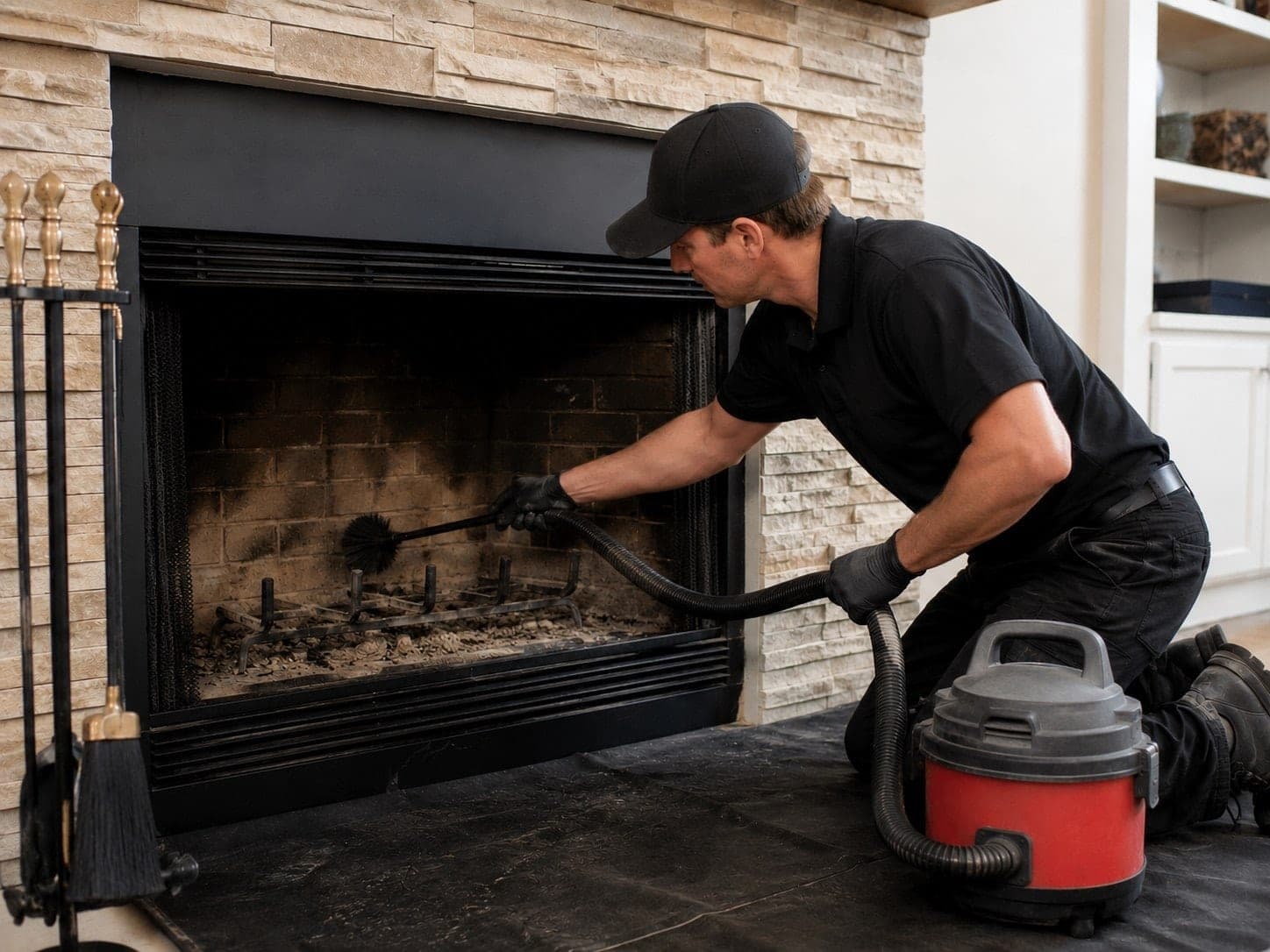
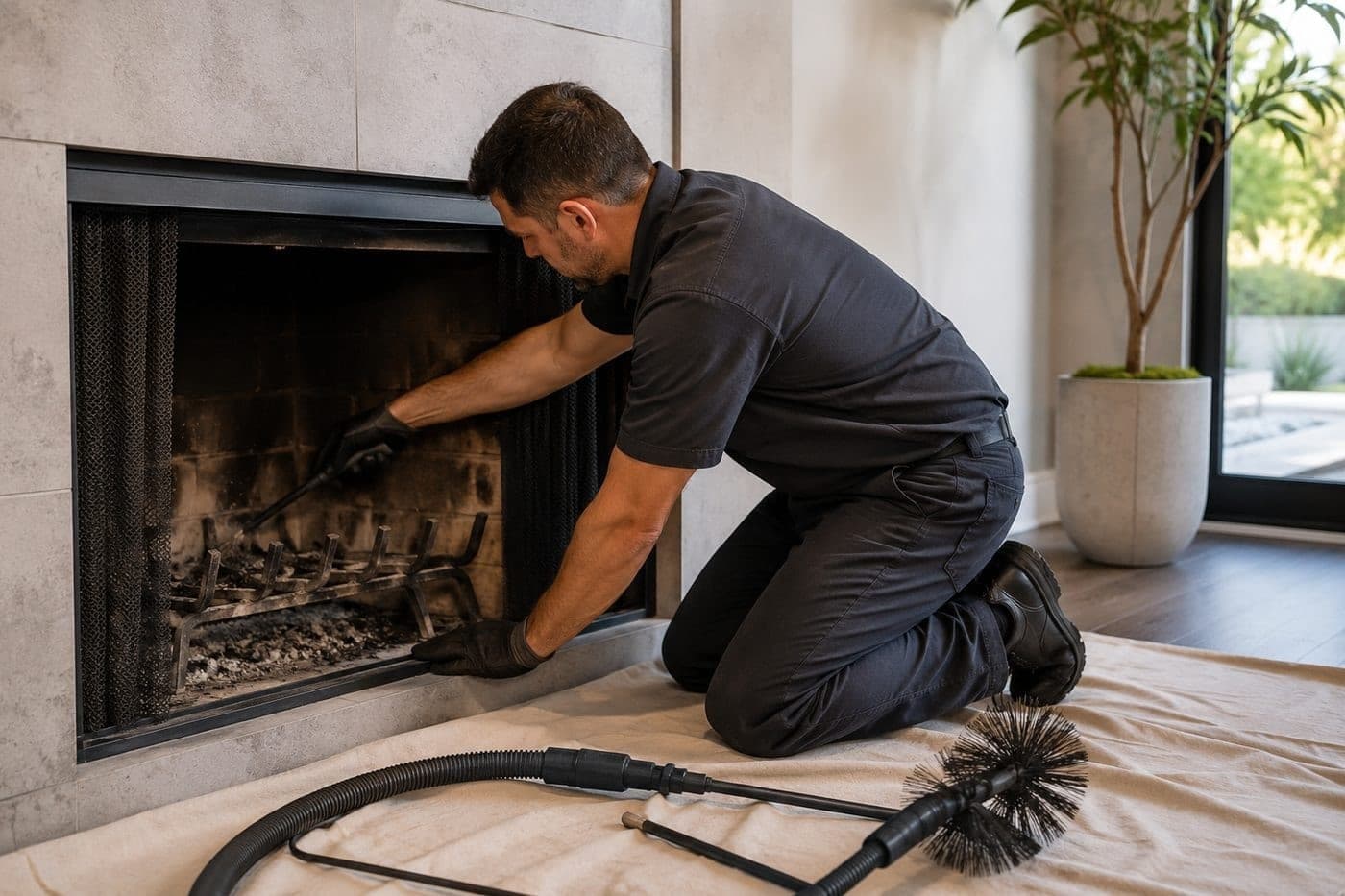
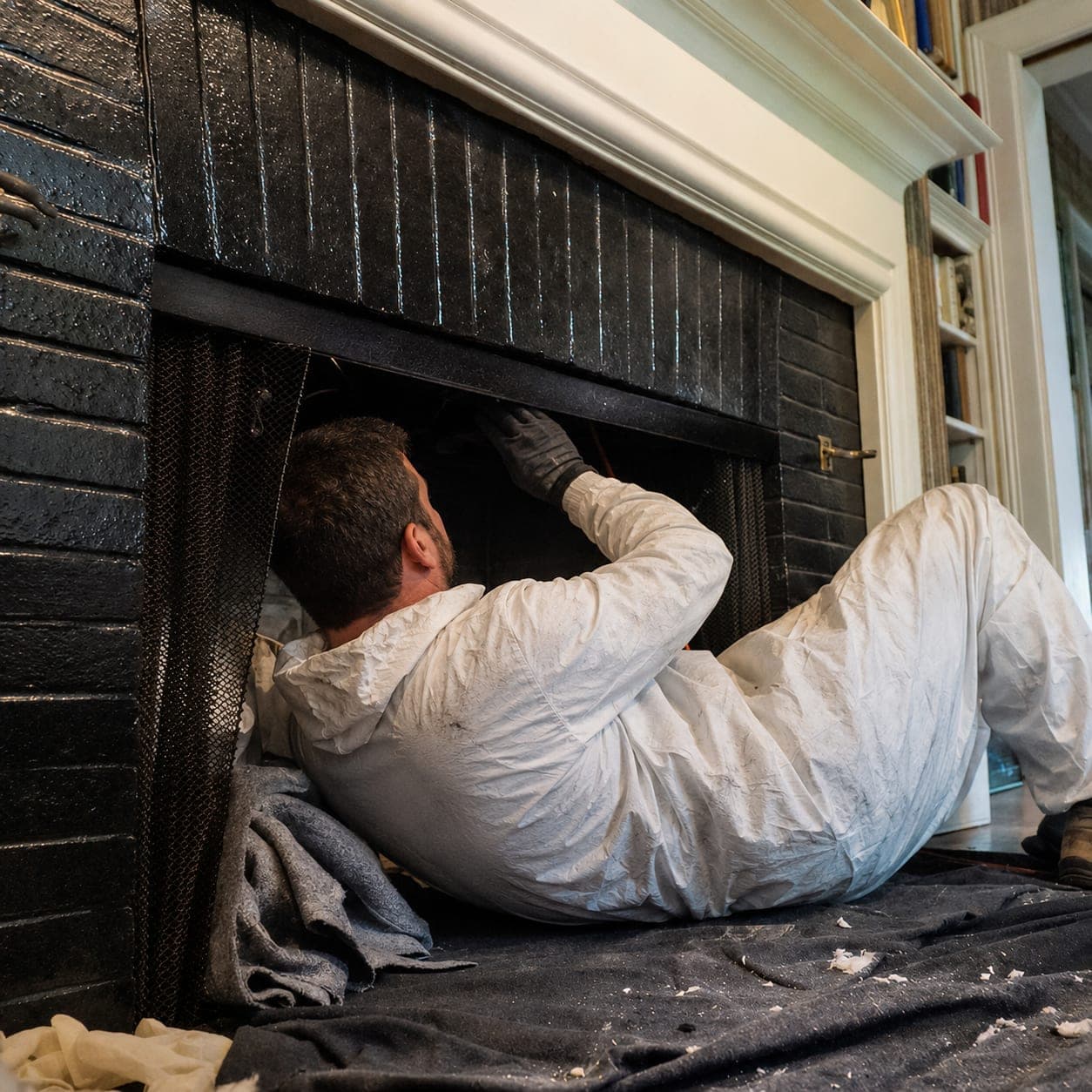
If those steps don't settle it, the flue needs a closer look. A professional cleaning of your wood-burning fireplace removes the creosote and debris that choke airflow. It also gives a clear view of the damper, smoke chamber and flue. From there, the fix depends on what turns up:
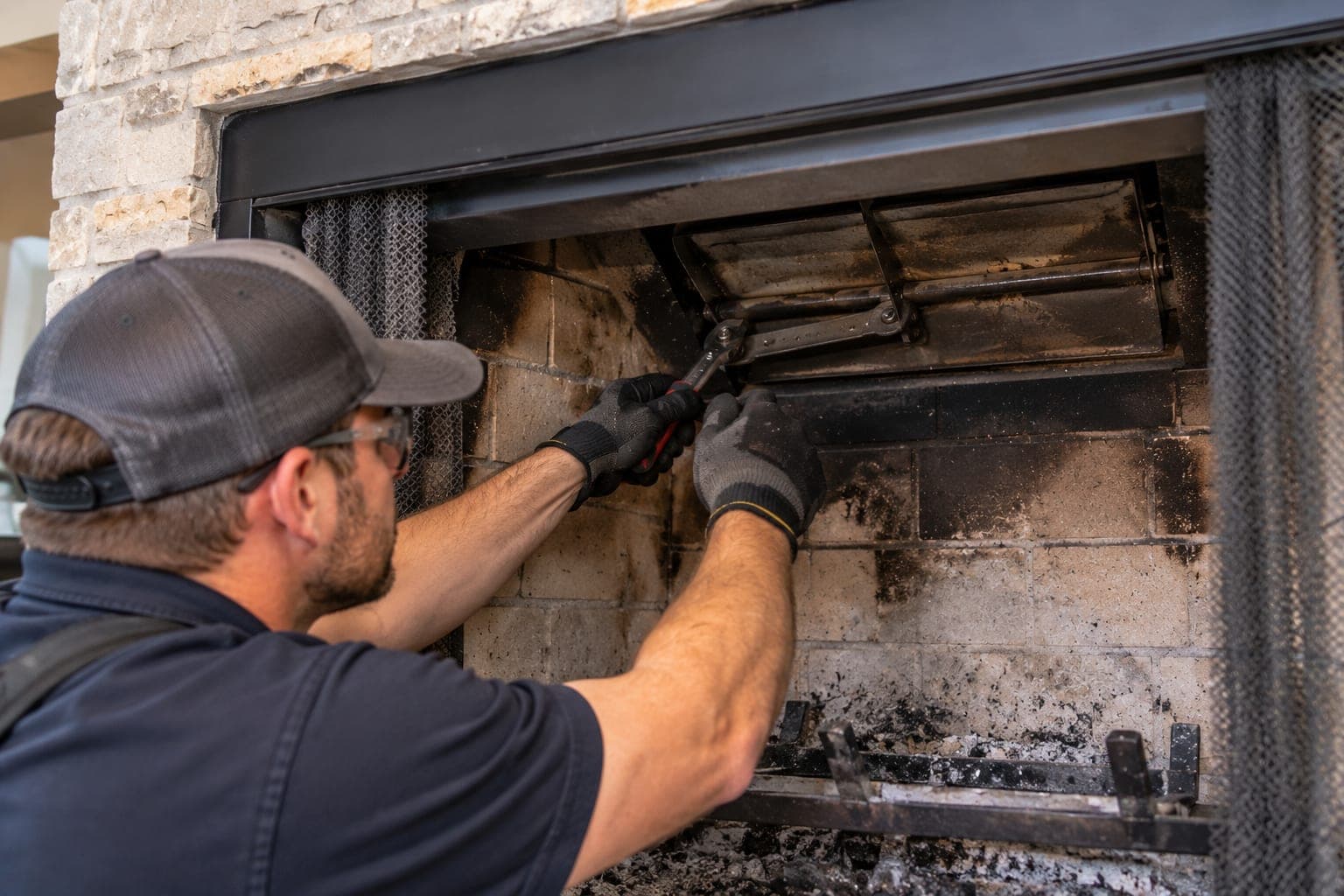
- Damper repair when the plate is warped, rusted or binding
- Blockage or nest removal when something is sitting in the flue
- Smoke chamber repair when rough or crumbling surfaces disrupt airflow
- A chimney cap where wind is forcing smoke back down
- Draft repair or fireplace doors when the opening is too large for the flue
For more on specific repairs, see what goes into smoky fireplace repair and practical fixes for a fireplace that keeps smoking. If you've decided wood fires aren't worth the hassle, a electric fireplace installation gives you the look with no flame or flue to manage.
Clearing smoky fireplace odor
The smell of escaped smoke can hang on after the cause is fixed. Soot settles on walls, curtains and upholstery. A flue coated in creosote can also keep releasing a campfire smell on humid days, long after the last fire.
To clean up the room: - Wash hard surfaces near the fireplace. - Launder or air out fabrics. - Change the furnace filter if smoke spread through the house. If the odor comes from the fireplace itself when nothing is burning, deposits in the flue or smoke chamber are the likely source. Chimney odor removal goes after those deposits directly. Air fresheners only cover the smell for a few days.
How a fireplace repair goes
A damaged smoke chamber is a common cause of smoke spilling into the room. Worn gaskets and glass on inserts and gas units waste heat and can leak exhaust.
Find the cause
The firebox, damper, smoke chamber and any doors, glass or panels are checked.
Confirm the type
Masonry or factory-built — the repair has to suit the system.
Explain the fix
You hear the options and what each involves before work starts.
Repair and test
The work is done and the fireplace is checked before you use it.
When to book wood-burning fireplace repair
- A damper that won't open or close
- Rust or warping inside the firebox
- Doors or glass that are cracked or don't seal
- A fireplace that is hard to light or won't stay lit
- Smoke coming into the room
Carbon monoxide
A blocked or damaged flue can push carbon monoxide into the home. If an alarm sounds or anyone feels dizzy or sick near the fireplace, get everyone outside and call 911.
Checked on every visit
- Damper operation
- Smoke chamber and smoke shelf
- Hearth and surround
- Firebrick or refractory panels
- Doors, glass and gaskets