On this page
What dryer vent cleaning is and who needs it
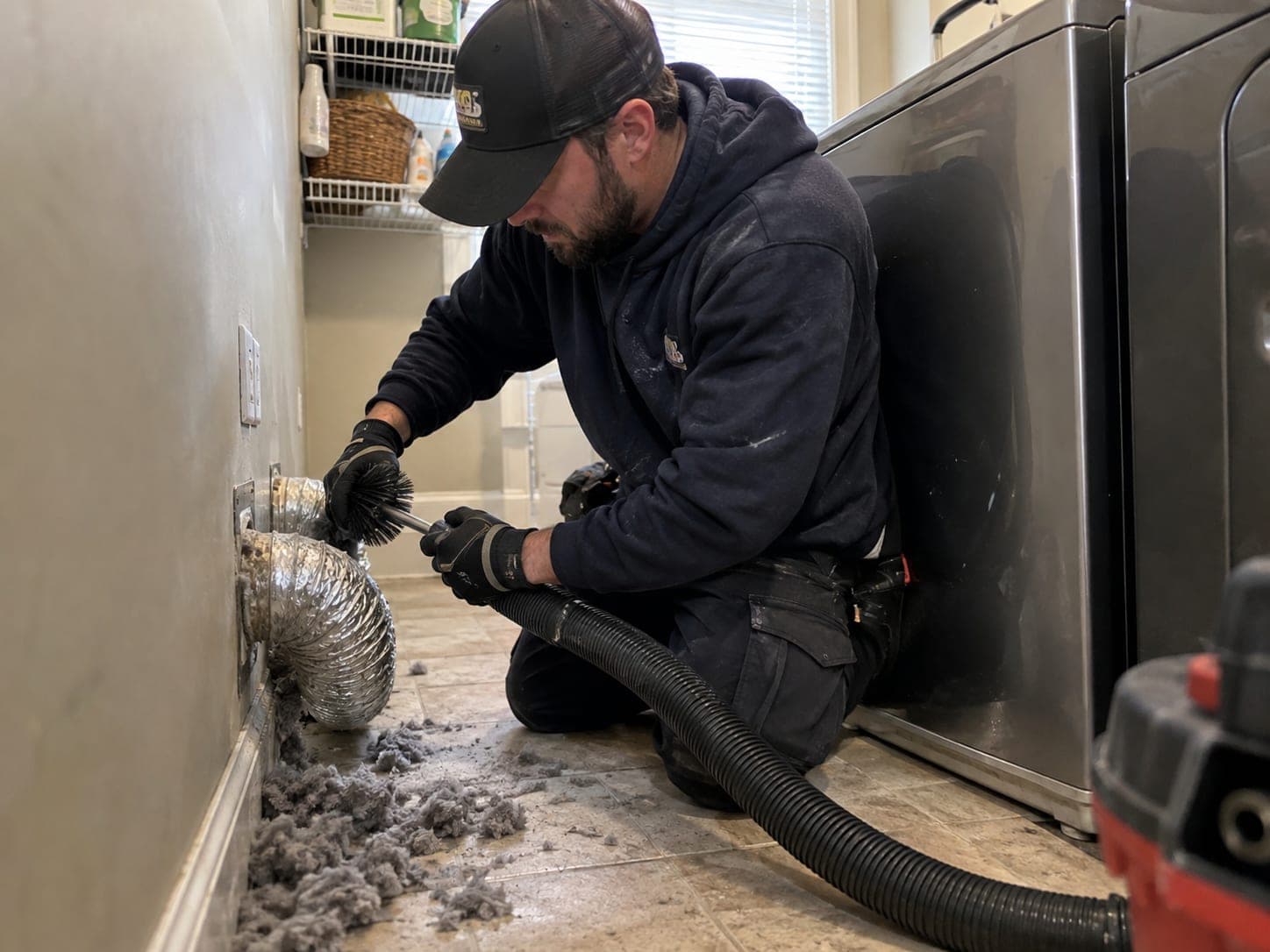
The lint screen in your dryer catches only part of the fiber that comes off your clothes. The rest travels into the transition duct behind the machine and on through the vent pipe to the outside. Over time it packs into bends, sags and the exterior hood, and the dryer has to push against a partly blocked pipe. Dryer vent cleaning removes that buildup along the whole length of the duct, not just the parts you can reach by hand.
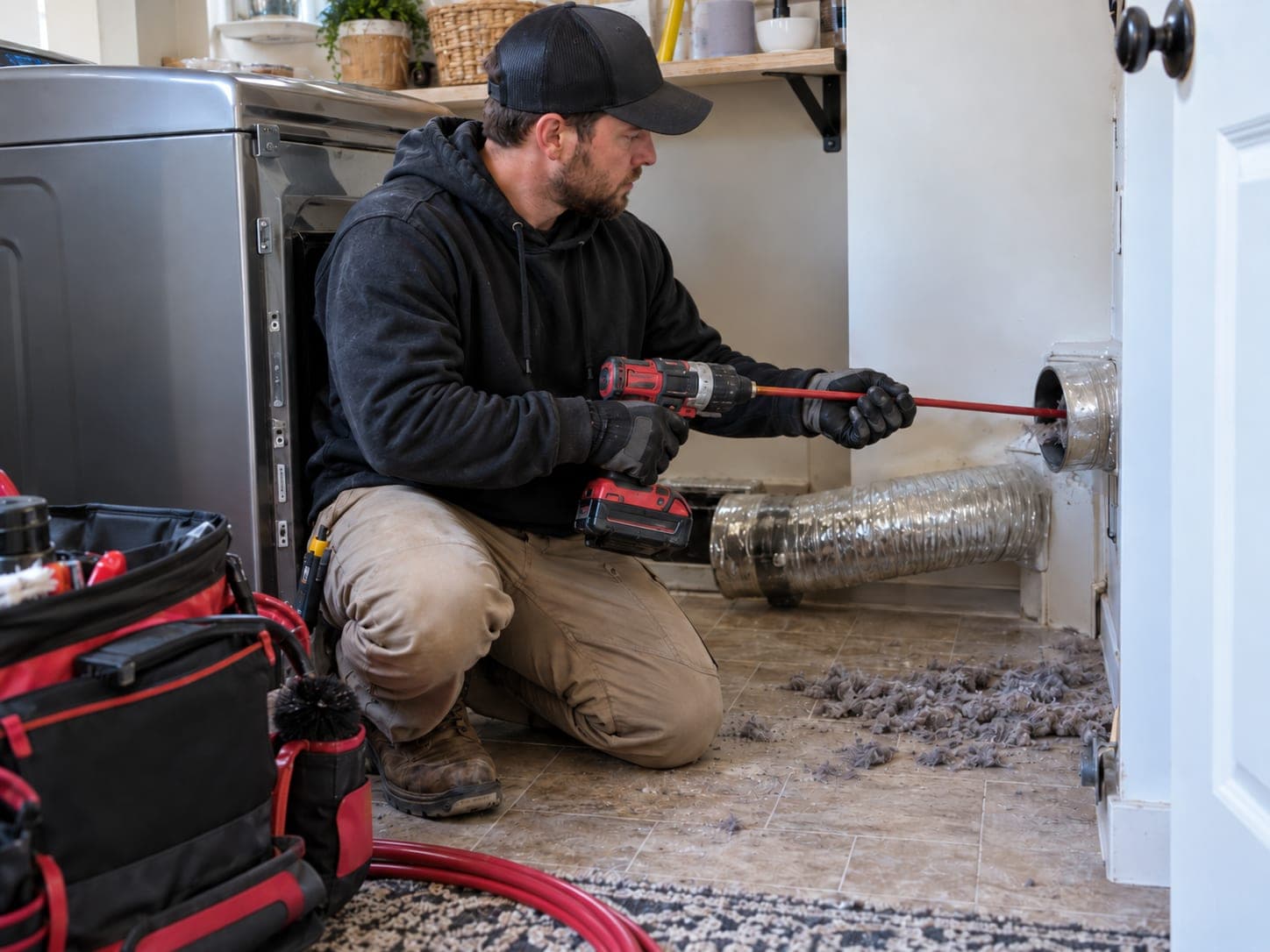
Almost every household with a vented dryer benefits from regular cleaning. It matters most in homes with long or winding vent runs, vents that exit through the roof, laundry rooms in the middle of the house, and busy households that run several loads a day. Landlords and property managers with several units also tend to schedule it on a routine basis, and larger buildings may fit better under commercial dryer vent cleaning.
Signs your dryer vent needs cleaning
- Clothes are still damp at the end of a normal cycle, or you routinely run a second cycle.
- The top of the dryer or the clothes feel unusually hot.
- A burning or scorched smell when the dryer runs.
- Lint collecting around the door seal, behind the machine or on the floor.
- The exterior vent flap barely opens, or you feel weak airflow outside while the dryer is on.
- Humidity, condensation or a musty smell in the laundry area.
- Bird activity, nesting material or debris at the outside hood.
- The dryer shuts off mid-cycle on its own, which some models do when they overheat.
These symptoms overlap with mechanical problems inside the dryer itself, which is why we test airflow first rather than assuming the vent is the cause. If you also burn wood, many of the same warning patterns apply to a flue; our guide to signs that your chimney needs cleaning covers that side of the house.
What happens during the visit
How a dryer vent cleaning visit works
Talk through the problem
We ask what you have noticed, how often the dryer runs and whether it is gas or electric, then look at where the vent leaves the house.
Measure airflow
With the dryer running, we check airflow at the exterior hood so there is a baseline to compare against after cleaning.
Disconnect and inspect
The dryer is pulled out and the transition duct is disconnected. We look at the duct material, the connections and any crushed or kinked sections.
Clean the full run
Rotary brushes and air pressure loosen lint from the duct walls and push it toward a collection point. Packed clogs and nests are removed directly.
Clear the exterior hood
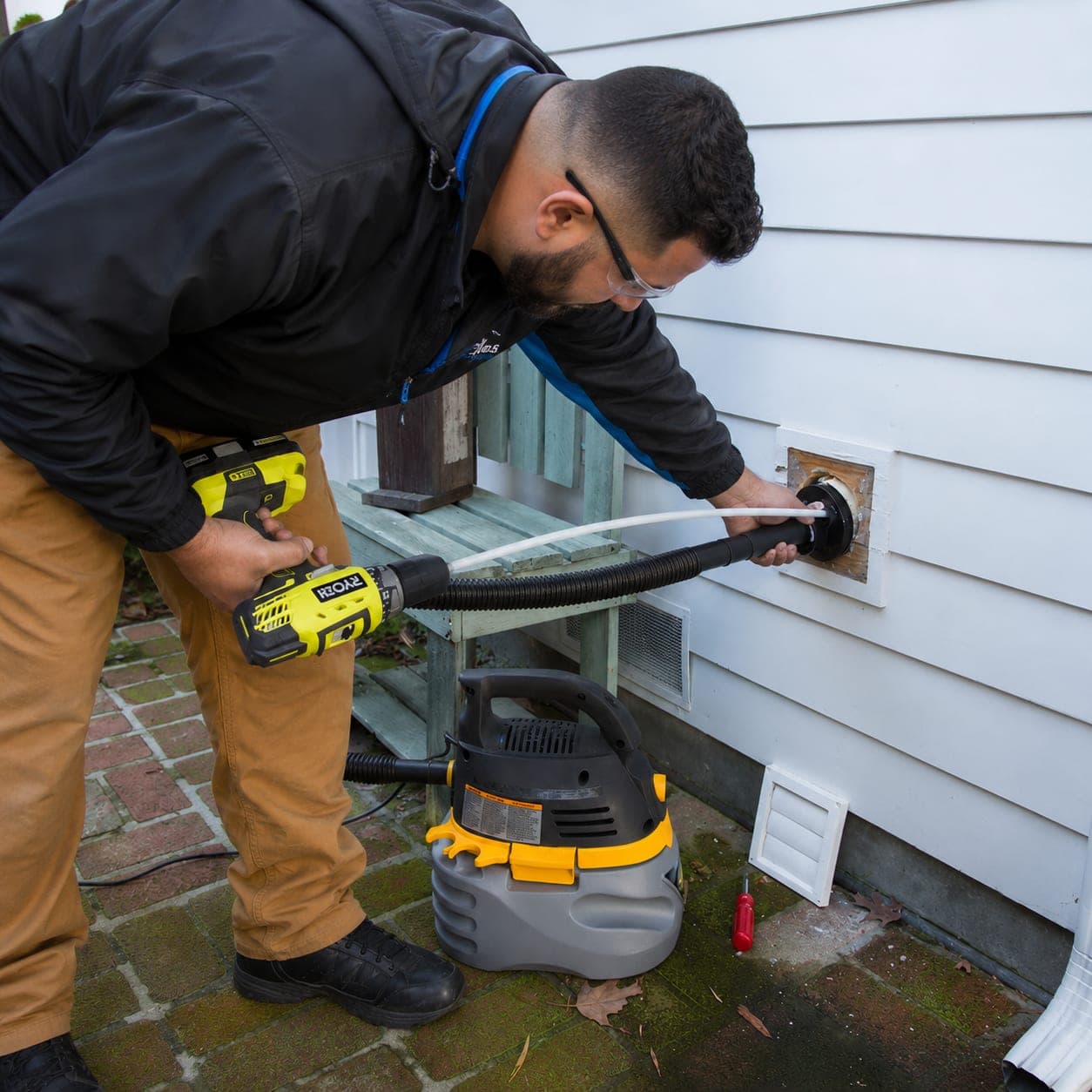
The outside cover, flap or roof cap is cleaned so it opens freely. Damaged covers are noted.
Reconnect and retest
The dryer is reconnected, pushed back without crushing the duct, and airflow is measured again so you can see the difference.
Explain what we found
You get a plain summary of the duct condition and any repairs worth considering. Nothing extra is done without your approval.
What we check and clean
Included in the cleaning
- Lint trap housing and the cavity below the screen
- Transition duct between the dryer and the wall
- Wall connection and any visible joints
- Interior vent run, including bends and vertical sections
- Exterior wall hood or roof cap and its damper flap
- Bird or rodent nests and other foreign debris
- Airflow at the exit before and after cleaning
- Duct material, crushed sections and loose or taped joints
- Gas connection area kept clear of lint on gas dryers
When a run is long, hidden inside walls or has a clog we cannot reach cleanly, a camera look inside the vent duct shows exactly where the problem sits and what condition the pipe is in.
Cleaning, repair or rerouting: choosing the right fix
Cleaning solves most airflow problems. Sometimes, though, the duct itself is the reason lint keeps building up, and cleaning alone would only buy a short break. The table below shows the common duct types and how they usually behave.
| Feature | Rigid or semi-rigid metal | Foil or vinyl flexible duct |
|---|---|---|
| Inside surface | Smooth, so lint has less to cling to | Ribbed, so lint catches in every fold |
| Crush resistance | Holds its shape behind the dryer | Kinks or flattens easily |
| Heat tolerance | Suited to dryer exhaust | Vinyl in particular is generally not recommended for dryer exhaust |
| Typical outcome | Usually just needs periodic cleaning | Often worth replacing during the visit |
Inside surface
- Rigid or semi-rigid metal
- Smooth, so lint has less to cling to
- Foil or vinyl flexible duct
- Ribbed, so lint catches in every fold
Crush resistance
- Rigid or semi-rigid metal
- Holds its shape behind the dryer
- Foil or vinyl flexible duct
- Kinks or flattens easily
Heat tolerance
- Rigid or semi-rigid metal
- Suited to dryer exhaust
- Foil or vinyl flexible duct
- Vinyl in particular is generally not recommended for dryer exhaust
Typical outcome
- Rigid or semi-rigid metal
- Usually just needs periodic cleaning
- Foil or vinyl flexible duct
- Often worth replacing during the visit
What decides between the options
- Cleaning only when the duct is sound metal, connections are tight and airflow recovers after the work.
- Repair or replacement when sections are crushed, torn, disconnected or made of plastic or foil.
- Rerouting or relocation when the run is so long or has so many bends that it clogs again quickly, or when the dryer has moved.
- Cover replacement when the exterior flap sticks, is broken or lets pests in.
What affects the scope of the job
Every vent is different, so the work is sized on site and explained before we start. The main factors are:
- Total length of the run and the number of elbows
- Where it exits: a low wall vent is simpler than a roof cap
- How long since the last cleaning and how much lint is packed in
- Access to the dryer, such as stacked units, closets or tight alcoves
- Nests, crushed sections or disconnected joints found along the way
- Whether repairs, rerouting or a new cover are needed afterward
Free estimates and flexible scheduling
Same-day service is offered where the schedule allows, we are available 24 hours, Sunday through Friday, and emergency calls are accepted, such as a strong burning smell from the dryer. If you smell burning, turn the dryer off and unplug it until the vent is checked. Get in touch to request an estimate.
How to prepare for the visit
- Clear a path to the dryer and some floor space around it.
- Finish or pause any laundry so the machine is empty and cool.
- Move items away from the outside vent, such as planters, grills or stored gear.
- Let us know if the vent exits through the roof, so we can plan for it.
- Keep pets out of the laundry area while the dryer is pulled out.
Safety notes
Lint is a fire hazard
Lint is highly flammable, and a clogged vent traps heat right where it collects. Clean the lint screen after every load, never run the dryer while you are asleep or away from home, and stop using it if you smell burning.
Gas dryers and carbon monoxide
A blocked vent on a gas dryer can push combustion gases back into the home. Keep a working carbon monoxide alarm near sleeping areas. If it sounds, leave the house and call your gas utility or emergency services.