On this page
What all electric fireplaces have in common
Wall-mount units, inserts, freestanding stoves and mantel packages look different, but all electric fireplaces are built from the same few parts. Each has a flame effect, usually LEDs with a reflector or a rotating rod, or a fine water mist on some models. Each also has a heater, a fan, a control board, and a remote or wall control. On most units the flame runs separately from the heat, so you can have the glow in July without warming the room.
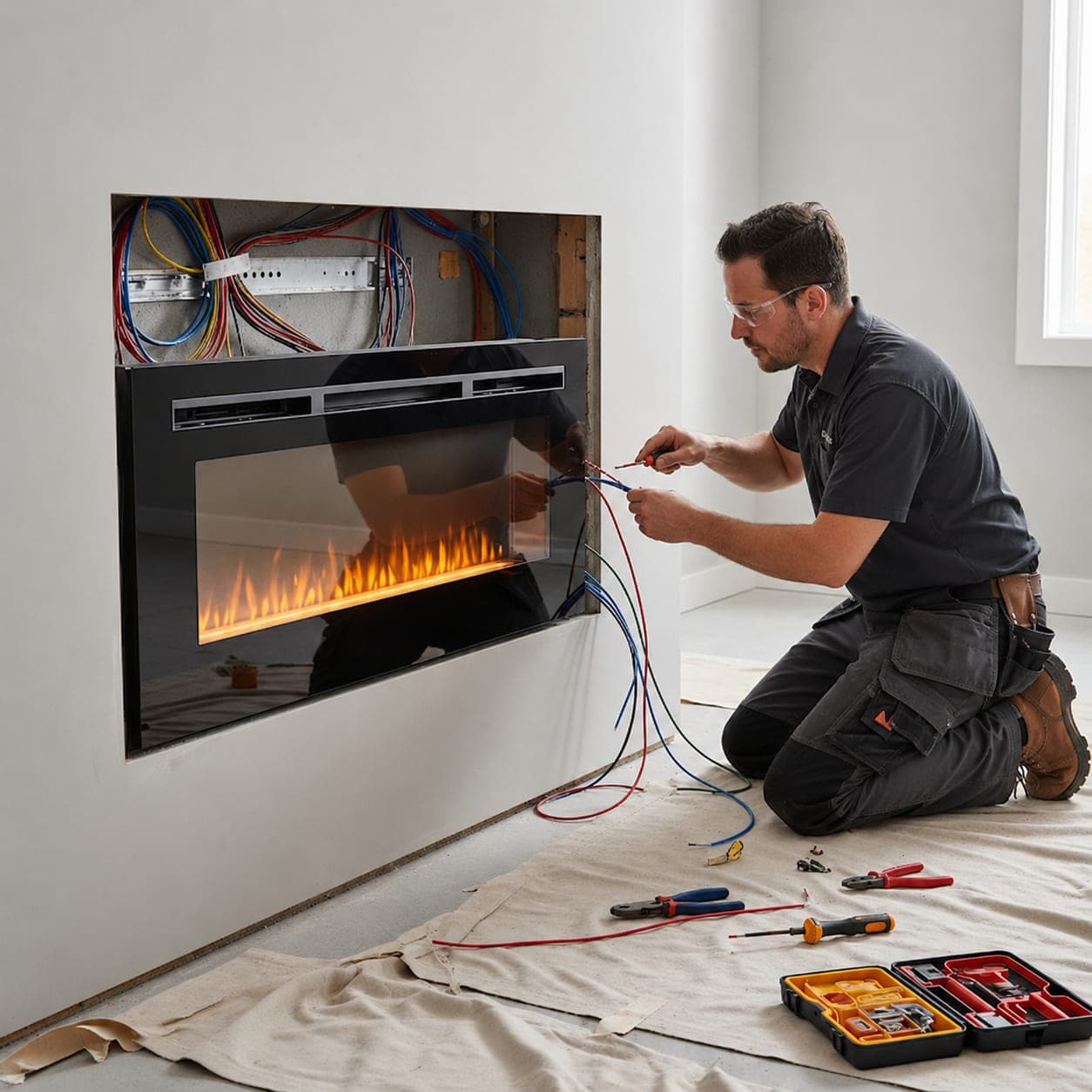
When something fails, the symptom usually points to the part. Flames with no heat suggest the heating element or a tripped thermal cutoff. Heat with no flames points to the lights or flicker motor. A unit that won't respond at all needs its power supply and board checked. Our electric fireplace repair service works through those parts one at a time. Our guide to fireplace anatomy shows how these parts compare with wood and gas units.
Multicolor flame electric fireplaces and stoves
Many newer units, including freestanding electric stoves, let you change the flame and ember-bed colors and cycle between them. That depends on multicolor LED strips and a controller. When one color drops out or the flames flicker erratically, the cause is usually a strip, a connector or the board, not the whole fireplace.
How the visit works
Dust in the heater and blocked air vents are a common cause of overheating shutdowns. A unit on a busy or undersized circuit can trip the breaker and run poorly.
Listen first
What it does and doesn't do, and since when.
Check the power
Outlet or hardwired circuit, plug, cord and breaker.
Test the parts
Heater, fan, thermal cutoff, lighting and controls are tested one at a time.
Explain
What failed, and whether a repair or a replacement part makes sense.
Checked on every visit
- Control board, wall switch and remote receiver
- Flame-effect motor and lighting
- Outlet, plug, cord or hardwired connection
- Heating element and thermal cutoff
- Breaker and circuit load
- Clearance around the heater outlet
Before the technician arrives
- Clear space around the unit so its vents and back panel can be reached.
- Write down what happens and when: at start-up, after a few minutes, or only on heat.
- If it smells hot or trips the breaker, unplug it or switch off its breaker until the visit.
- Note the make and model from the label if you can find it.
Signs to watch for
- Clicking, rattling or grinding from the fan or flicker motor
- The heater runs but the flame effect is dark or frozen
- The flame effect works but no heat comes out
- No response to the remote or the wall control
- The unit shuts itself off after a few minutes
If it smells hot or trips the breaker
Switch it off, unplug it or turn off its breaker, and don't use it until it has been checked. Keep curtains and furniture clear of the heater outlet.
Advancements in electric fireplace technology
Early models showed a flat, looping image. Current ones use layered LEDs, mist effects that look three-dimensional, app and Wi-Fi control, built-in thermostats and timers. The trade-off is more parts that can fail. Mist models also need water and periodic cleaning. If an older unit still works but looks tired, bringing an electric fireplace back to good condition may cost less than replacing it. If you're turning an unused wood fireplace into an electric one, read about inserts made for existing fireboxes.
Electric as a fireplace fuel: the honest trade-offs
Advantages of electric as a fireplace fuel
- No chimney, vent or gas line needed
- No smoke, ash, soot or creosote
- The flame can run without heat
- Can go almost anywhere near a suitable outlet
- Very little routine upkeep compared with wood or gas
- Heats one room without running the whole-house system
Disadvantages of electric as a fireplace fuel
- Heat output is modest, and plug-in models are limited by what a household outlet can supply
- No heat or flame during a power outage
- No crackle, smell or radiant warmth like a real fire
- Electronics wear out, and discontinued models can be hard to find parts for
- Running cost depends on your electricity rates
If you're weighing heat output and running costs across fuel types, the efficient fireplace guide lays out the comparisons.