On this page
- What commercial chimney service covers and who needs it
- Signs a commercial chimney needs attention
- What a commercial service visit involves
- What we check and clean
- Options and what decides between them
- What affects the scope of the job
- How to prepare for the visit
- Safety notes for business and rental owners
What commercial chimney service covers and who needs it
Commercial chimney service is the same core work as residential chimney care: sweeping, inspection, and repair of flues, fireplaces, stoves and the masonry around them. The difference is the setting. A business or rental building often has several flues, heavier use, more people nearby, and an owner or manager who needs clear records of what was found and done.
Properties that typically need it include:
- Restaurants, taverns and cafes with a wood-burning or gas fireplace in the dining room
- Inns, bed-and-breakfasts and event venues where fireplaces run most of the season
- Apartment buildings, condo associations and multi-family rentals with a flue per unit
- Office lobbies and retail spaces with decorative gas fireplaces or inserts
- Property managers handling chimneys and dryer vents across several addresses
For managers who also look after laundry areas, we offer dryer vent cleaning for rentals and property managers alongside chimney work, so one visit can cover both where it makes sense.
Signs a commercial chimney needs attention
Heavy use speeds up wear. Watch for these warning signs, and call before the next busy stretch rather than after:
- Smoke rolling into the room when a fire is lit or when doors open
- A strong smoky or sour smell, especially on humid days or when the fireplace is idle
- Black, flaky or glazed buildup visible above the damper
- Water stains on ceilings or walls near the chimney, or rust on the damper or firebox
- Crumbling mortar, loose bricks, or a cracked crown seen from the roof or parking lot
- Birds, nesting material or animal noises in a flue
- Gas fireplace pilot outages, sooty glass or a flame that looks wrong
- Any chimney fire, lightning strike or storm damage, even if things seem fine afterward
Many of these trace back to a handful of root causes; our guide to common chimney problems explains what usually sits behind each one.
Stop using the fireplace if you suspect a chimney fire
Loud popping or a rumbling roar, dense smoke and a hot chimney wall can mean a flue fire. Get everyone out, call 911, and do not relight until the flue has been inspected. Emergency calls are accepted, and we are available 24 hours, Sunday through Friday.
What a commercial service visit involves
How the visit runs
Scheduling around your business
Tell us how many chimneys and appliances there are and when the space is quiet. Because we are available 24 hours, Sunday through Friday, work can often be set for before opening or after close, and same-day service is offered where the schedule allows.
Site walk-through
We confirm roof access, which flues serve which units or rooms, and where guests or tenants need to be kept clear.
Exterior check
Crown, cap, flashing, masonry joints and chase covers are looked over for cracks, gaps and water entry points.
Interior and appliance check
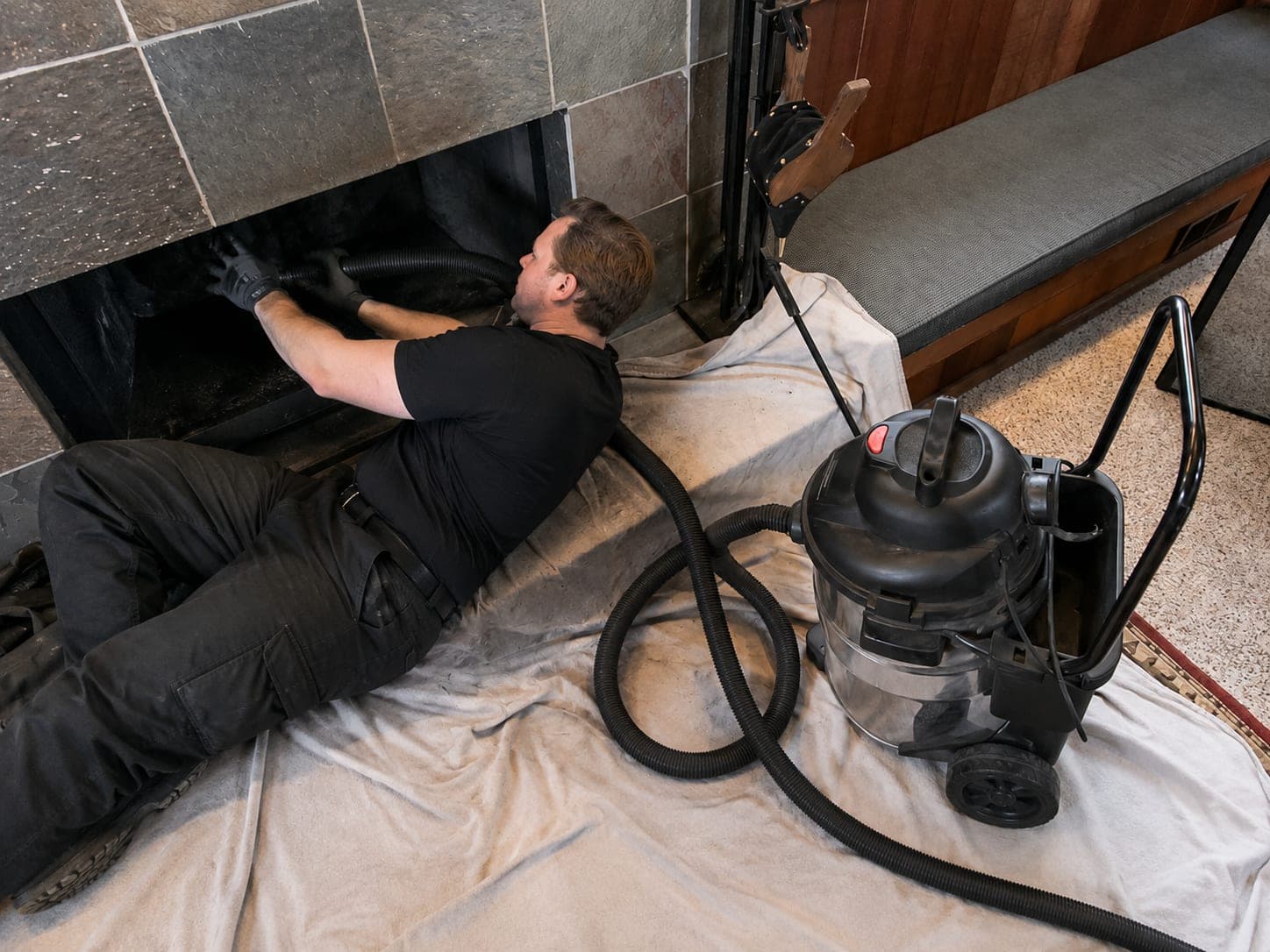
Fireplaces, inserts, stoves, dampers and smoke chambers are examined, with drop cloths and containment in place to protect the room.
Camera inspection where needed
If the flue interior can't be seen well enough by eye, a camera is run through it to look at the liner and joints.
Cleaning
Soot, creosote, debris and any blockages are removed and the work area is cleaned up.
Findings and free estimate
You get a plain explanation of what we found for each chimney, with a free estimate for any repairs so you can plan and budget.
What we check and clean
Typical items on a commercial visit
- Creosote and soot level in each flue
- Blockages from nests, debris or fallen masonry
- Liner condition: cracks, gaps and missing sections
- Damper operation and seal
- Firebox walls, refractory panels and smoke chamber
- Chimney cap, animal screen and spark arrestor
- Crown, flashing and waterproofing condition
- Brick and mortar joints
- Chase and chase cover on prefab systems
- Gas fireplace burner, glass and door condition
- Draft: whether smoke leaves the building as it should
Options and what decides between them
Not every problem calls for the same fix. The right choice depends on what the inspection turns up and how hard the chimney is worked.
| Option | When it usually fits | What decides it |
|---|---|---|
| Sweeping and creosote removal | Routine upkeep or visible buildup | Burn volume and how glazed the deposits are |
| Cap, screen or spark arrestor | Animal entry, debris or water coming down the flue | Flue size and shape, and whether one cap covers several flues |
| Liner repair or new liner | Cracked, gapped or deteriorated liner | Extent of damage and the appliance the flue serves |
| Masonry repair or tuckpointing | Loose bricks, open joints, cracked crown | How much of the structure is affected |
| Chimney rebuild | Severe leaning, widespread brick failure | Whether repair can restore a sound structure |
For brick and mortar work on larger buildings, see how our commercial chimney masonry repairs work.
| Feature | Visual inspection | Camera inspection |
|---|---|---|
| Best for | Accessible parts of the chimney and appliance | Flue interiors that can't be seen by eye |
| Shows | Exterior, firebox, damper, smoke chamber | Liner cracks, joint gaps, hidden blockages |
| Typical trigger | Routine yearly check | Chimney fire, storm, sale, odor or unexplained draft problems |
Best for
- Visual inspection
- Accessible parts of the chimney and appliance
- Camera inspection
- Flue interiors that can't be seen by eye
Shows
- Visual inspection
- Exterior, firebox, damper, smoke chamber
- Camera inspection
- Liner cracks, joint gaps, hidden blockages
Typical trigger
- Visual inspection
- Routine yearly check
- Camera inspection
- Chimney fire, storm, sale, odor or unexplained draft problems
What affects the scope of the job
We don't quote prices on this page because commercial work varies too much, but these factors drive how big a job is. For background on how sweeping is usually priced, read what affects the cost of a chimney sweep.
- Number of chimneys, flues and appliances
- Roof height, pitch and how the roof is reached
- How heavily the fireplaces or stoves are used
- Fuel type: wood, gas or a mix
- Whether a camera inspection is needed
- Repairs found during cleaning
- Work that must happen outside business hours or in occupied units
How to prepare for the visit
- Stop burning at least 24 hours ahead so the flue and firebox are cool
- Clear furniture, decor and stored items from around each fireplace
- Let tenants or staff know which areas will be off-limits and when
- Have keys or access arranged for roofs, mechanical rooms and individual units
- Gather any past inspection or repair notes you have
- List any symptoms by location, such as which unit smells smoky or which room drafts poorly
Safety notes for business and rental owners
The national fire-safety standard most chimney professionals follow, NFPA 211, calls for chimneys, fireplaces and vents to be inspected once a year, with cleaning done as needed. On a busy property, check smoke and carbon monoxide alarms near every fuel-burning appliance, keep combustibles away from hearths, and never let staff burn trash, cardboard or treated wood. For a broader look at warning signs, our guide to common chimney issues is a useful refresher to share with on-site managers.
Smell gas? Leave first
If you smell gas near a gas fireplace, don't switch anything on or off. Get people outside and call the gas utility or 911 from a safe distance before arranging service.