On this page
- What a dryer vent inspection is and who needs it
- Signs your dryer vent needs a professional inspection
- Inspecting the whole dryer vent system
- What happens during the visit
- Options after the inspection and what decides between them
- What affects the scope of the job
- How to prepare for the visit
- Dryer vent inspection in Connecticut
- Schedule a dryer vent inspection
What a dryer vent inspection is and who needs it
A dryer vent inspection is a hands-on look at the duct that carries hot, moist, lint-filled air out of your home. We check the connection behind the dryer, the transition hose, the hidden run through walls, floors or the attic, and the exterior termination. Then we test airflow to see how well the system is actually moving air, not just whether it looks clean.
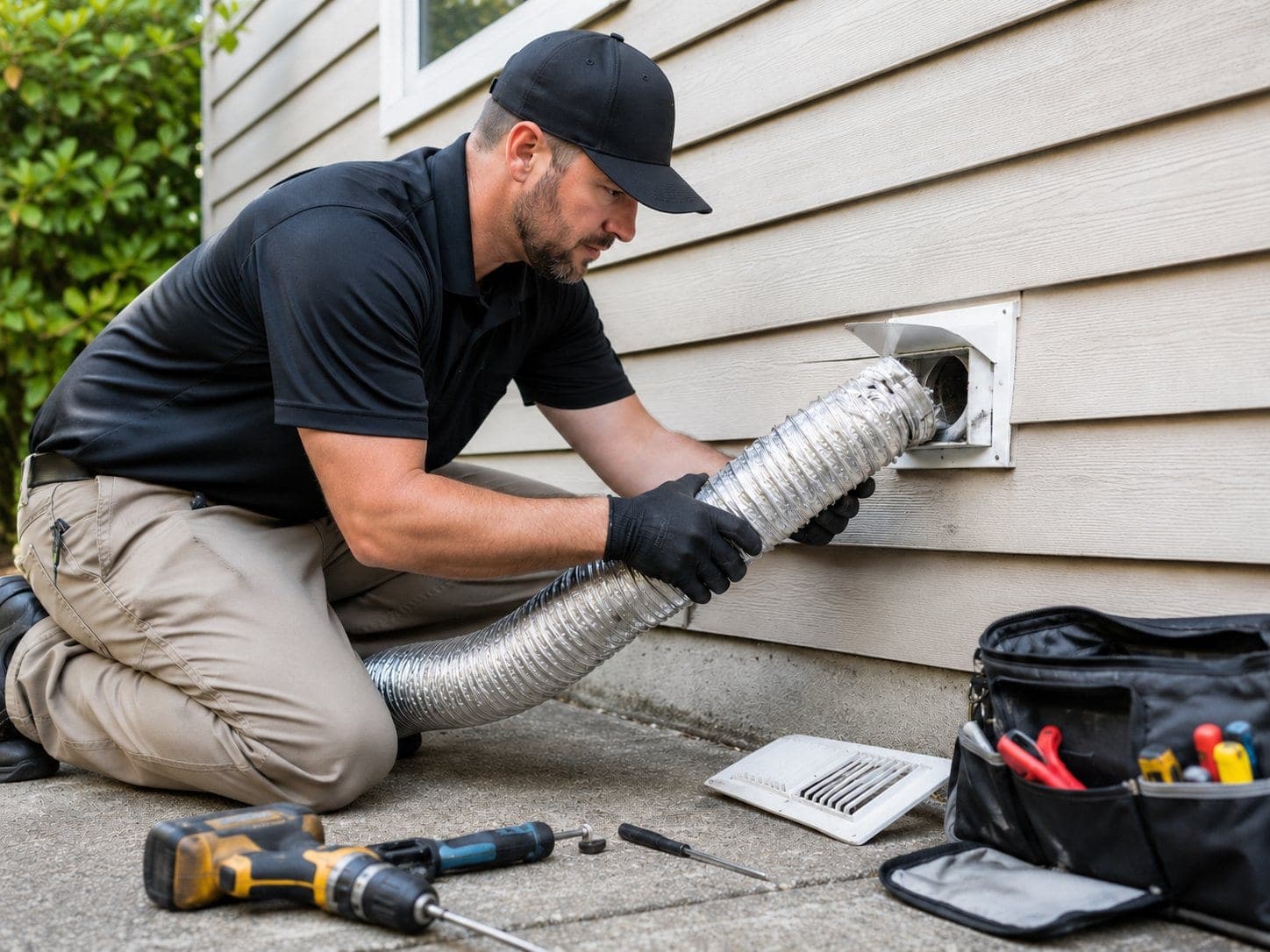
It makes sense for almost any household with a clothes dryer, but especially if you:
- Have a long vent run, several elbows, or a vent that exits through the roof
- Recently bought a home and don't know when the vent was last serviced
- Run a large family's worth of laundry every week
- Manage rentals or shared laundry and need to know the condition of each unit's vent
- Noticed drying times creeping up even though the dryer itself seems fine
Signs your dryer vent needs a professional inspection
Most vent problems build slowly, so the warning signs are easy to write off as an aging dryer. Watch for these:
- Longer drying times. A normal load needs a second cycle, or towels come out damp.
- Hot laundry room or hot dryer top. Heat that can't escape stays in the cabinet and the room.
- Burning or musty smell. Lint near a heating element can scorch; trapped moisture can smell stale.
- Lint around the door, behind the dryer, or at the outside vent. Lint escaping means it isn't leaving the way it should.
- Exterior flap barely opens. With the dryer running, the outside cover should push open with steady airflow.
- Error codes or the dryer shutting off. Many newer dryers sense restricted airflow and cut out to protect themselves.
If several of these sound familiar, read more about what causes a clogged dryer vent and how it gets fixed.
Inspecting the whole dryer vent system
A real dryer vent system inspection covers more than the lint trap and the first few feet of hose. Problems often hide in the middle of the run, where you can't see them: a crushed section behind a wall, a joint that has pulled apart in the attic, or a bird nest wedged against the outside cover.
What we check
- Lint screen housing and the dryer's exhaust outlet
- Transition duct material, length and condition (kinks, crushing, tears)
- Connections and joints along the run for gaps or separation
- Overall run length and number of turns
- Lint buildup inside the duct
- Moisture, condensation or rust inside the duct
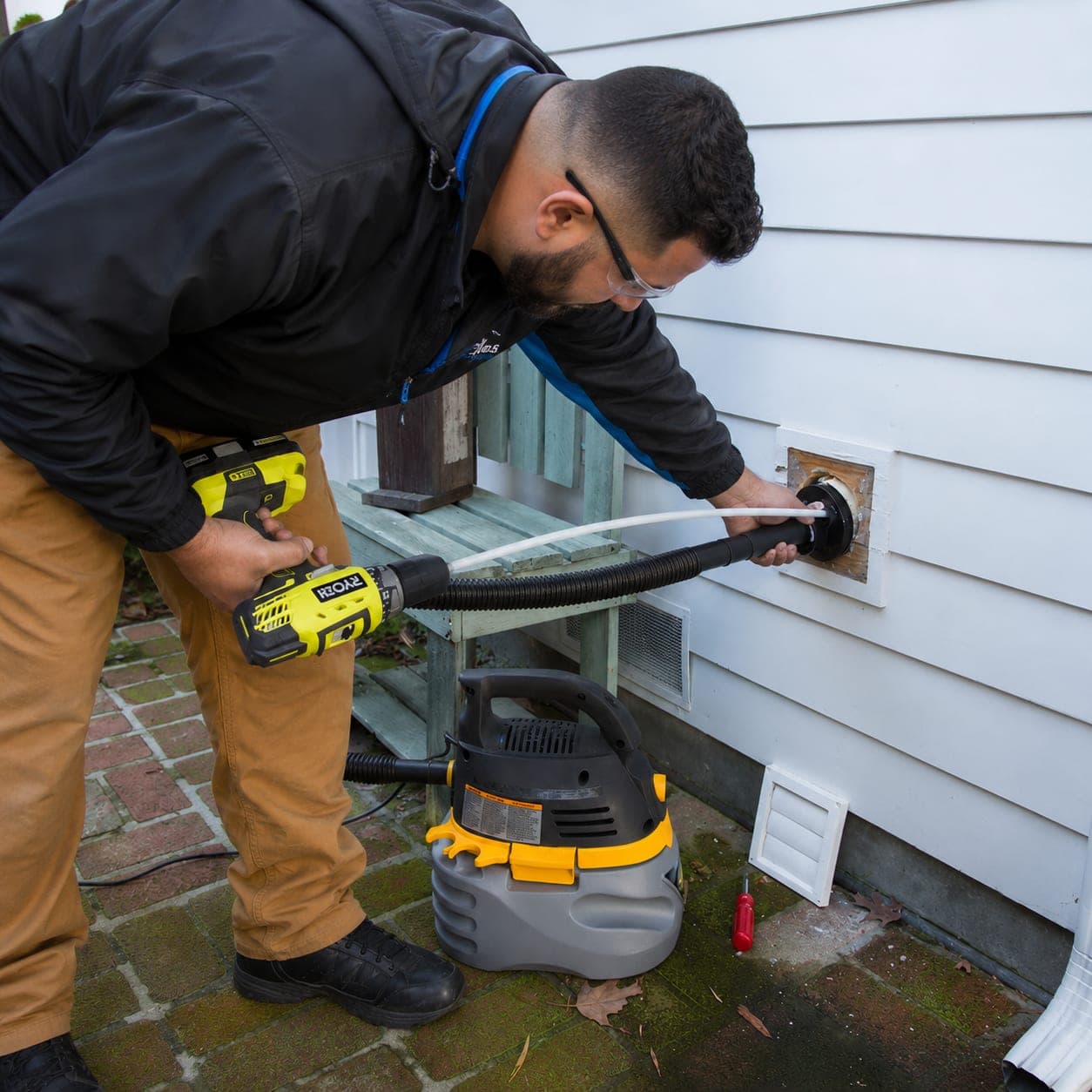
- Exterior or roof vent cover: flap movement, screens, nests, debris
- Airflow at the termination with the dryer running
- Signs of lint or heat damage around the dryer and in the wall cavity where visible
What happens during the visit
How a dryer vent inspection works
Talk through the symptoms
We ask what you've noticed, how much laundry you run, and whether the dryer is gas or electric.
Pull the dryer and check the connection
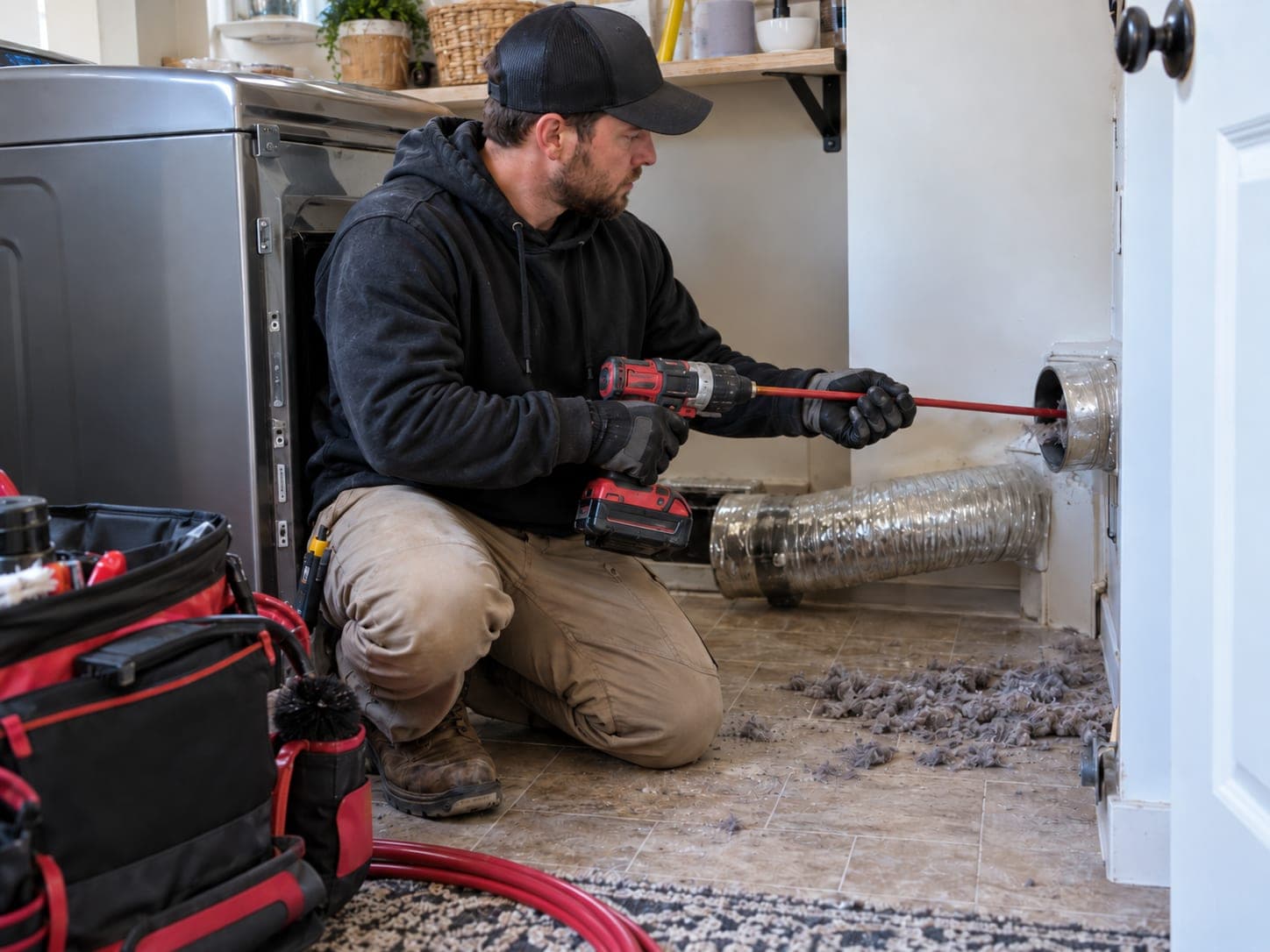
We move the dryer carefully, inspect the transition duct and the outlet, and look for lint in the cabinet area.
Trace the run
We follow the vent through walls, floors, basement or attic as far as access allows, and inspect the exterior or roof termination.
Test airflow
With the dryer running, we measure airflow at the outlet to see how much the system is restricted.
Explain findings and options
You get a plain explanation of what we found and what, if anything, needs to be done, along with a free estimate for any work.
Where a section of duct is hidden behind finished walls, a camera can show what the eye can't. Here is how a camera inspection of a dryer vent works.
Options after the inspection and what decides between them
An inspection doesn't automatically mean more work. Sometimes the vent is in good shape and you just need to keep the lint screen clean. When it isn't, the choice usually comes down to whether the duct itself is sound.
| Feature | Cleaning and lint removal | Repair, replacement or rerouting |
|---|---|---|
| Best when | The duct is intact and correctly installed, just loaded with lint or debris | The duct is crushed, torn, disconnected, made of unsuitable material, or the run is too long or convoluted |
| What gets done | Lint and blockages are removed from the full run and the exterior cover is cleared | Damaged sections or covers are replaced, or the vent is rerouted to a shorter, more direct path |
| Main deciding factor | Airflow returns to normal once the run is clear | Airflow stays poor even after cleaning, or the layout keeps collecting lint |
Best when
- Cleaning and lint removal
- The duct is intact and correctly installed, just loaded with lint or debris
- Repair, replacement or rerouting
- The duct is crushed, torn, disconnected, made of unsuitable material, or the run is too long or convoluted
What gets done
- Cleaning and lint removal
- Lint and blockages are removed from the full run and the exterior cover is cleared
- Repair, replacement or rerouting
- Damaged sections or covers are replaced, or the vent is rerouted to a shorter, more direct path
Main deciding factor
- Cleaning and lint removal
- Airflow returns to normal once the run is clear
- Repair, replacement or rerouting
- Airflow stays poor even after cleaning, or the layout keeps collecting lint
If cleaning is the answer, see how our dryer vent cleaning service handles the full run. Landlords and property managers with multiple units can look at vent cleaning for rentals and multi-unit buildings.
What affects the scope of the job
- Run length and number of elbows. Longer, twistier runs take more time to trace and test.
- Where the vent exits. Wall vents are simpler to reach than roof terminations.
- Access. Finished basements, tight attics and closets built around the dryer slow things down.
- Duct material. Flexible plastic or foil duct often needs replacing rather than cleaning.
- What turns up. Nests, heavy lint packing or separated joints change the scope once they're found.
How to prepare for the visit
- Clear a path to the dryer and some floor space so it can be pulled out.
- Empty the dryer and clean the lint screen so we see the system as it normally runs.
- Move stored items away from attic or basement access points along the vent run.
- Make sure the outside vent cover is reachable, and keep pets in another room.
- Jot down any symptoms and when you first noticed them.
Safety notes
Lint is highly flammable, and a restricted vent pushes heat back toward it. If you smell burning, stop the dryer and don't run it again until the vent is checked. With a gas dryer, a blocked or disconnected vent can also send combustion gases indoors, so a working carbon monoxide alarm nearby is a good idea. Never vent a dryer into an attic, crawlspace or the room itself.
Dryer vent inspection in Connecticut
We handle dryer vent inspection in Hartford and in homes and rental properties around Connecticut. Because a technician also works on chimneys, fireplaces and other venting, we're used to tracing runs through attics, basements and rooflines, and the same team can clean, repair or reroute the vent if the inspection shows it's needed.
Schedule a dryer vent inspection
We're available 24 hours, Sunday through Friday, accept emergency calls, and offer same-day service where the schedule allows. Call or request an estimate, tell us what you're noticing, and we'll set up a time to look at the full vent run.