On this page
What pellet stove service covers
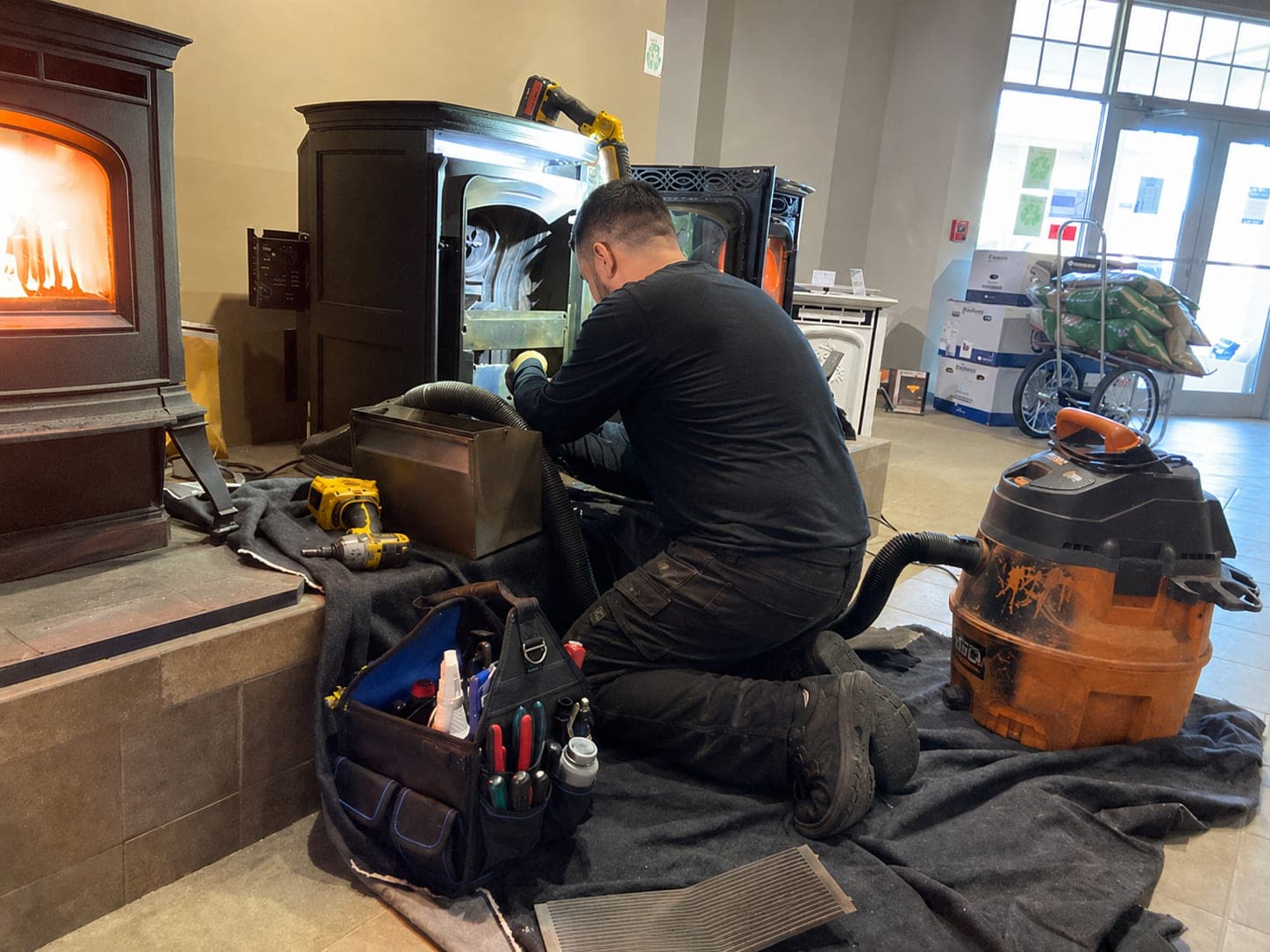
Pellets burn hot and fairly clean, so a pellet stove doesn't coat its vent with creosote the way a wood stove can. It does produce fine fly ash, and a lot of it over a season. That ash settles in the exhaust passages behind the firebox, in the elbows and tees of the vent pipe, and at the cap. Our pellet stove service focuses on that exhaust path:
- Ash cleared from the firebox, the burn pot area and the exhaust passages
- Vent pipe cleaned, along with any chimney or liner it runs through
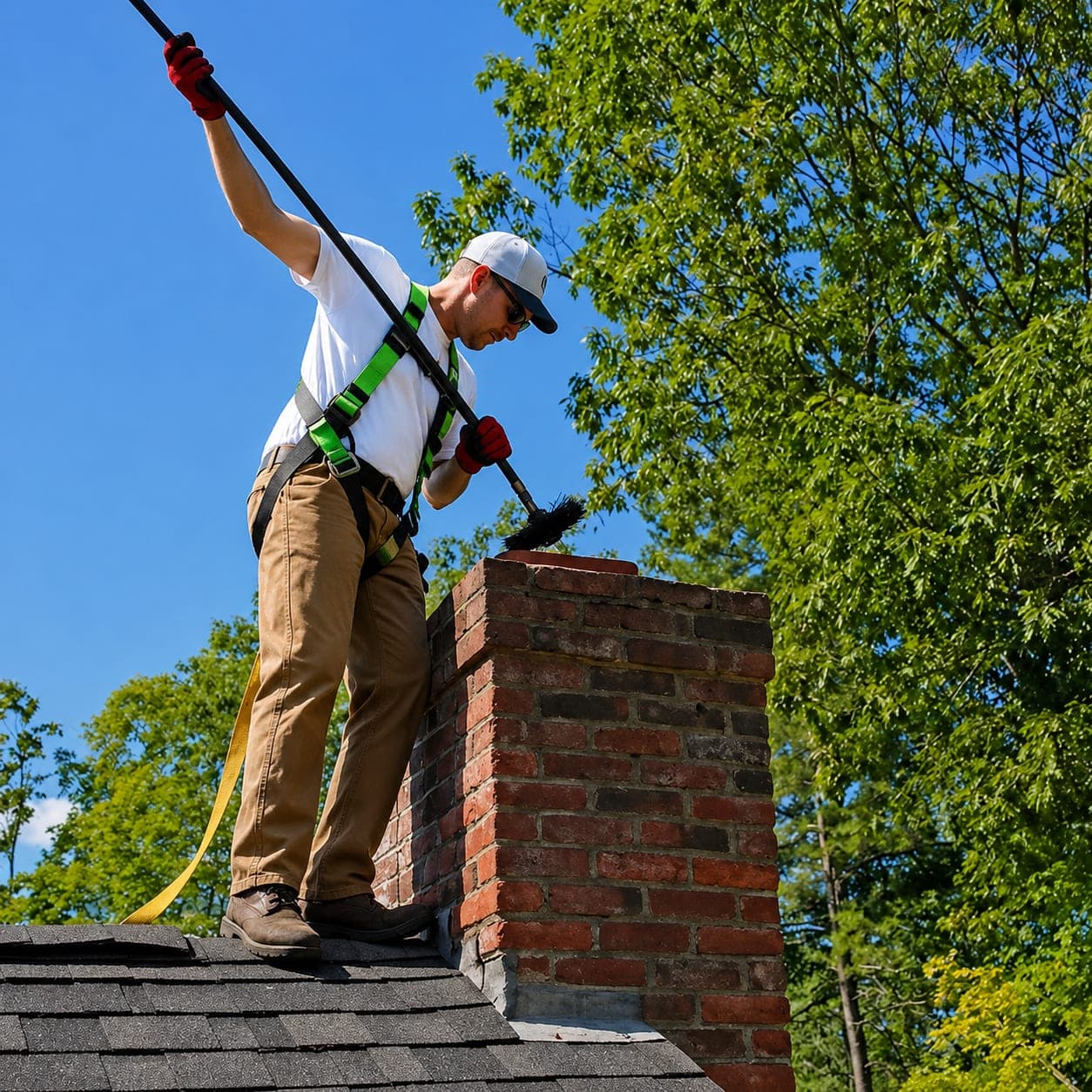
- Termination cap or screen cleared
We don't repair the stove's electronics. Igniters, augers, control boards and sensors are best handled by your stove's dealer. Often, though, a stove that throws error codes or shuts down simply can't exhaust properly, and clearing the vent solves the problem.
Signs your pellet stove is choking on ash
- The flame turns lazy, tall and orange instead of crisp and active
- The glass darkens within a day or two of cleaning
- Unburned pellets pile up in the burn pot
- The stove shuts down or shows a vacuum or exhaust error
- Smoke or a burnt smell appears when the stove starts
- Ash puffs out around the door or the vent joints
Smoke in the room
Shut the stove down the way the manual describes, open windows, and don't restart it until the vent is checked. Pellet vents run under positive pressure, so a leaking joint can push exhaust, including carbon monoxide, into the house. We take emergency calls around the clock, Sunday through Friday.
Pellet stove pellets and the ash they leave
Fuel quality affects how often the vent needs attention. Most bags list ash content, and lower is better. High-ash pellets leave more clinkers in the burn pot and fill the passages faster. Store bags somewhere dry, because pellets that absorb moisture swell, crumble into dust and burn poorly.
Pellet stove service in Connecticut
Whether your stove heats a single room or the whole first floor, the exhaust needs the same attention. We're available 24 hours, Sunday through Friday, offer same-day service when the schedule allows, and estimates are free. To understand what affects pricing in general, see what drives the cost of a chimney sweep. If the stove vents through an older masonry chimney, the chimney issues we find most often and common chimney problems and their causes are useful background. Burning cordwood instead? See care for a wood burning stove or our page on wood pellet stoves.
What the visit covers
Pellet stoves depend on electricity: a fan or control fault, or a power cut, stops the draft the fire relies on. A pellet vent that isn't cleaned collects fine ash and can leak exhaust at its joints.
Read the symptoms
Error codes, how it fails and when — at lighting, during a burn or at shutdown.
Clean the combustion path
Burn pot, heat exchanger tubes, ash traps and the combustion fan area are cleaned.
Check the parts
Igniter, fans, auger, door gasket and safety switches are tested.
Clean and check the vent
The vent pipe is cleaned and its joints and termination checked, then the stove is test-run.
What we look at
- Door and hopper gaskets
- Pressure and temperature safety switches
- Combustion and convection fans
- Vent pipe joints and termination
- Burn pot and air holes
- Auger and hopper feed
Off, cold and unplugged
Clean the burn pot, ash pan or glass only with the stove off, completely cold and unplugged — the auger and fans can start on their own.
Signs to watch for
- Grinding, squealing or rattling from a fan or the auger
- The stove won't light or keeps shutting down
- Pellets piling up in the burn pot
- Lazy, dark or sooty flames
- Ash or a smoky smell around the vent pipe
Before the technician arrives
- Note any error codes and when the problem happens.
- Let the stove burn out, then switch it off and unplug it once it is cold.
- Run the hopper low if you can, so the feed system can be reached.
- Clear space around the stove and the outside vent termination.