On this page
- What fireplace cleaning covers and who needs it
- Signs your fireplace is due for a cleaning
- What happens during a fireplace cleaning visit
- What we check and clean
- Which type of cleaning fits your fireplace
- What affects the scope of the job
- How to prepare for your appointment
- Safety notes for homeowners
- Choosing a fireplace cleaning company
What fireplace cleaning covers and who needs it
Fireplace cleaning covers the part of the system you can see and reach from the room. That includes the firebox, the grate and andirons, the hearth, the damper, the smoke shelf just above the damper, and any glass doors or screens. A full chimney sweep goes further. It focuses on the flue running up through the house. The two jobs are often done together, but they are not the same thing.
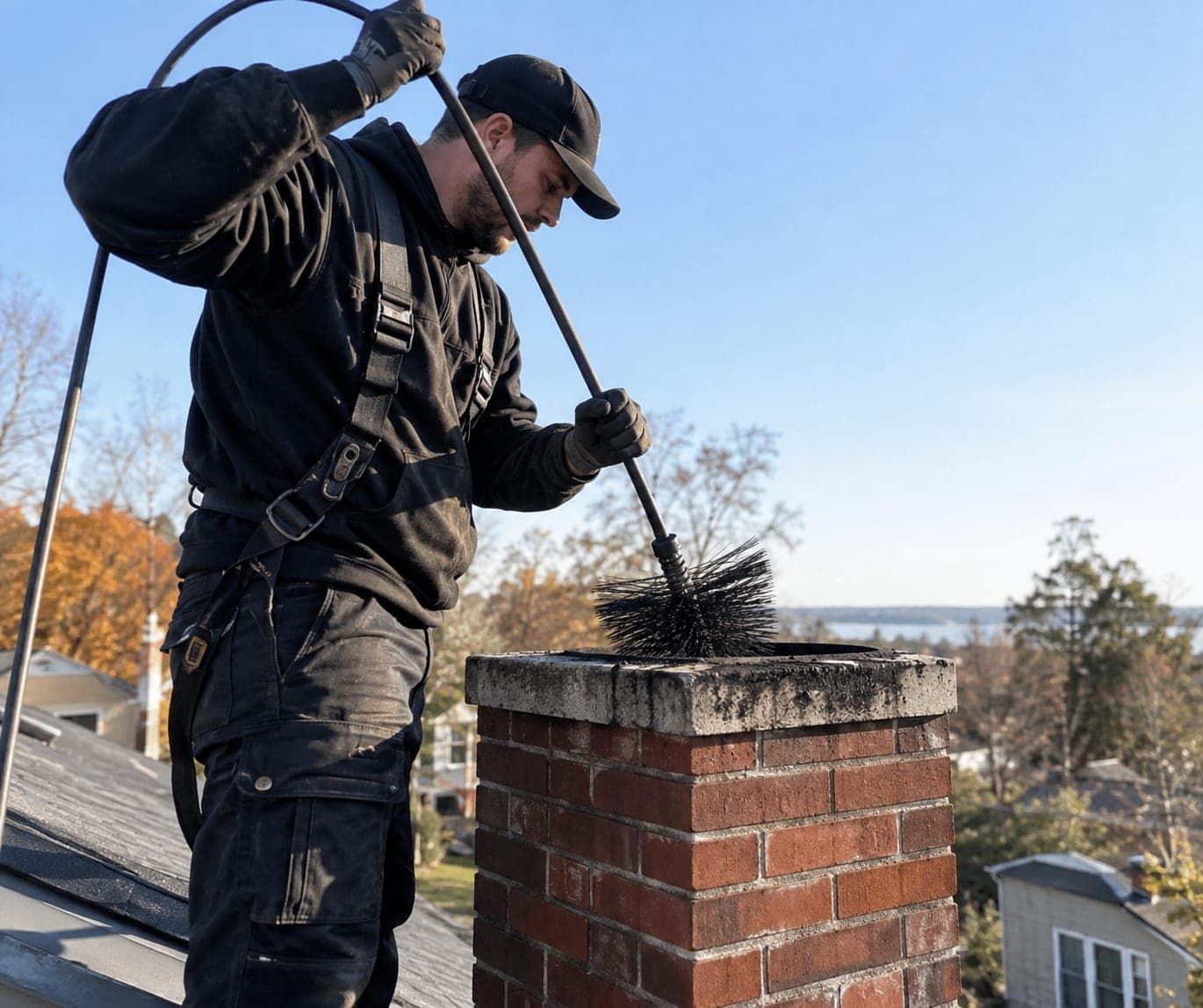
It suits homeowners who burn wood regularly and want a clean start to the season. It also suits people who just bought a house with a fireplace they have never used, and anyone preparing to sell who wants the hearth to look cared for. We clean fireplaces for homeowners in Hartford and nearby Connecticut towns, and we also clean fireplace inserts and wood stoves.
Signs your fireplace is due for a cleaning
- Ash has built up past the grate or is spilling onto the hearth.
- A dark, sooty film covers the glass doors and you can barely see the fire.
- There is a smoky or stale smell in the room, especially on humid days or when the heat runs.
- Black flakes or crusty deposits sit on the firebox walls or the smoke shelf.
- The damper sticks, grinds or won't close fully because debris is in the way.
- Smoke drifts into the room when you light a fire instead of drawing up.
- You can't remember the last time anyone looked closely at the fireplace.
Some of these, like smoke spilling into the room or heavy deposits above the damper, can point to problems further up the chimney. Our guide to signs that your chimney needs cleaning explains how to tell a fireplace issue from a flue issue.
What happens during a fireplace cleaning visit
How the visit works
Walkthrough and questions
We ask how often you burn and what fuel you use, and whether you've noticed smoke, odors or draft problems. Then we look over the fireplace before touching anything.
Protecting the room
Drop cloths go down around the hearth and nearby flooring. The fireplace opening is set up to contain dust while we work.
Ash and debris removal
Cold ash, partly burned wood and loose debris are removed from the firebox and grate. They are bagged or placed in a closed container.
Brushing and scraping
Soot and loose buildup are brushed from the firebox walls, the damper and the smoke shelf. Debris is collected with equipment made for fine ash.
Doors, screens and hearth
Glass is cleaned with products suited to fireplace glass. Screens and the hearth surface are wiped down.
Findings and next steps
We tell you what we saw, such as cracks, a worn damper or heavy deposits. Then we explain whether anything needs more attention.
What we check and clean
Fireplace cleaning checklist
- Firebox floor and walls cleared of ash, soot and loose debris
- Grate and andirons emptied and brushed
- Damper cleaned and opened and closed to check that it moves freely and seals
- Smoke shelf cleared of fallen debris and buildup
- Glass doors cleaned inside and out, and frames and hinges checked
- Mesh screen brushed and checked for tears or sagging
- Hearth surface wiped down
- Visible cracks, gaps or damaged firebrick noted for you
- Deposits above the damper noted so you know whether the flue needs attention
When cleaning turns up something more
A clean firebox makes problems easier to spot. If we find cracked firebrick, a damaged damper or heavy creosote, we explain what it means. If you want, we can talk through repair or creosote removal options. Nothing is added without your go-ahead.
Which type of cleaning fits your fireplace
The right approach depends mostly on the type of fireplace and how much it gets used. An open masonry fireplace, a closed insert and a gas unit each collect different residue and are cleaned differently.
| Feature | Open wood-burning fireplace | Fireplace insert or wood stove |
|---|---|---|
| Main buildup | Ash, soot on the firebox walls, debris on the smoke shelf | Ash in the firebox, soot on the glass, deposits around baffles and connections |
| Glass | Only if glass doors are installed | Usually part of the unit and cleaned every time |
| Often paired with | A chimney sweep of the masonry flue | Cleaning of the liner or connector pipe |
| Key deciding factor | How often you burn and what wood you use | Manufacturer's design and how the unit connects to the chimney |
Main buildup
- Open wood-burning fireplace
- Ash, soot on the firebox walls, debris on the smoke shelf
- Fireplace insert or wood stove
- Ash in the firebox, soot on the glass, deposits around baffles and connections
Glass
- Open wood-burning fireplace
- Only if glass doors are installed
- Fireplace insert or wood stove
- Usually part of the unit and cleaned every time
Often paired with
- Open wood-burning fireplace
- A chimney sweep of the masonry flue
- Fireplace insert or wood stove
- Cleaning of the liner or connector pipe
Key deciding factor
- Open wood-burning fireplace
- How often you burn and what wood you use
- Fireplace insert or wood stove
- Manufacturer's design and how the unit connects to the chimney
Gas fireplaces don't produce ash, but logs, burners and glass still collect dust and film. They are handled through our gas fireplace service and maintenance. If you aren't sure which category your unit falls into, describe it when you call or send a photo when you request an estimate.
What affects the scope of the job
- How long it's been. A fireplace used through several winters without cleaning takes more work than one cleaned every year.
- Type of buildup. Loose soot brushes off easily. Hard, glazed deposits take more effort and may point to a creosote problem higher up.
- Doors and accessories. Glass doors, blowers and tight insert designs add time.
- Combined work. Booking a chimney sweep or inspection on the same visit changes what gets done.
- Access. Raised hearths, tight rooms or furniture near the fireplace can affect setup.
We don't quote prices on this page because these factors vary from home to home. Estimates are free, so you'll know what's involved before any work begins.
How to prepare for your appointment
- Stop burning at least a day ahead so the ash and firebox are fully cold.
- Clear the hearth and move furniture, rugs and decor a few feet back.
- Keep pets and small children out of the room during the cleaning.
- Note any problems you've noticed, such as smoke, smells or a sticky damper, so we can look at them.
- Close interior doors nearby if you want to limit any dust.
Safety notes for homeowners
Ashes can hold heat for days
Embers buried in ash can stay hot long after a fire looks dead. If you clear ash yourself between cleanings, put it in a metal container with a tight lid. Set the container outside on a non-combustible surface, away from the house, decks and anything that can burn.
- Don't use a regular household vacuum on fireplace ash. Fine ash can pass through standard filters, and a hidden ember can start a fire inside the vacuum.
- Clean glass only when it's cool, and use products meant for fireplace glass. Some household cleaners leave residue that bakes on.
- If a fire won't draw, the room fills with smoke, or you smell something unusual from a gas unit, stop using the fireplace and call. Emergency calls are accepted, and we're available 24 hours, Sunday through Friday.
Choosing a fireplace cleaning company
When comparing companies, ask exactly what the visit includes. Does it cover the damper and smoke shelf, or just the firebox? Will they tell you about problems they find? Will they explain the difference between cleaning the fireplace and sweeping the flue? It also helps to read up on common chimney issues beforehand so you know what questions to ask.
We also serve nearby towns. See fireplace cleaning in East Hartford, fireplace cleaning for homes in West Hartford and fireplace cleaning in Glastonbury.