On this page
Where chimney masonry fails first
A crack in the brick is often a symptom, not the cause. Water that gets past a damaged crown or a gap at the roofline travels down through the masonry, freezes and thaws, and loosens mortar well below where it entered. Tracing the problem from top to bottom keeps you from paying twice for the same leak.
| Location | What you might notice | Repair it often leads to |
|---|---|---|
| Crown | Cracks, or chunks of concrete on the roof | Crown repair |
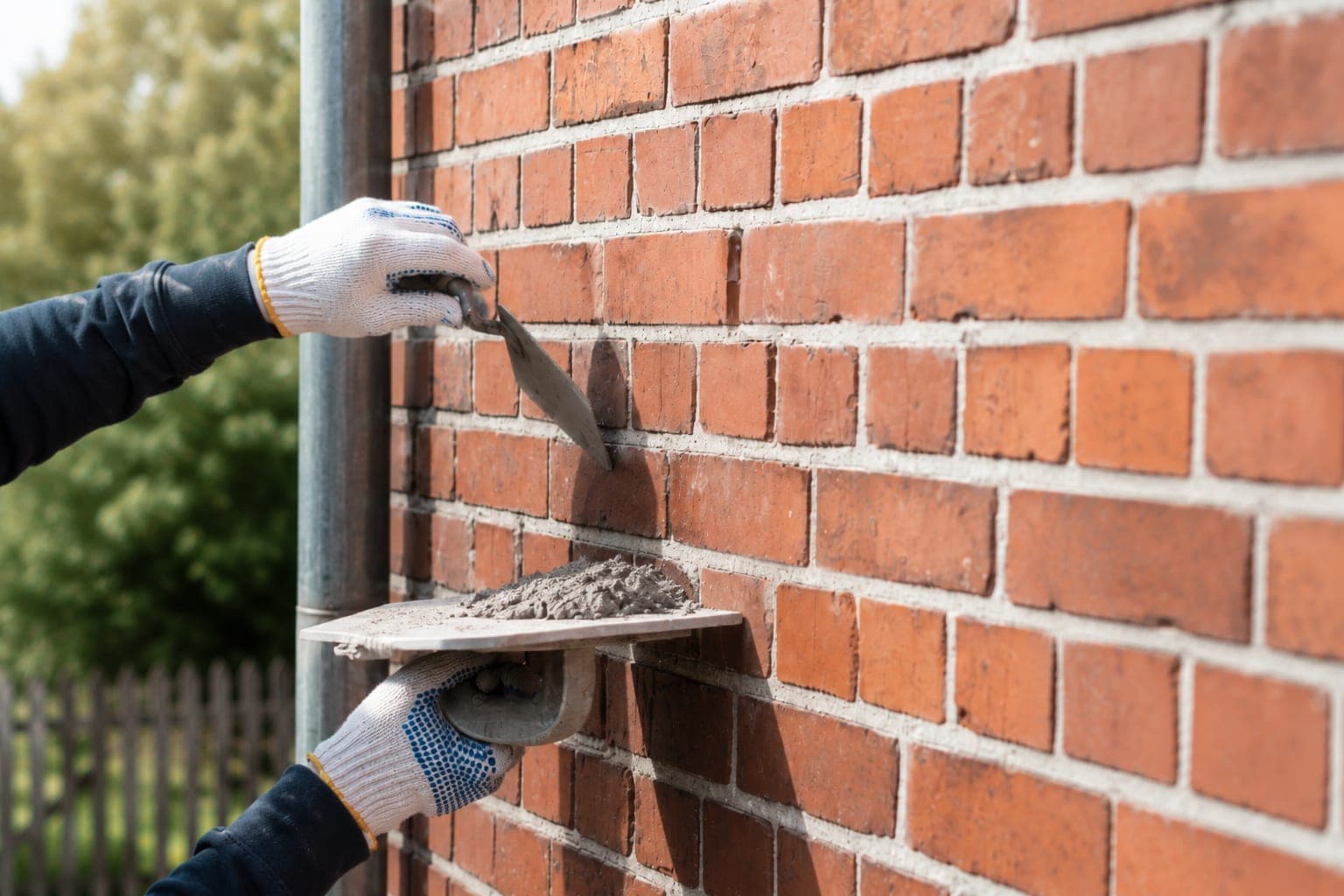
| Mortar joints | Recessed, sandy or missing mortar | Tuckpointing |
| Brick, stone or block faces | Flaking, popped faces, loose units | Unit replacement and masonry repair |
| Roofline | Stains on the ceiling or wall near the chimney | Flashing repair along with masonry work |
| Firebox | Cracked firebrick, open joints | Firebox repair |
| Smoke chamber | Rough, crumbling or stepped interior walls | Smoke chamber repair |
What happens during the visit
Mortar wears faster than brick; once joints open, water gets into the stack. Spalling brick is a sign water is freezing or soaking inside the masonry.
Look closely
Where water gets in and how far the damage goes.
Plan the scope
Repointing, brick replacement or a partial rebuild — explained before work starts.
Rebuild the weak parts
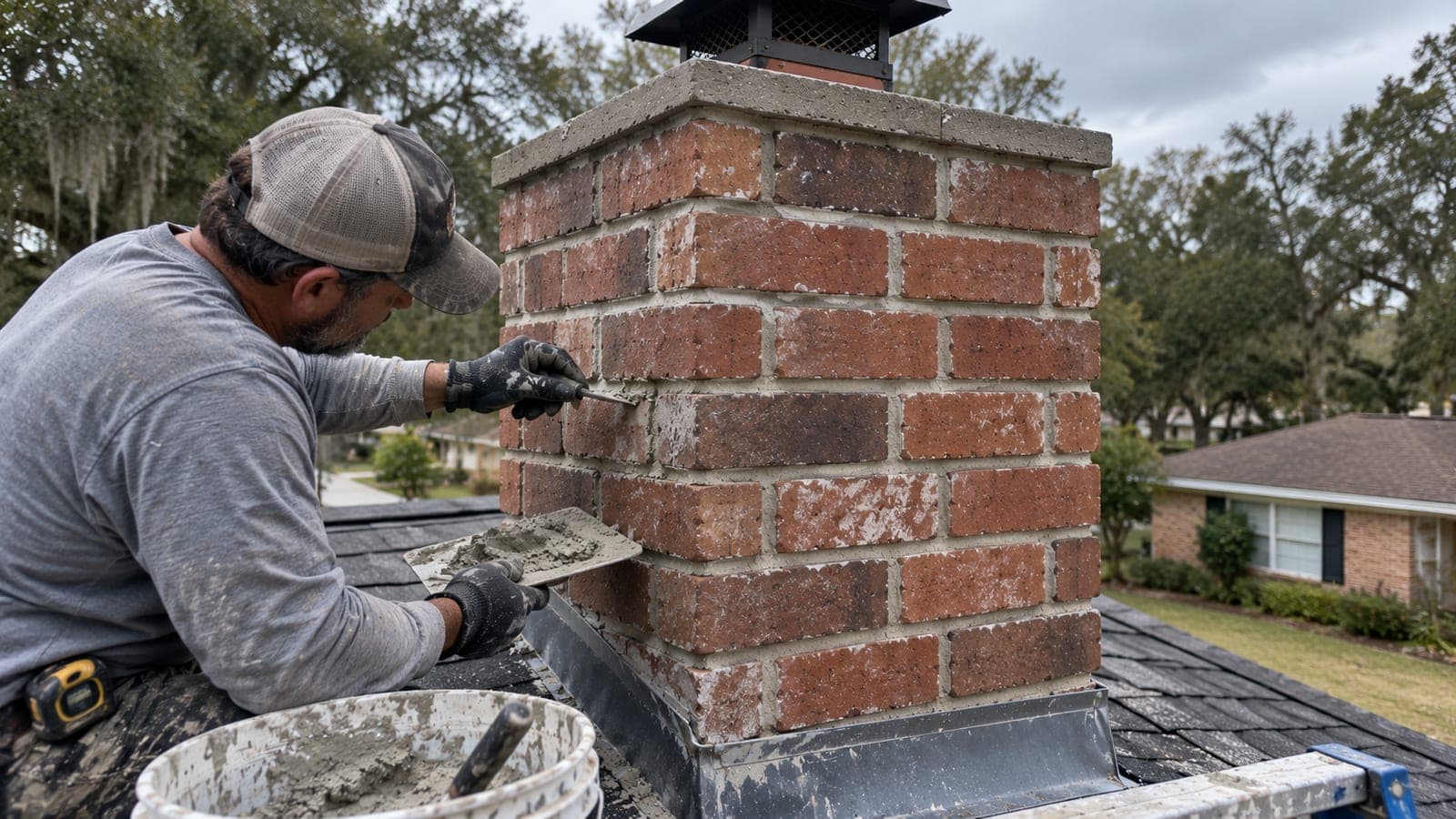
Joints, bricks and crown are repaired with compatible materials.
Protect
Where suitable, a breathable water repellent is applied after repairs cure.
When to book chimney masonry repair
- A leaning or cracked stack
- Bricks with faces flaking or popping off
- White efflorescence staining on the chimney
- Loose bricks at the top of the chimney
- A crown with cracks or missing pieces
How to prepare
- Write down what you've noticed and when it happens — smells, smoke, sounds or stains.
- Make sure the technician can reach the roof or attic access if it's needed.
- Let the fireplace or stove cool completely — ideally no fire for 24 hours before the visit.
- Clear a few feet of space in front of the hearth or appliance.
What we look at
- Mortar joint depth and condition
- Crown cracks and overhang
- Stack alignment and loose courses
- Flashing where masonry meets the roof
- Efflorescence and water staining
- Brick faces for spalling
Stay off the roof
Looking from the ground or with binoculars is safe. Climbing a steep or wet roof to inspect a chimney is not — leave that to someone with the right equipment.
Repair, rebuild or something in between
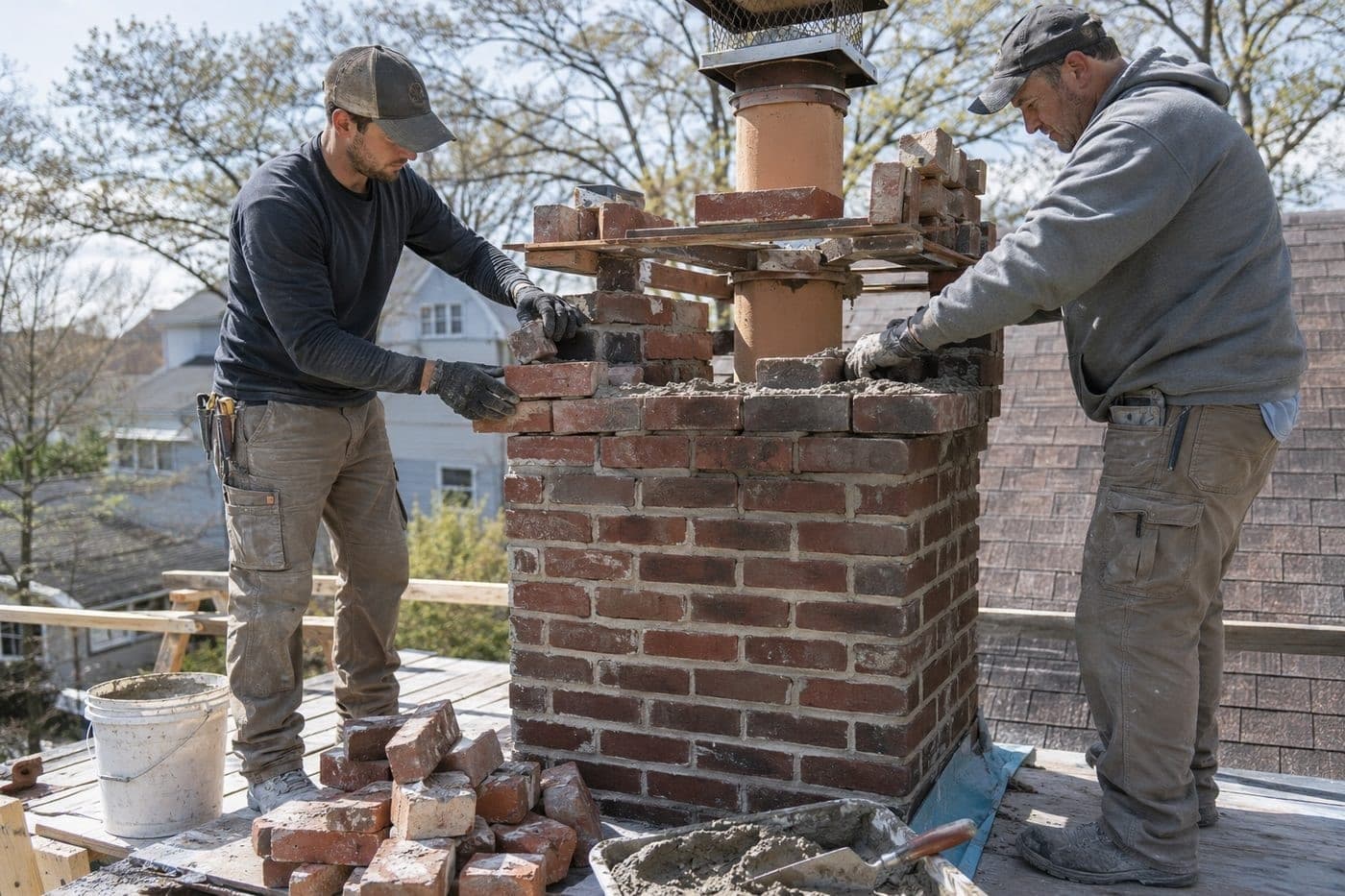
Not every crack calls for major work. Isolated joint erosion or a few spalled bricks are routine fixes. When the top courses are loose or the stack has started to lean, the conversation shifts toward rebuilding part of the chimney. Most jobs fall somewhere in the middle, with some repointing, a few replaced units and a repaired crown done together.
If your chimney is brick, our page on repairing chimney brickwork goes deeper into repointing and brick replacement. When sections need to come down and go back up, chimney masonry construction explains what rebuilding involves. Problems inside the fireplace, such as a damaged damper or firebox, are covered by our fireplace and chimney repairs.
Why waterproofing comes after the repair
A breathable water repellent can help masonry shed rain, but only once the joints, crown and flashing are sound. Applying it over open cracks doesn't stop water from getting in. Waterproofing is a finishing step, not a substitute for repair.
What to expect when you ask for masonry repairs
We'll explain what we found and which repairs matter most, so you can plan the work in a sensible order. Bricks falling from a chimney or a sudden leak during a storm can't wait, and emergency calls are accepted around the clock, Sunday through Friday. If bricks are falling or it looks like it could come down, keep everyone away from the area below it and call 911.