On this page
Commercial chimney air: draft, sizing and the appliance
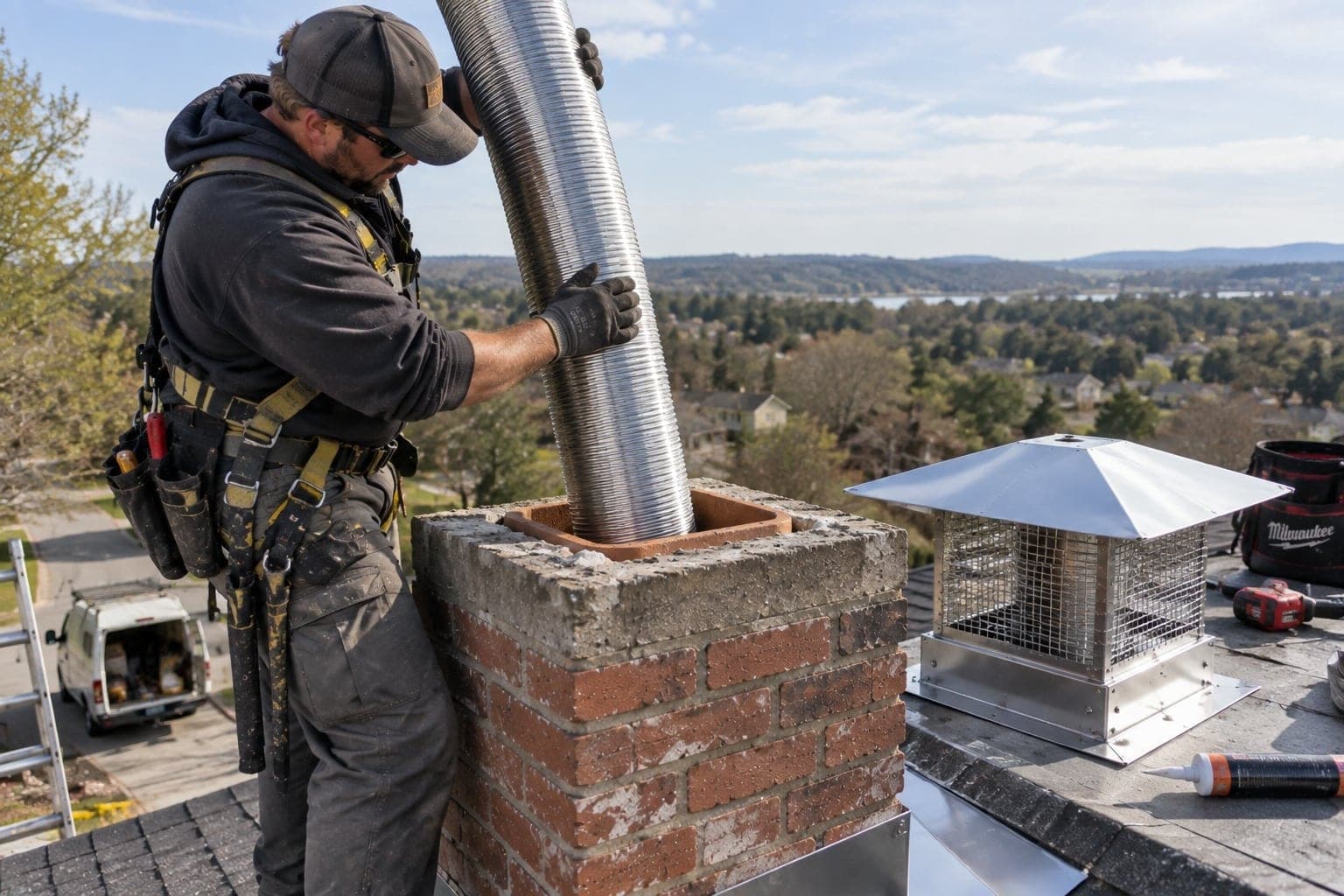
A commercial chimney has to move combustion gases reliably, often for long hours every day. For any new or rebuilt chimney, the flue size has to match the appliance it serves, whether that's an oven, a boiler or a fireplace. The chimney also has to rise far enough above the roof and nearby obstructions to draft well. Air inside the building matters too. A tight building with strong kitchen exhaust fans can pull air down the chimney instead of up. These questions get settled before the first brick is laid, along with whatever the appliance manufacturer and local building officials require.
With an existing chimney, the first question is whether to repair or rebuild. Widespread cracked chimney brick can make a rebuild the better long-term choice. For houses rather than commercial buildings, see residential brick chimney installation.
Finishing the top: caps, bands and spark arrestors
The band around a brick chimney cap
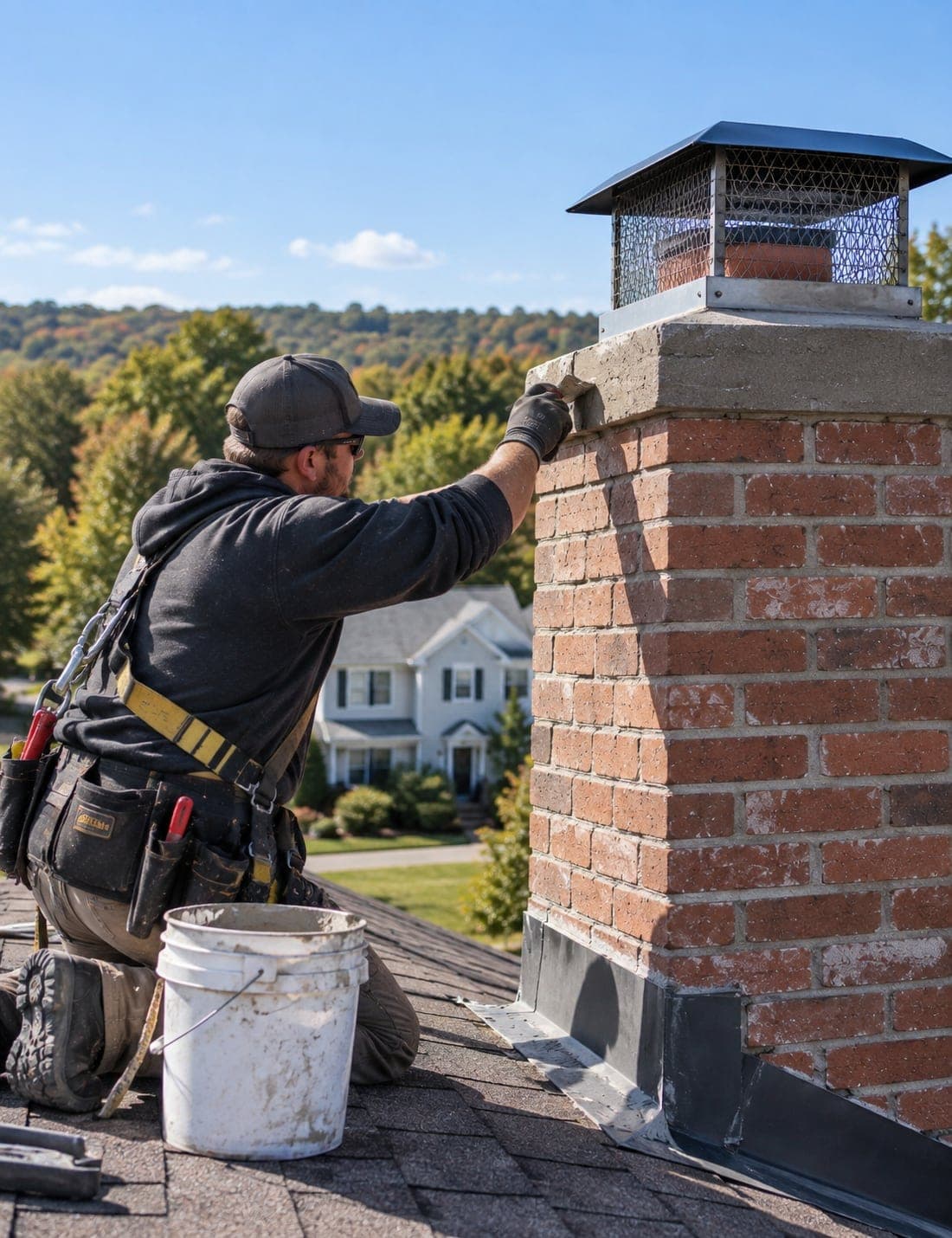
Caps attach in different ways. Single-flue caps often clamp to the flue tile with a band or bolts that tighten around it. Multi-flue and outside-mount caps fit over the whole crown and are secured with a band or skirt around the top of the brick. Either way, the band has to match the actual dimensions and be fastened firmly. A loose band is how caps end up on the roof after a windstorm.
Chimney spark arrestor installation
A spark arrestor is the mesh on a cap that stops embers from leaving the flue. It matters most for wood-burning appliances and for buildings near combustible roofing or trees. The mesh has to be sized to catch embers without choking the draft. On busy wood-fired equipment, it also needs regular cleaning, because soot and creosote can clog it.
Can all brick chimneys benefit from waterproofing?
Most can, with a few conditions. Brick and mortar absorb water, and repeated freezing and thawing breaks them down over time. A vapor-permeable water repellent made for masonry cuts down on absorption while still letting moisture escape. However:
- New masonry needs to cure before it's treated; follow the product's directions
- Brick that's spalling or has open joints needs repair or tuckpointing first
- Waterproofing won't stop leaks caused by failed flashing or a cracked crown
Before you plan a build
This overview of common chimney issues shows how water, heat and age wear down masonry, which is useful context when you're deciding between repair and new construction.
How a chimney build or rebuild runs
Rebuilding from sound masonry, not just patching the surface, is what stops a failing chimney from coming back. A chimney has to be sized and lined for the appliance it serves, or it won't draw properly.
Assess
What has to come down, or where the new chimney will run, and what it will serve.
Plan
Brick or stone, the liner size, the height above the roof and permits are settled first.
Build
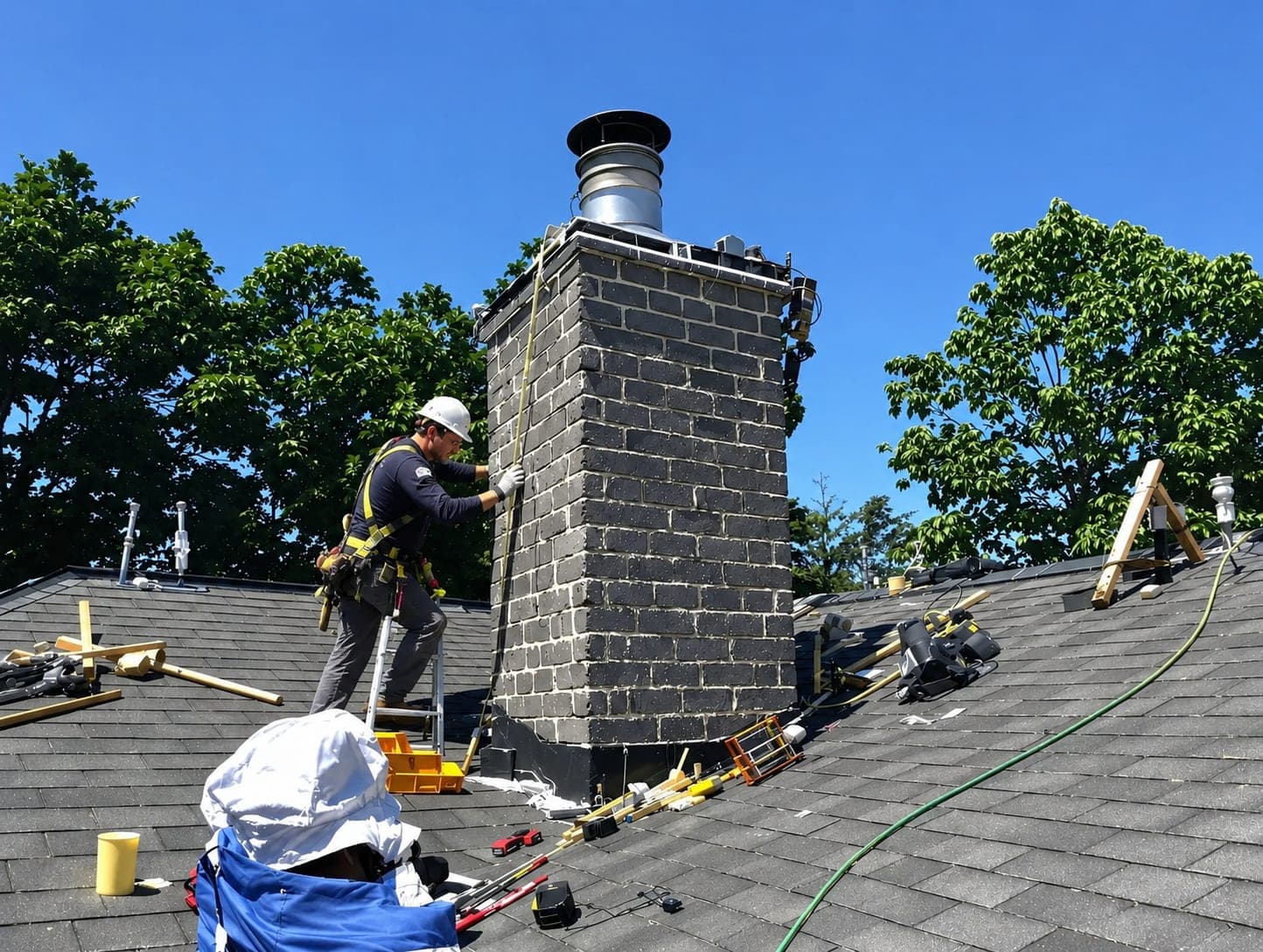
The masonry goes up course by course with a matched liner, then the crown, flashing and cap.
Finish
The roof line is sealed, the site cleaned up and the draw checked.
Stay off the roof
Looking from the ground or with binoculars is safe. Climbing a steep or wet roof to inspect a chimney is not — leave that to someone with the right equipment.
Signs it's time for commercial brick chimney installation
- Storm or impact damage to the stack
- A crown and top courses too far gone to repair
- A new fireplace or stove that needs a chimney
- A chimney with loose, spalling or leaning masonry above the roof
Getting ready for the visit
- Keep pets in another room while the work area is open.
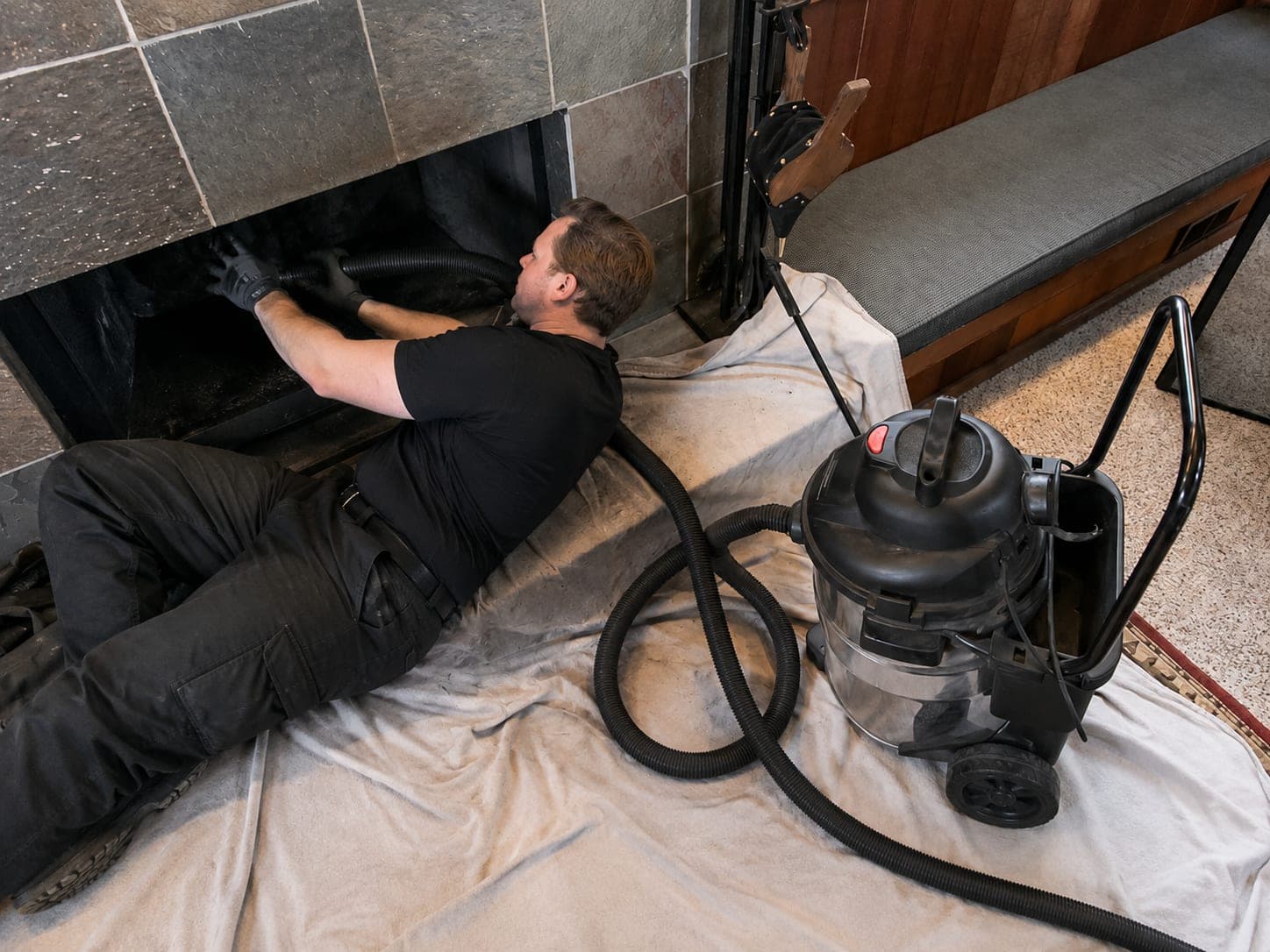
- Let the fireplace or stove cool completely — ideally no fire for 24 hours before the visit.
- Note the make and model of any insert, stove or gas unit if you have it.
- Write down what you've noticed and when it happens — smells, smoke, sounds or stains.
Checked on every visit
- Permit requirements
- Footing or sound masonry to build from
- Flue liner size for the appliance
- Flashing at the roof line
- Height above the roof