On this page
- What gas fireplace repair covers and who needs it
- Signs your gas fireplace needs repair
- What a repair visit involves
- What we check and adjust
- Repair options and what decides between them
- What affects the scope of the job
- How to prepare for the visit
- Safety notes for gas fireplaces
- Finding a nearby gas fireplace repair company you can trust
- Calling for gas fireplace repair
What gas fireplace repair covers and who needs it
A gas fireplace runs on a small chain of parts: a gas valve, a pilot or electronic ignition, a flame sensor (a thermocouple or thermopile), the burner and logs, a vent system that carries combustion gases outside, and controls such as a wall switch, remote or thermostat. Gas fireplace repair means finding which link in that chain has failed and fixing or replacing it, then confirming the whole system runs safely. If the names of these parts are new to you, our guide to fireplace anatomy explains how they fit together.
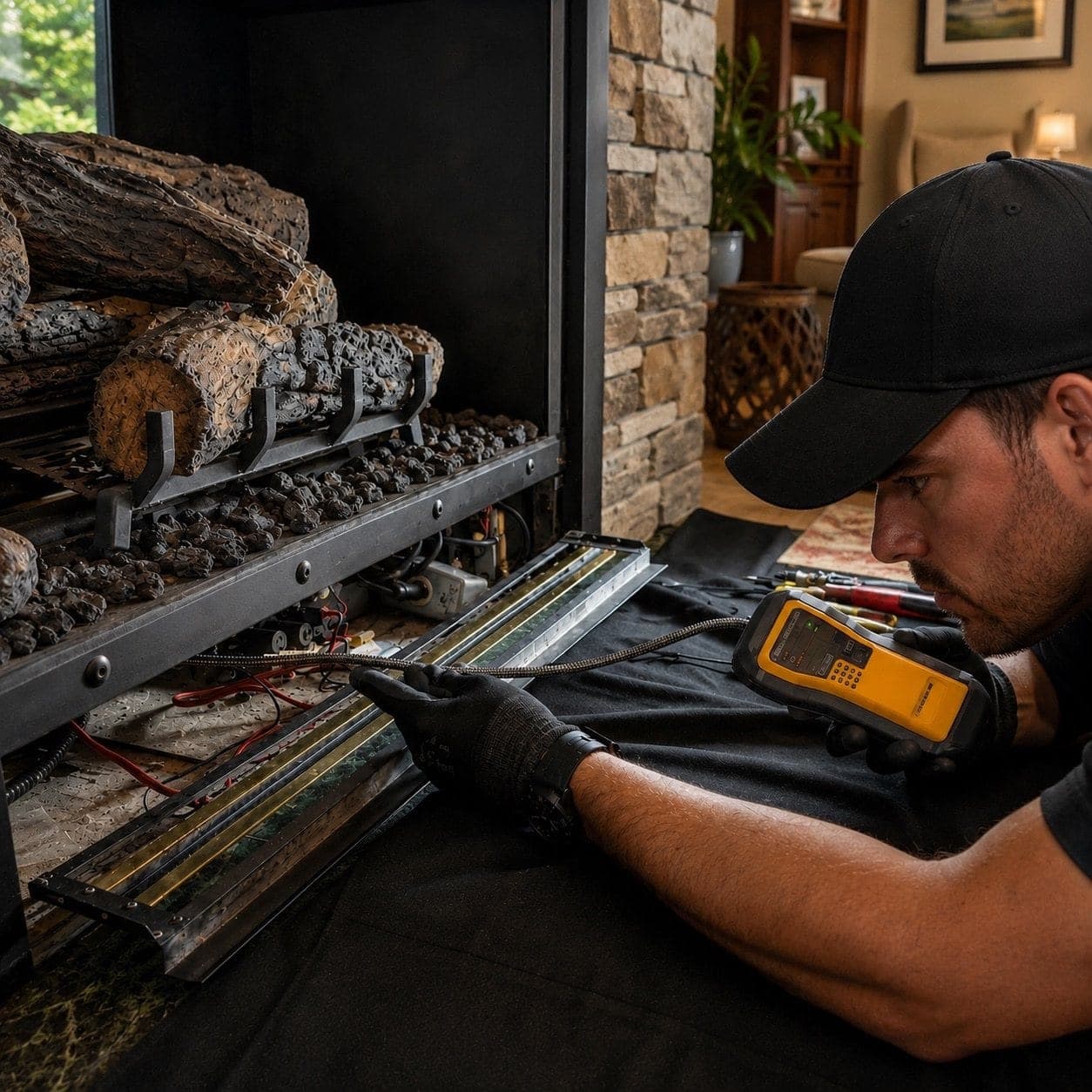
You need this service if you own a gas fireplace, gas insert or gas log set that has stopped working, works only some of the time, or is behaving in a way that worries you. Electric units work differently. If yours plugs into an outlet rather than a gas line, see our electric fireplace repair service instead.
Signs your gas fireplace needs repair
| What you notice | Common causes we check |
|---|---|
| Pilot lights but goes out when you release the knob | Weak or dirty thermocouple, pilot flame not reaching the sensor |
| Clicking, but the burner never ignites | Igniter gap or wiring, dirty pilot orifice, low gas pressure |
| Burner shuts off after a few minutes | Failing thermopile, loose switch wiring, safety sensor tripping on a venting problem |
| Tall, yellow or sooty flames | Misplaced logs, clogged burner ports, air shutter out of adjustment |
| White or dark film on the glass | Normal residue buildup or poor combustion; worth checking which |
| Remote or wall switch does nothing | Batteries, receiver, or the switch circuit |
| Gas odor beyond a brief whiff at startup. Any gas smell that lingers or comes back means leave the house and call your gas utility or 911 from outside. | Leak at a fitting or valve; treat as urgent |
If you smell gas
Don't light anything, flip switches or use the fireplace. Leave the house, then call your gas utility or 911 from outside. Once the utility has made the home safe, get in touch with us about the fireplace itself.
What a repair visit involves
How a gas fireplace repair visit works
Talk through the symptoms
We ask what the fireplace does, when it started, and whether anything changed recently, such as new batteries, a power outage or a gas service interruption.
Shut down and open up
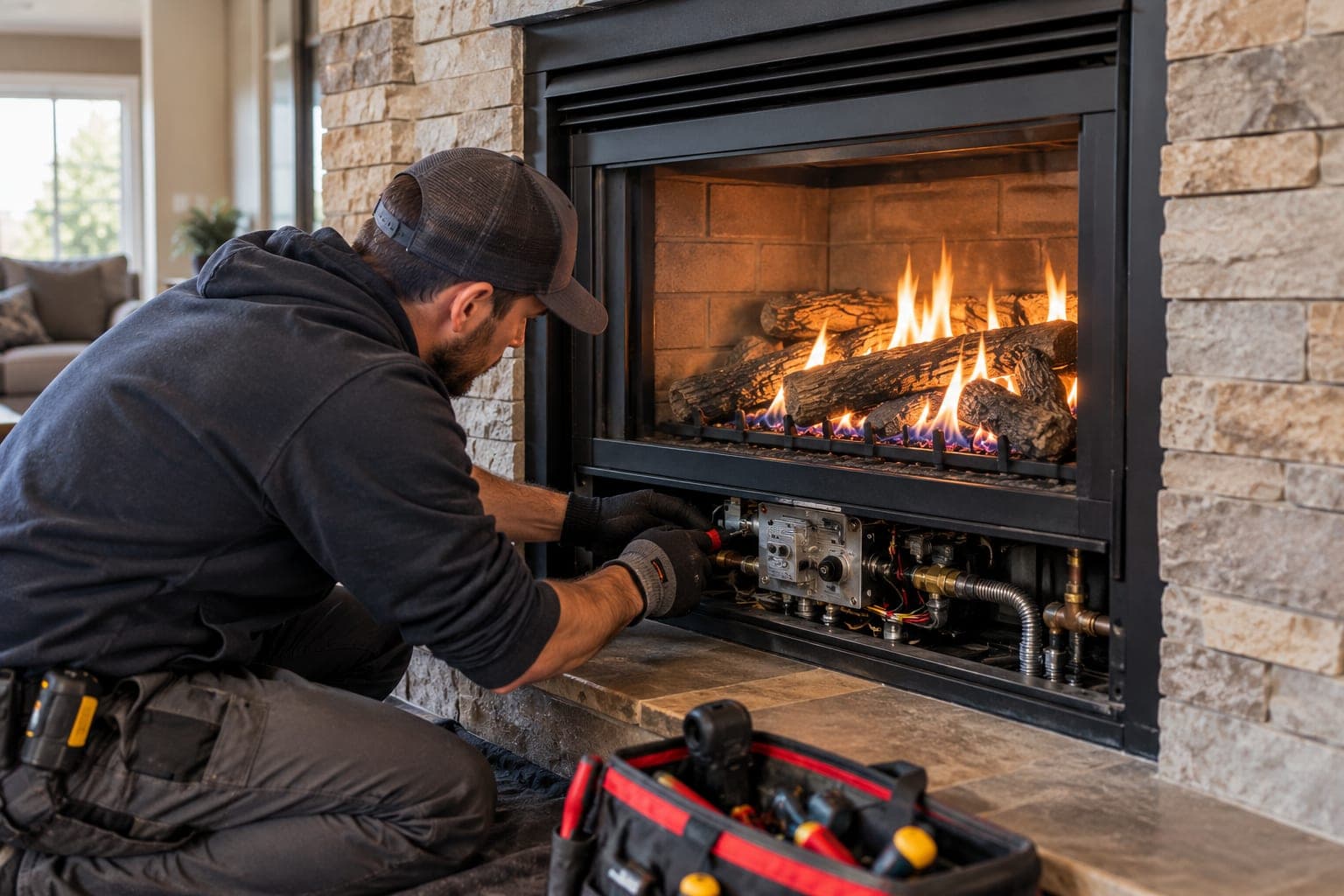
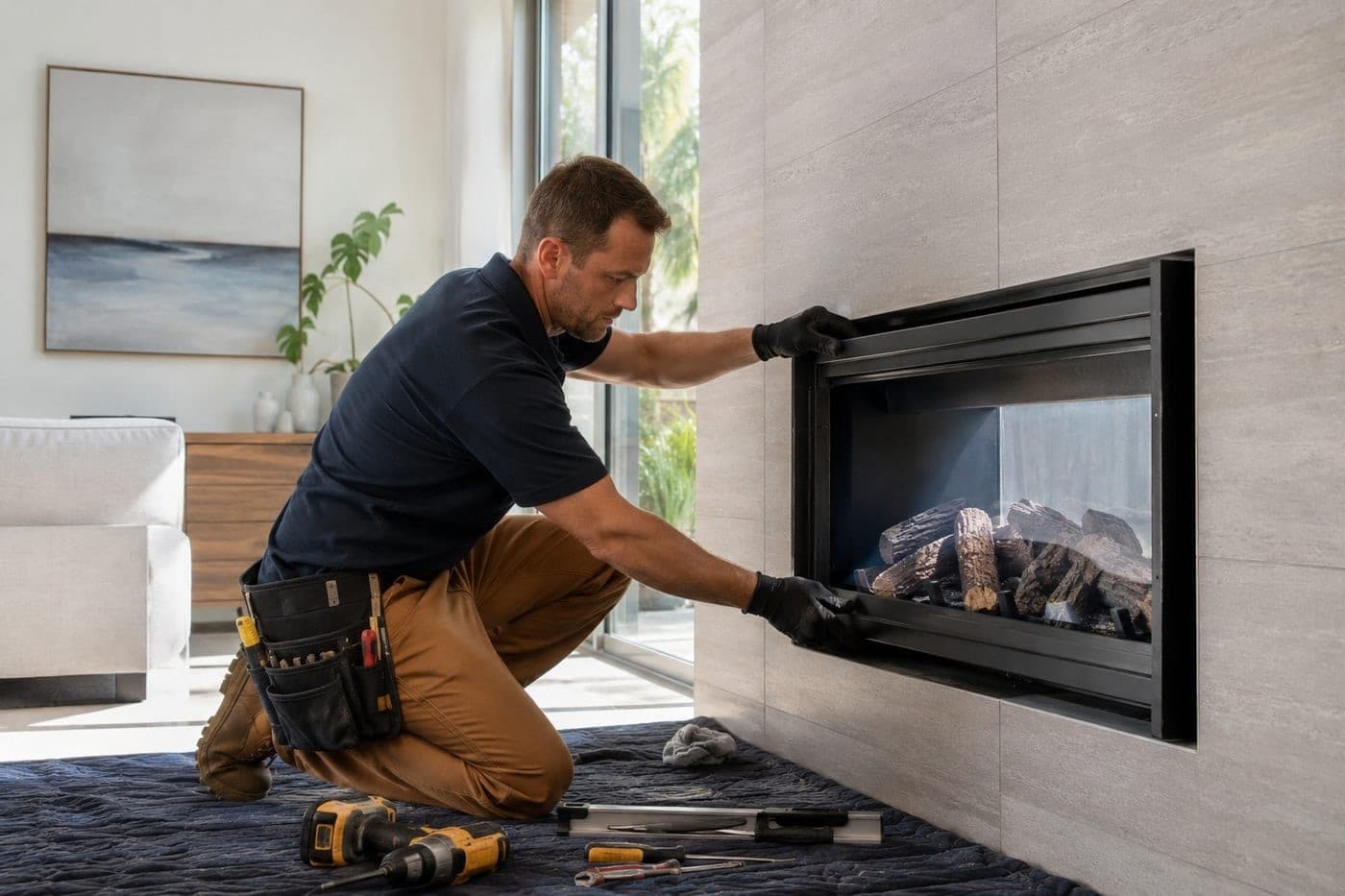
Gas is turned off at the appliance valve, the glass front is removed once the unit is cool, and the logs and burner are lifted out so the controls can be reached.
Test the ignition and safety circuit
The pilot, igniter, thermocouple or thermopile and valve are tested one at a time to isolate the fault instead of guessing.
Check venting and combustion
We look at the vent connection and termination for blockages, damage or separation, because a venting fault can make a healthy appliance shut itself off.
Explain findings and estimate
You hear what failed, why, and what the options are, with a free estimate before any repair begins.
Repair, reassemble and test-fire
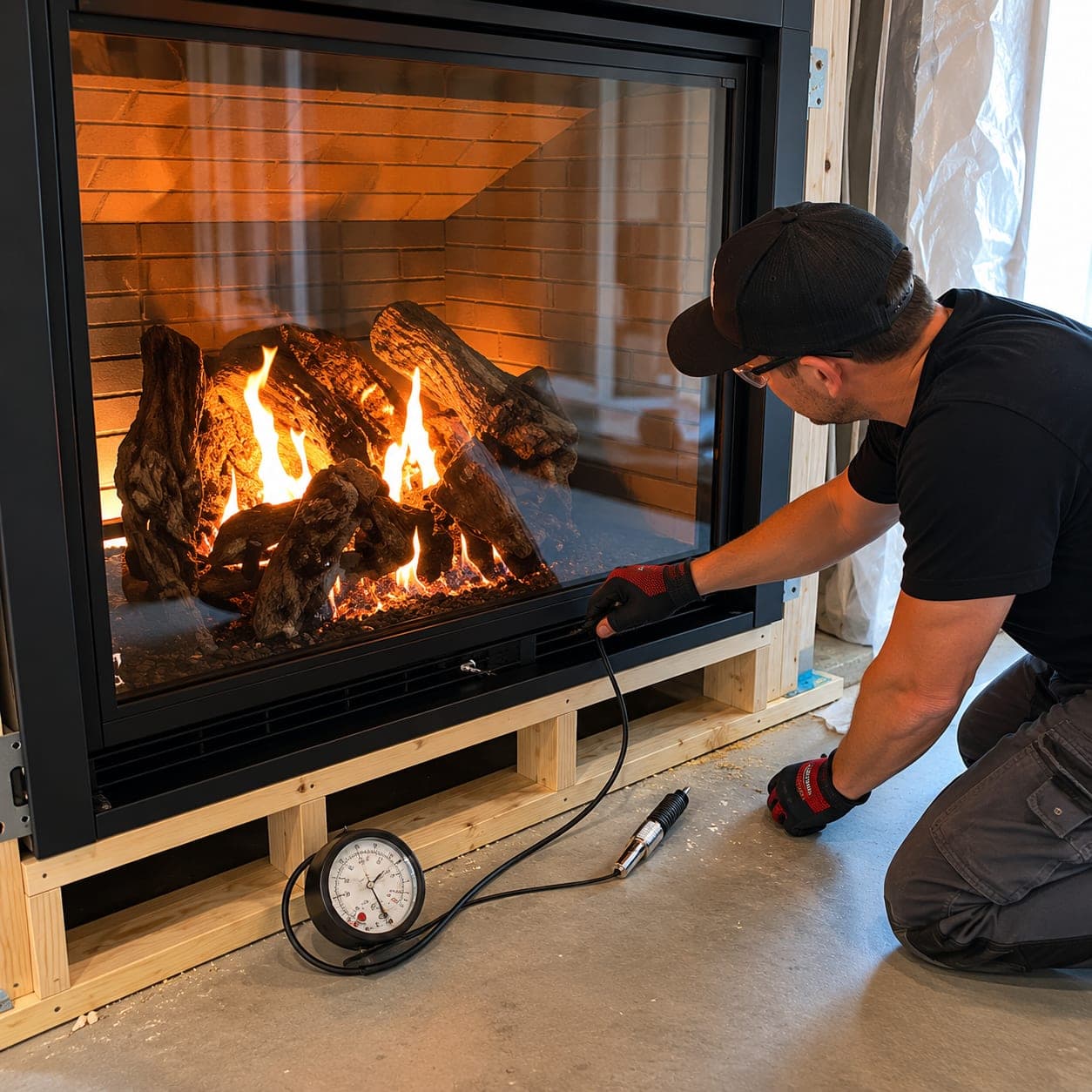
After the repair, logs go back in their correct positions, the glass is resealed, and the unit is run long enough to confirm the flame, shutoff and controls all behave.
What we check and adjust
Gas fireplace repair checklist
- Pilot flame size, color and contact with the sensor
- Thermocouple or thermopile output
- Igniter spark and wiring
- Gas valve operation and control knob
- Fittings and connections near the appliance for leaks
- Burner ports and pilot orifice for dust, debris or spider webs
- Log placement against the manufacturer's layout
- Glass gasket and front seal
- Vent pipe connection and outside termination
- Wall switch, remote receiver and thermostat function
- Blower or fan operation, if equipped
Repair options and what decides between them
| Feature | Part repair or replacement | Larger repair or replacement |
|---|---|---|
| Typical fault | Thermocouple, thermopile, igniter, switch, dirty burner | Failed gas valve, damaged firebox, corroded or improper venting |
| Unit condition | Sound body, parts still available | Worn throughout, or parts no longer made |
| What it involves | Cleaning, adjustment or swapping one component | Major component replacement or replacing the appliance |
Typical fault
- Part repair or replacement
- Thermocouple, thermopile, igniter, switch, dirty burner
- Larger repair or replacement
- Failed gas valve, damaged firebox, corroded or improper venting
Unit condition
- Part repair or replacement
- Sound body, parts still available
- Larger repair or replacement
- Worn throughout, or parts no longer made
What it involves
- Part repair or replacement
- Cleaning, adjustment or swapping one component
- Larger repair or replacement
- Major component replacement or replacing the appliance
Most visits end with a single part repaired or replaced. When the problem goes deeper, the deciding factors are parts availability, the condition of the firebox and venting, and whether a fix now just puts off a larger problem. If replacement makes more sense, we explain why rather than pushing it. Homeowners weighing a switch to an electric unit can read about how electric fireplace installation works, and our guide to choosing an efficient fireplace covers the trade-offs between heat output and running a unit for looks.
What affects the scope of the job
- Venting type: direct-vent, B-vent and vent-free units each have different checks and failure points.
- Access: a fireplace behind built-in cabinetry or a tight surround takes longer to open up.
- Parts: common components are easier to source than parts for older or discontinued models.
- Hidden problems: a second fault sometimes appears once the first is fixed, such as a valve that was masked by a dead thermopile.
- Venting condition: if the outside termination is damaged, that becomes part of the repair.
How to prepare for the visit
- Turn the fireplace off a few hours ahead so the glass and firebox are cool.
- Find the make and model, usually on a rating plate behind the lower grille or in the owner's manual.
- Clear the hearth and a few feet in front of the unit.
- Have the remote and spare batteries handy.
- Note when the problem happens: at startup, after a few minutes, only in wind, or randomly.
Safety notes for gas fireplaces
Gas appliances carry two real risks: leaks and incomplete combustion that can produce carbon monoxide. Keep working CO alarms in the home, never run a unit with the glass removed or cracked, and don't bypass a safety sensor that keeps shutting the fireplace off. That shutoff is usually telling you something. Our guide to fireplace safety at home covers the everyday habits that prevent most problems.
Finding a nearby gas fireplace repair company you can trust
When you search for a nearby gas fireplace repair company, reviews are only part of the picture. Ask how the company diagnoses a fault, whether they explain the problem before quoting, and whether the estimate is free. Ask also whether they test-fire the unit before leaving. With us, estimates are free, and we explain what failed and why before any repair is done.
Calling for gas fireplace repair
We serve Hartford and homeowners across Connecticut. We are available 24 hours, Sunday through Friday, accept emergency calls, and offer same-day service where the schedule allows. When you call, have the make and model ready and describe the symptoms. Mention any gas smell right away. That helps us arrive with the right parts in mind and makes the visit shorter.