On this page
Wood burning fireplace problems we repair
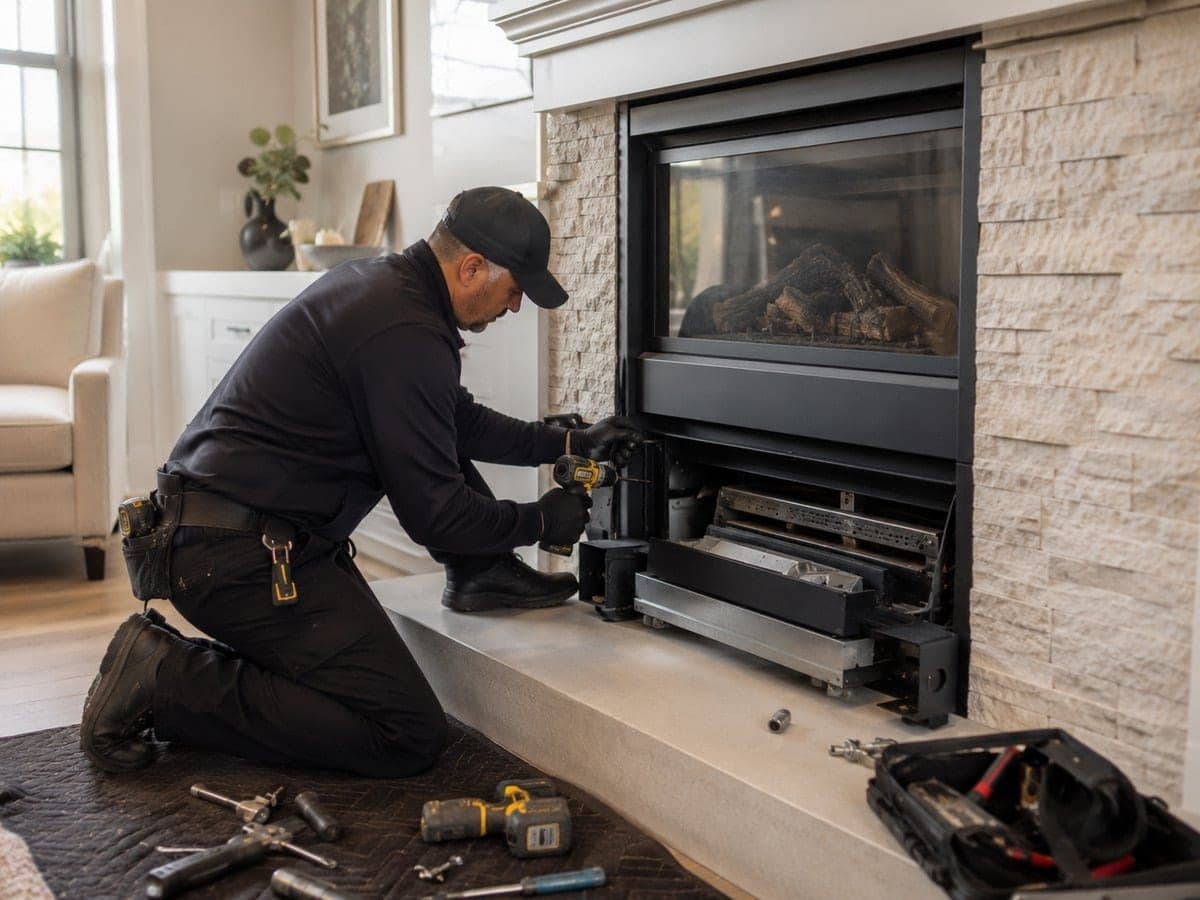
Most repairs start with a symptom you notice from the living room. Here's how common signs usually line up with the work behind them:
| What you notice | Usual cause | Repair |
|---|---|---|
| Cracked, loose or crumbling firebrick | Years of heating and cooling | Firebox repair |
| A damper that sticks, won't seal or sheds rust | Corrosion or a warped plate | Damper repair |
| Smoke spilling into the room | Draft problems or a rough smoke chamber | Fireplace draft repair or smoke chamber repair |
| Water stains or rust inside the firebox | Leaks at the crown or flashing, or a missing cap | Chimney leak repair and cap installation |
| Grit or bits of flue tile on the hearth | A deteriorating flue or masonry | Liner repair or masonry repair |
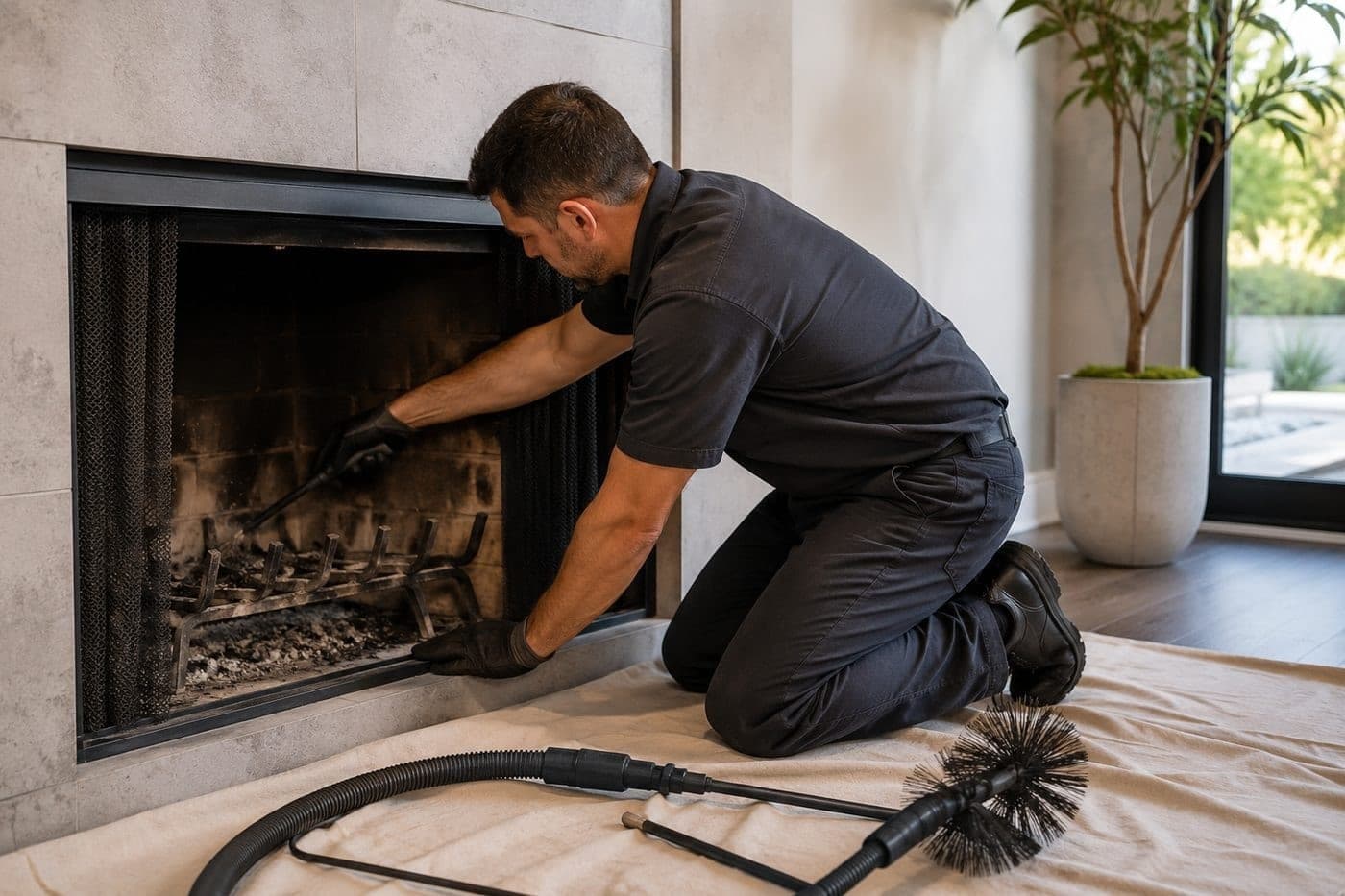
Heavy soot and creosote can hide damage. A fireplace that hasn't been swept in a while may need a thorough wood burning fireplace cleaning before we can see exactly what's wrong.
Burning wood in your fireplace without wearing it out
How you burn affects how often you'll need repairs. Wet wood smolders, leaves more creosote behind and puts extra stress on a cold flue.
Habits that protect a wood burning fireplace
- Burn split hardwood that has dried for at least six months
- Open the damper fully before lighting and leave it open until the ashes are cold
- Build moderate fires rather than packing the firebox full
- Skip painted or treated lumber, pallets, cardboard and trash
- Keep a thin bed of ash, but clear it out before it reaches the grate
For tips on getting heat into the room rather than up the flue, see ways to get more heat from a fireplace.
Other wood burning fireplace services
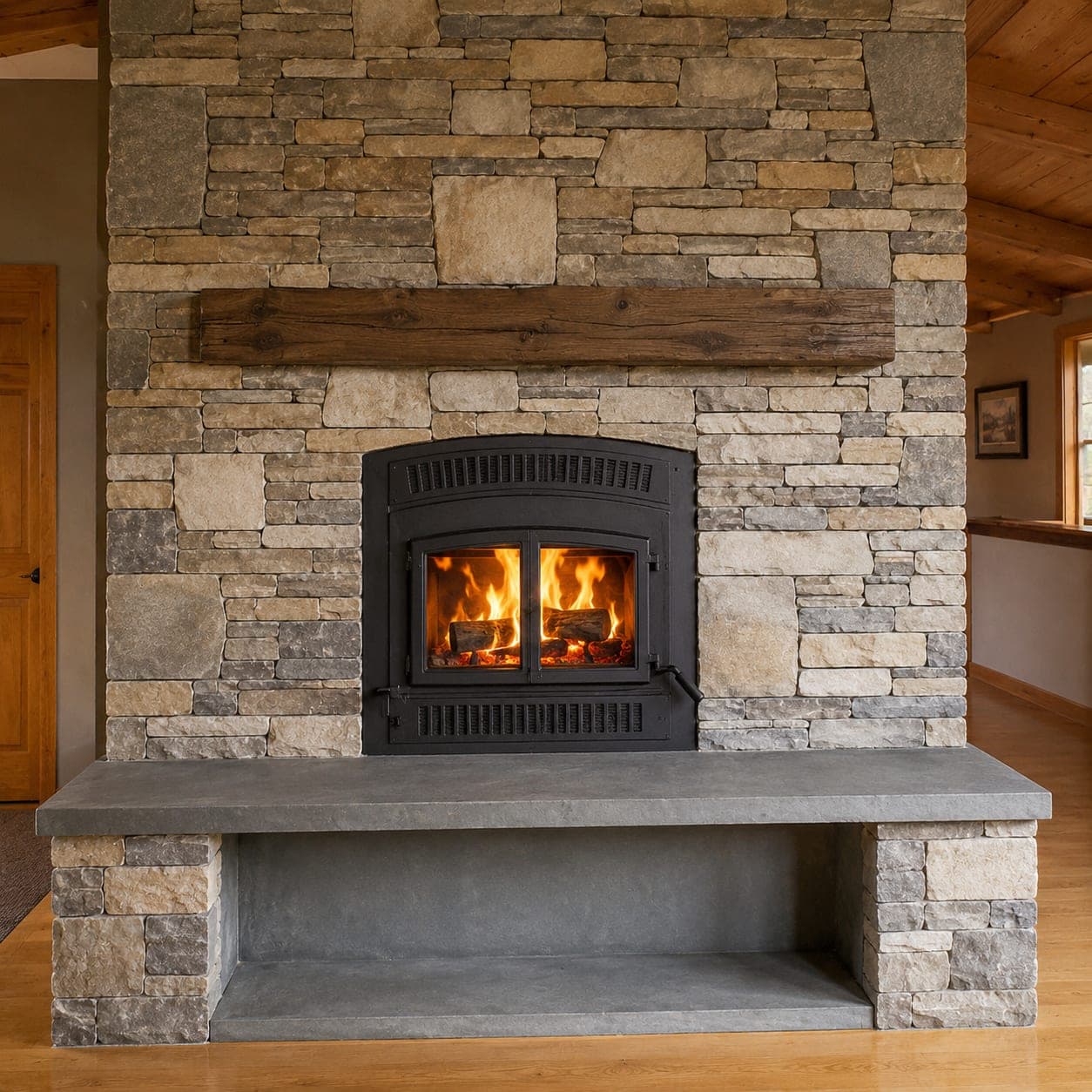
Repair isn't the only path. If your fireplace heats poorly even in good condition, a wood burning fireplace insert can make it a far more efficient heater while keeping a real wood fire. If you have no fireplace, or one that's beyond saving, look at building a traditional wood fireplace. Torn between fuels? Our comparison of gas and wood fireplaces lays out the trade-offs.
We work on wood burning fireplaces across Connecticut, including older ones that need restoration rather than a quick patch. Estimates are free and emergency calls are accepted.
How the visit works
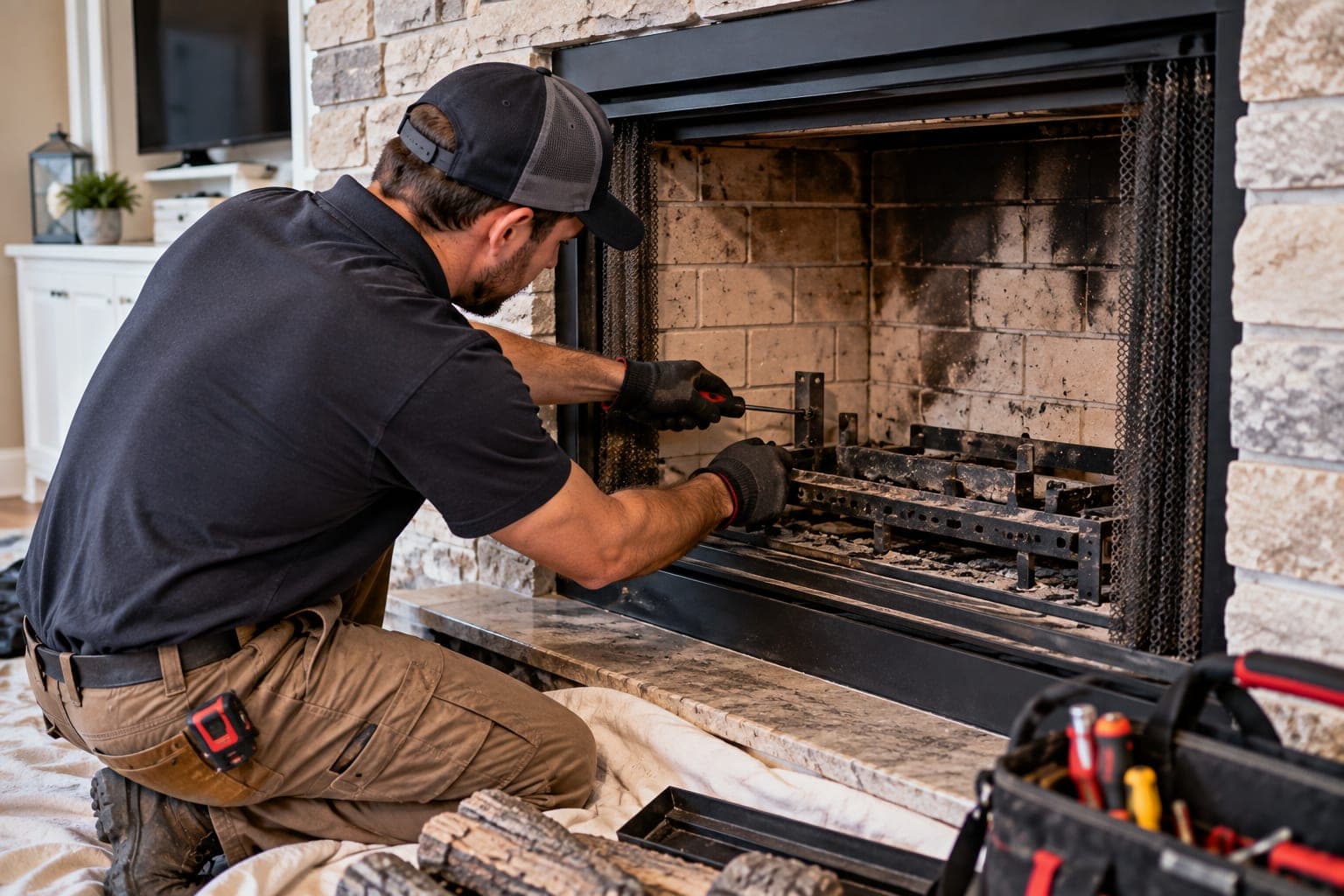
A damaged smoke chamber is a common cause of smoke spilling into the room. Cracks in the firebox let heat reach the framing behind it.
Find the cause
The firebox, damper, smoke chamber and any doors, glass or panels are checked.
Confirm the type
Masonry or factory-built — the repair has to suit the system.
Explain the fix
You hear the options and what each involves before work starts.
Repair and test
The work is done and the fireplace is checked before you use it.
What gets checked
- Smoke chamber and smoke shelf
- Hearth and surround
- Firebrick or refractory panels
- Doors, glass and gaskets
- Mortar joints inside the firebox
When to book wood-burning fireplace repair
- Doors or glass that are cracked or don't seal
- Smoke coming into the room
- Cracked or missing firebrick or refractory panels
- A damper that won't open or close
- Rust or warping inside the firebox
Before the technician arrives
- Let the fireplace or stove cool completely — ideally no fire for 24 hours before the visit.
- Clear a few feet of space in front of the hearth or appliance.
- Write down what you've noticed and when it happens — smells, smoke, sounds or stains.
- Keep pets in another room while the work area is open.
Carbon monoxide
A blocked or damaged flue can push carbon monoxide into the home. If an alarm sounds or anyone feels dizzy or sick near the fireplace, get everyone outside and call 911.