What a thorough clogged dryer vent cleaning covers
Lint rarely piles up where it's easy to reach. It packs into elbows and into low spots where moisture made it stick. It also builds up at the exterior hood, where a flap may no longer swing open. Pushing a cheap brush in from the laundry room can squeeze that lint into a tighter plug. A proper cleaning works the entire run, not just the first few feet.
What's usually part of the visit
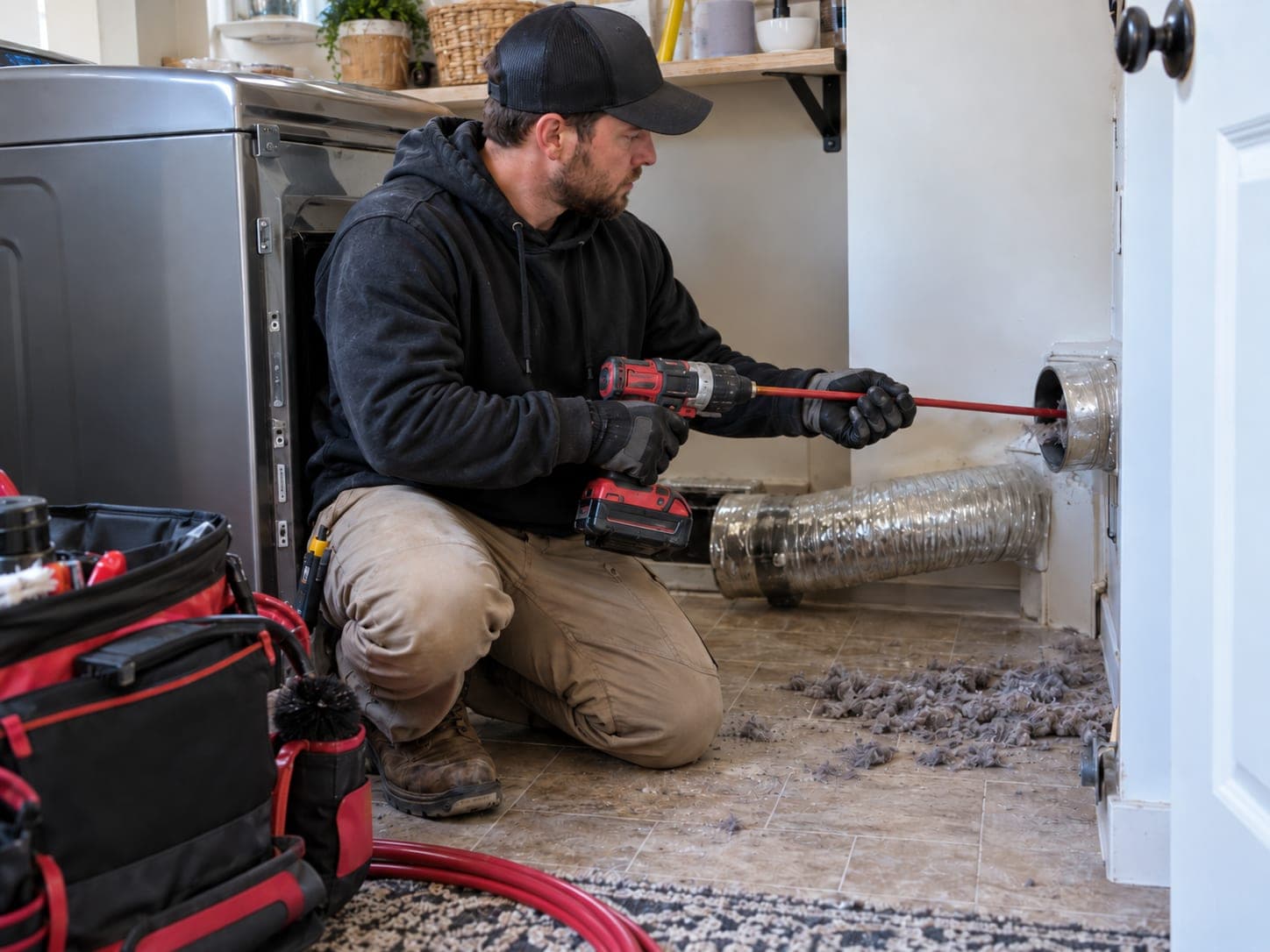
- Pulling the dryer out and checking the transition hose behind it for kinks, crushing and lint
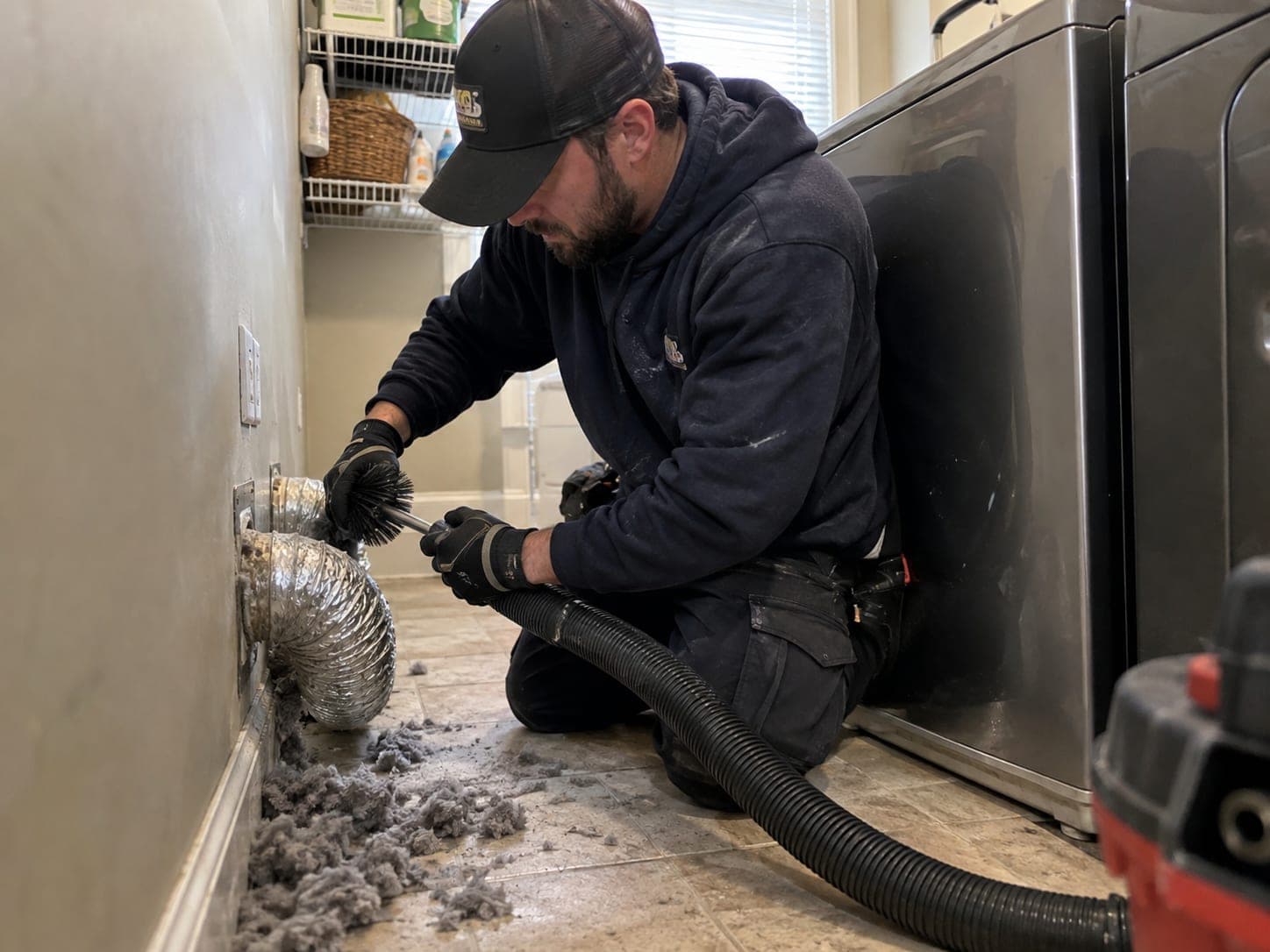
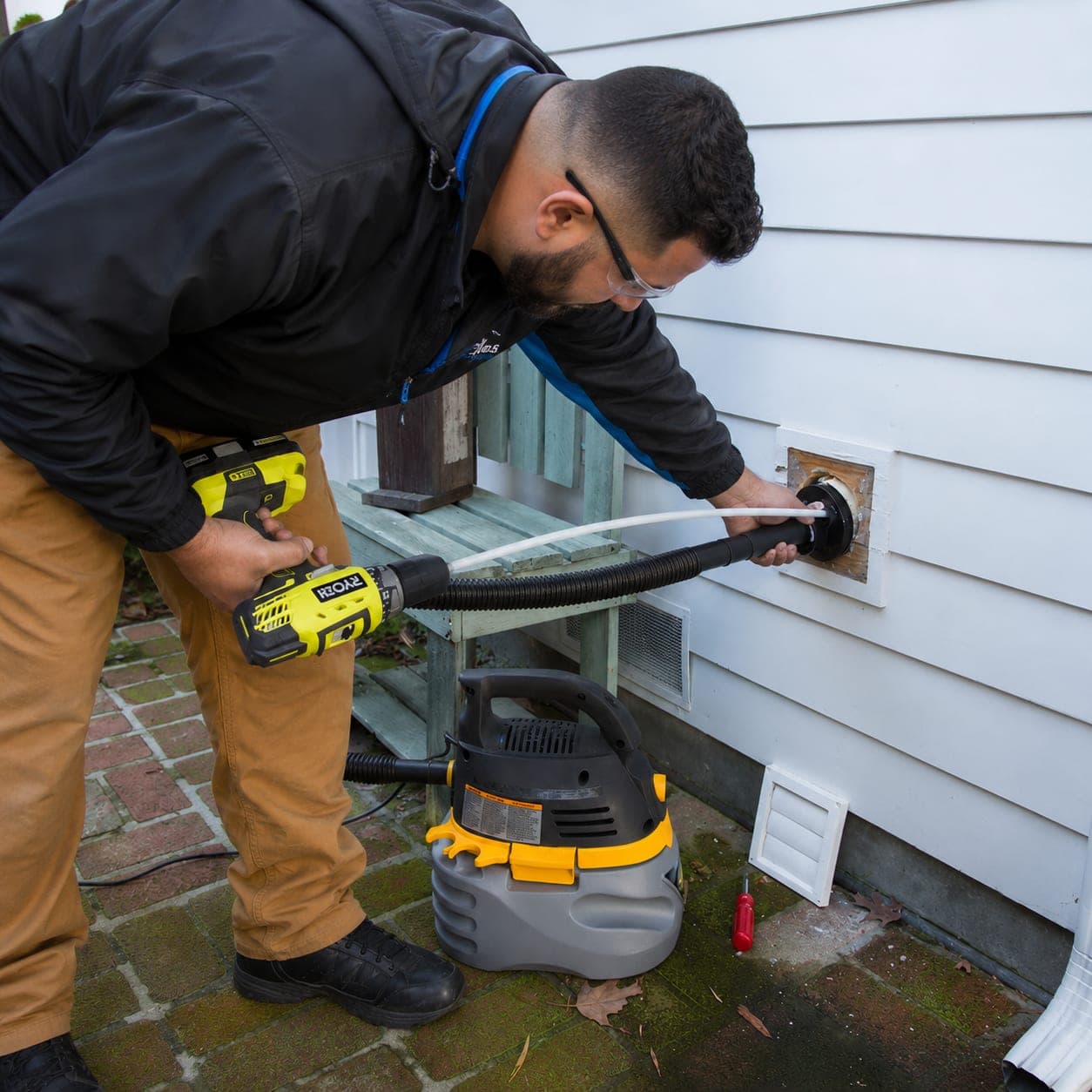
- Brushing and vacuuming the full duct run, including every elbow
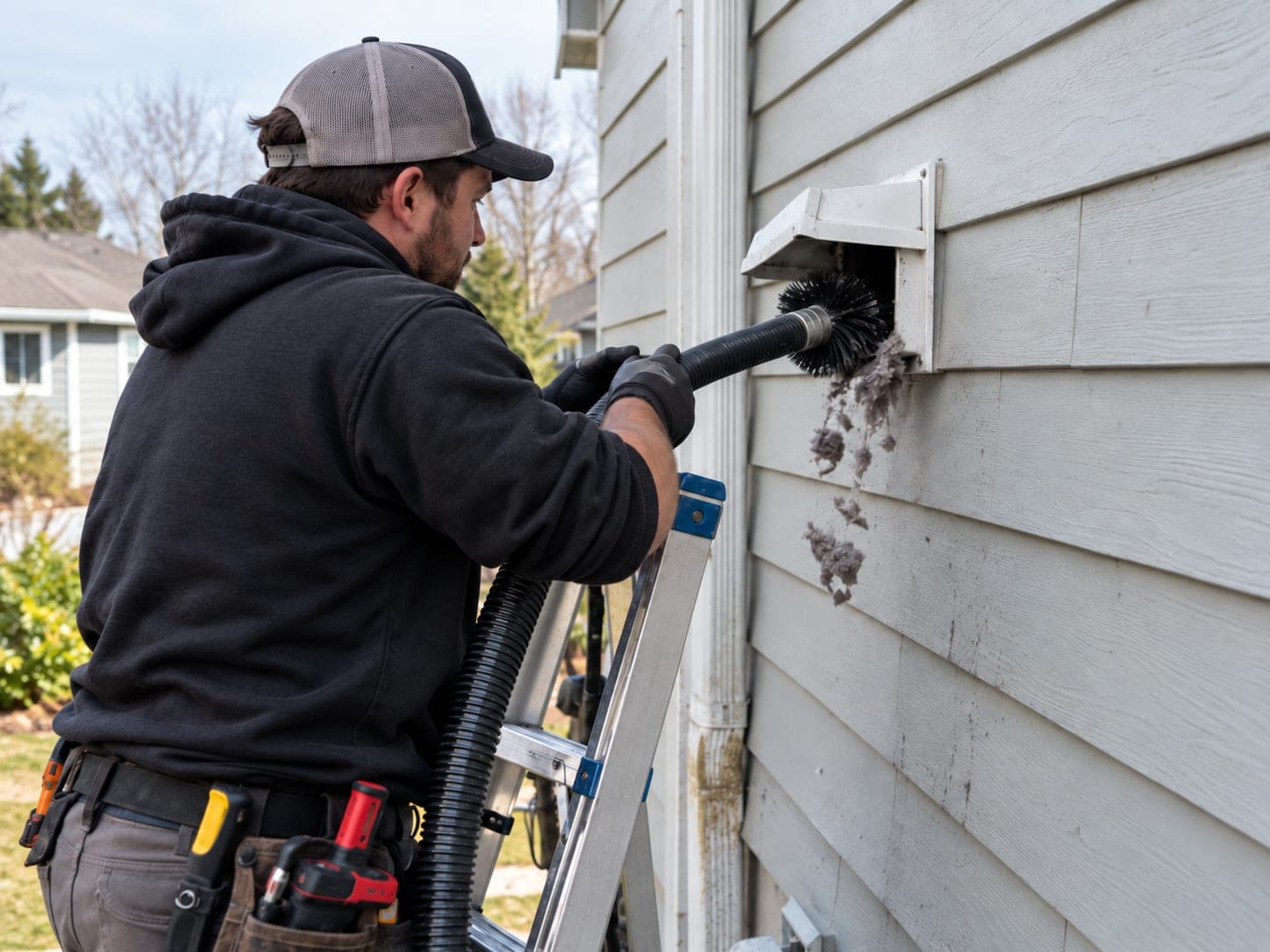
- Clearing the outside hood or roof termination and making sure the flap opens freely
- Removing nesting material or other debris found in the duct
- Reconnecting the dryer and confirming strong airflow at the exit
- Pointing out crushed, sagging or disconnected sections that will clog again
Single-family homes, rentals and larger buildings
In a house, one vent serves one dryer, and the run is usually short enough to clear in a single visit. Rentals and apartment buildings are different. Several machines may run every day, and tenants rarely notice slow drying until it's bad. Owners and property managers in Hartford and elsewhere in Connecticut can set up dryer vent cleaning for rental and multi-unit properties. That way, units are handled together rather than one complaint at a time.
Roof-mounted vents are used where the laundry sits far from an exterior wall, and they are cleaned too. They tend to collect lint under the cap, where it's hardest to spot from the ground.
When a cleaning isn't the whole answer
A vent that fills back up within months usually has a physical cause. Each of these will rebuild a clog no matter how well the duct was brushed: - foil hose crushed behind the dryer - a run with too many turns - joints held with screws that snag lint - an outside cover with a lint-trapping screen The fix may then be repairing or replacing the damaged section, rerouting a vent that's too long, or fitting a new vent cover. If you're still working out what causes a clogged dryer vent, start there. If you'd rather pinpoint the blockage before anything is taken apart, see inspecting a dryer vent for clogs.
Stop using the dryer if you notice these
Stop running the dryer until the vent is checked if you notice a scorching smell, a dryer too hot to touch, or a machine that shuts itself off mid-cycle. Emergency calls are accepted at any hour, Sunday through Friday.
What the visit covers
Lint is highly flammable and collects in long or crushed vent runs. A restricted vent makes the dryer run longer and wear out sooner.
Look
Length, bends and condition of the vent.
Clean end to end
From the dryer connection to the outside.
Fix small problems
Crushed connectors and loose joints are pointed out or replaced.
Confirm airflow
A final check with the dryer running.
When to book dryer vent cleaning
- The outside flap barely opens when the dryer is on
- Clothes take two cycles to dry
- The dryer or laundry room gets very hot
- A burning smell when the dryer runs
- Lint around the outside vent hood or behind the dryer
What the technician checks
- Outside hood, flap and screen
- Crushed or kinked sections
- Airflow at the outside hood
- Vent length and number of bends
- Connector behind the dryer
Burning smell?
If you smell burning while the dryer runs, turn it off and unplug it until the vent is checked.