On this page
- What dryer vent repair covers and who needs it
- Signs your dryer vent needs repair
- What happens during a repair visit
- What we check and fix
- Repair, replacement or rerouting: what decides it
- Code-adherent dryer vent repairs
- Why professional dryer vent repair is better than a quick patch
- What affects the scope and cost of a repair
- How to prepare for the visit
- Dryer vent repair in Connecticut
What dryer vent repair covers and who needs it
A dryer vent is the duct that carries exhaust from the back of your dryer to the outdoors. It includes the short transition duct behind the machine, the run through walls, floors, ceilings or attics, and the termination cover outside. Dryer vent repair means fixing or replacing any part of that path that is damaged, disconnected, undersized or built from the wrong material. Cleaning alone can't fix those problems.
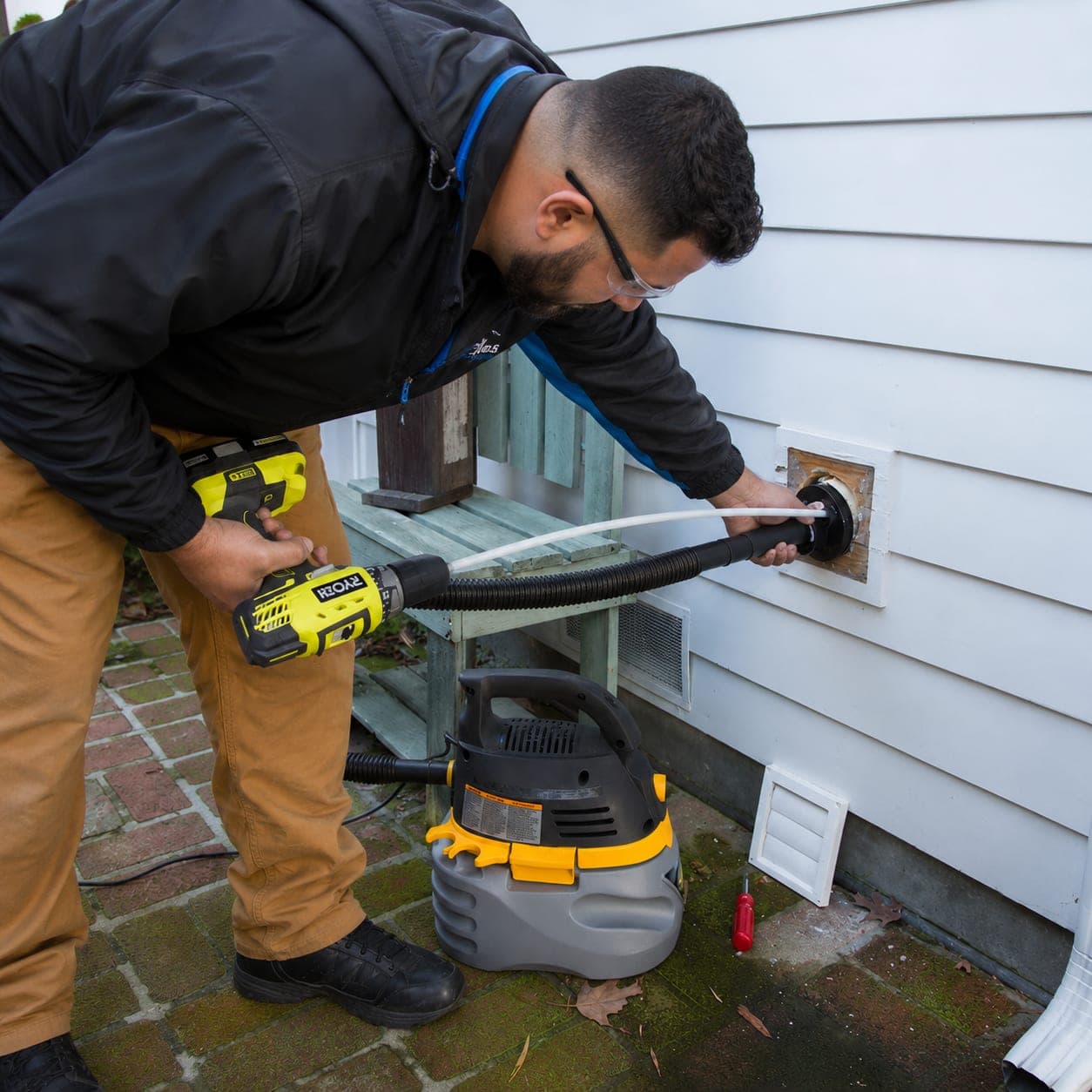
Homeowners usually need it after a move or a new dryer installation, after a renovation that boxed in or rerouted the duct, or when a vent has been crushed behind the machine for years. Landlords and property managers often call when tenants report long dry times or a hot laundry closet.
Signs your dryer vent needs repair
Broken dryer vent repair
Physical damage is the most common reason for a repair visit. Look for:
- A transition hose that is flattened, kinked or pushed tight against the wall
- Duct sections that have separated in a basement, crawlspace or attic, often with lint piling up around the gap
- Thin plastic or vinyl foil duct, which many dryer manufacturers do not allow
- A cracked, stuck or missing flap on the exterior vent cover
- Moisture, condensation or water stains near the duct run
Clogged dryer vent repair
A blockage often signals a deeper problem, such as a sagging section where lint settles, too many bends, or a run that is simply too long. Typical signs are clothes still damp after a full cycle, the outside of the dryer getting very hot, a burning smell, the dryer shutting off early, or very little airflow at the outdoor cover while the dryer runs. If you smell burning, turn the dryer off and unplug it until the vent is checked. Removing the clog solves today's symptom. Correcting the layout keeps it from coming back.
What happens during a repair visit
How a typical visit goes
Talk through the symptoms
We ask what you've noticed, how old the dryer is, whether it runs on gas or electric, and where the vent exits the house.
Pull the dryer and inspect the run
We disconnect the dryer safely, check the transition duct and follow the run as far as it can be reached. Hidden sections may call for a camera inspection of the vent run.
Test airflow
We measure airflow at the termination so we can compare it before and after the work.
Explain the findings and options
You get a plain explanation of what's wrong and the choices for fixing it before any repair begins. The estimate is free.
Repair, replace or reroute
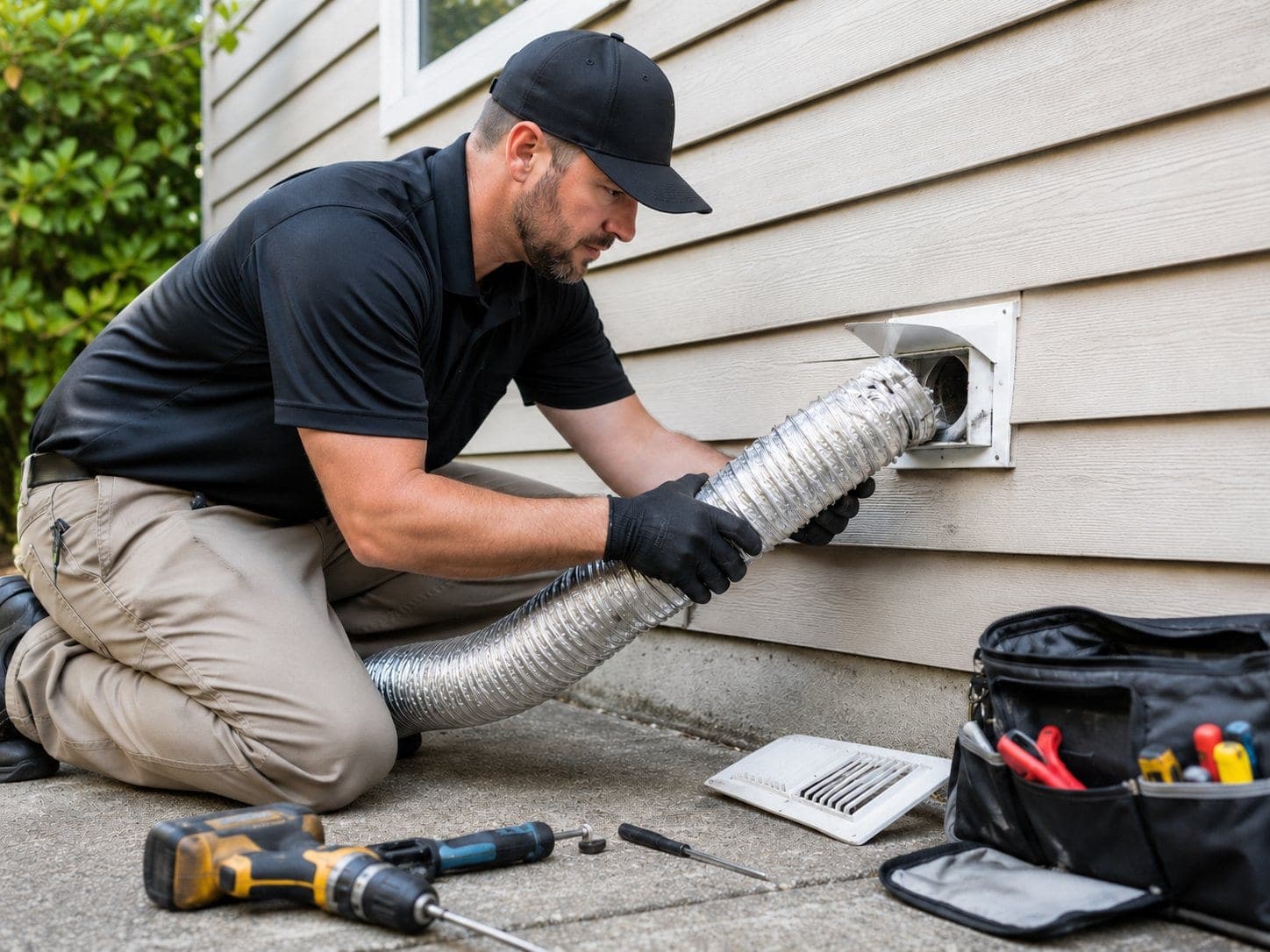
We clear blockages, replace damaged sections, seal joints and fit a proper exterior cover as needed.
Reconnect and retest
We reconnect the dryer without crushing the duct, run it, and confirm airflow at the outside cover.
What we check and fix
Points covered on a repair visit
- Transition duct material, length and condition behind the dryer
- Connections at the dryer outlet and the wall
- Joints along the run, including any loose, gapped or screwed-through seams
- Sags, low spots and crushed sections in hidden runs
- Number and tightness of bends
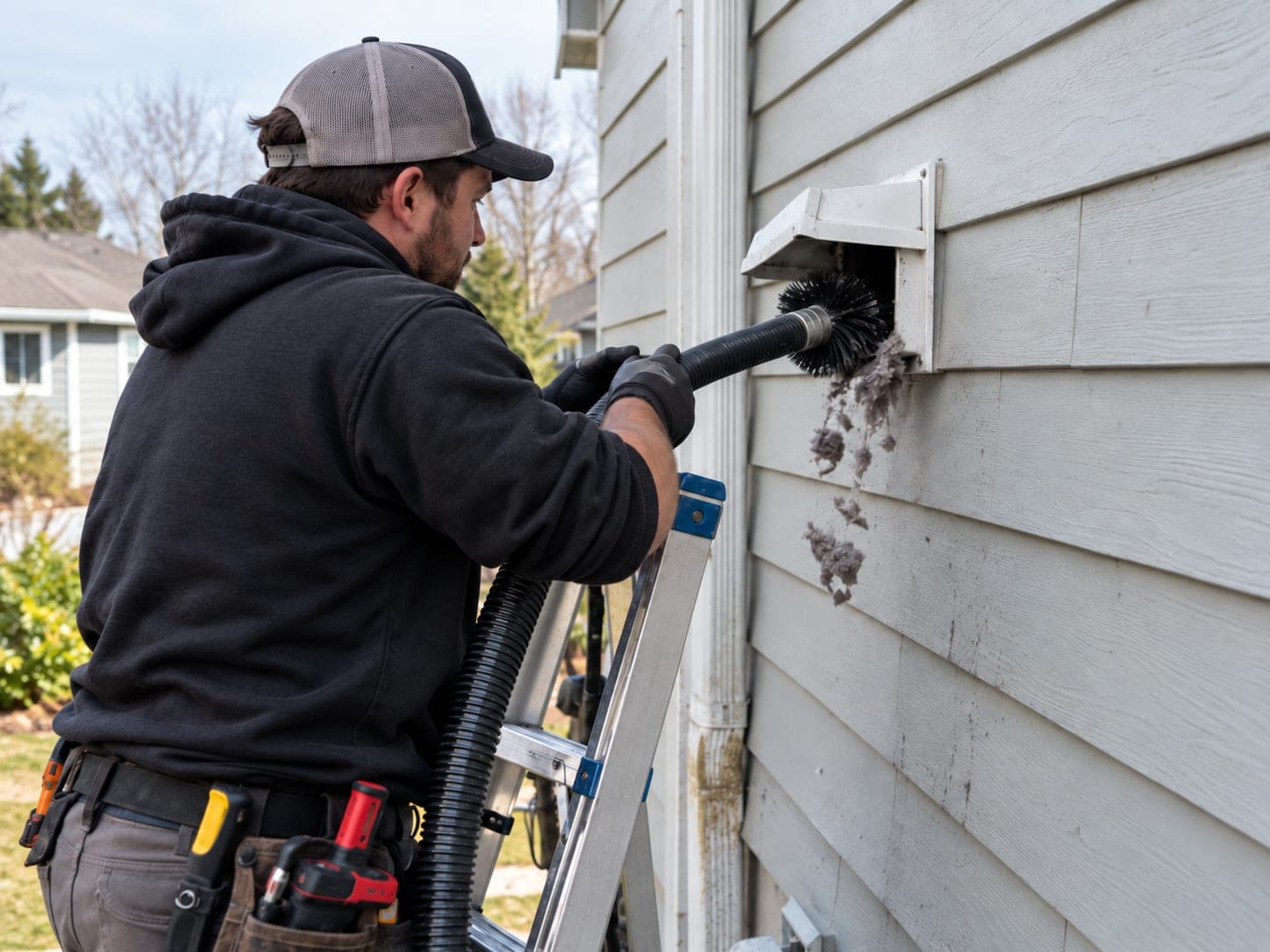
- Lint buildup and debris, including nests at the exterior opening
- Exterior or roof termination cover, flap or damper, and screen
- Signs of moisture, heat damage or lint escaping into wall or attic spaces
- Airflow at the termination before and after the work
Repair, replacement or rerouting: what decides it
Not every vent problem calls for a full replacement. The right fix depends on what the inspection shows.
| Feature | Repair or partial replacement | Full replacement or reroute |
|---|---|---|
| Best when | Damage is limited to one section, a joint or the cover | The duct is the wrong material throughout, too long, or has too many bends |
| Typical work | Replace the transition hose, reseal joints, swap a broken cover | New rigid metal run, a new wall or roof exit, or a shorter path |
| Disruption | Usually limited to the laundry area and the exterior cover | May involve access through ceilings, closets, attics or exterior walls |
| Long-term result | Restores airflow if the original layout is sound | Fixes layouts that keep clogging no matter how often they're cleaned |
Best when
- Repair or partial replacement
- Damage is limited to one section, a joint or the cover
- Full replacement or reroute
- The duct is the wrong material throughout, too long, or has too many bends
Typical work
- Repair or partial replacement
- Replace the transition hose, reseal joints, swap a broken cover
- Full replacement or reroute
- New rigid metal run, a new wall or roof exit, or a shorter path
Disruption
- Repair or partial replacement
- Usually limited to the laundry area and the exterior cover
- Full replacement or reroute
- May involve access through ceilings, closets, attics or exterior walls
Long-term result
- Repair or partial replacement
- Restores airflow if the original layout is sound
- Full replacement or reroute
- Fixes layouts that keep clogging no matter how often they're cleaned
The difference between dryer vent repair and cleaning
Cleaning removes lint and debris from a duct that is otherwise in good shape. Repair changes the duct itself by fixing damage, replacing poor materials or correcting the route. Many visits include both. If your vent is intact and only needs clearing, our dryer vent cleaning service may be all you need.
Code-adherent dryer vent repairs
Dryer venting is covered by building codes and by the installation instructions that come with each dryer, and the two usually point the same way. We follow the manufacturer's instructions for your dryer and the requirements that apply to your home. Common practice includes:
- Smooth-walled rigid metal duct for concealed runs, with no plastic or vinyl foil duct
- Joints sealed with foil tape or clamps rather than screws that reach into the airflow and catch lint
- A run length that stays within what the dryer manufacturer allows, with each bend counted against that limit
- Venting that ends outdoors, never into an attic, crawlspace, garage or chimney
- An exterior cover with a working backdraft flap and no screen that traps lint
Why professional dryer vent repair is better than a quick patch
Taping over a split or swapping in a cheap flexible hose can make a dryer seem fine for a while. It rarely fixes the cause. A professional repair traces the whole run, including the parts you can't see, measures airflow instead of guessing, and corrects layouts that trap lint. It also handles gas dryer connections carefully when the machine has to be moved.
What affects the scope and cost of a repair
Dryer vent repair cost depends on the job, so we give a free estimate after seeing the vent rather than quoting a flat number. The factors that shape the scope are:
- How long the run is and how many bends it has
- Whether the duct is exposed or hidden in finished walls and ceilings
- How many sections need replacing, or whether the whole run does
- Whether the vent exits through a wall or the roof, and how easy that spot is to reach
- Whether rerouting or a new exterior opening is needed
- How much lint and debris must be cleared first
How to prepare for the visit
- Clear a path to the dryer and leave space to pull it out from the wall. Unplug the dryer first, and on a gas dryer turn off its gas valve.
- Empty the dryer and clean the lint screen
- Unlock attic, basement or crawlspace access if the duct passes through them
- Know where the exterior or roof vent cover is, and clear plants or stored items from around it
- Note any symptoms, such as long dry times, odors or a hot cabinet, so we know what to look for
Safety notes
If you smell burning, see scorched lint, or the dryer shuts off from overheating, stop using it and unplug it. On a gas dryer, a damaged or disconnected vent can release exhaust indoors, so treat a gas smell or a carbon monoxide alarm as an emergency and leave the house. Don't run the dryer with the vent disconnected. We accept emergency calls and are available 24 hours, Sunday through Friday.
Dryer vent repair in Connecticut
We handle dryer vent repairs for houses, condos and rental units in Hartford and other parts of Connecticut. Same-day service is offered when the schedule allows. If you live nearby, see our page on dryer vent repair for homes in West Hartford. Owners of apartment buildings, laundromats and other shared laundry spaces can read how commercial dryer vent cleaning works. To get started, call or request an estimate.