On this page
- What commercial dryer vent cleaning covers
- Signs a commercial dryer vent needs attention
- What can affect dryer vent airflow
- Dryer vent accessibility
- Cleaning, repair or rerouting: choosing the fix
- What affects the scope of the job
- Managing dryer vent systems across multiple buildings
- Dryer vent services across Connecticut
- How to prepare for the visit
What commercial dryer vent cleaning covers
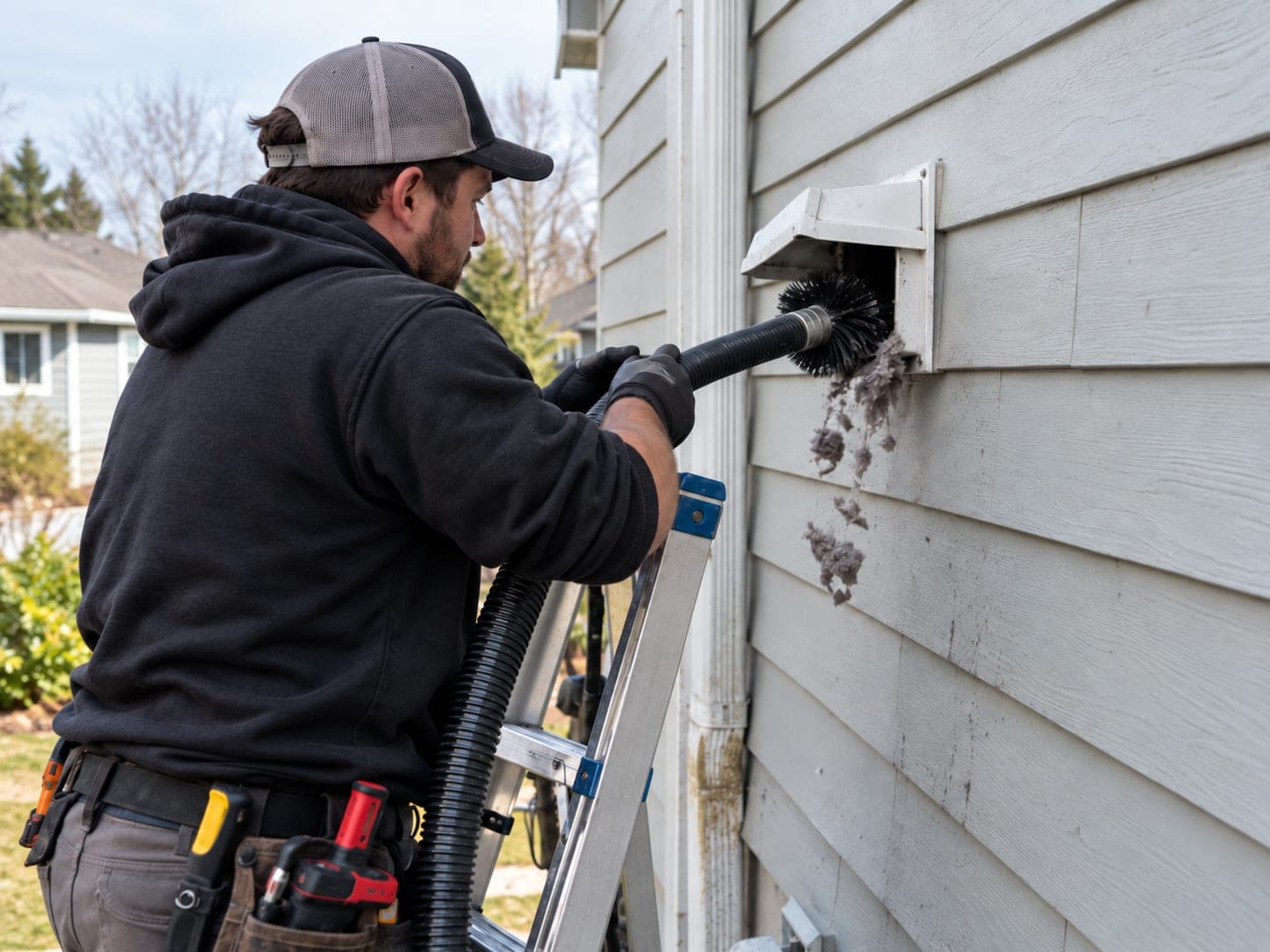
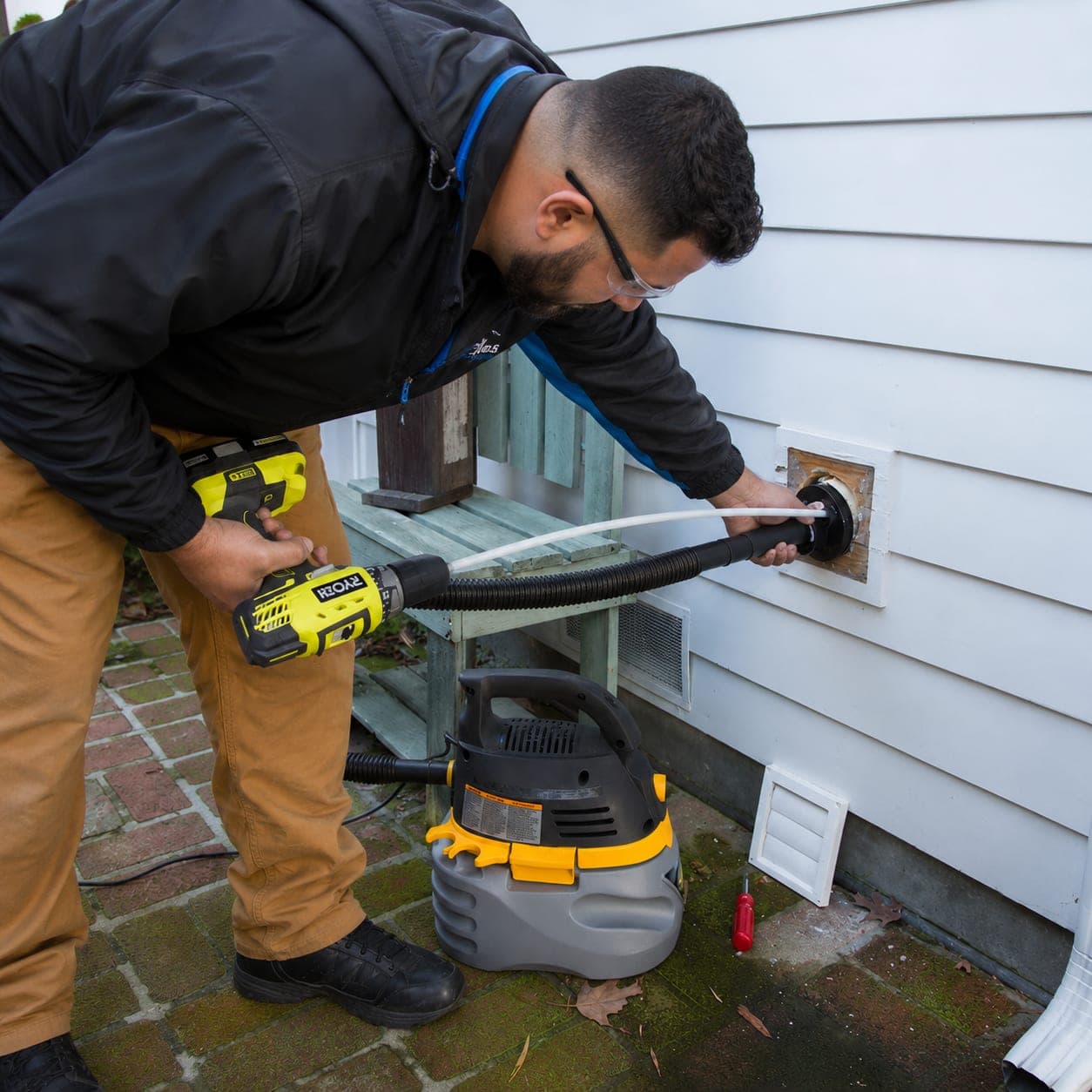
Commercial dryer vent cleaning removes lint, debris and obstructions from the exhaust ducts that serve high-use dryers. These dryers are found in apartment and condo buildings, rental properties, laundromats, hotels, salons, gyms and any business that washes towels or uniforms every day. The principle is the same as residential dryer vent cleaning. The difference is scale. Commercial runs tend to be longer and are often hidden in walls or chases. Many end on a roof, and a single building can have dozens of them.
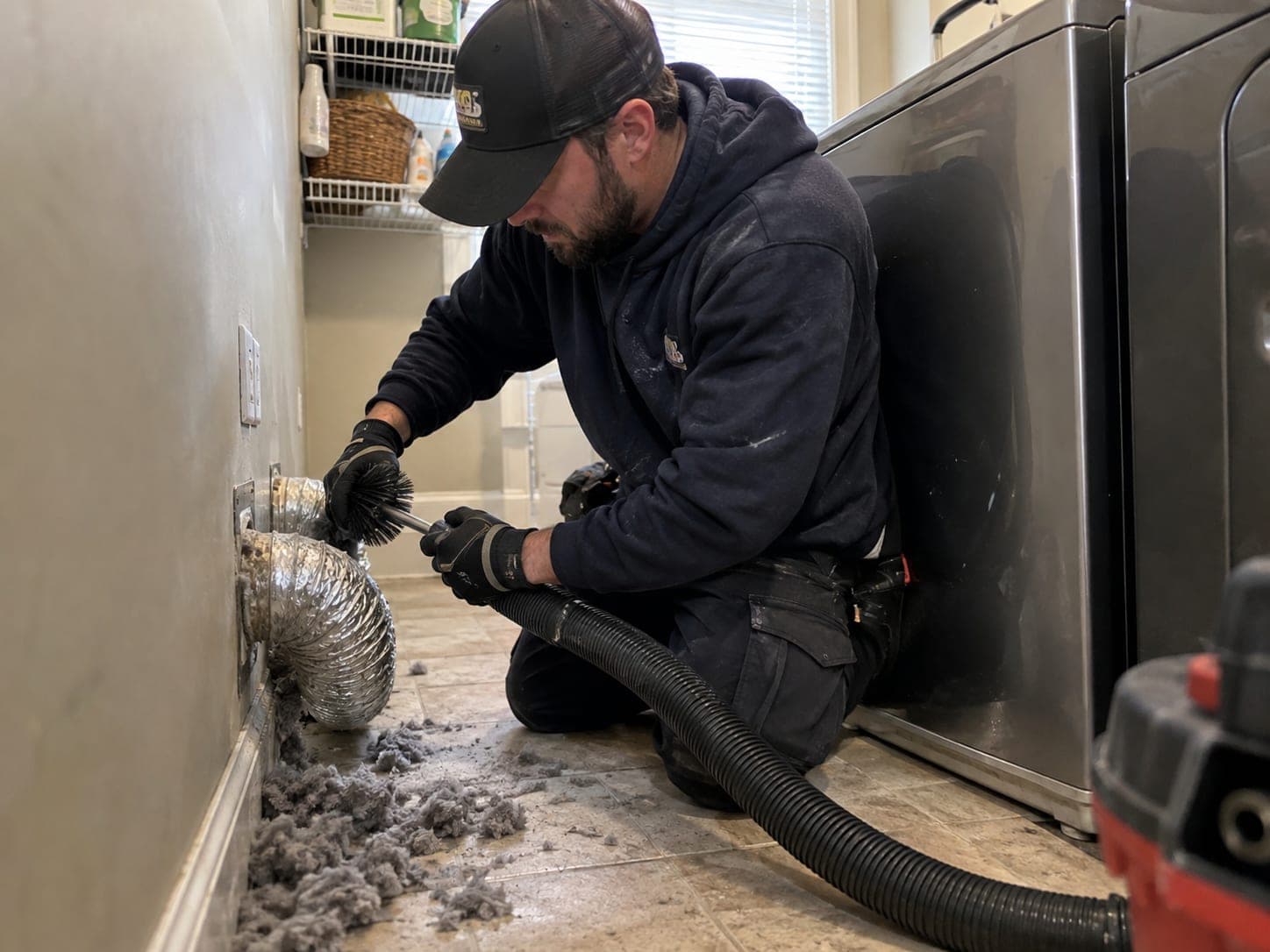
Property managers, landlords, condo boards and business owners call us most often. Some are dealing with a problem they can see. Others simply have no record of when the vents were last cleaned.
Signs a commercial dryer vent needs attention
- Loads take two or more cycles to dry, or staff and tenants keep adding time
- The dryer cabinet, door or laundry room feels unusually hot or humid
- A burning or scorched smell while the dryer runs
- Lint collecting around the outside hood, on the roof or around the dryer
- The exhaust flap stays shut, or barely moves, while the dryer is running
- Dryers shutting off mid-cycle on their high-temperature safety limit
- Twigs, feathers or chirping at the vent opening
Most of these point to a clogged dryer vent. In high-use buildings, they usually come back on a schedule rather than at random. If you want to understand what usually causes a vent to clog, the problem page walks through it.
What can affect dryer vent airflow
Airflow drops whenever something adds resistance between the dryer and the outdoors. The main factors:
- Total duct length and the number of elbows
- Ribbed flexible duct instead of smooth rigid metal
- Crushed sections behind machines
- Separated joints that leak lint into walls
- Termination caps with screens that trap lint
- Several dryers pushing into a duct sized for fewer
Lint builds fastest wherever air slows down, so a vent that was marginal when it was installed clogs sooner as use increases.
Bird activity around dryer vents
A warm, sheltered vent opening attracts birds, especially on upper walls and rooftops where nobody looks. A nest can wedge a flap open, fill the hood or sit deep in the duct. Warning signs include nesting material at the hood, noise inside the wall and a sudden drop in drying performance. We remove nests and the lint packed around them. We can also replace the vent cover with one that discourages entry but still opens freely. A fine mesh screen is not a good fix, because it catches lint and creates a new blockage.
Dryer vent accessibility
A vent nobody can reach does not get cleaned or inspected. In commercial and multi-unit buildings, access problems are common:
- Ducts sealed behind drywall with no access panel
- Stacked machines in tight closets
- Terminations on roofs or high walls
- Runs that pass through spaces tenants control
During the visit we note each access problem so you know which runs can be serviced as they are and which need changes.
Code requirements for dryer vent accessibility
Model building and mechanical codes, along with dryer manufacturers' installation instructions, generally cover these points:
- A maximum vent length, which is reduced for each fitting
- Approved duct materials
- Termination outdoors with a backdraft damper
- No screens at the exhaust outlet
- Labeling or documenting concealed duct length so the run can be identified later
The code edition and any amendments that apply depend on your municipality, and your local building official has the final word. We point out conditions that look like they may not meet these requirements. When the fix involves new ductwork, we explain what we propose and why.
What a commercial visit involves
Walk-through and free estimate
We locate each dryer, follow each run as far as it can be traced, find every termination and note access issues.
Airflow check before cleaning
We check exhaust flow at the termination so there is a baseline to compare against.
Move and disconnect
Dryers are pulled out and disconnected from the vent, and the work area is protected.
Clean the full run
Rotary brushes and air move lint out of the duct, working from both ends where access allows, including roof terminations.
Clear the termination
We remove nests, packed lint and debris, and free stuck flaps.
Reconnect, retest and report
We reconnect the dryers, recheck airflow and note damaged sections. Where a run can't be seen, we recommend a camera inspection of the vent.
What we check and clean
- Lint trap housing and the cavity below the screen
- Transition duct behind each dryer
- Joints and connections along the run
- Elbows and long horizontal sections
- Exterior hood, flap and roof cap
- Signs of lint or moisture leaking into chases
- Crushed, kinked or disconnected duct
- Airflow before and after cleaning
Cleaning, repair or rerouting: choosing the fix
| Feature | Cleaning and lint removal | Repair or replacement |
|---|---|---|
| Best when | The duct is sound and only dirty or blocked | Sections are crushed, separated or the wrong material |
| What it fixes | Lint, nests and debris | Leaks, kinks and damaged caps |
| What decides it | Airflow recovers after cleaning | Visible damage or a failed connection |
Best when
- Cleaning and lint removal
- The duct is sound and only dirty or blocked
- Repair or replacement
- Sections are crushed, separated or the wrong material
What it fixes
- Cleaning and lint removal
- Lint, nests and debris
- Repair or replacement
- Leaks, kinks and damaged caps
What decides it
- Cleaning and lint removal
- Airflow recovers after cleaning
- Repair or replacement
- Visible damage or a failed connection
About the BetterVent indoor dryer vent by ADR products
Some owners ask about indoor vent kits such as the BetterVent indoor dryer vent by ADR Products. These kits filter exhaust from an electric dryer and release it into the room instead of outdoors. Products in this category are meant for electric dryers only. Gas dryers must vent outside because their exhaust contains combustion gases. Indoor venting also adds heat and moisture to the room, which adds up quickly in a laundry room with several machines. Check the manufacturer's instructions and local requirements before using one. For most commercial laundry, a properly sized outdoor run that can be reached for cleaning is the more practical answer.
What affects the scope of the job
- Number of dryers and separate vent runs
- Run length, number of fittings and duct material
- Termination location: ground level, upper wall or roof
- Whether access panels exist
- How long it has been since the last cleaning
- Nests, packed blockages or damaged duct
- Tenant or business hours that limit when machines can be pulled
Managing dryer vent systems across multiple buildings
For managers with more than one property, the biggest gains come from good records:
- Keep a simple inventory of each building, listing every dryer, run and termination
- Schedule cleanings by how hard each laundry room is used, not one date for the whole portfolio
- Keep airflow notes from each visit so repeat problems stand out
- Group nearby buildings into the same visit window
- Send tenants one notice that covers access to units, roofs and laundry rooms
Dryer vent services across Connecticut
We work in Hartford and take dryer vent calls from properties across Connecticut. Estimates are free, same-day service is offered where the schedule allows, and we are available 24 hours, Sunday through Friday, including emergency calls. Many commercial buildings also have chimneys or fireplaces, and we handle commercial chimney work too. Our article on the warning signs that a chimney needs cleaning is a useful companion read.
How to prepare for the visit
- Send a list of buildings, laundry rooms and dryer counts
- Arrange access to roofs, attics, mechanical rooms and any units the ducts pass through
- Notify tenants or staff that dryers will be out of service
- Clear space behind and around the machines
- Stop running dryers that show warning signs
- Write down symptoms and which machines have them
Safety first
If a dryer smells like it is burning, the vent is too hot to touch or you see smoke, turn the dryer off and don't use it until the vent has been checked. If a gas dryer sets off a carbon monoxide alarm, or people feel dizzy or get headaches near it, leave the area and call emergency services or your gas utility. Then get in touch with us.