On this page
Furnace flues need annual cleaning too
A furnace, boiler or water heater that burns oil or gas sends its exhaust into a chimney flue, often one running right beside the fireplace flue. Because nothing in it ever looks like a fire, it's easy to forget. Oil burners leave soot and scale along the walls and at the base. Gas burns cleaner, but its flue still collects nesting material, leaves, crumbling mortar and flakes of a failing liner, and any of that can narrow the opening the exhaust depends on.
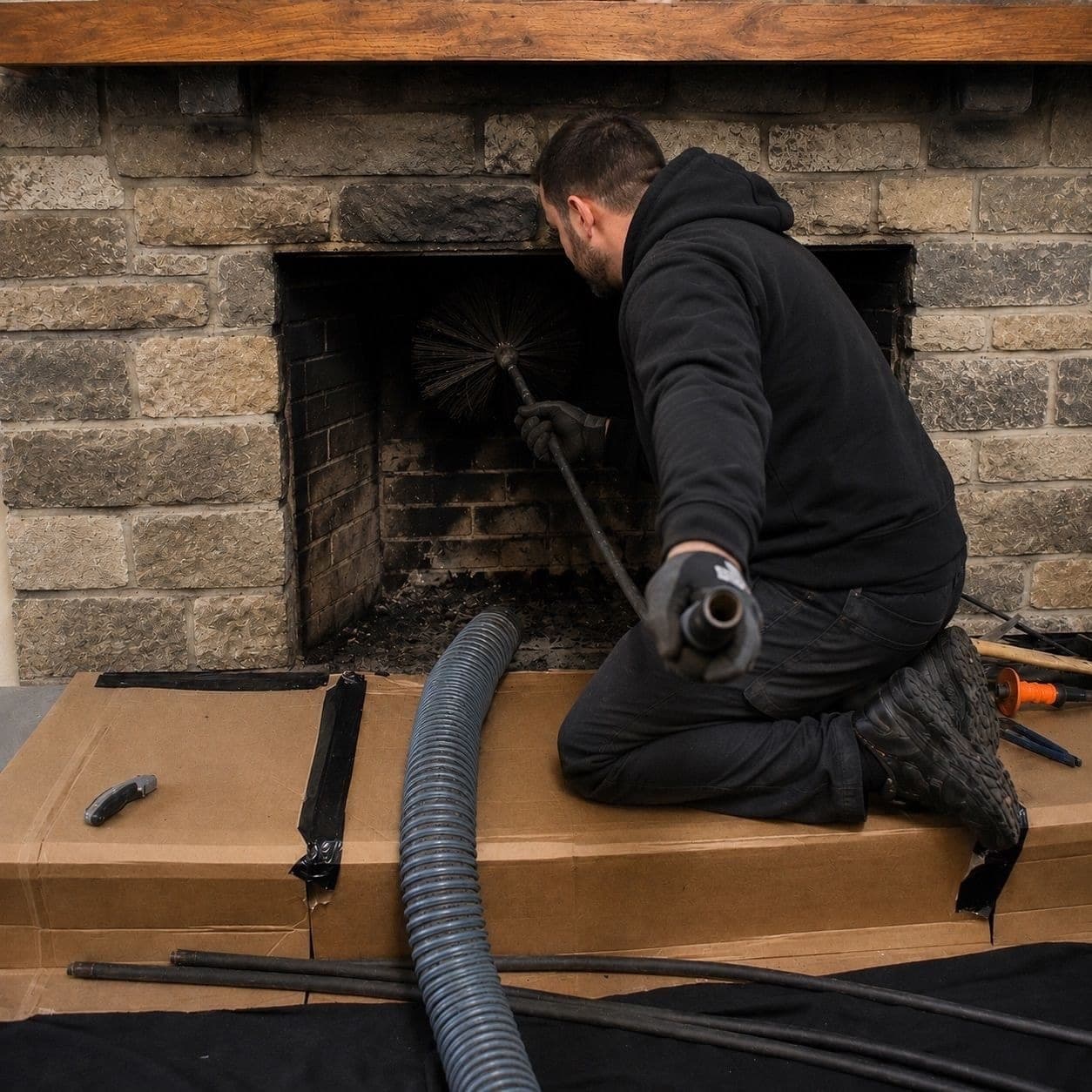
Our furnace flue cleaning removes buildup from the top of the flue to the base and clears the cleanout so debris doesn't pile up against the connector pipe. When a chimney has more than one flue, each is handled on its own; see how flue cleaning works for the full picture.
Acidic condensate in furnace flues
Burning oil or gas produces water vapor along with sulfur and nitrogen compounds. When exhaust cools before it leaves the chimney, that vapor condenses on the flue walls as a weak acid. This often happens when a newer, more efficient furnace is connected to a flue sized for an older, hotter-running unit: the exhaust moves slowly, cools early and wets the liner. Signs include:
- Flakes or chunks of clay tile collecting at the base cleanout
- White, chalky staining on the outside brick near the top of the chimney
- Rust on a metal liner or on the connector pipe where it enters the wall
- A damp, sour smell near the furnace
What this service covers
Many high-efficiency condensing furnaces vent through plastic pipe out a side wall instead of the chimney; those vents aren't part of this service. We also don't work on the furnace itself. Our work is the chimney and flue it uses.
Dangers prevented by an annual furnace flue cleaning
A dirty heating flue rarely announces itself. The furnace keeps running while the exhaust looks for another way out. Annual furnace flue cleaning targets a short list of real risks:
- Carbon monoxide spillage. A partial blockage or collapsed liner can push exhaust back into the basement.
- Soot fires in oil flues. Heavy soot can ignite, and the heat can crack a liner that's already weakened.
- Blocked bases. Fallen tile and scale can build up at the thimble until the connector has nowhere to empty.
- Masonry damage. Acidic moisture left in the flue works into mortar joints and brick over time.
Not sure what to watch for? Our guide to signs that your chimney needs cleaning covers warning signs for every kind of flue.
Annual furnace flue cleaning and the inspection that goes with it
Furnace flues need annual inspection
Cleaning removes what's in the flue; inspection explains why it was there. While cleaning, we check the liner, the connection at the thimble, the cap and the crown. Heavy scale or tile debris usually points to condensation damage, and a deteriorating liner may need repair or a new liner sized for the furnace. Common chimney problems explains many of these findings.
Many homeowners book the heating flue alongside their annual chimney cleaning, ideally before the heating season. If the furnace is already running and something seems wrong, emergency calls are accepted at any hour, Sunday through Friday, same-day service is offered where the schedule allows, and estimates are free.
What the visit covers
Creosote is flammable: a thick layer is the usual fuel for a chimney fire. Debris and nests can block the flue completely and trap carbon monoxide.
Protect the room
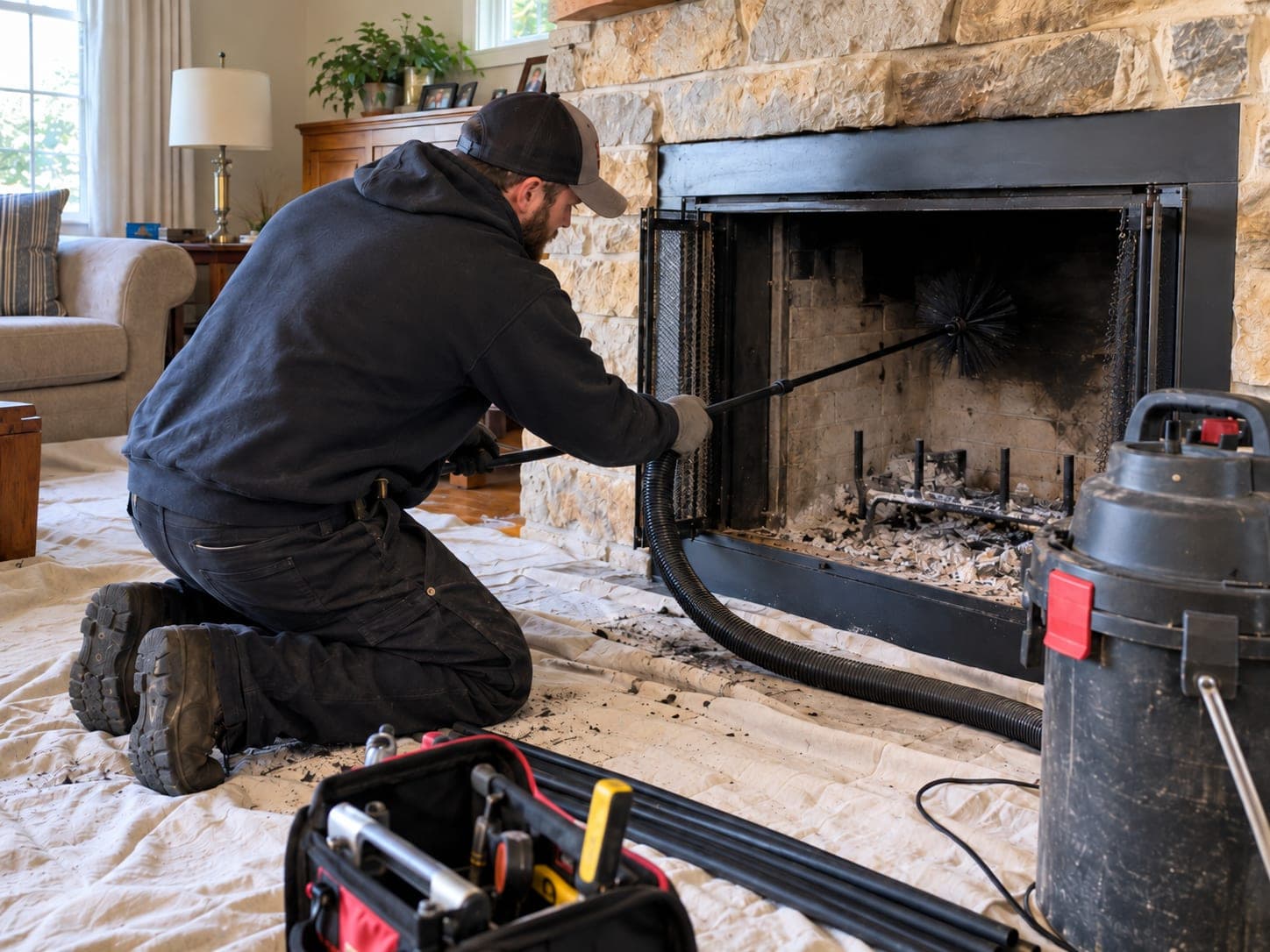
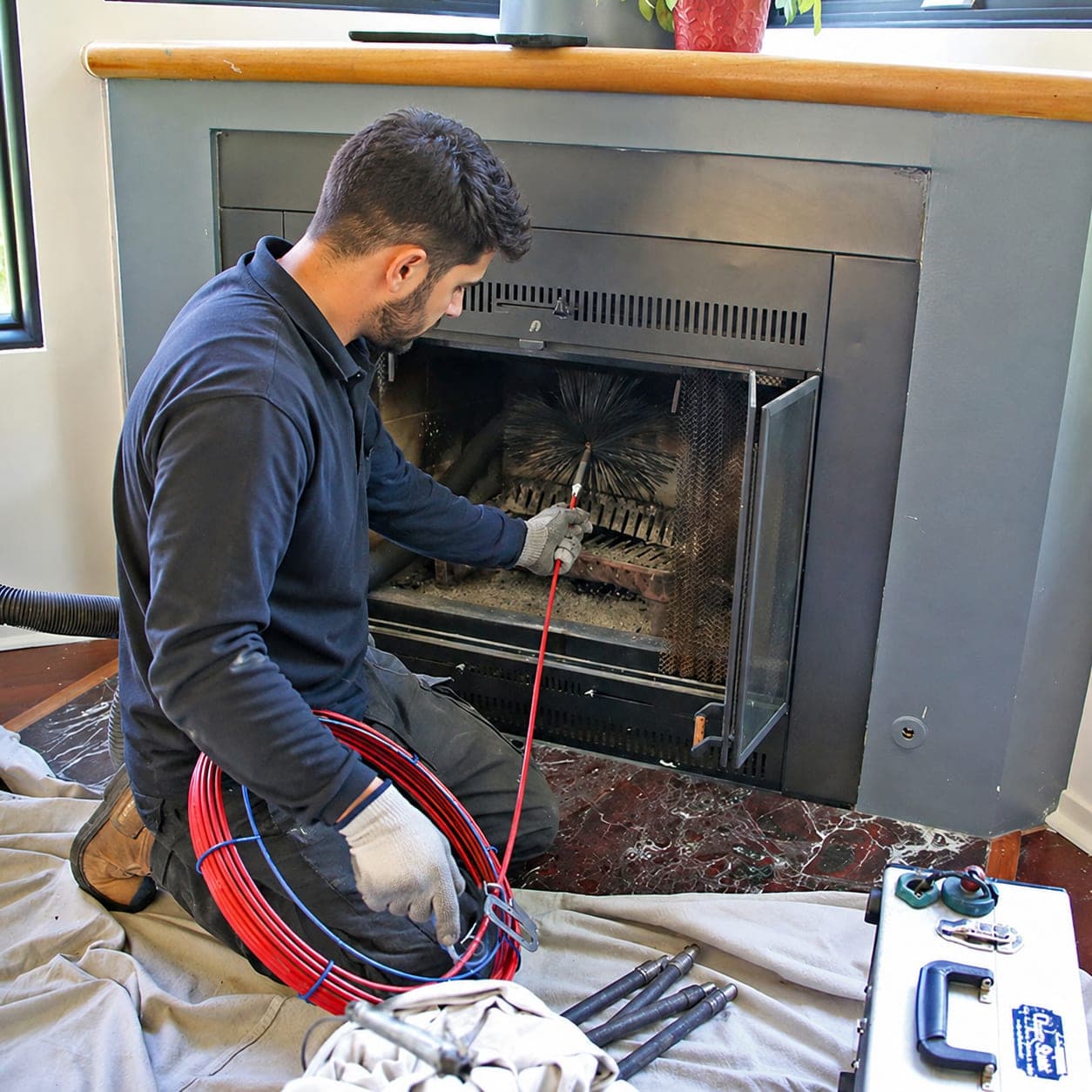
Drop cloths go down around the hearth and the opening is sealed so soot stays out of the house.
Look first
The firebox, damper and visible flue are checked before cleaning, so you know the condition things were in.
Brush the flue
Rods and brushes sized to the flue clear soot and loose creosote from top to bottom.
Clean the smoke chamber and firebox
The areas just above the fire, where buildup collects fastest, are cleaned and vacuumed.
Explain what was found
You hear what was cleaned and anything that needs watching or repair, before anything else is suggested.
Carbon monoxide
A blocked or damaged flue can push carbon monoxide into the home. If an alarm sounds or anyone feels dizzy or sick near the fireplace, get everyone outside and call 911.
Checked on every visit
- Visible liner sections for cracks or gaps
- Signs of animals or nesting material
- Firebox brick or panels and mortar joints
- Smoke shelf and smoke chamber
- Damper opening, closing and seal
- Creosote level and type in the flue
Signs to watch for
- Black, flaky or shiny glazed deposits inside the firebox or flue
- Smoke rolling into the room instead of drawing up
- A campfire or tar smell from the fireplace, especially on warm or damp days
- A full burning season since the last cleaning
- Scratching or chirping sounds, or debris falling into the firebox
How to prepare
- Make sure the technician can reach the roof or attic access if it's needed.
- Keep pets in another room while the work area is open.
- Note the make and model of any insert, stove or gas unit if you have it.
- Let the fireplace or stove cool completely — ideally no fire for 24 hours before the visit.