On this page
- What a chimney damper does and who needs repair
- Signs your damper needs attention
- Damper repairs that improve heating efficiency
- Repair or replace an older chimney's damper
- What affects the scope of the work
- The best time for chimney damper repair
- How to prepare for the visit
- Finding reliable chimney damper repair pros near you
- Request your free damper repair estimate today
What a chimney damper does and who needs repair
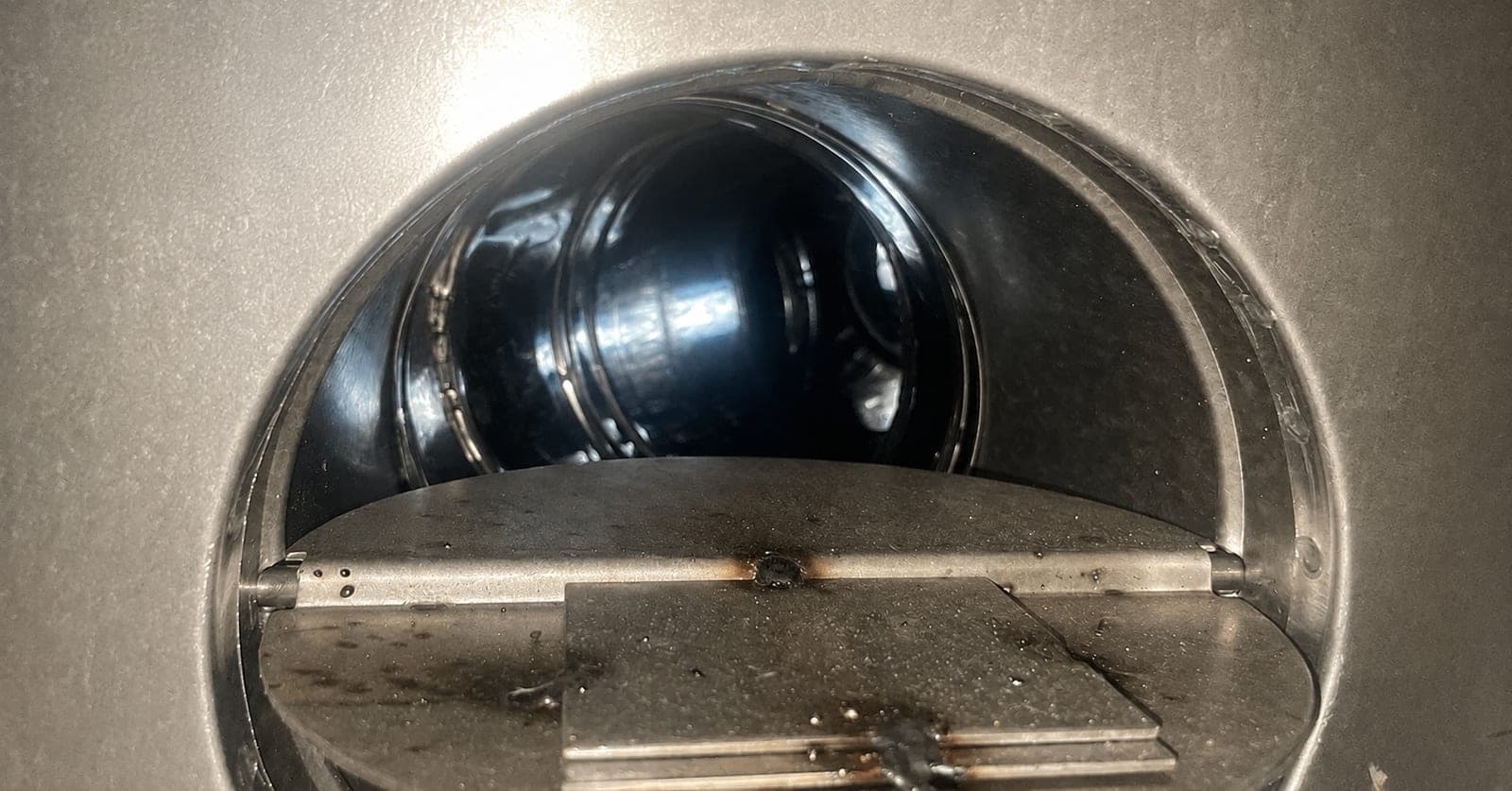
The damper is the movable plate that opens and closes your flue. Open, it lets smoke and combustion gases rise out of the house. Closed, it keeps warm indoor air from escaping up the chimney and stops outside air, rain and drafts from coming down. Most older masonry fireplaces have a throat damper, a cast-iron or steel plate just above the firebox that you work with a lever, knob or chain. Many homes have since added a top-sealing damper mounted at the top of the flue and operated by a cable that runs down to the fireplace.
Damper repair is for any homeowner whose fireplace damper has stopped working the way it should. That includes people who burn wood every weekend in winter, people who light a fire twice a year and anyone who never uses the fireplace but still feels a cold draft coming from it. A damper doesn't have to be in daily use to matter. It is part of your home's envelope every day of the year.
Signs your damper needs attention
- The handle or lever won't move, or it moves but the plate doesn't respond.
- The damper won't stay open and drifts shut, which can push smoke into the room.
- You can see daylight or feel a steady draft with the damper closed.
- Metallic rattling or banging in the chimney on windy days.
- Rust flakes, debris or water dripping onto the firebox floor.
- A broken or frayed cable on a top-sealing damper, or a cap-style damper that has blown loose.
- A smell of soot or damp masonry that gets stronger when the weather turns.
Damper repairs that improve heating efficiency
A chimney works like a tall open pipe. When the damper doesn't seal, warm air from your living space rises straight out of it, and your furnace or boiler has to run longer to make up the loss. Fixing a warped plate, replacing a worn gasket or adjusting a frame so the plate seats flush cuts down that constant leak. It's one of the more practical ways to make a home feel less drafty without touching the walls or windows.
Efficiency isn't the whole story. A damper that seals well also keeps rain, leaves and animals out. A damper that opens fully when you need it lets the fire draw properly, so less smoke and fewer combustion byproducts come back into the room. If you want more background on how the flue itself affects draft and safety, our guide to understanding chimney liners is a good next read.
What a Damper Repair Visit Involves
Talk through the problem
We ask what you've noticed: sticking, drafts, noise, smoke or water, and how you use the fireplace.
Inspect the damper and surroundings
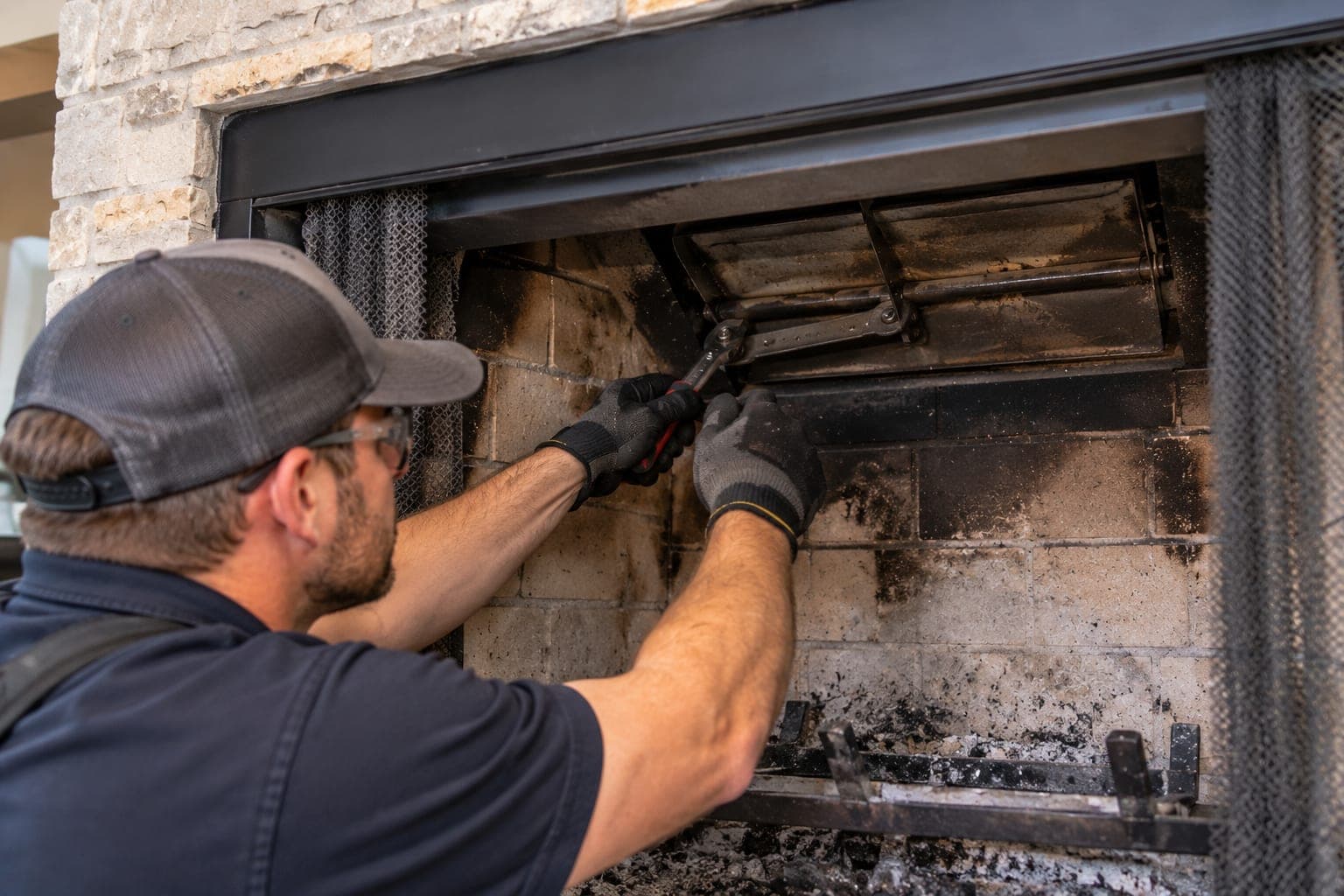
We open and close the damper, look at the plate, frame, hinge points and handle, and check the smoke chamber and firebox area around it.
Explain what we found
You get a plain explanation of whether the damper can be repaired, what's causing the problem and what your options are, along with a free estimate.
Complete the repair
With your go-ahead, we clean, free up, adjust or replace the parts involved and test the damper through its full range of motion.
Clean up and walk you through it
We clean the work area and show you how to operate the damper so it keeps working smoothly.
What We Check and Fix
- Damper plate for rust, warping, cracks or burn-through
- Hinge pins, pivot points and the frame the plate seats against
- Handle, lever, rotary control or chain and its linkage
- Gaskets and seals on top-sealing dampers
- Cable, spring and mounting hardware on top-mount units
- Soot, creosote or debris jamming the plate
- Signs of water entry above or around the damper
- Whether the damper opens fully for a safe draft
Repair or replace an older chimney's damper
Many older homes still have the original cast-iron throat damper. These are sturdy, but decades of heat, moisture and rust can seize the hinge or warp the plate. Sometimes cleaning, freeing the pivots and replacing the handle linkage brings one back. Other times the plate or frame is too far gone, and the better answer is a new throat damper or a top-sealing damper mounted at the crown. You can read more about how damper repair works on a related page, and about the chimney cap damper installation service if a top-mount unit makes sense for your chimney.
| Feature | Repair the Throat Damper | Add a Top-Sealing Damper |
|---|---|---|
| Where it sits | Just above the firebox | At the top of the flue |
| Best fit | Plate and frame are sound and only stuck or worn | Plate or frame is badly rusted, warped or broken |
| Seal | Metal on metal, so some air leakage is normal | Gasketed lid that closes tightly |
| Keeps out rain and animals | Only below the damper | At the top, protecting the whole flue |
| Original look | Keeps the existing hardware | Adds a cable and handle inside the firebox |
Where it sits
- Repair the Throat Damper
- Just above the firebox
- Add a Top-Sealing Damper
- At the top of the flue
Best fit
- Repair the Throat Damper
- Plate and frame are sound and only stuck or worn
- Add a Top-Sealing Damper
- Plate or frame is badly rusted, warped or broken
Seal
- Repair the Throat Damper
- Metal on metal, so some air leakage is normal
- Add a Top-Sealing Damper
- Gasketed lid that closes tightly
Keeps out rain and animals
- Repair the Throat Damper
- Only below the damper
- Add a Top-Sealing Damper
- At the top, protecting the whole flue
Original look
- Repair the Throat Damper
- Keeps the existing hardware
- Add a Top-Sealing Damper
- Adds a cable and handle inside the firebox
What decides between them
The main factors are the condition of the existing plate and frame, the shape and size of the flue, whether a liner is present, how you use the fireplace and how much you care about keeping the original hardware. We'll tell you plainly when a repair is worth doing and when it would only buy a short reprieve.
What affects the scope of the work
- How seized or corroded the hinge and plate are
- Whether parts can be adjusted in place or need replacing
- Access through the firebox, and roof access for top-mount work
- Creosote or debris that has to be cleaned before the damper can move
- Related damage found nearby, such as smoke chamber or firebox problems
- The flue's size and shape if a new damper is needed
If the inspection turns up issues beyond the damper, such as cracked firebox brick or a deteriorating smoke chamber, we'll explain them separately so you can decide what to handle now. Those fall under broader chimney and fireplace repair.
The best time for chimney damper repair
The ideal time is before you need the fireplace, ideally in late summer or early fall before the heating season. That's also when it's easiest to combine the repair with a sweep or inspection. Don't wait if the damper is stuck closed, won't stay open or is letting smoke into the room. Those problems make the fireplace unsafe to use. We accept emergency calls, and same-day service is available when the schedule allows.
How to prepare for the visit
- Don't use the fireplace for at least 24 hours beforehand so the firebox is cool.
- Clear about six feet of space in front of the hearth and move rugs, screens and decor.
- Remove ashes if you can do it safely, or leave them and let us know.
- Keep pets and children out of the room during the work.
- Note when the problem started and anything that makes it better or worse.
Safety First
Never light a fire unless the damper is fully open. If it is stuck closed or partly closed, don't burn anything until it's repaired. If you have a gas log set, the damper may have a stop or clamp that keeps it from closing completely. Leave it in place. Forcing a rusted damper handle can snap the linkage or drop the plate into the firebox, so call instead of prying.
Finding reliable chimney damper repair pros near you
When you compare providers, look for someone who inspects before quoting, explains what failed and why, and gives you real choices between repair and replacement instead of jumping to the biggest job. Ask whether they will test the damper through its full motion before leaving and whether they check the area around it, not just the handle. A technician does the work itself, from the inspection to the final test.
Request your free damper repair estimate today
We're available 24 hours, Sunday through Friday, take emergency calls and offer same-day service when the schedule allows. Get in touch to describe what your damper is doing, and we'll set up a visit.