What the fireplace smoke chamber does
The smoke chamber starts at the damper and tapers upward to meet the flue. It gathers smoke and hot gases from the wide fireplace opening and funnels them into a much narrower chimney without stirring up turbulence. Just behind the damper is the smoke shelf, a flat ledge that turns back downdrafts and catches debris falling from above.
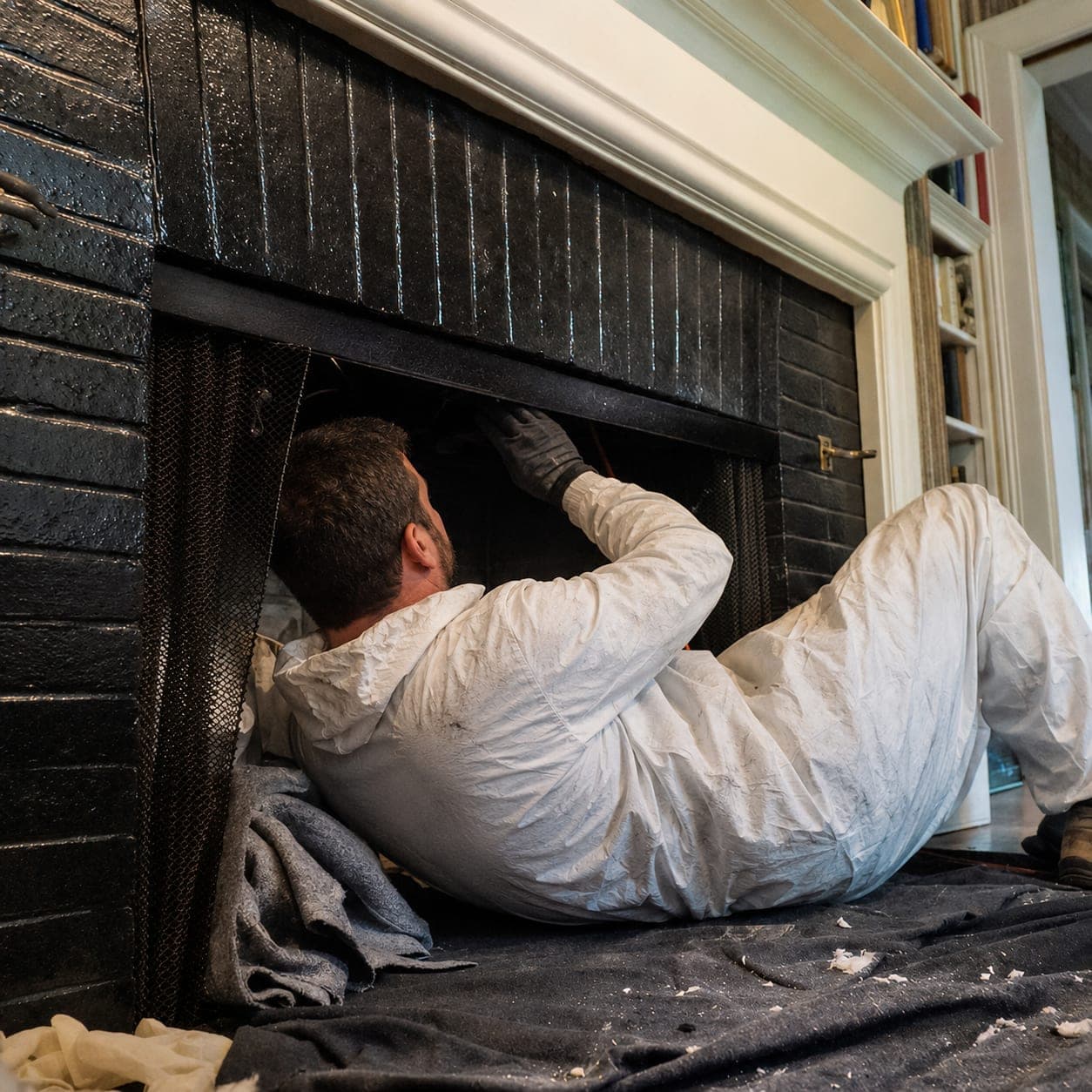
In many masonry fireplaces, the sloped walls of the chamber are built by stepping each row of brick inward. Left bare, those steps form small ledges that disrupt airflow and give creosote plenty of places to collect. A smooth coat of heat-resistant mortar, called parging, evens them out. If the layout is new to you, this overview of fireplace anatomy shows where the smoke chamber sits.
What the visit covers
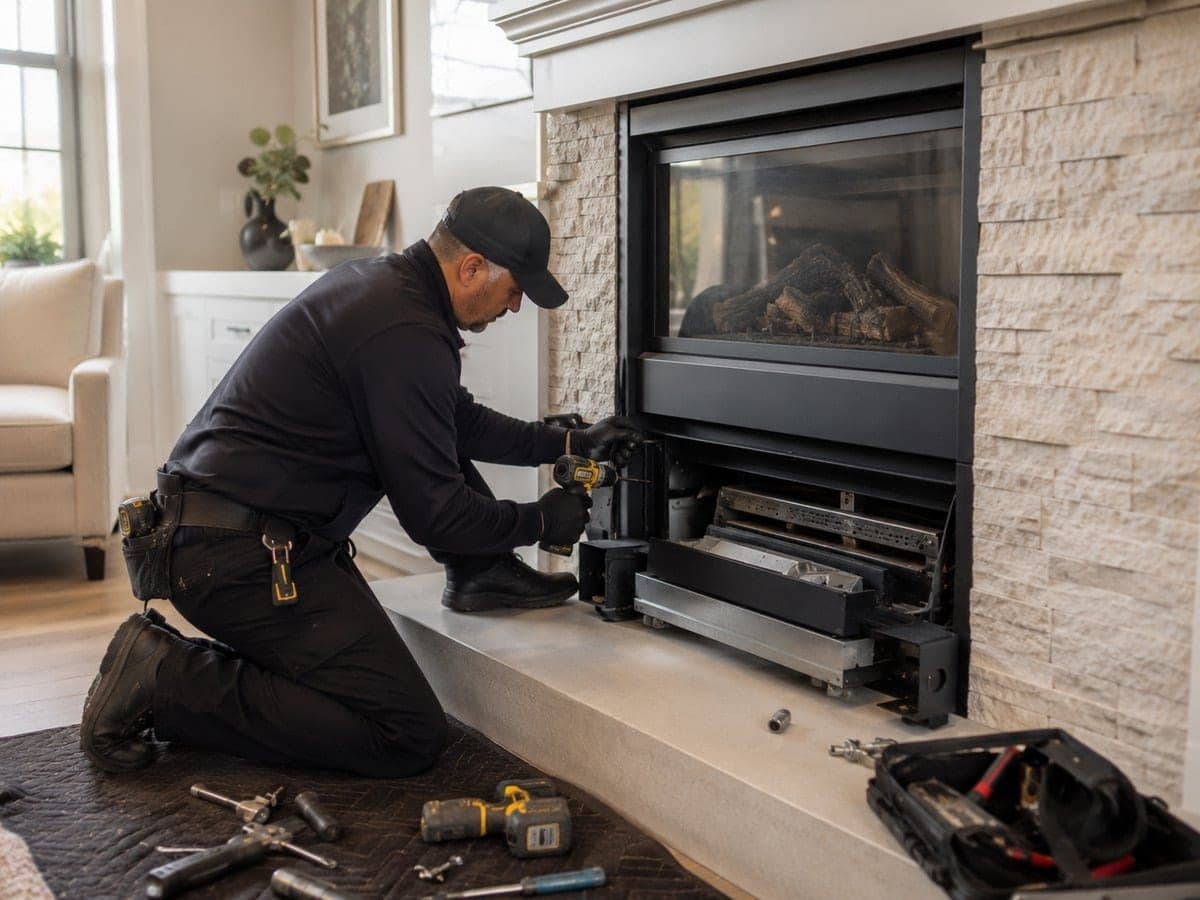
Worn gaskets and glass on inserts and gas units waste heat and can leak exhaust. Cracks in the firebox let heat reach the framing behind it.
Find the cause
The firebox, damper, smoke chamber and any doors, glass or panels are checked.
Confirm the type
Masonry or factory-built — the repair has to suit the system.
Explain the fix
You hear the options and what each involves before work starts.
Repair and test
The work is done and the fireplace is checked before you use it.
If smoke comes into the room
Stop adding fuel, open a window and don't relight the fire until the chimney has been checked. If the smoke is heavy, an alarm sounds or you suspect a chimney fire, get everyone outside and call 911.
What gets checked
- Mortar joints inside the firebox
- Smoke chamber and smoke shelf
- Firebrick or refractory panels
- Hearth and surround
- Doors, glass and gaskets
- Draft from the opening
Signs it's time for wood-burning fireplace repair
- Doors or glass that are cracked or don't seal
- Smoke coming into the room
- Cracked or missing firebrick or refractory panels
- Rust or warping inside the firebox
Signs the smoke chamber needs attention
The smoke chamber is above the damper and out of sight, so damage there usually shows up indirectly:
What smoke chamber trouble looks like
01Creosote buildup above the damper
- What you may notice
- Thick, crusty or shiny black deposits visible with a flashlight; flakes dropping into the firebox
- How it’s confirmed
- Checked during a cleaning, often with a camera so the full chamber and flue can be seen
02Smoke spilling even with a clean flue
- What you may notice
- Smoke rolls out mid-fire even with dry wood and an open damper
- How it’s confirmed
- The chamber's shape and surfaces are examined for rough steps, narrowing or missing parging
03Mortar or brick debris in the firebox
- What you may notice
- Gritty mortar, chunks of old parging or loose brick on the grate or smoke shelf
- How it’s confirmed
- The chamber walls are inspected for cracks, gaps and loose masonry
Cleaning versus repairing the smoke chamber
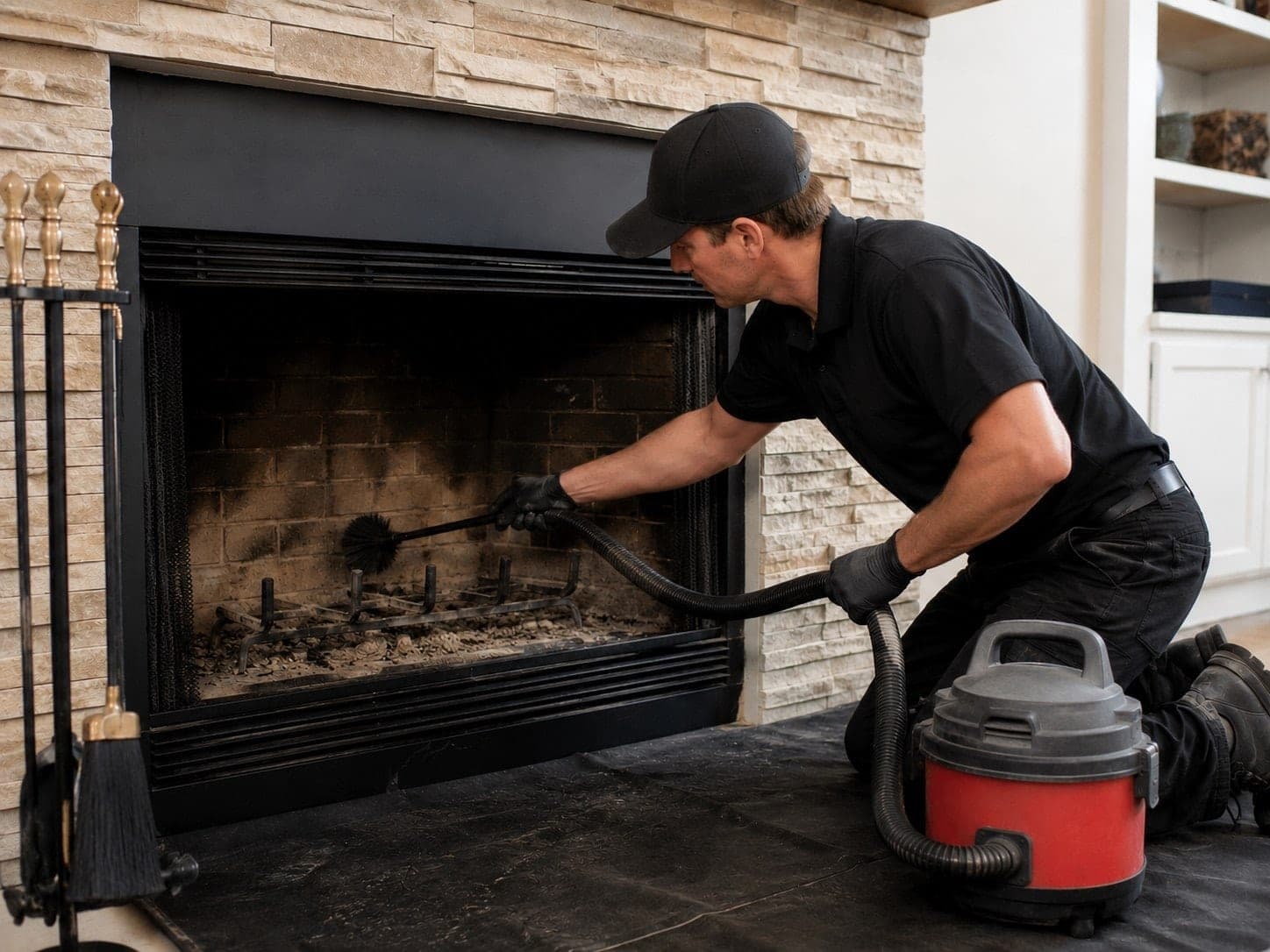
Light, sooty deposits come off during a routine cleaning of a wood-burning fireplace. Hardened or glazed creosote clings much harder and needs dedicated creosote removal.
Neither one fixes the surface underneath. If the chamber walls are bare stepped brick, cracked, or shedding old parging, they need smoke chamber repair. That means filling gaps, resetting loose brick and parging the walls smooth.
A smooth, sound smoke chamber does more than cut down on creosote. It helps the fireplace draw steadily, so less smoke comes into the room and more of the fire's heat goes where you want it. Our efficient fireplace guide explains why. For details of the repair itself, see how smoke chamber repair is approached.