On this page
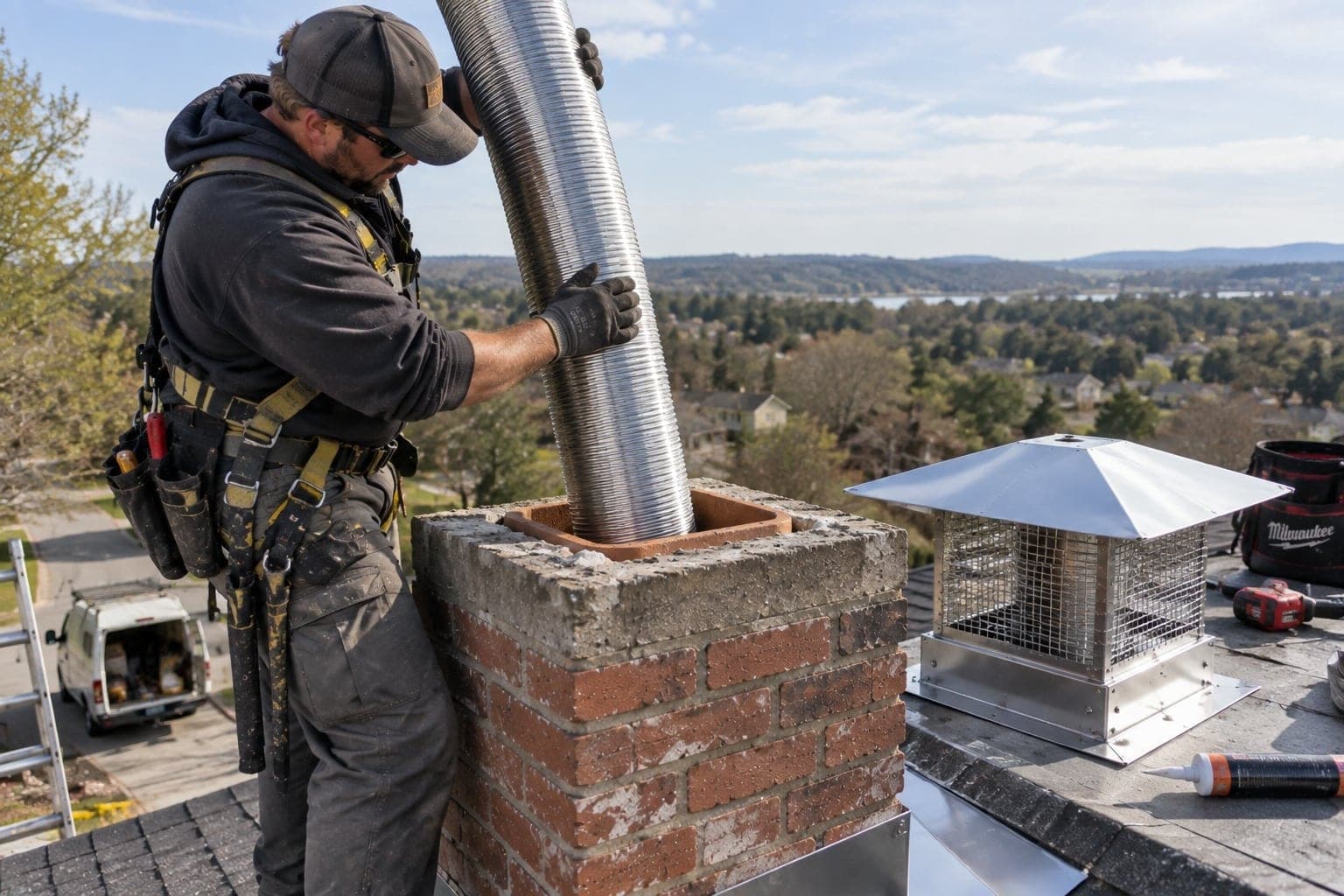
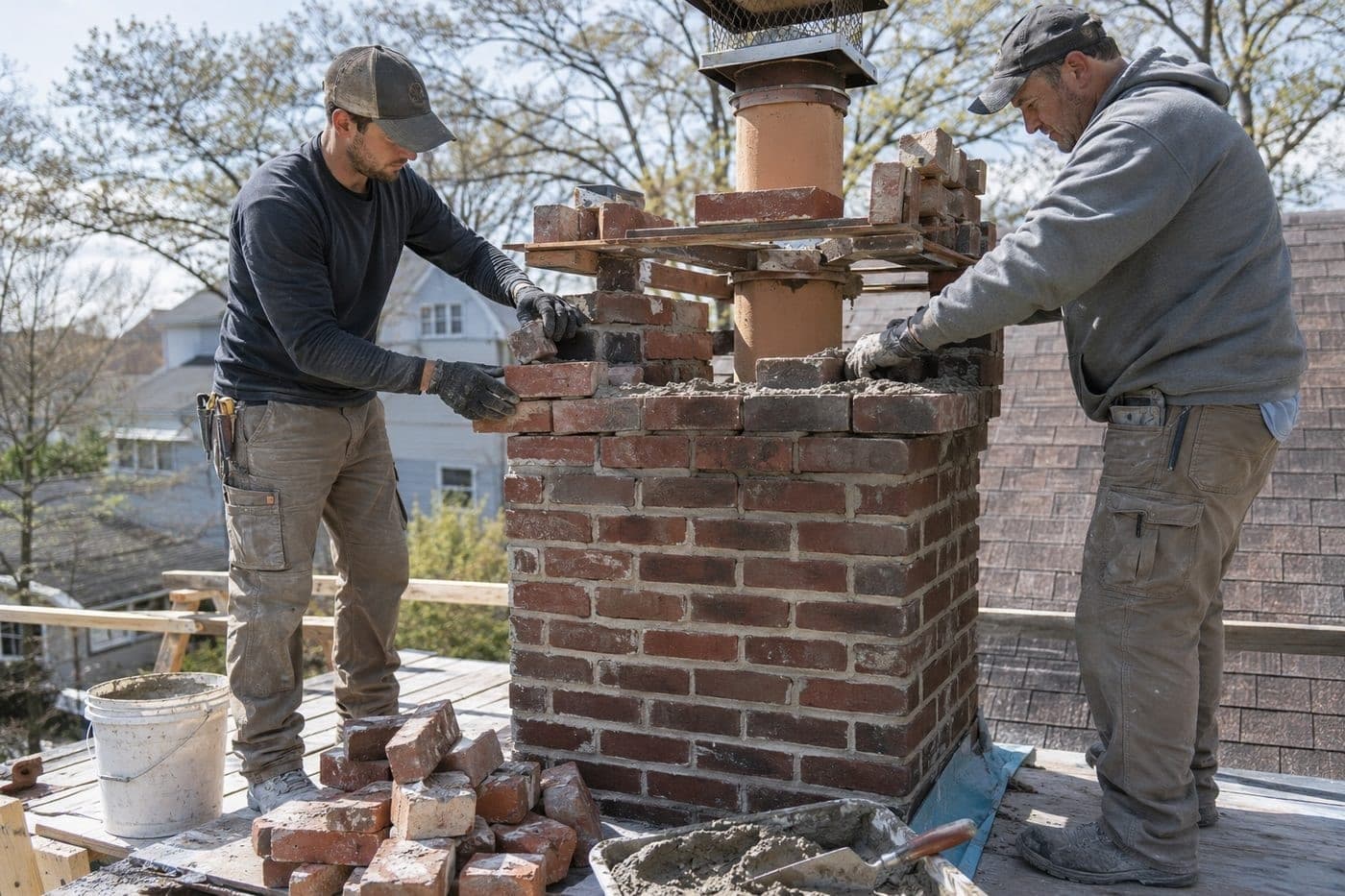
Brick chimney installation here means rebuilding the brick stack on a home that already has a chimney. We take the damaged section down to solid masonry, lay new brick and mortar, and finish the top so it keeps water out. It is the step after repairs stop working. This page covers the rebuild of an existing chimney, not adding a new one to a house that has never had one.
What brick chimney installation covers and who needs it
Most chimneys never need this. Loose mortar, a cracked crown or a few spalled bricks can usually be handled with brick chimney repair or tuckpointing. A rebuild makes sense when damage runs through the structure, not just the surface. Bricks are crumbling, mortar joints are hollow deep into the wall, or the stack has started to lean or separate from the house.
People who usually end up needing this work include:
- Homeowners whose chimney above the roofline has deteriorated after years of water getting in
- Buyers or sellers who were told during a real estate chimney inspection that the stack is unsound
- Owners whose chimney was damaged in a storm, by a falling limb or by settling
- Anyone planning a new fireplace insert or liner who learns the masonry around it won't support the work
Signs your chimney may need rebuilding
Repair or rebuild? What we look for
01Spalling and crumbling brick
- What you may notice
- Brick faces popping off, flakes of brick on the roof or in the gutters, bricks that turn to powder when pressed
- How it’s confirmed
- We check how deep the damage goes. Damage limited to a few faces can be repaired. Soft brick through the wall points to a rebuild.
02Leaning or separating stack
- What you may notice
- Visible tilt, a gap between the chimney and siding, cracks that open in a stair-step pattern
- How it’s confirmed
- We look at alignment from the ground and the roof, plus the condition of the base and flashing.
03Water getting into the house
- What you may notice
- Stains on the ceiling or wall beside the chimney, damp smell, rust on the damper
- How it’s confirmed
- We check the crown, cap, flashing and mortar joints to find where water enters and how far it has spread inside the masonry.
One sign by itself doesn't mean you need a rebuild. A few of them together, especially near the top of the stack, usually do.
What the visit involves
From first look to finished chimney
Free estimate and inspection
We look at the chimney from the ground, the roof and inside the flue where we can reach. We note how much brick is sound and how much has to come down.
Written scope
You get a plain description of what will be removed, rebuilt and replaced, including the crown, flashing, liner and cap, so you know what you're agreeing to.
Protecting the site
We cover the roof, landscaping and the area around the fireplace inside to catch debris and dust.
Taking down damaged masonry
Brick is removed course by course until we reach solid masonry. Debris goes down in a controlled way, not off the roof edge.
Laying new brick
New brick and mortar go up plumb and tied in correctly. Flue tiles or the liner connection are set as the stack rises.
Crown, flashing and cap
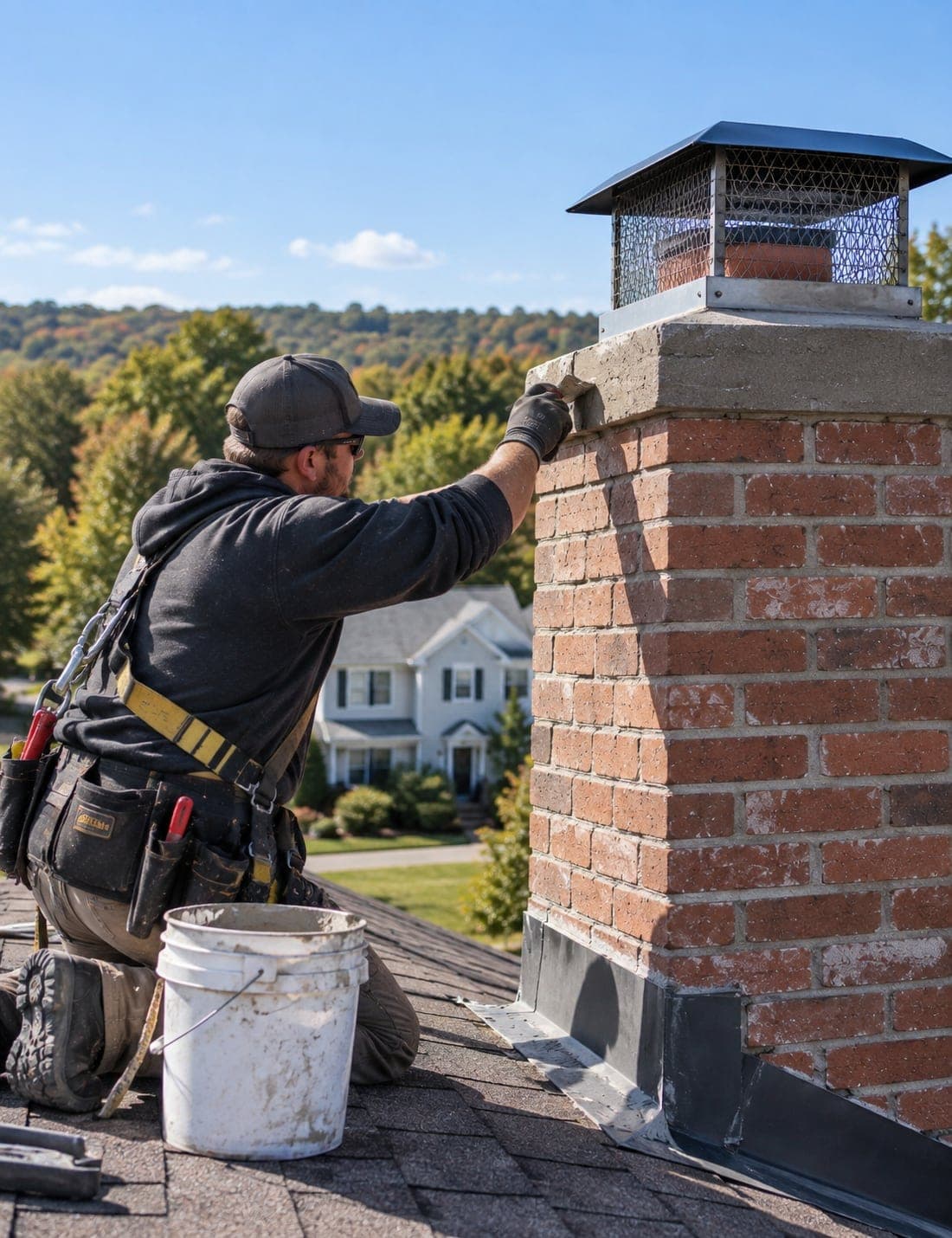
The top is finished with a crown that sheds water, flashing where the chimney meets the roof, and a cap to keep out rain, animals and debris.
Cleanup and walkthrough
We clear the site and walk you through the finished work, including any curing time before the first fire.
What is checked and done
Rebuild checklist
- Condition of brick and mortar above and below the roofline
- Soundness of the base where the rebuild will start
- Flue tile or liner condition and size
- Chimney height relative to the roof
- Crown thickness, slope and overhang
- Step and counter flashing at the roof
- Damper condition and fit
- Cap or spark arrestor sized to the flue
- Clearances to framing where they can be seen
Your options and what decides between them
| Feature | Partial rebuild | Full rebuild |
|---|---|---|
| Typical situation | Damage limited to the top of the stack, often above the roofline | Damage runs through most of the height, or the stack is leaning or unstable |
| What's removed | Brick down to the first solid courses | Most or all of the stack, down to a sound base |
| Liner | Existing liner kept if it's sound, otherwise replaced | Liner normally installed or replaced as the stack goes up |
| Disruption | Mostly roof work | Roof, exterior and sometimes interior work |
Typical situation
- Partial rebuild
- Damage limited to the top of the stack, often above the roofline
- Full rebuild
- Damage runs through most of the height, or the stack is leaning or unstable
What's removed
- Partial rebuild
- Brick down to the first solid courses
- Full rebuild
- Most or all of the stack, down to a sound base
Liner
- Partial rebuild
- Existing liner kept if it's sound, otherwise replaced
- Full rebuild
- Liner normally installed or replaced as the stack goes up
Disruption
- Partial rebuild
- Mostly roof work
- Full rebuild
- Roof, exterior and sometimes interior work
The deciding factor is how much brick is still solid, not how the chimney looks from the street. A chimney can look rough and still have a sound core. Another can look tidy and be soft all the way through. Liner choice matters too, because the flue has to match the appliance you'll be using. Our guide to understanding Chimney Liners covers the main types. The top of the stack is also where you choose between a standard cap and a top-sealing damper. Read how chimney cap damper installation works if you want to cut heat loss up the flue.
What affects the scope of the job
- Height to be rebuilt: a few courses above the roof is a very different job from a full stack.
- Roof pitch and access: steep or high roofs need more setup.
- Number of flues: chimneys serving a furnace and a fireplace have more to build around.
- Brick matching: older brick can be hard to match in color and size.
- Liner work: whether the existing flue can be reused or a new liner is needed.
- Hidden damage: water damage to framing or the firebox sometimes only shows once brick comes off.
If the masonry problems don't reach the chimney, the brick masonry repair service may be the better fit.
How to Prepare
- Stop using the fireplace or stove that vents through the chimney and let it cool fully.
- Clear a path to the fireplace and move furniture, rugs and decor away from the hearth.
- Move vehicles, grills and outdoor furniture away from the side of the house below the chimney.
- Keep pets and children away from the work area and the roof edge.
- Tell us about any leaks, odors or past repairs you know of.
- If you're unsure whether your town requires a permit, check with the local building department before work starts.
Safety notes
Don't burn in a failing chimney
Cracked flue tiles and open mortar joints can let heat, sparks and smoke reach the framing around the chimney. If you suspect serious damage, stop using the fireplace until it has been inspected.
Loose brick is a falling hazard
If bricks are loose or the stack is leaning, keep people away from the area below it and stay off the roof. We accept emergency calls and are available 24 hours, Sunday through Friday, with same-day service when the schedule allows.
Brick chimney work across Connecticut
We work with homeowners throughout Connecticut. Area pages cover brick chimney installation in East Hartford, brick chimney installation for homes in West Hartford and brick chimney installation in Farmington. Request an estimate and we'll look at your chimney and tell you plainly whether it needs a rebuild or a repair.