Where the crack is matters more than how big it looks
| Location | What it often means | How it's usually repaired |
|---|---|---|
| Firebox brick or mortar joints | Years of heating and cooling; mortar worn away by heat and moisture | Firebox repair: replacing damaged firebrick and repointing with heat-rated mortar |
| Refractory panel in a prefab unit | Normal wear, or thermal shock from water or oversized fires | Replacing the refractory panel with parts made for that unit |
| Hearth in front of the opening | Settling, impact, or a hearth not built to carry the load | Hearth repair, then resetting tile or stone once the base is sound |
| Surround or face brick | Often cosmetic; sometimes movement in the masonry behind | Masonry repair or tile replacement, depending on the material |
| Smoke chamber above the damper | Heat and moisture damage above the damper | Smoke chamber repair, usually identified during an inspection |
If you want the terms straight before talking to anyone, our anatomy guide lays out the parts of a fireplace and how they connect.
How the visit works
Worn gaskets and glass on inserts and gas units waste heat and can leak exhaust. A damaged smoke chamber is a common cause of smoke spilling into the room.
Find the cause
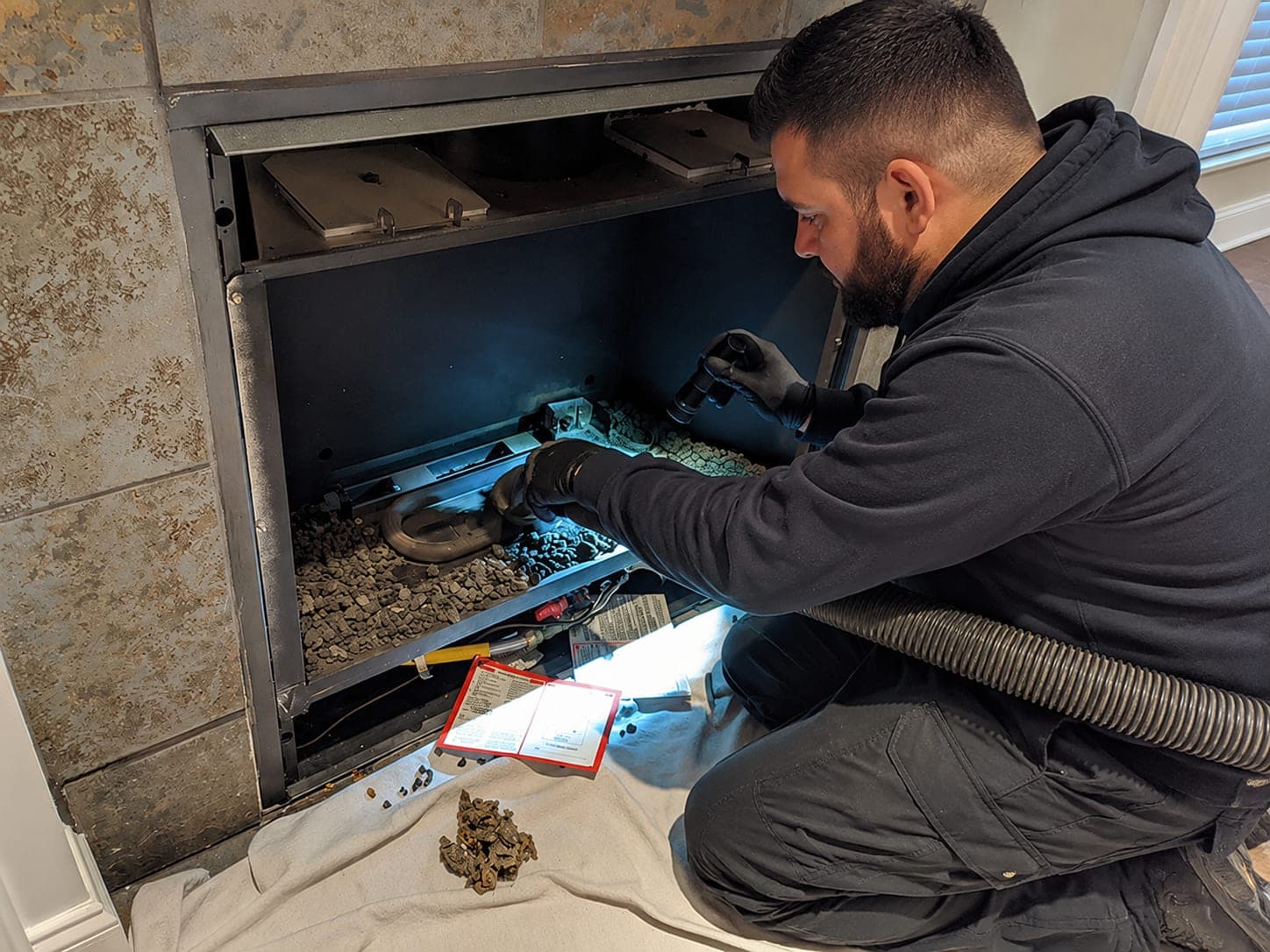
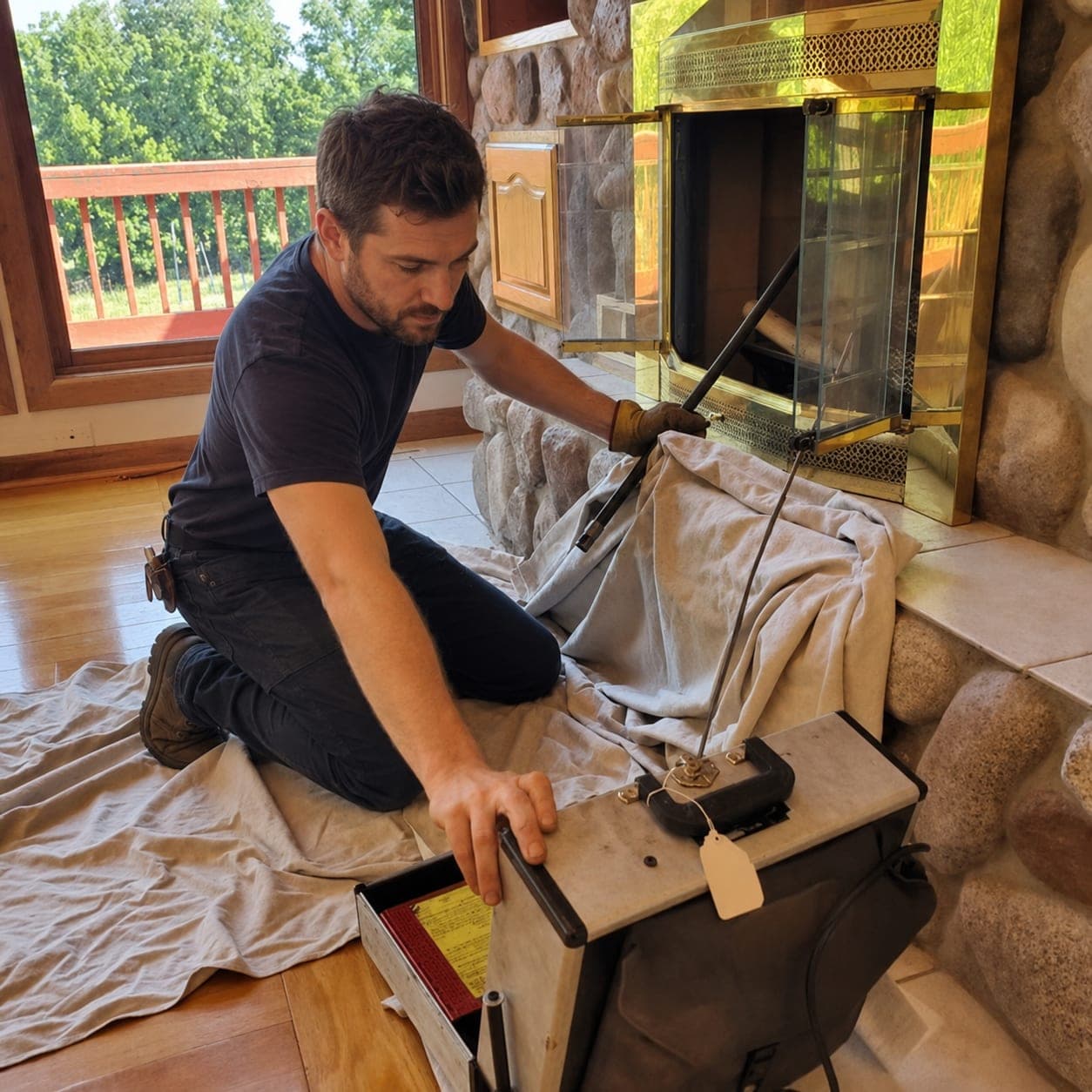
The firebox, damper, smoke chamber and any doors, glass or panels are checked.
Confirm the type
Masonry or factory-built — the repair has to suit the system.
Explain the fix
You hear the options and what each involves before work starts.
Repair and test
The work is done and the fireplace is checked before you use it.
Carbon monoxide
A blocked or damaged flue can push carbon monoxide into the home. If an alarm sounds or anyone feels dizzy or sick near the fireplace, get everyone outside and call 911.
Signs it's time for wood-burning fireplace repair
- Smoke coming into the room
- Cracked or missing firebrick or refractory panels
- A fireplace that is hard to light or won't stay lit
- Doors or glass that are cracked or don't seal
What gets checked
- Damper operation
- Doors, glass and gaskets
- Draft from the opening
- Hearth and surround
- Smoke chamber and smoke shelf
- Mortar joints inside the firebox
Why fireplaces crack in the first place
Masonry expands as it heats and contracts as it cools, with every fire. Over many seasons, that movement opens mortar joints and cracks brick. It happens faster if the firebox was built with ordinary brick and mortar instead of firebrick and refractory mortar. Water makes it worse. Rain coming in through the chimney soaks the masonry, and a hot fire on damp brick can make the face flake off (spalling) and crack. In factory-built fireplaces, panels crack when they're hit by a log, splashed with water, or exposed to fires larger than the unit was designed for.
Brick damage follows its own patterns. We cover those separately under how cracked brick in a fireplace develops and repair options for cracked fireplace bricks.
Repair or replace a cracked fireplace?
Masonry fireplaces are almost always repaired, since a firebox wall can be rebuilt brick by brick. Factory-built fireplaces are different. If the panels are cracked but the metal body is sound, new panels solve the problem, but a cracked or warped steel firebox generally means replacing the unit. Soot can hide how far the damage goes, so a thorough wood-burning fireplace cleaning is sometimes needed before anyone can say which way it goes.
If you're ready to stop burning wood, installing an electric fireplace means the old firebox no longer holds a fire, though any structural damage still has to be repaired. Either way, it helps to read about ways to make a fireplace more efficient first. Estimates are free, and same-day visits are possible when the schedule allows. During a chimney fire, get everyone out and call 911 first. If a crack appeared suddenly after a chimney fire or a storm, emergency calls are accepted 24 hours a day, Sunday through Friday.