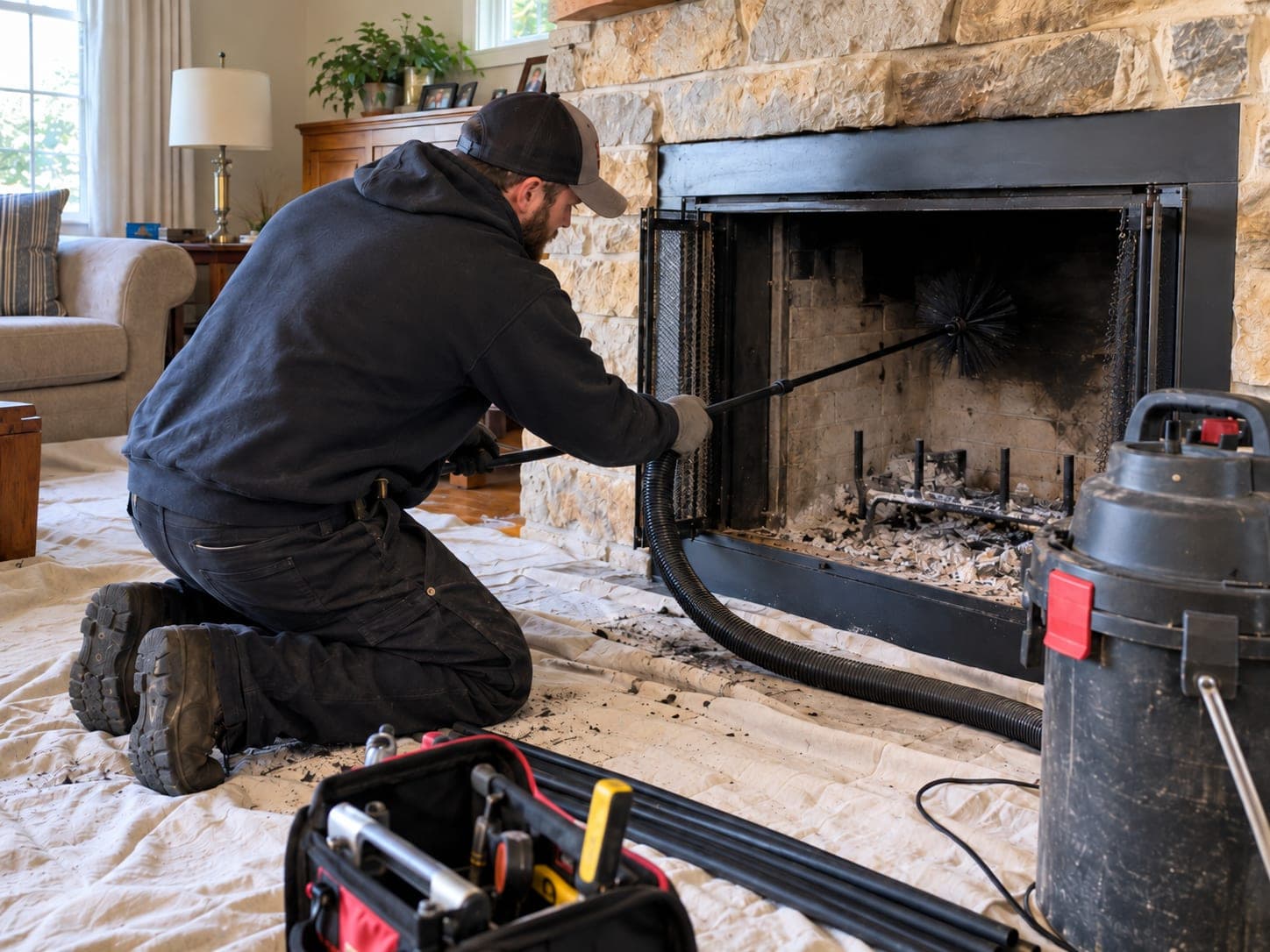
What people mean by the smoke shaft
There's no single official part called the smoke shaft. Homeowners and builders use the term for the whole route smoke takes after it leaves the fire. In a masonry fireplace, that route has four distinct sections:
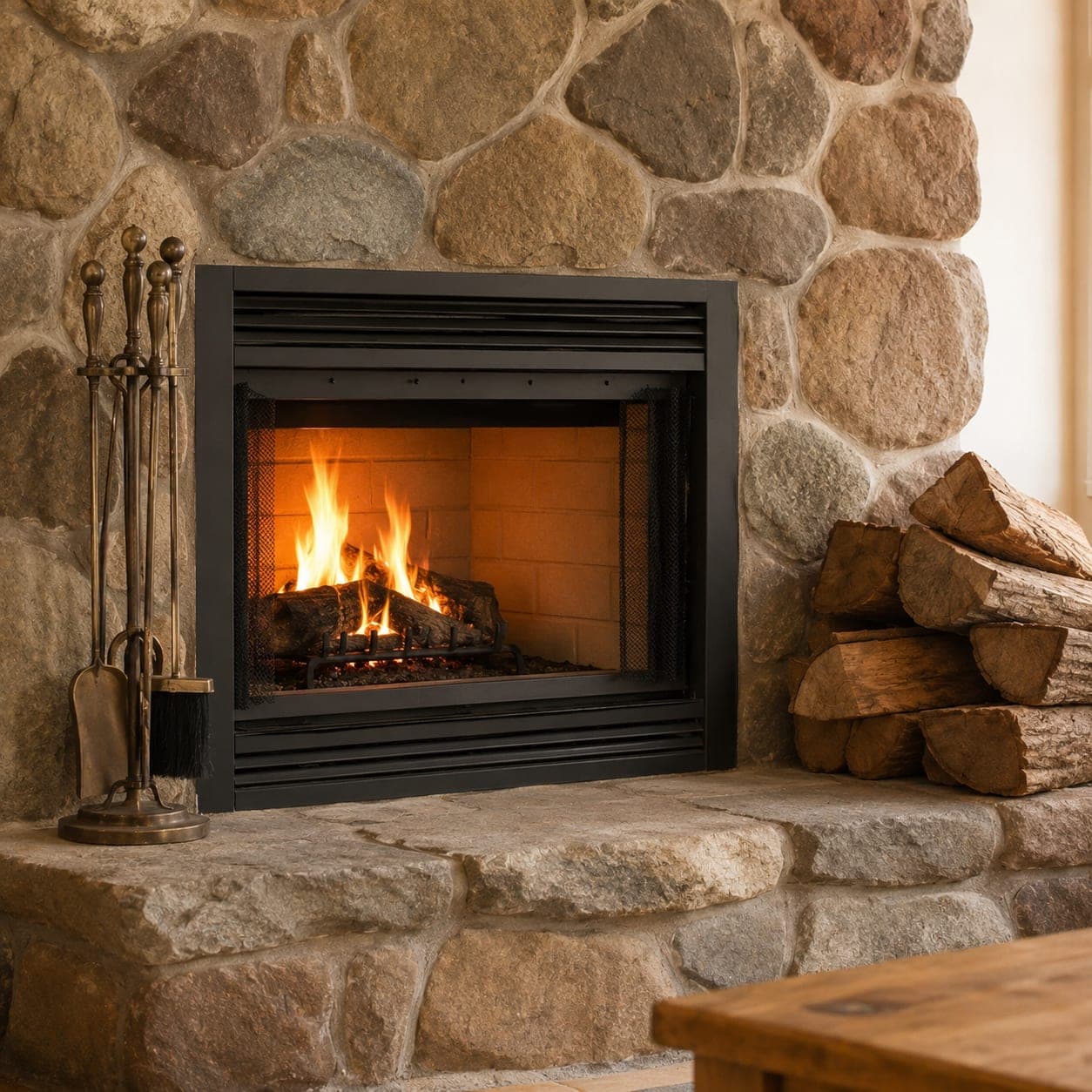
- The throat and damper: the narrow opening just above the firebox, where the damper plate opens and closes.
- The smoke shelf: a ledge behind the damper that turns back cold downdrafts and collects debris.
- The smoke chamber: the funnel-shaped space that narrows from the width of the firebox to the size of the flue.
- The flue: the vertical passage, usually lined, that runs to the top of the chimney.
Factory-built fireplaces have a simpler metal version of the same path. Our anatomy guide shows how the smoke path fits into the rest of the fireplace in more detail.
How the visit works
A damaged smoke chamber is a common cause of smoke spilling into the room. Cracks in the firebox let heat reach the framing behind it.
Find the cause
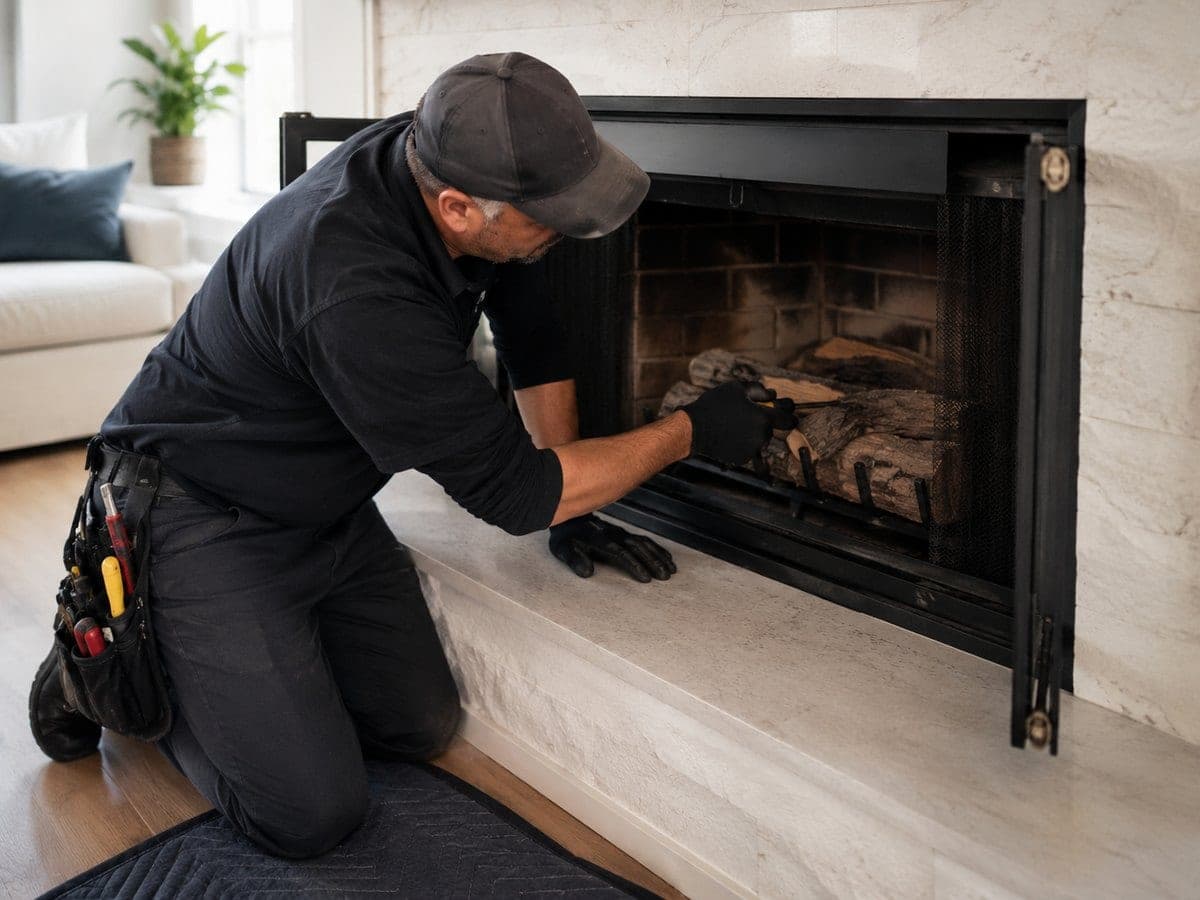
The firebox, damper, smoke chamber and any doors, glass or panels are checked.
Confirm the type
Masonry or factory-built — the repair has to suit the system.
Explain the fix
You hear the options and what each involves before work starts.
Repair and test
The work is done and the fireplace is checked before you use it.
What we look at
- Mortar joints inside the firebox
- Smoke chamber and smoke shelf
- Doors, glass and gaskets
- Damper operation
- Draft from the opening
- Firebrick or refractory panels
If smoke comes into the room
Stop adding fuel, open a window and don't relight the fire until the chimney has been checked. If the smoke is heavy, an alarm sounds or you suspect a chimney fire, get everyone outside and call 911.
Signs it's time for wood-burning fireplace repair
- A fireplace that is hard to light or won't stay lit
- Smoke coming into the room
- Cracked or missing firebrick or refractory panels
- Rust or warping inside the firebox
Signs the smoke shaft isn't doing its job
Watch for
- Smoke spilling out of the top of the opening, especially early in a fire
- Soot stains on the fireplace face above the opening
- A fire that's hard to start or keep burning
- A damper that sticks, won't close or has rusted
- Bits of mortar, brick or debris falling onto the smoke shelf or grate
- A strong smoky smell in the room between fires
Draft problems have several possible causes, and the smoke shaft is only one of them. A smoke chamber with rough, stepped brickwork creates turbulence that slows the smoke. Creosote narrows the passage. Missing mortar or cracked parging (the smooth mortar coat inside the chamber) can let heat reach the framing around the chimney. That's a safety issue, not just a nuisance.
Cleaning versus repair
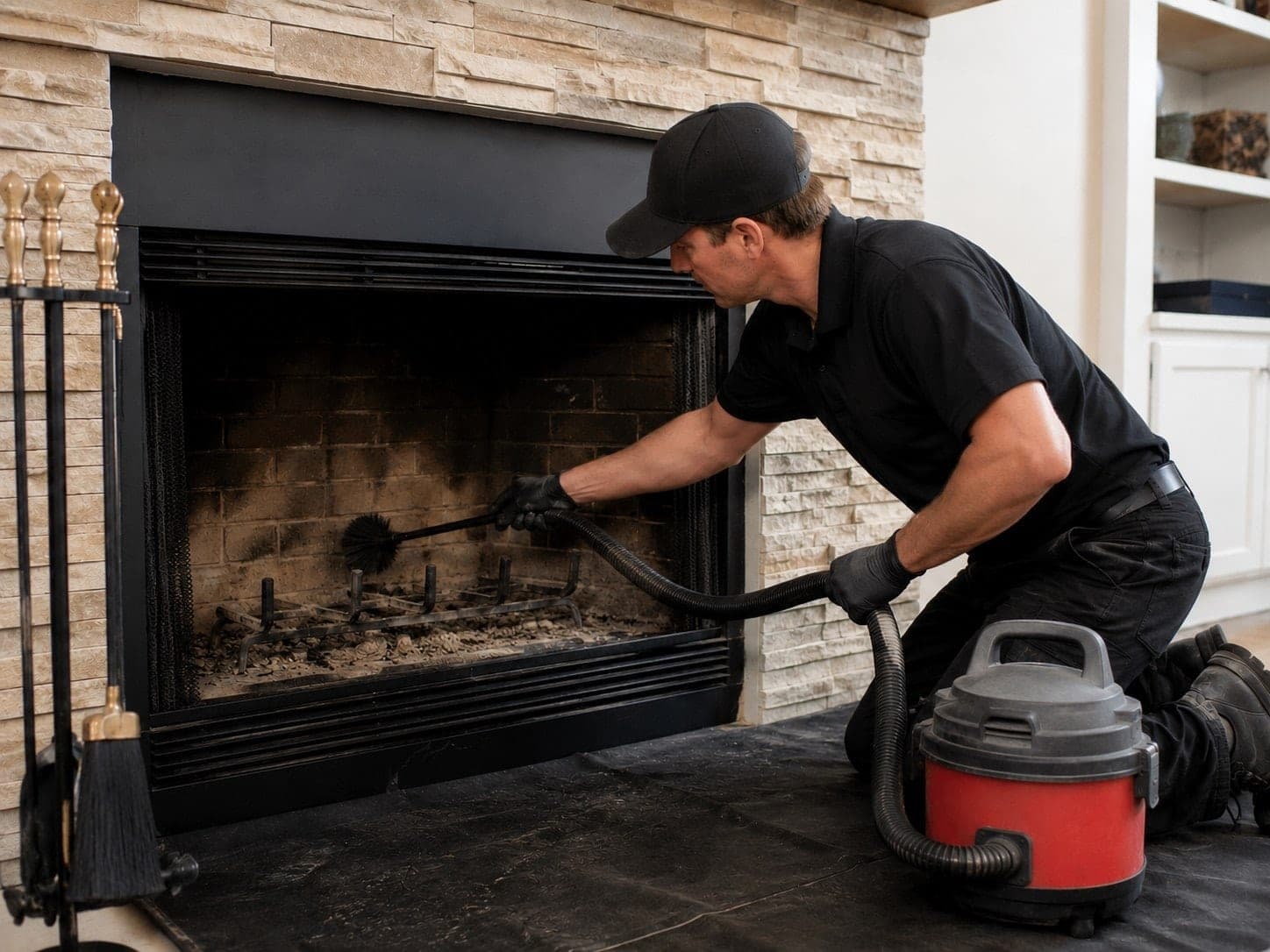
Many smoke shaft problems start with buildup. A wood-burning fireplace cleaning service that covers the smoke shelf and chamber, not just the firebox, often restores draft on its own. It also reveals what condition the masonry is in. When the problem is structural, such as worn mortar, cracked parging or a damaged damper, repair is the next step. Our pages on fireplace smoke shaft repair and a broken fireplace smoke chamber explain what that work covers.
Thinking about giving up wood fires?
If the smoke shaft needs major work and you mainly want the look of a fire, an electric unit doesn't need chimney draft at all. An electric fireplace installation is one route some homeowners take, and our guide on how efficient fireplaces hold on to their heat can help you weigh it.
Estimates are free, emergency calls are accepted at any hour, Sunday through Friday, and same-day visits are possible when the schedule allows.