On this page
Common gas fireplace problems and where they start
A gas fireplace is a chain of small parts working in sequence, so one weak link stops the whole unit. These are the symptoms homeowners describe most, and the parts that usually explain them.
| What you notice | Where the trouble usually is |
|---|---|
| Pilot won't light or won't stay lit | A dirty or weak thermocouple or thermopile, a blocked pilot orifice, or a low pilot flame |
| Pilot lights but the main burner won't | Thermopile output, the wall switch or remote, or wiring to the valve |
| Tall, lazy yellow flames or soot | Logs moved out of position, air shutter setting, or debris in the burner |
| Hazy white film on the glass | Normal combustion residue that needs proper cleaning |
| Shuts off after running a while | Venting problems, a failing safety sensor, or overheating |
| Remote or switch does nothing | Batteries, the receiver, or a loose connection |
If you want to follow along when we explain a repair, our fireplace anatomy guide names each of these parts.
Gas, electric or wood: confirm what you have
Not every fireplace with a glass front and a remote burns gas. Electric units plug in, have no pilot or gas valve, and fail for different reasons. If yours is electric, our electric fireplace repair page is a better fit. If you're planning a new electric unit, see installing an electric fireplace. Wood stoves and wood inserts are another category, and our wood fireplace repair service is the place to start for one of those.
Not sure which you have? A photo of the unit and its rating plate usually settles it.
Choosing a gas fireplace service company
Rather than hunting for the best name, ask any company a few plain questions:
- Will you explain what failed and show me the part?
- Do you work on vented, direct-vent and insert-style gas fireplaces?
- Is the estimate free?
- Can you come the same day, and do you take emergency calls?
Here's where we stand on the last two. Estimates are free, same-day service is offered when the schedule allows, and we take emergency calls 24 hours a day, Sunday through Friday. For keeping a working unit healthy between visits, read our fireplace safety guide and our notes on running an efficient fireplace.
What happens during the visit
A dirty pilot or worn thermocouple is the usual reason a gas fireplace won't stay lit. Logs set in the wrong place cause soot and incomplete burning.
Check ignition
Pilot, thermocouple or thermopile and igniter are tested.
Clean the burner
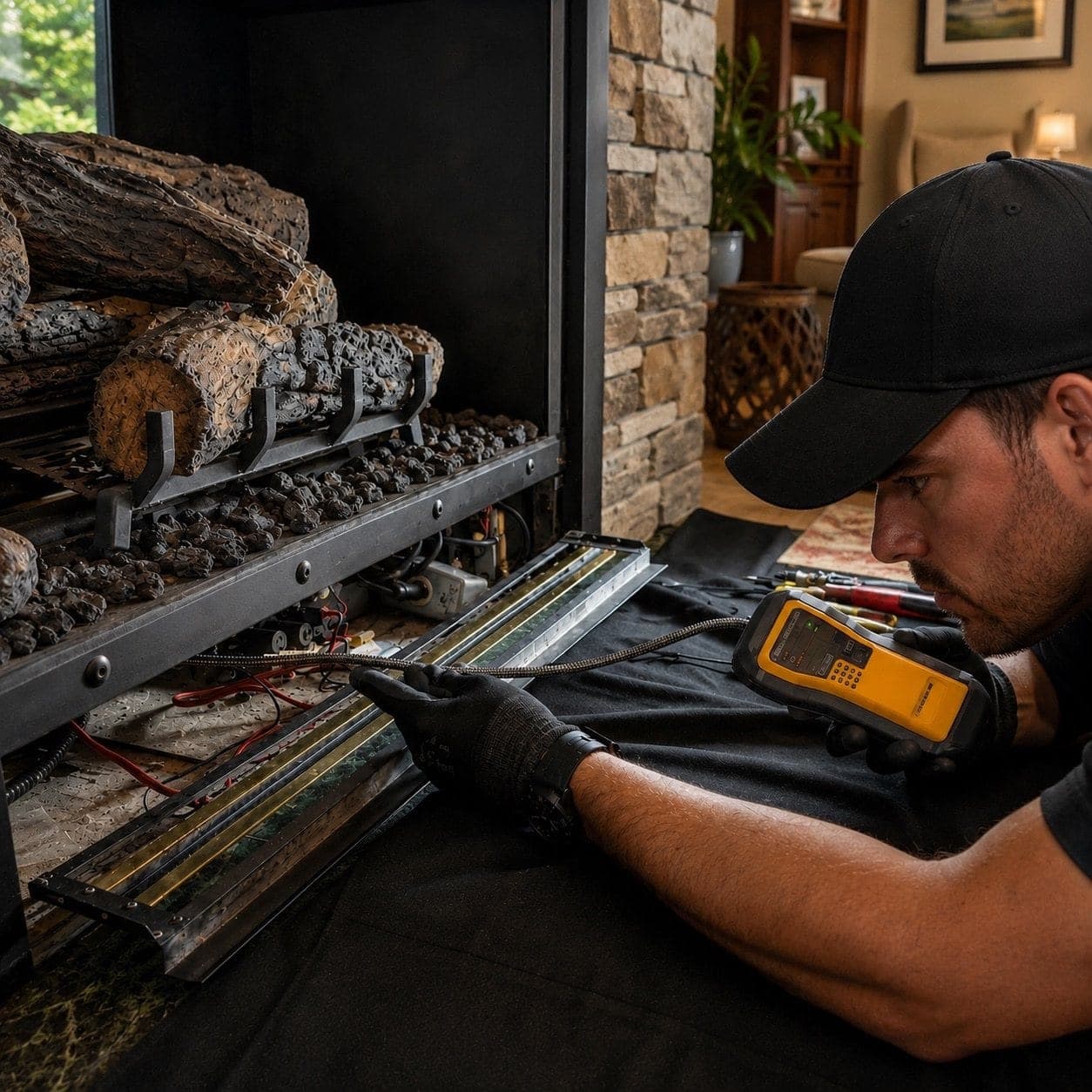
Burner ports, pilot assembly and logs are cleaned and logs placed per the manual.
Check venting
The vent and termination are checked for blockage and damage.
Test
The unit is run and the flame and controls are checked.
Checked on every visit
- Pilot assembly and flame
- Vent and termination cap
- Thermocouple or thermopile output
- Log placement
- Burner ports
- Controls and remote
Carbon monoxide
A blocked or damaged flue can push carbon monoxide into the home. If an alarm sounds or anyone feels dizzy or sick near the fireplace, get everyone outside and call 911.
Signs to watch for
- Yellow, lazy or uneven flames
- Glass that is cloudy, cracked or loose
- Soot on the glass or logs
- A gas smell (leave and call the utility first)
- The unit clicks but won't ignite
How to prepare
- Note what happens when you try to light it.
- Have the remote or wall switch working.
- Turn the unit off and let it cool.
- Find the model number, usually on a plate under the lower grille.