On this page
Understanding fireplace inserts and blowers
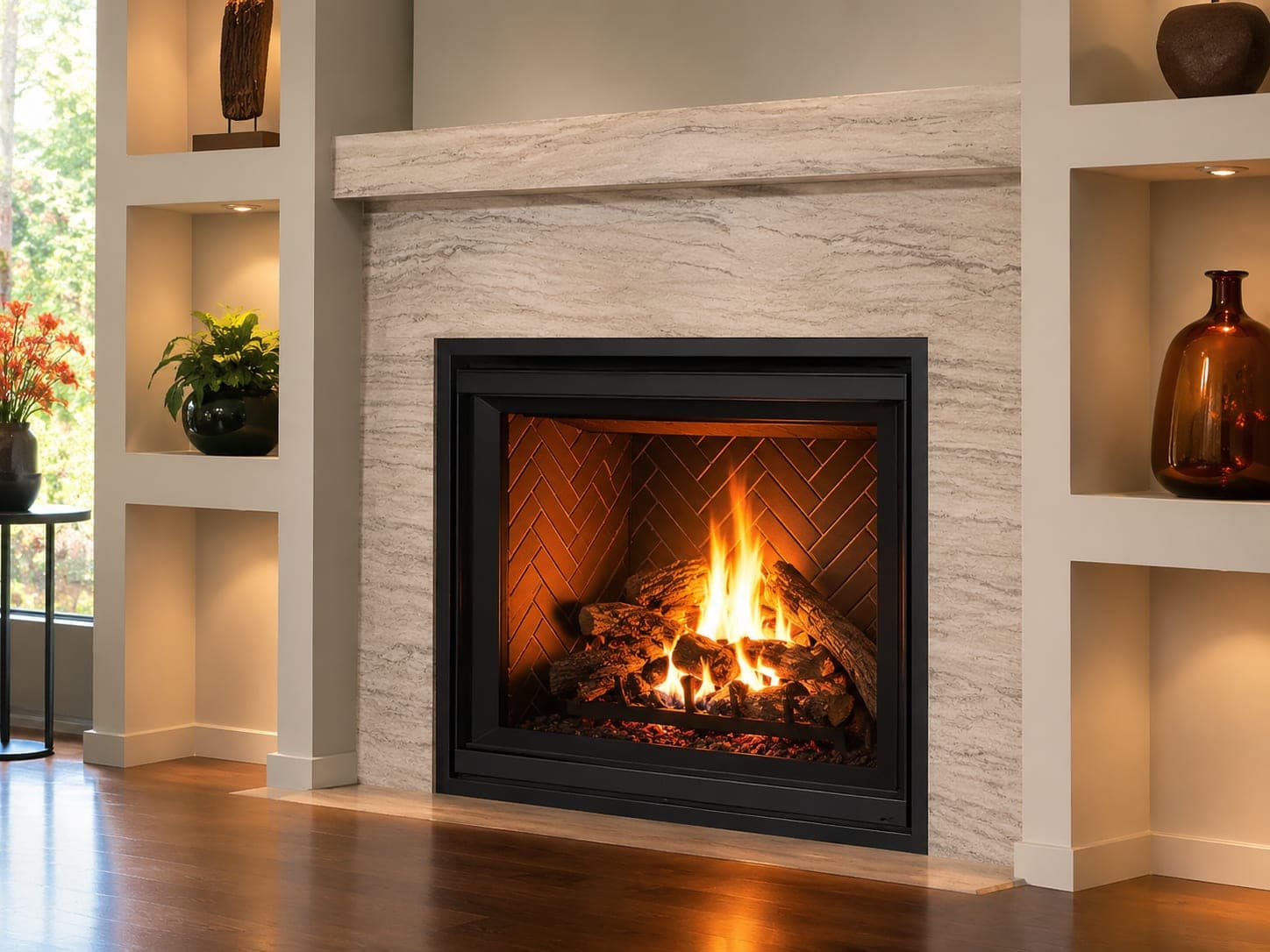
A gas fireplace insert is a sealed firebox that fits into an existing masonry or factory-built fireplace. The original opening was built to vent wood smoke, so the insert gets its own liner running up the chimney. That liner keeps exhaust contained and lets the unit draw combustion air from outside. Our fireplace anatomy guide shows where the insert, liner and chimney meet.
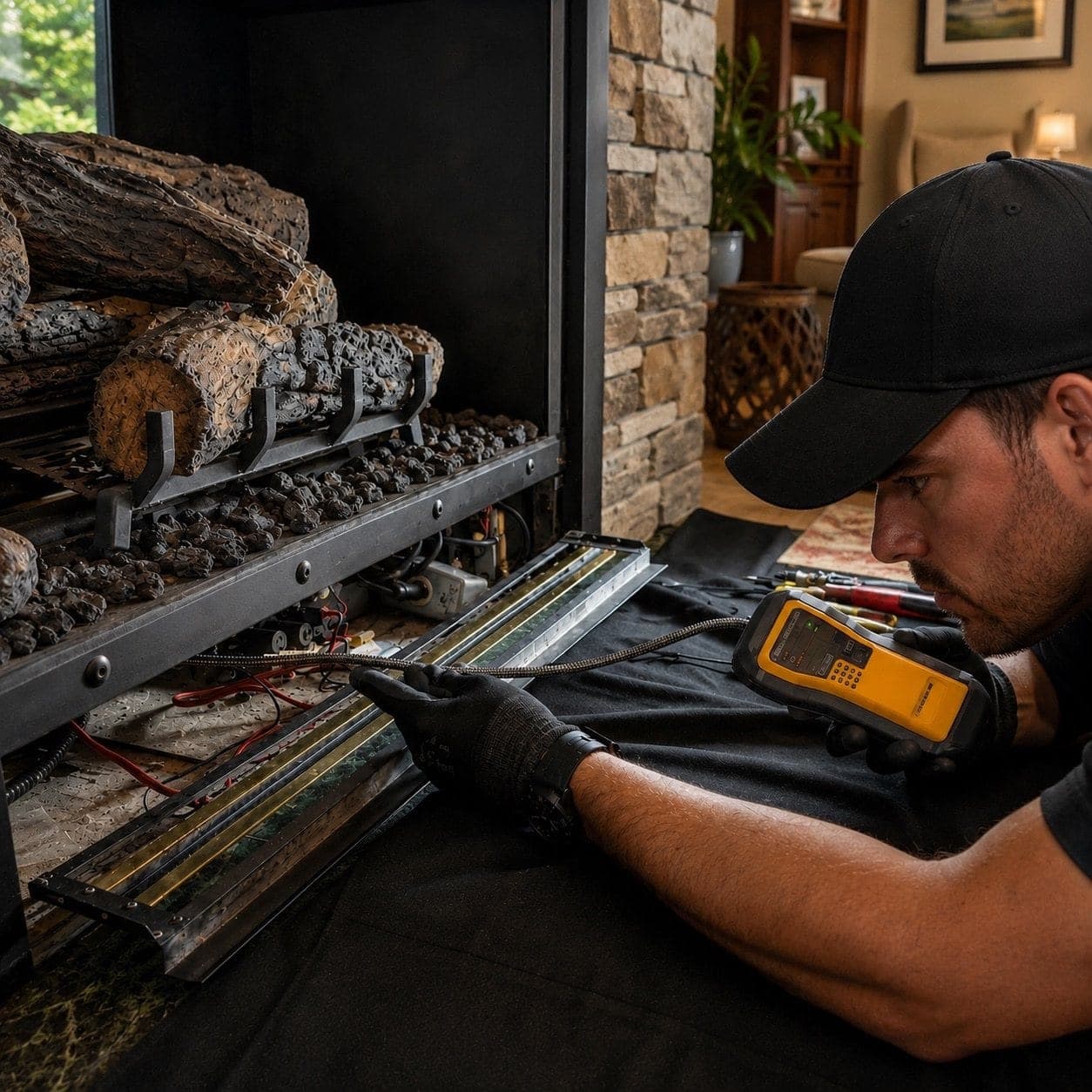
The blower is what makes many inserts feel like heaters rather than decorations. It pulls room air through a channel around the hot firebox and pushes it back out warmer. Without it, an insert still heats, but more slowly and mostly through the glass. If you're weighing heat output, see what makes a fireplace efficient.
Fireplace blower inserts: when the fan acts up
- Loud or rattling: dust and pet hair on the fan wheel, or worn motor bearings
- Never comes on: a failed thermostatic switch, loose wiring or a dead motor
- Cycles on and off: a switch misreading the firebox temperature
- Runs but moves little air: blocked intake grilles or a clogged fan
Lists of the top fireplace blower inserts won't help much. The right blower is the one listed for your insert's model. Aftermarket fans that don't match can fit poorly or run hot.
What happens during the visit
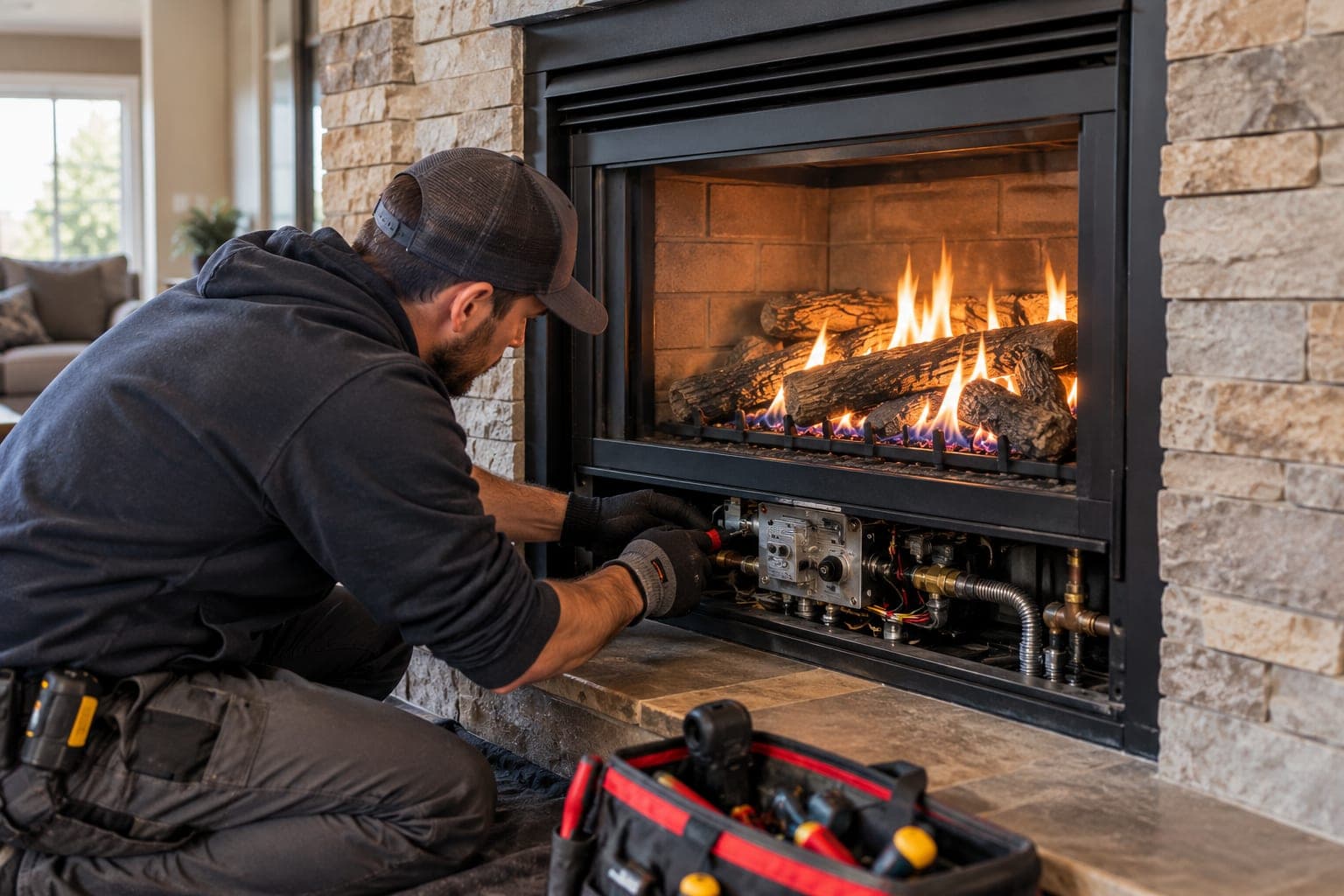
A dirty pilot or worn thermocouple is the usual reason a gas fireplace won't stay lit. Logs set in the wrong place cause soot and incomplete burning.
Diagnose
Why it won't light, stays lit poorly or soots.
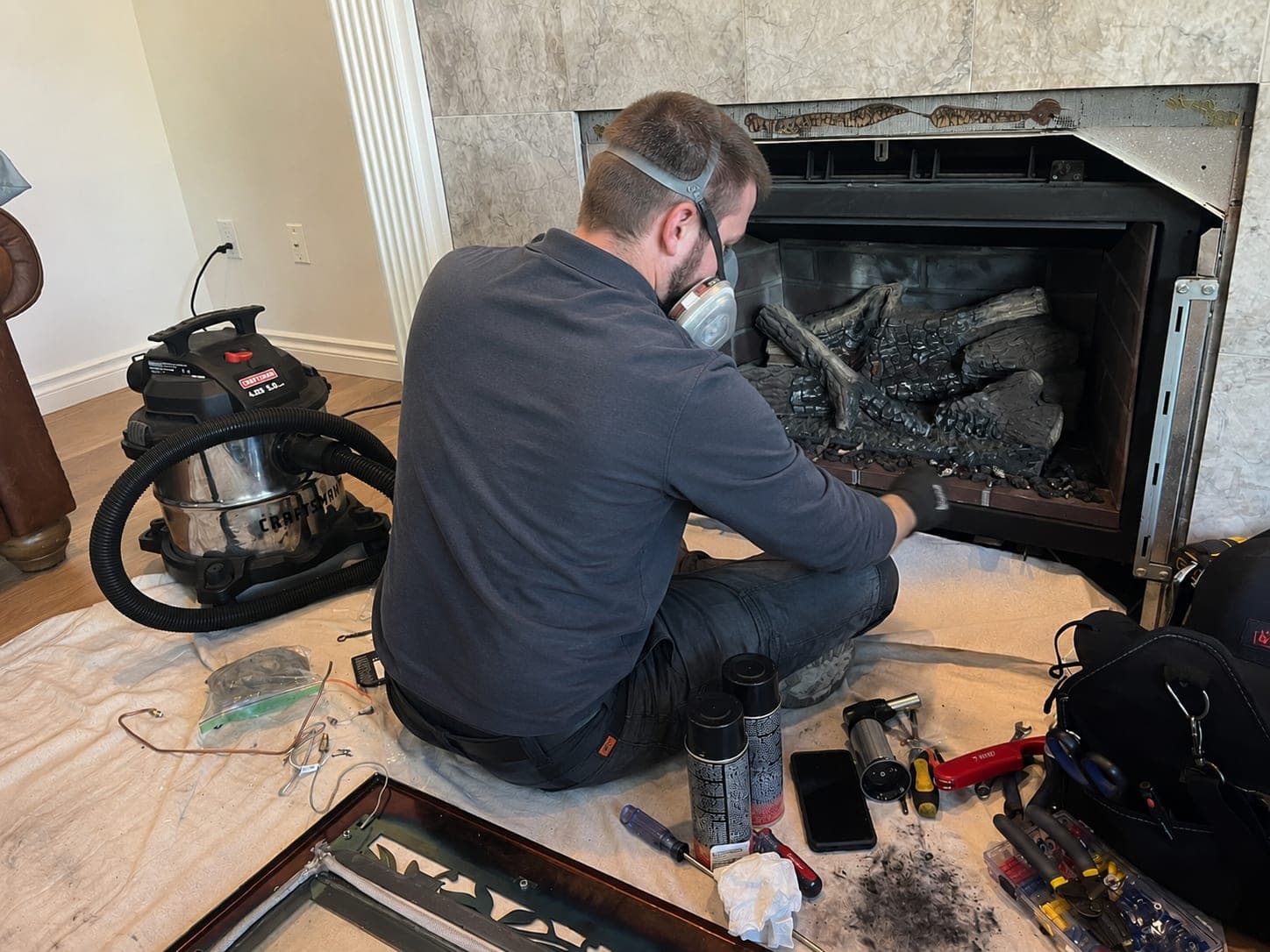
Clean and adjust
Burner, pilot, logs and glass.
Inspect the vent
From the appliance to the outside cap.
Confirm
A test run before you use it.
What gets checked
- Burner ports
- Glass and gasket seal
- Controls and remote
- Pilot assembly and flame
- Log placement
- Thermocouple or thermopile output
- Vent and termination cap
How to prepare
- Note what happens when you try to light it.
- Find the model number, usually on a plate under the lower grille.
- Turn the unit off and let it cool.
- Have the remote or wall switch working.
If you smell gas
Leave the home right away, don't use switches or phones inside, and call your gas utility or 911 from outside.
Signs it's time for gas fireplace repair
- A gas smell (leave and call the utility first)
- Yellow, lazy or uneven flames
- Soot on the glass or logs
- The pilot won't light or keeps going out
Gas fireplaces and inserts brands
We work from the rating plate, not the logo. The model and serial number tell us the venting type, the ignition system and which parts fit. Have a photo of that label ready when you call. It's usually behind the lower grille or on a pull-out tag.
Is a Wilderness insert a worthwhile change?
Anyone researching inserts runs across names like Wilderness and many others, often with big claims attached. Whether any insert is worth it depends on your fireplace: the chimney's condition, the opening size, whether gas is available and how often you'd use it. If gas doesn't fit your home, compare wood-burning fireplace inserts or electric fireplace inserts, which need neither a chimney nor a gas line.
Additional services: fireplace log sets and gas inserts
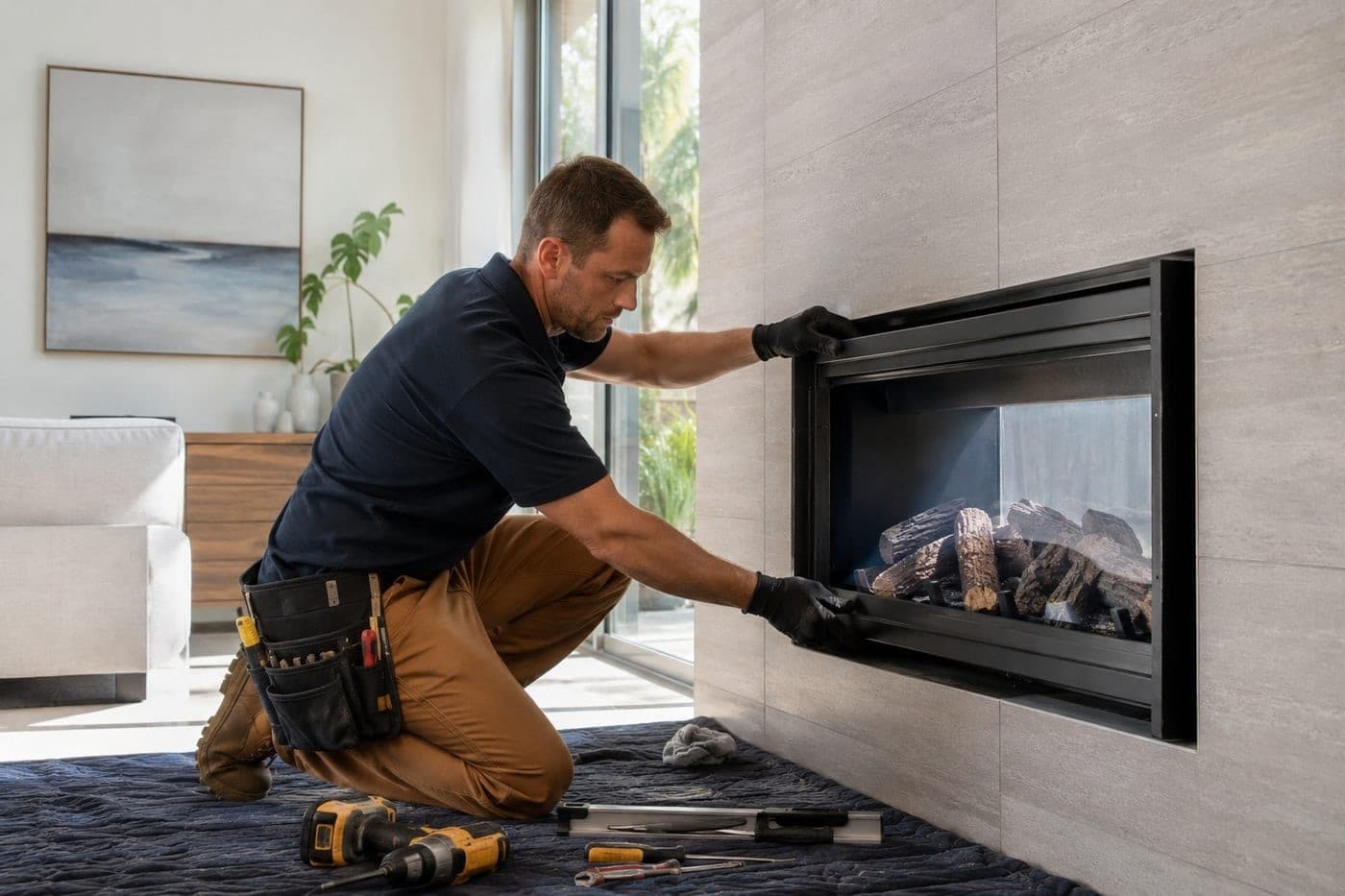
Insert work rarely stands alone. Alongside installing and repairing gas inserts, we handle:
- Gas log installation for open fireplaces
- Fireplace insert cleaning
- Chimney liner installation for new inserts
- Gas line installation
- Fireplace door installation and glass replacement
- Gas fireplace service and maintenance
Torn between fuels? Our page on choosing wood and gas fireplace inserts lays out the trade-offs. The fireplace safety guide covers everyday use.