Matching the fireplace smell to its source
Pin down what the smell actually is before trying to fix it. Different odors come from different places, and the right fix depends on which one you have.
| What it smells like | Likely source | When it's strongest |
|---|---|---|
| Campfire, asphalt or barbecue | Creosote and soot in the flue and smoke chamber | Humid days and summer |
| Musty, like a damp basement | Water entering through the crown, cap or flashing | After rain |
| Sour, rotten or animal-like | Nest material, droppings or a dead animal in the flue or on the smoke shelf | Warm weather |
| Burning dust or hot metal | Dust on gas logs, a heater or an electric unit | First few uses of the season |
| Rotten eggs or sulfur | Gas odorant from a possible leak | Any time; treat as urgent |
Rotten eggs is a different emergency
Natural gas and propane are given a sulfur smell so leaks get noticed. If you smell it near a gas fireplace or log set: 1. Leave the house. 2. Don't flip switches or use the phone inside. 3. Call your gas utility or 911 from outside. Read more about what causes a gas fireplace smell.
Why the smell drifts into the room
Creosote and soot are porous and hold onto odor. When humidity rises, those deposits release more of it. That's why a fireplace left idle since winter can smell strongest in summer. Rain getting into the flue adds a musty note of its own.
Air movement matters just as much. Exhaust fans, clothes dryers and a running furnace all pull air out of the house, and some of the replacement air comes down the chimney, carrying the smell with it. A leaky damper or an uncapped chimney gives that air an easy path. Knowing how the parts of a fireplace fit together helps you picture where odors collect, especially on the smoke shelf behind the damper.
Removing the smell instead of masking it
Baking soda, charcoal and scented sprays can take the edge off for a few days, but the deposits stay put. Lasting results come from removing the source and keeping it from coming back:
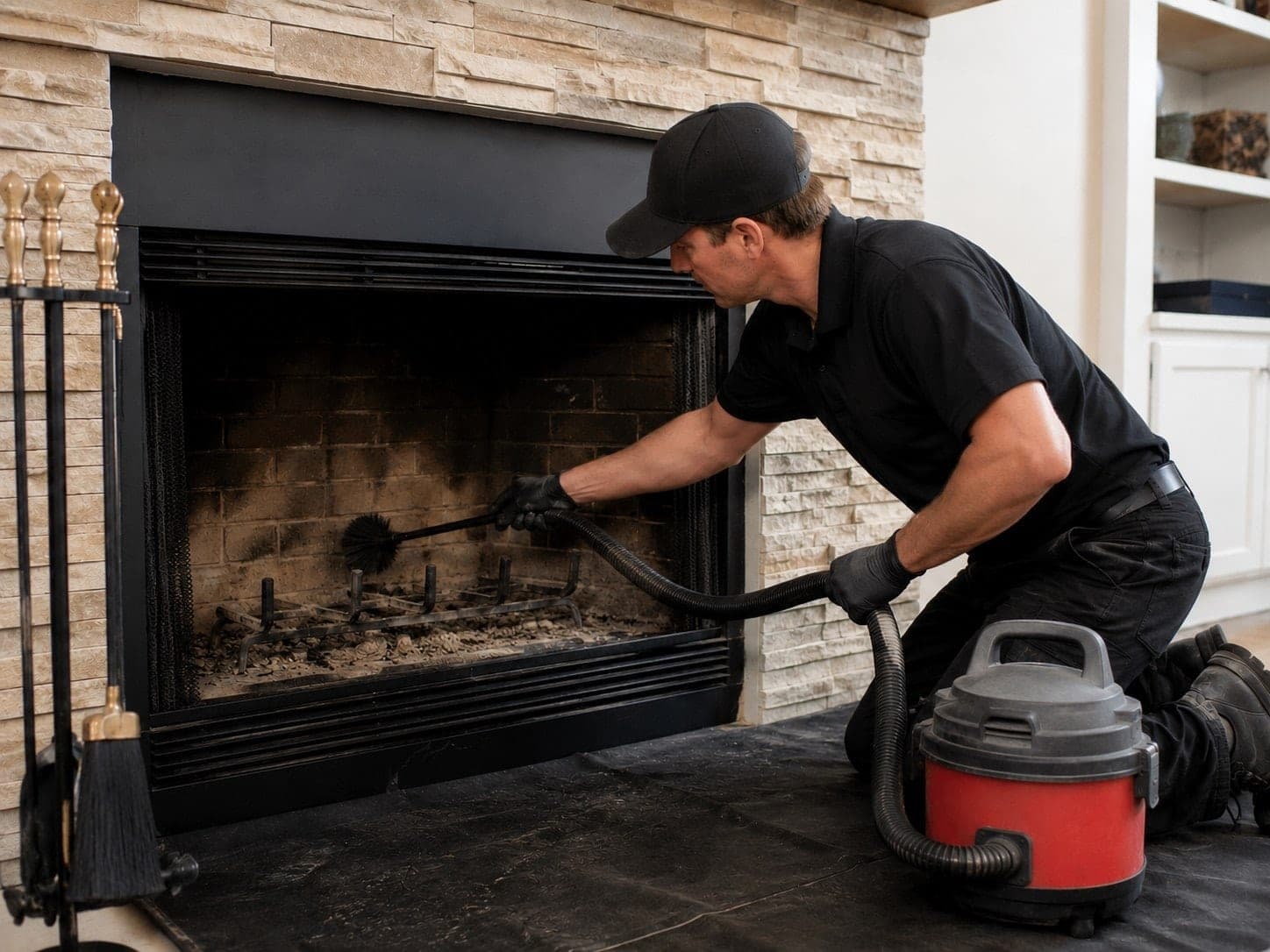
- Creosote and soot: a complete wood-burning fireplace cleaning. Heavy or glazed buildup needs creosote removal, and chimney odor removal handles what lingers.
- Water: chimney leak repair, crown or flashing repair, or waterproofing, depending on where water gets in.
- Animals: chimney animal and nest removal, followed by a cap or animal screen to keep them out.
- Downdrafts: chimney damper repair so the flue closes tightly when not in use.
For a closer look at the work, see how fireplace smell removal is handled. If the fireplace hasn't been used in years and you'd rather not maintain a wood-burning flue, ask about switching to an electric fireplace.
What the visit covers
A damaged smoke chamber is a common cause of smoke spilling into the room. Worn gaskets and glass on inserts and gas units waste heat and can leak exhaust.
Find the cause
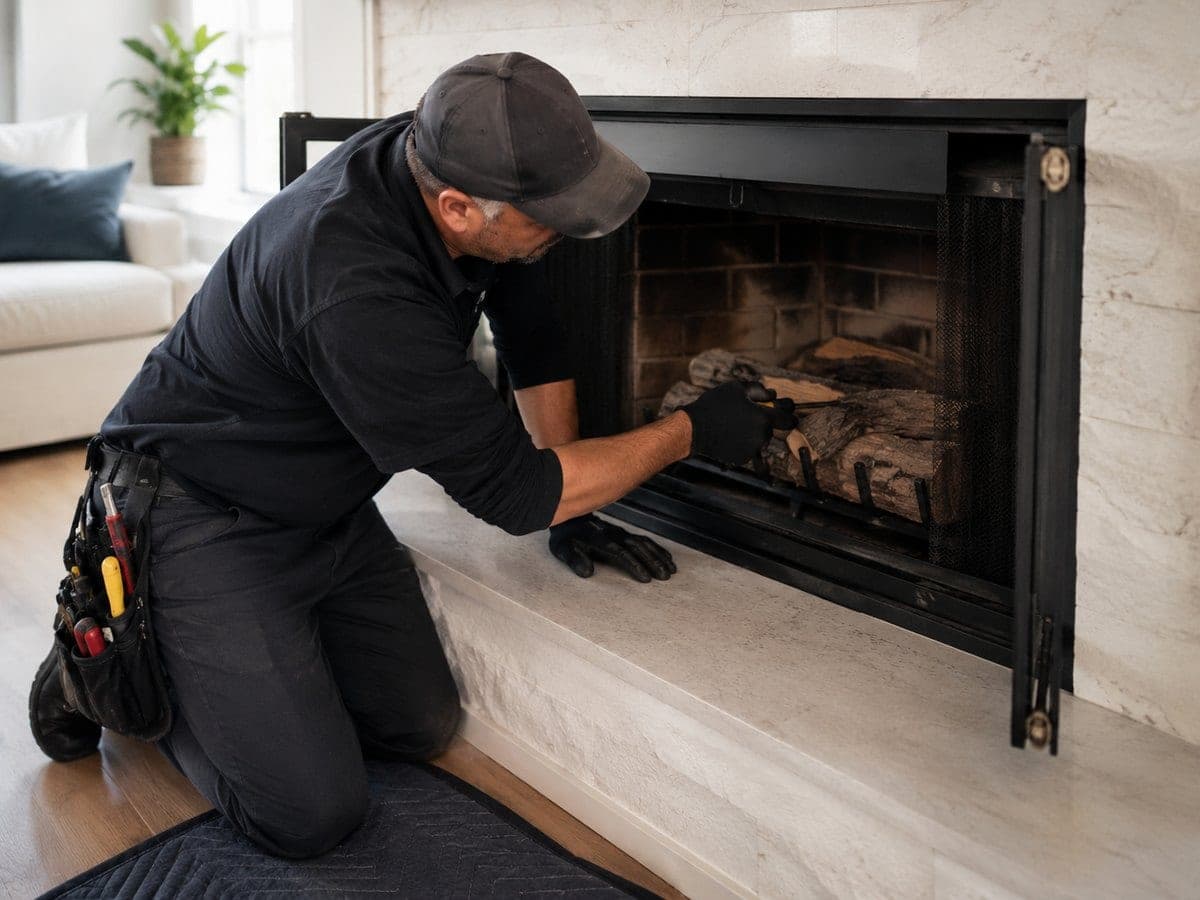
The firebox, damper, smoke chamber and any doors, glass or panels are checked.
Confirm the type
Masonry or factory-built — the repair has to suit the system.
Explain the fix
You hear the options and what each involves before work starts.
Repair and test
The work is done and the fireplace is checked before you use it.
What gets checked
- Draft from the opening
- Hearth and surround
- Doors, glass and gaskets
- Firebrick or refractory panels
- Smoke chamber and smoke shelf
What fireplace smell removal involves
Getting rid of the odor means removing whatever produces it. For a wood-burning fireplace, that usually starts with a full wood-burning fireplace cleaning and a flue sweep to clear creosote and soot. Next comes fixing whatever lets water or air carry the smell inside. That might be a new chimney cap, damper repair, crown repair or waterproofing. Nests and animal remains are removed, and the flue can be screened so it doesn't happen again.
Deodorizing sprays or a box of baking soda in the firebox can take the edge off for a few days. The smell comes back once humidity rises, because the deposits are still there.
Fireplace smell removal cost in Hartford, East Hartford and West Hartford
There's no flat price, because the fix isn't one thing. The cost depends on what's causing the smell, how much creosote has built up, whether repairs like a cap, damper work or waterproofing are needed, and whether a nest or animal has to be removed. Those factors are the same whether you live in East Hartford, West Hartford or Hartford itself. Estimates are free, so you'll know what the job involves and what it costs before any work starts.
Ethanol fireplaces that smell
Ethanol fireplaces have no chimney, so none of the causes above apply. Their odor almost always comes from the fuel or the burner. Common culprits are low-quality or contaminated fuel, a burner that isn't burning cleanly, spilled fuel, or a room without enough fresh air. Start by following the manufacturer's guidance on fuel and ventilation. Ethanol burner repair isn't one of our services. If you'd rather replace the unit, an electric fireplace produces no combustion odor at all; see our electric fireplace installation page. Our efficient fireplace guide compares the options.
Signs to watch for
- Smoke coming into the room
- Doors or glass that are cracked or don't seal
- Cracked or missing firebrick or refractory panels
- A damper that won't open or close
- Rust or warping inside the firebox
Carbon monoxide
A blocked or damaged flue can push carbon monoxide into the home. If an alarm sounds or anyone feels dizzy or sick near the fireplace, get everyone outside and call 911.