On this page
The annual fireplace maintenance sweep for gas units
When people say annual sweep, they usually picture brushes and soot. A gas fireplace needs a different kind of yearly visit. The burner ports and pilot collect dust, lint and spider webs. The glass gets a film that bakes on harder each season. The vent and its outdoor termination can pick up leaves, nests or crushed sections. If the unit vents into a masonry chimney, that flue and its cap still need checking. Our general fireplace maintenance service covers wood-burning fireplaces. This page is about gas.
Additional tips for gas fireplace maintenance
- Clean the glass only when it's cool, using a cleaner made for gas fireplace glass
- Don't rearrange the logs or add decorative stones the manual doesn't call for, since flame contact causes soot
- Keep the outdoor vent termination clear of shrubs, snow and stored items
- Change remote and receiver batteries each fall
- Call for service if you see yellow, lazy flames or soot, or notice a persistent odor
Booking ahead of cold weather is easiest. See what our fall gas fireplace service includes. For background on safe operation, there's our guide to fireplace safety.
Benefits and safety of maintaining factory-built fireplaces
Most gas fireplaces are factory-built. The firebox, burner, glass, vent pipe and cap were tested and listed together as one system. That's what makes them safe in a wood-framed wall, and it's also why maintenance matters. A cracked panel, a gasket that's lost its seal, or a substitute part that doesn't match the listing changes how the whole system behaves. Our fireplace anatomy guide shows how those parts fit together.
- Safety: sealed combustion depends on intact gaskets and vent joints
- Performance: clean burner ports and correct log placement keep the flame even and the glass clear
- Longevity: catching chase cover rust or a loose termination early prevents water damage
- Efficiency: a well-tuned unit puts more heat in the room. Our efficient fireplace guide explains why.
What happens during the visit
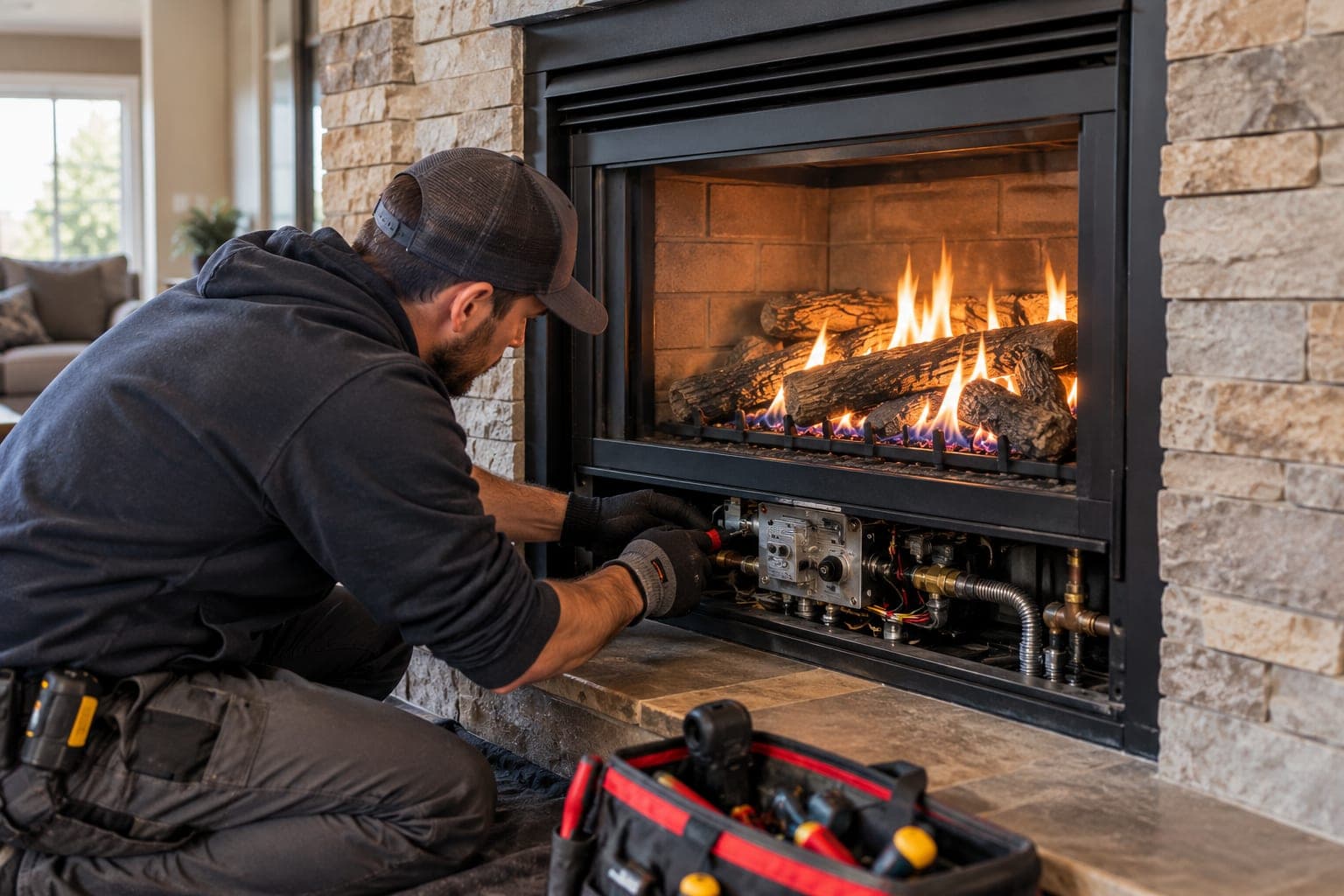
A dirty pilot or worn thermocouple is the usual reason a gas fireplace won't stay lit. Blocked or damaged venting can push exhaust into the room.
Check ignition
Pilot, thermocouple or thermopile and igniter are tested.
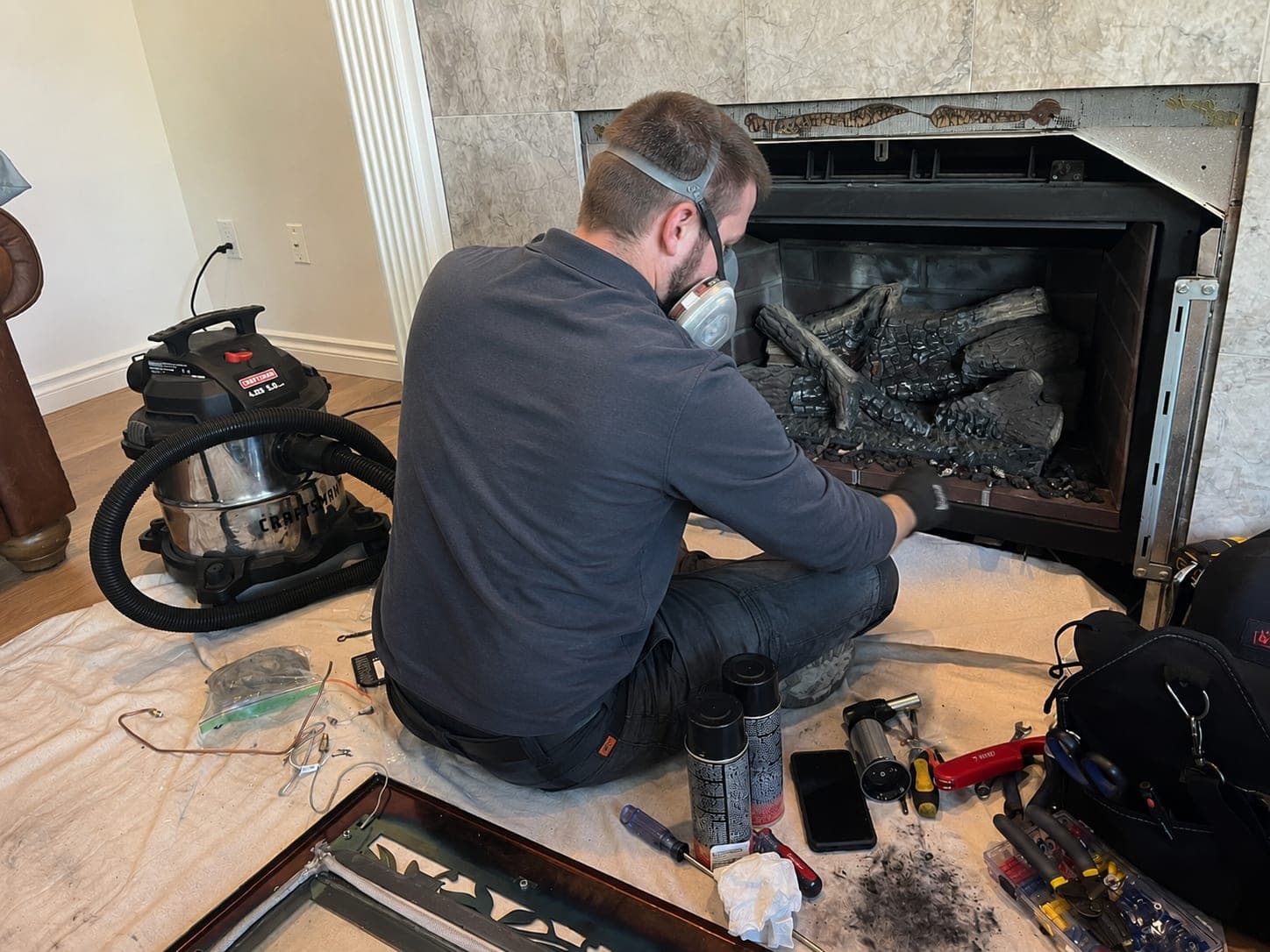
Clean the burner
Burner ports, pilot assembly and logs are cleaned and logs placed per the manual.
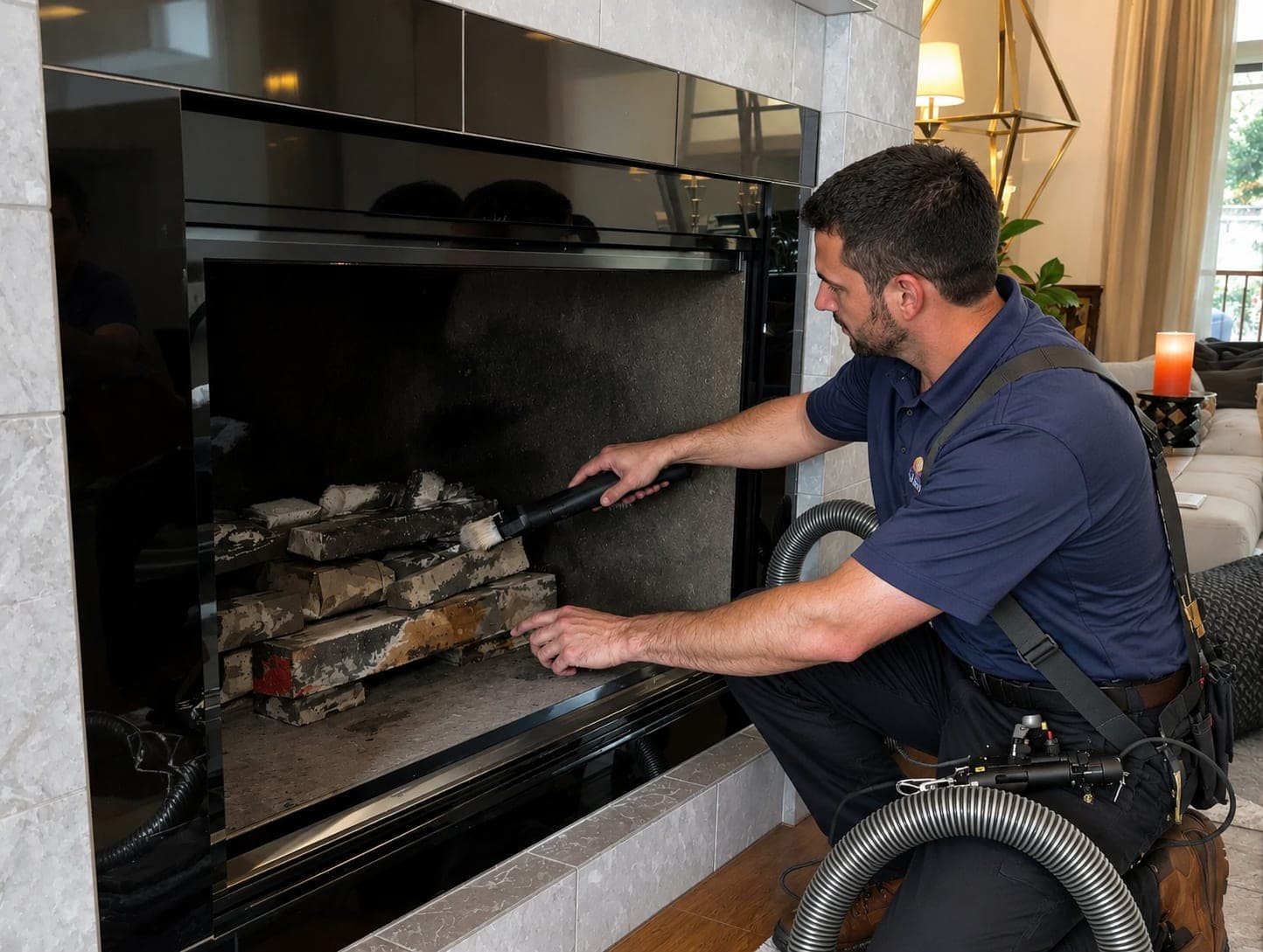
Check venting
The vent and termination are checked for blockage and damage.
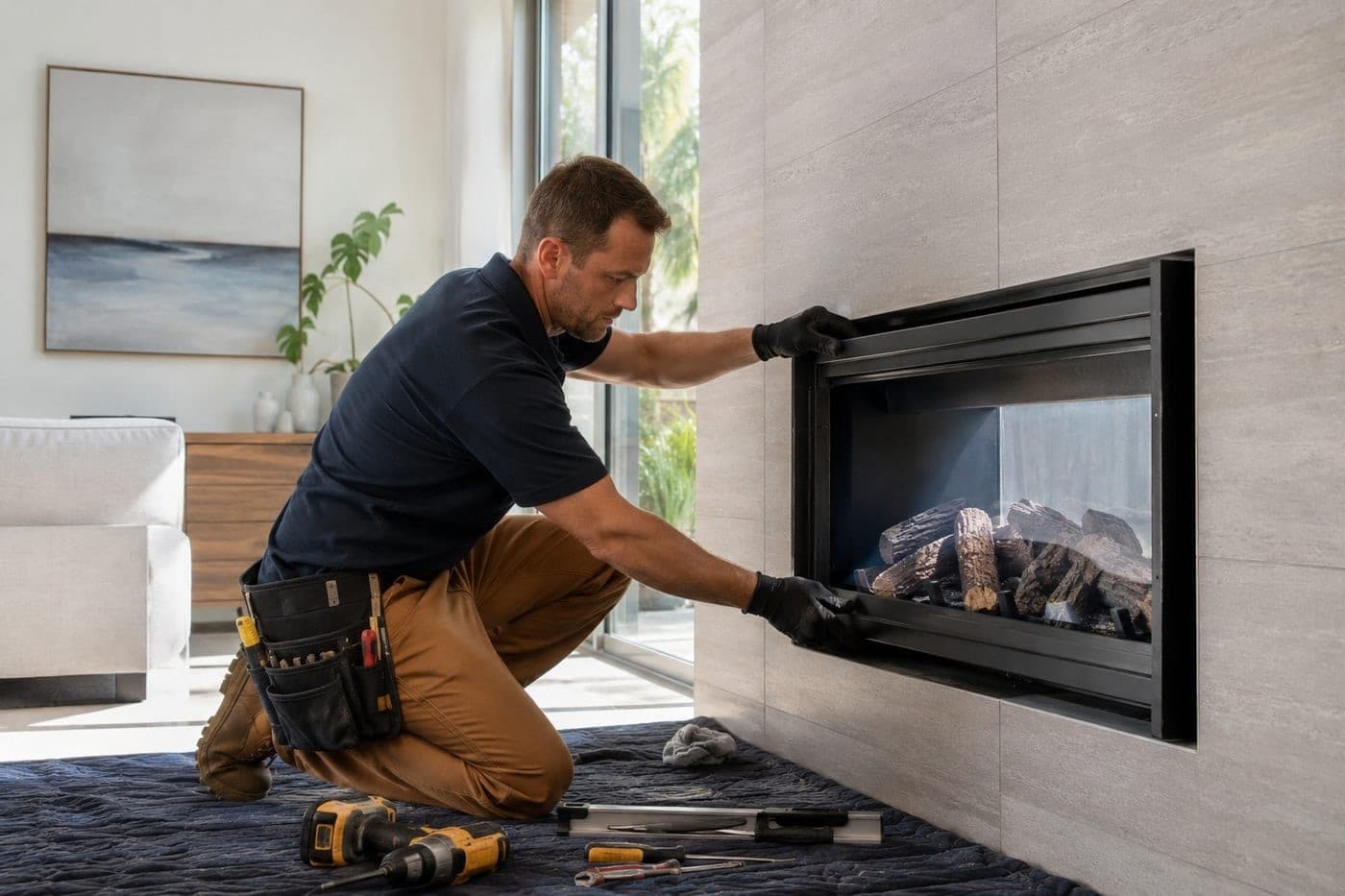
Test
The unit is run and the flame and controls are checked.
Carbon monoxide
A blocked or damaged flue can push carbon monoxide into the home. If an alarm sounds or anyone feels dizzy or sick near the fireplace, get everyone outside and call 911.
Getting ready for the visit
- Turn the unit off and let it cool.
- Find the model number, usually on a plate under the lower grille.
- Note what happens when you try to light it.
- Have the remote or wall switch working.
What we look at
- Thermocouple or thermopile output
- Controls and remote
- Glass and gasket seal
- Pilot assembly and flame
- Vent and termination cap
- Log placement
When to book gas fireplace service & maintenance
- Yellow, lazy or uneven flames
- The unit clicks but won't ignite
- Soot on the glass or logs
- Glass that is cloudy, cracked or loose