What goes wrong inside a smoke chamber
Above the damper, the fireplace narrows from the width of the firebox down to the size of the flue. In many masonry fireplaces, those sloping walls were built by stepping each course of brick inward, a method called corbelling. Left bare, the steps form ledges that catch creosote and churn the rising smoke instead of guiding it upward. The walls may also have a mortar coating, called parging, that has cracked and flaked from years of heating and cooling. If those terms are new, our guide to how a fireplace is built walks through each part.
Signs the smoke chamber needs attention
- Smoke rolls into the room when the fire is first lit, even with the damper fully open
- Heavy, crusty creosote just above the damper
- Bits of mortar or brick resting on the damper or smoke shelf
- An inspection or sweep note mentioning an unparged, cracked or deteriorated smoke chamber
How fireplace smoke chamber repair is done
Typical sequence
Clean and inspect
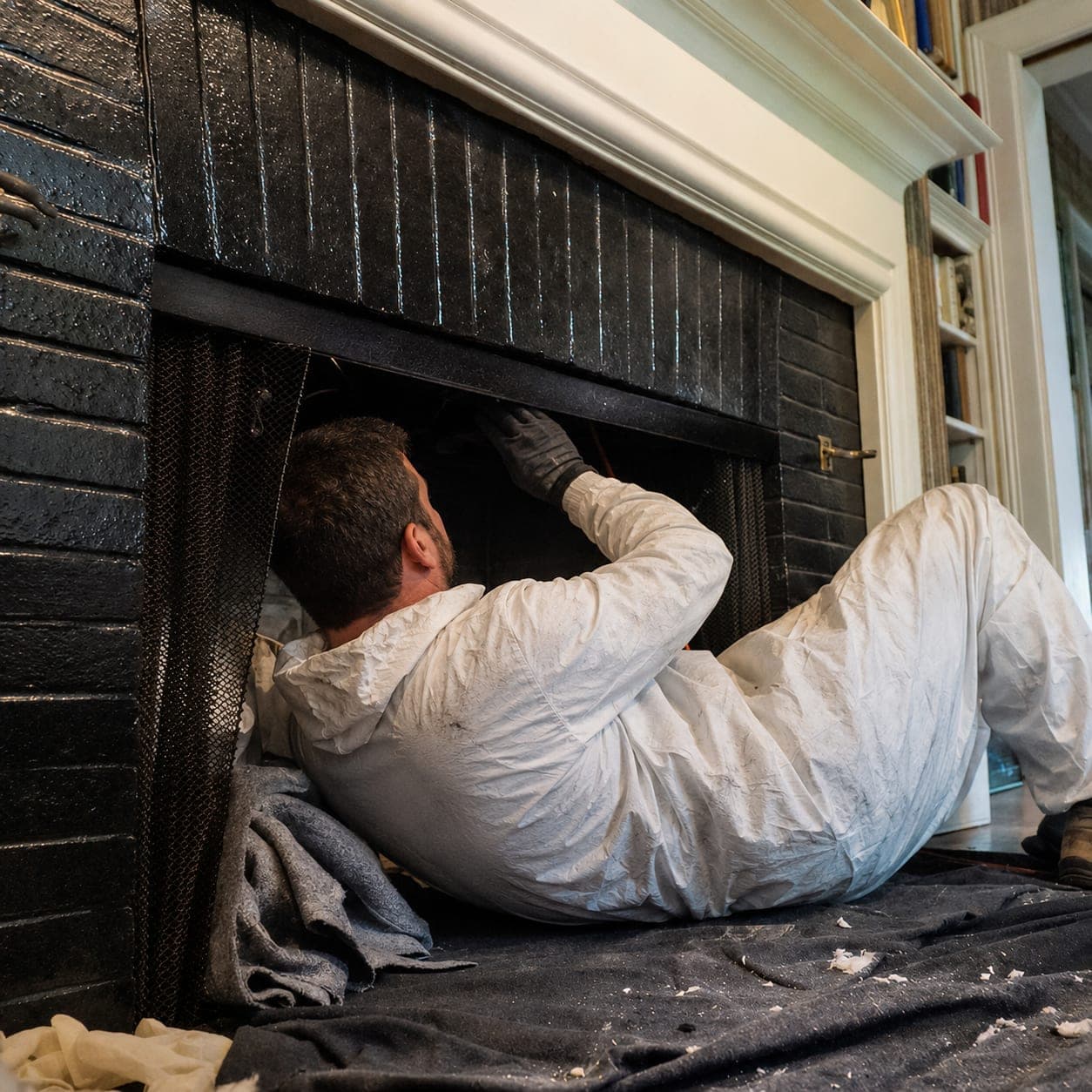
Creosote is removed so the masonry can be seen clearly. Where the angle makes direct viewing hard, a camera is used to examine the chamber.
Repair damaged masonry
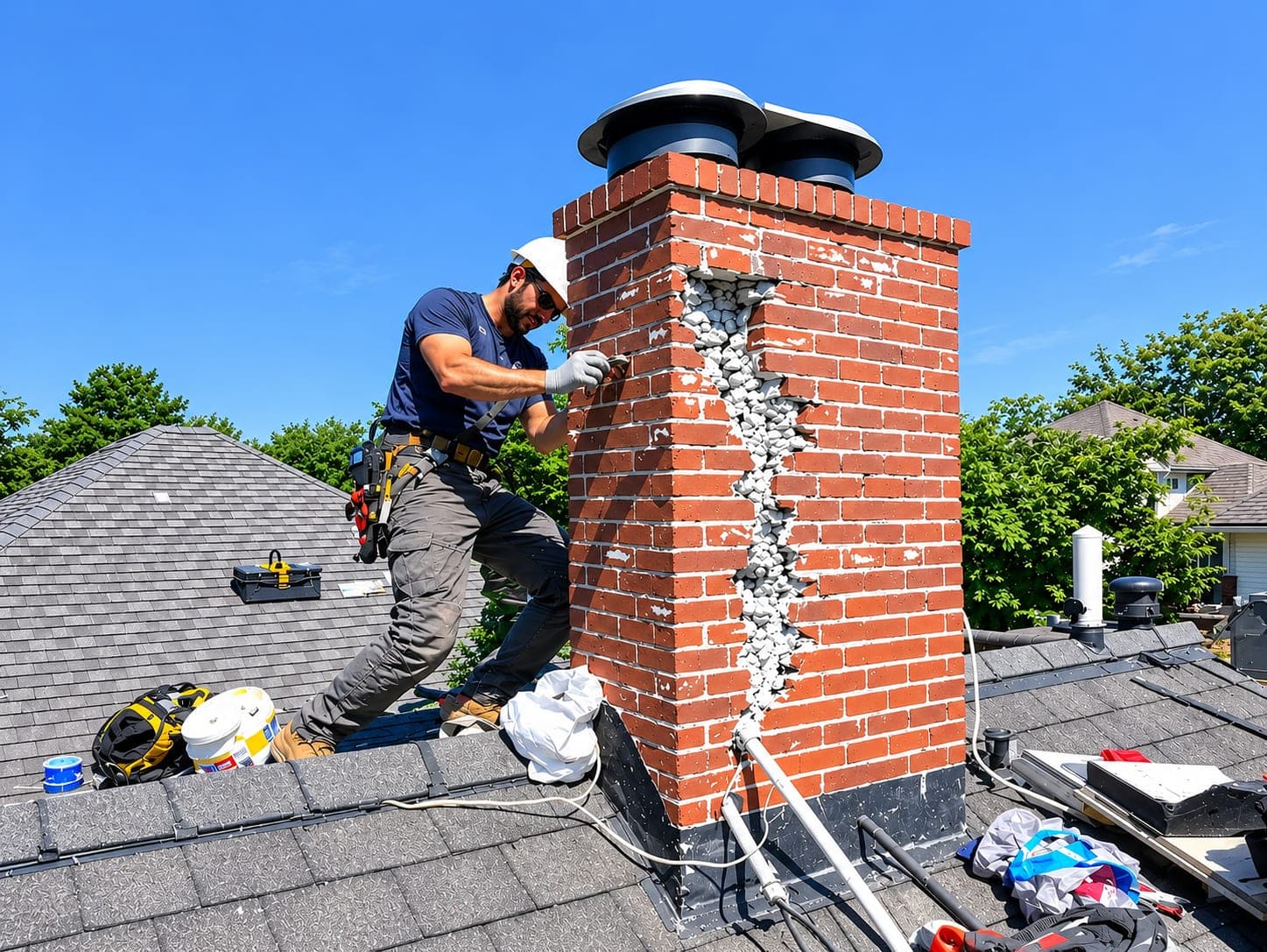
Loose or missing brick and failed mortar joints are rebuilt so the walls are solid.
Seal and smooth
A heat-resistant mortar is applied over the walls to close cracks and turn the stepped surface into a smooth slope.
Check connected parts
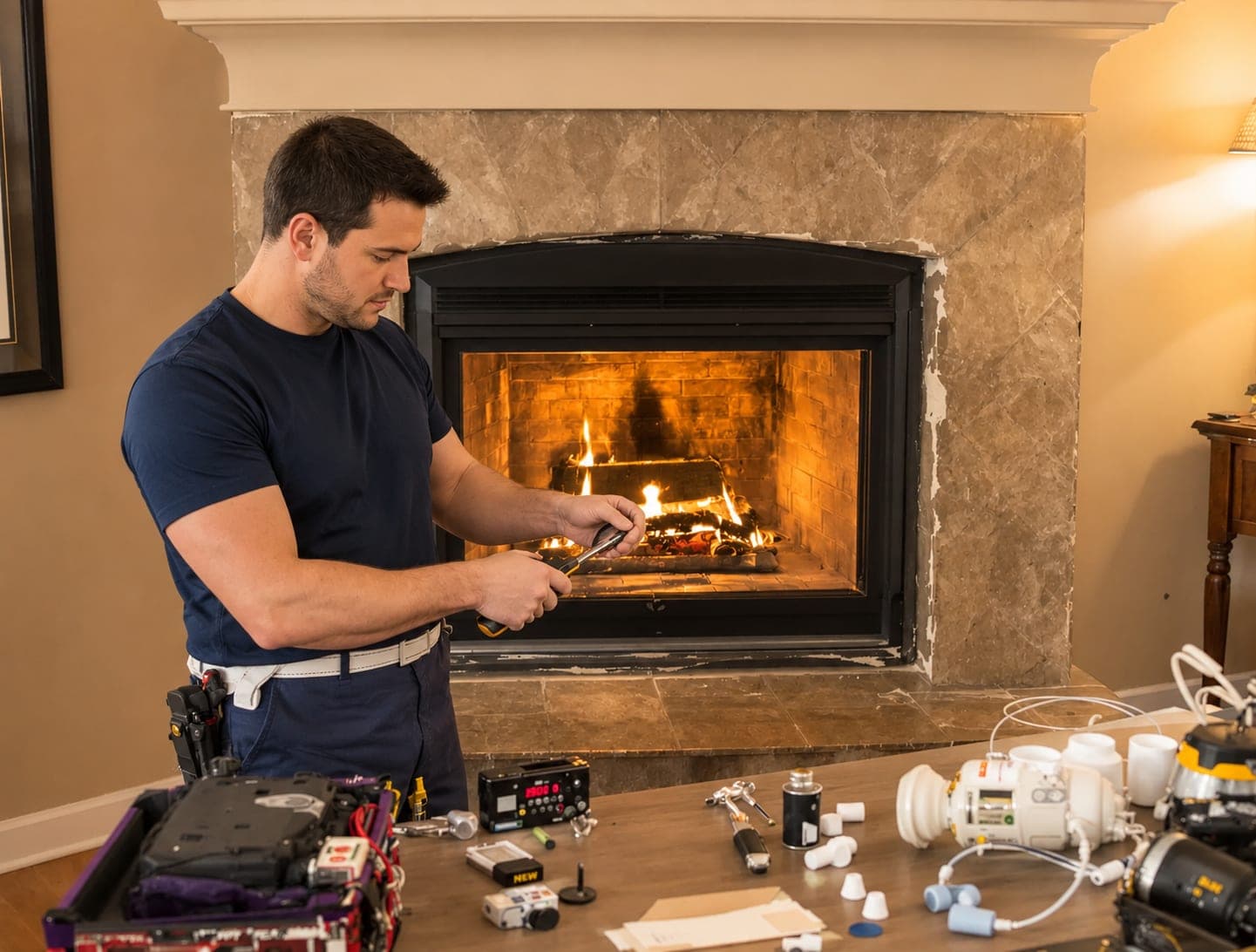
The damper, smoke shelf, firebox and flue liner are looked at, since a smoking fireplace often has more than one cause.
This work falls under chimney and fireplace repair. If the chamber has partly collapsed or has large open gaps, read about repairing a badly broken smoke chamber. For other conditions in the same area, see common smoke chamber problems.
If you'd rather not rebuild
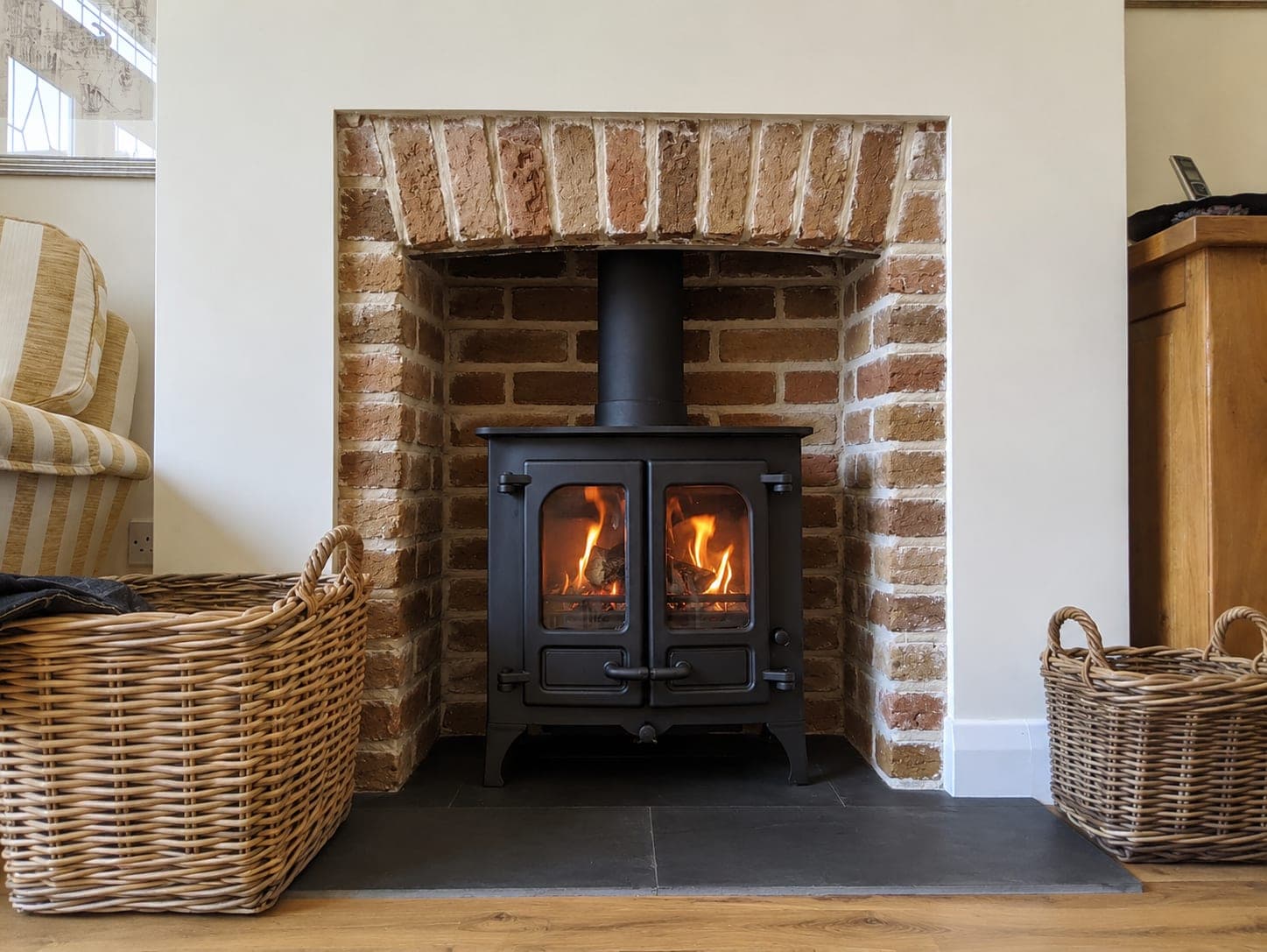
Some homeowners who rarely burn wood decide that converting the fireplace makes more sense than restoring it. Options include a fireplace insert, gas logs or an electric fireplace in place of the wood-burning one. Each has its own requirements, and an inspection comes first. For ideas on getting more heat from the fire you already have, see making a fireplace more efficient.
How the visit works
Water that gets into a chimney widens cracks every season and can rot nearby framing. A damaged liner or firebox lets heat reach parts of the house it shouldn't.
Describe the problem
What you've noticed, when it started and whether it's worse after rain.
Find the source
The chimney is checked from the roofline down to the firebox — a ceiling stain can start at the flashing, the crown or porous brick.
Explain the options
You hear what failed and the ways to fix it, with what each involves.
Repair
Once you approve the scope, the area is protected and the work is done.
Check the result
The repaired area is shown to you and the site is cleaned up.
Signs to watch for
- Water stains on the ceiling or wall beside the chimney
- Rust on the damper or firebox
- Crumbling or sandy mortar joints
- Pieces of flue tile in the firebox
What we look at
- Cap, screen and chase cover
- Firebox walls and floor
- Flue liner condition
- Damper and smoke chamber
- Mortar joints and brick faces
- Flashing seal at the roof
Carbon monoxide
A blocked or damaged flue can push carbon monoxide into the home. If an alarm sounds or anyone feels dizzy or sick near the fireplace, get everyone outside and call 911.