Top signs your chimney is leaking and how to address the issue
Each symptom points toward a few likely sources. Matching what you see to the right part of the chimney is how a leak gets fixed on the first visit instead of the third.
What you're seeing and where it usually starts
01Stains beside the chimney
- What you may notice
- Brown rings, peeling paint or bubbling drywall on a ceiling or wall next to the chimney
- How it’s confirmed
- Flashing and the joint where roof meets chimney are inspected, and framing is checked from the attic side
02Water or rust in the fireplace
- What you may notice
- Puddles on the hearth after rain, a rusted damper or a corroded grate
- How it’s confirmed
- The cap and crown are examined from the roof for missing parts and cracks
03Damaged outside brick
- What you may notice
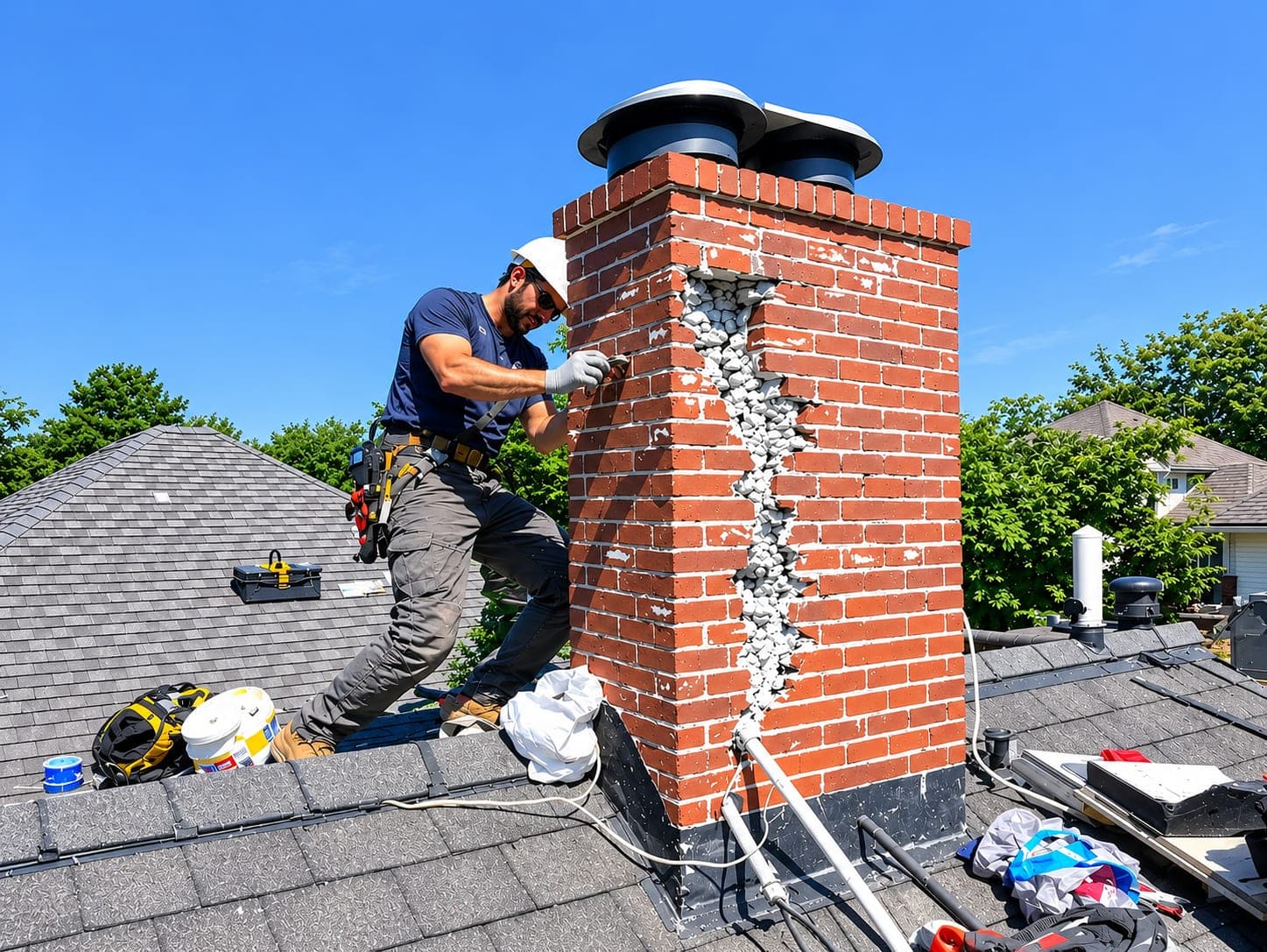
- White powdery deposits, flaking brick faces or mortar you can scrape out
- How it’s confirmed
- Masonry and mortar joints are inspected for cracks and porous areas
04Damp smell after storms
- What you may notice
- Musty or smoky odor that comes and goes with the weather
- How it’s confirmed
- A camera inspection of the flue looks for cracked tiles and wet deposits
Once the source is confirmed, the repair matches it. That can mean new flashing, a crown repair, a cap, tuckpointing or waterproofing. Masonry leaks often call for repairing worn brick and mortar, and wider cracking is covered on our page about cracks in chimney masonry.
Leaking chimney damage: how a slow leak spreads
A chimney leak is quiet. Brick soaks up water, mortar washes out a little more each season, and moisture moves into the wood around the chimney long before a ceiling stain shows up. The first thing to get damaged depends on where the water comes in.
| Entry point | What usually suffers first |
|---|---|
| Cracked crown | Top flue tiles and upper courses of brick |
| Missing or damaged cap | Damper, firebox and smoke chamber |
| Failed flashing | Roof sheathing, rafters and the ceiling near the chimney |
| Porous or spalling brick | Mortar joints and the interior wall behind the chimney |
Inside the fireplace, rust and loose masonry are common results of a long-running leak. Our chimney and fireplace repair work covers the damper, firebox and smoke chamber once the water has been stopped.
Leaking chimney repair in Connecticut
Same-day service is available when the schedule allows. If water is coming in during a storm, emergency calls are accepted and we're available 24 hours, Sunday through Friday.
Before you call
Take photos of any stains and note when they appear: during rain, after snow melts, or only in windy storms. That timing helps narrow down the source.
What the visit covers
Flashing is the most common leak point, where the chimney meets the roof. Water in a chimney rusts dampers and caps, breaks down mortar and stains ceilings and walls.
Look inside
Where the water shows up — the ceiling, the firebox, the damper or the attic.
Check the top and roof line
Cap, crown, flashing and the masonry, where it can be reached safely.
Find the source
The likely entry points are narrowed down before anything is repaired.
Repair
Flashing, crown, cap or masonry work, and a water repellent where it suits.
Water near wiring or a sagging ceiling
If water is reaching light fixtures or wiring, or a ceiling is sagging, keep clear of that area and switch off its power at the breaker if you can do it safely. Call 911 if there's an immediate danger.
Checked on every visit
- Damper and firebox for rust
- Crown cracks
- Cap and chase cover
- Attic and ceiling around the chimney
- Mortar joints and brick faces
- Flashing and counter-flashing
Basic homeowner checks for chimney leaks
You can narrow down the source without getting on the roof. Note when the leak appears: every rain, only during wind-driven storms, or during snowmelt. That pattern points toward different culprits.
Checks you can do from the ground and the attic
- Use binoculars to look at the metal flashing where the chimney meets the roof. Lifted edges, missing sealant or gaps are common entry points.
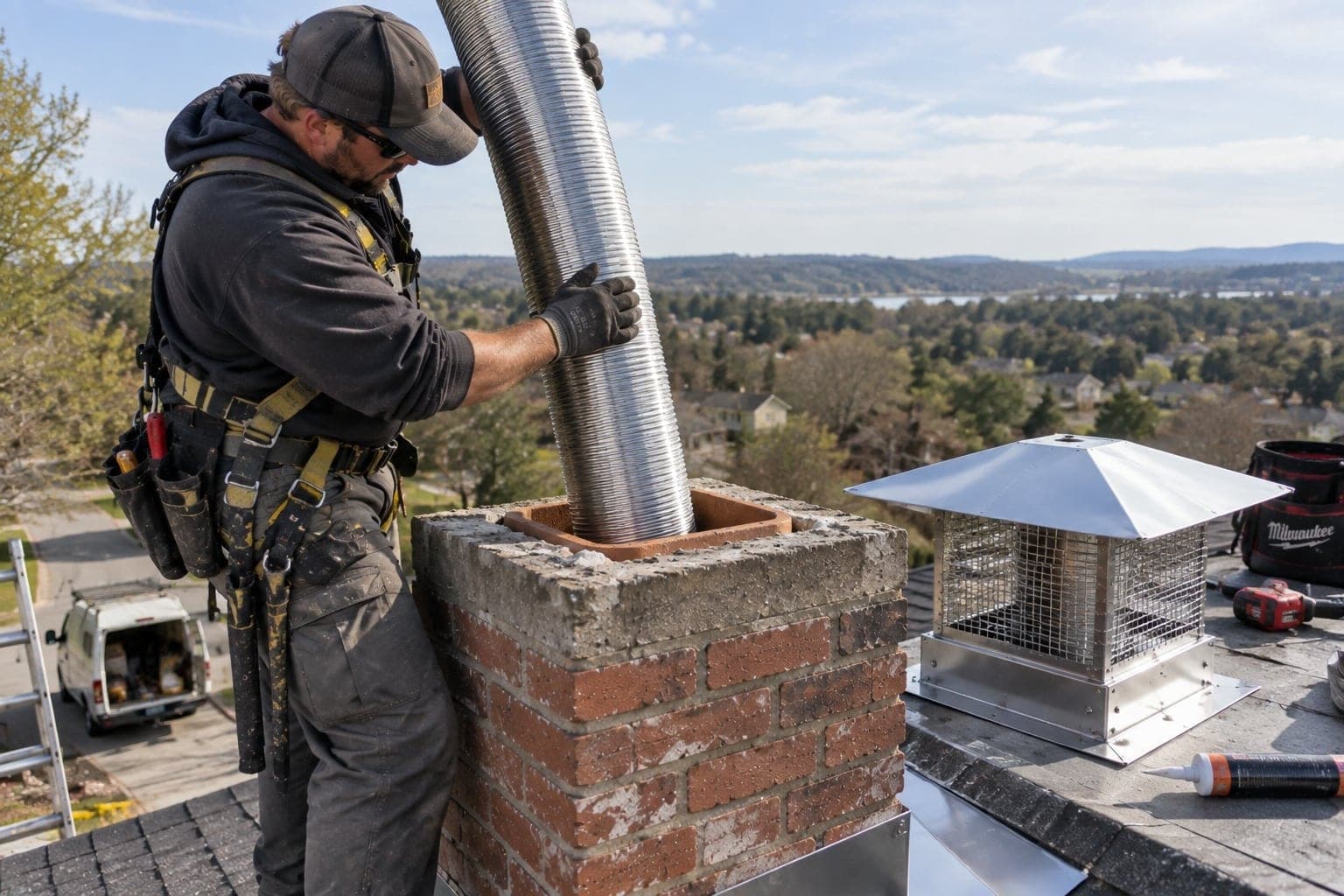
- Look for a cap on top of the flue. A missing or rusted-out cap lets rain fall straight down the chimney.
- Check the top slab, called the crown, for visible cracks or missing chunks.
- Look at the brick for white chalky deposits, dark wet patches or flaking faces.
- After a rain, check the attic around the chimney with a flashlight for damp wood or drip marks.
- Open the damper and look for rust flakes, puddles or water staining in the firebox.
Stay off the roof
Wet shingles and steep pitches make roof inspections risky. If the cause isn't obvious from the ground, leave the up-close look to someone with the right equipment.
How a chimney leak is traced
Water in a chimney rusts dampers and caps, breaks down mortar and stains ceilings and walls. A cracked crown or missing cap lets rain straight into the masonry and the flue.
Look inside
Where the water shows up — the ceiling, the firebox, the damper or the attic.
Check the top and roof line
Cap, crown, flashing and the masonry, where it can be reached safely.
Find the source
The likely entry points are narrowed down before anything is repaired.
Repair
Flashing, crown, cap or masonry work, and a water repellent where it suits.
What causes leaky chimneys
Leaky chimney flashing
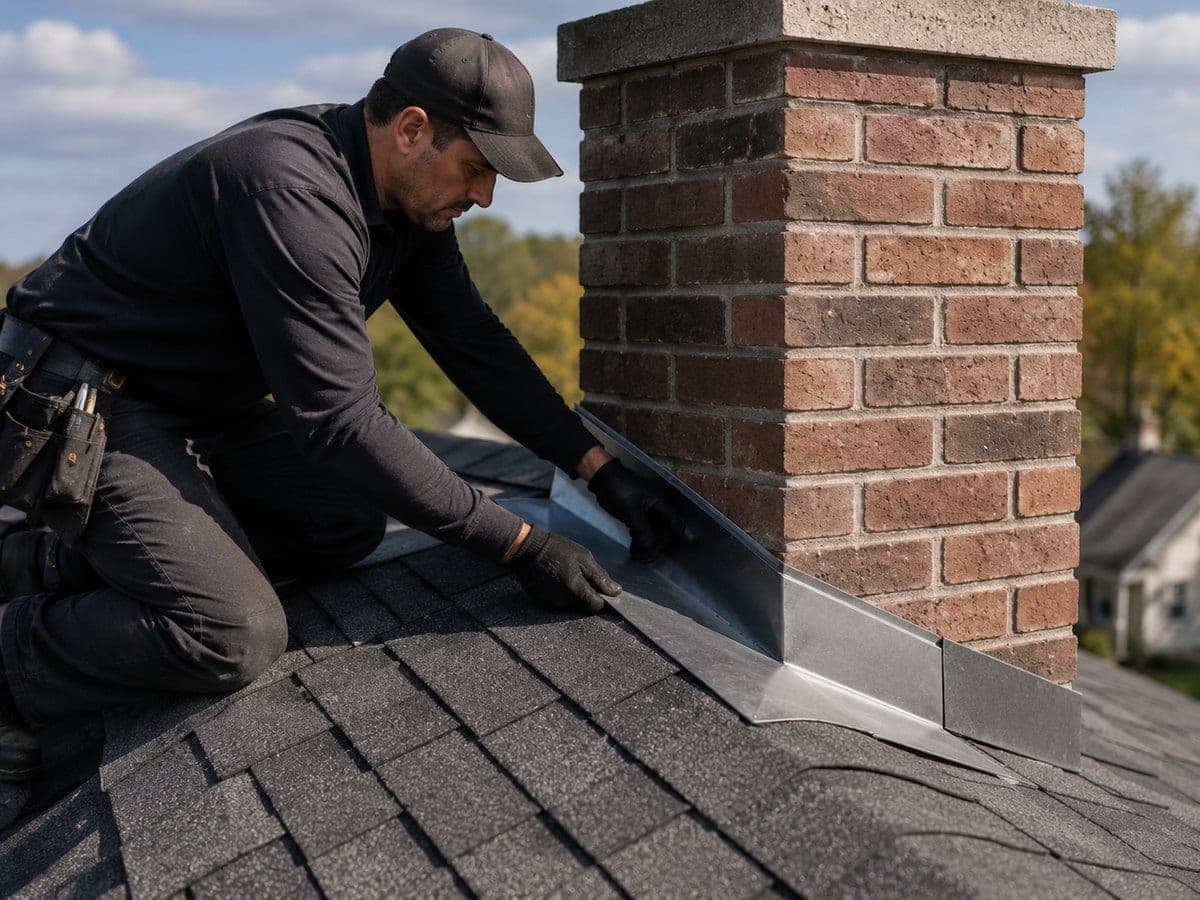
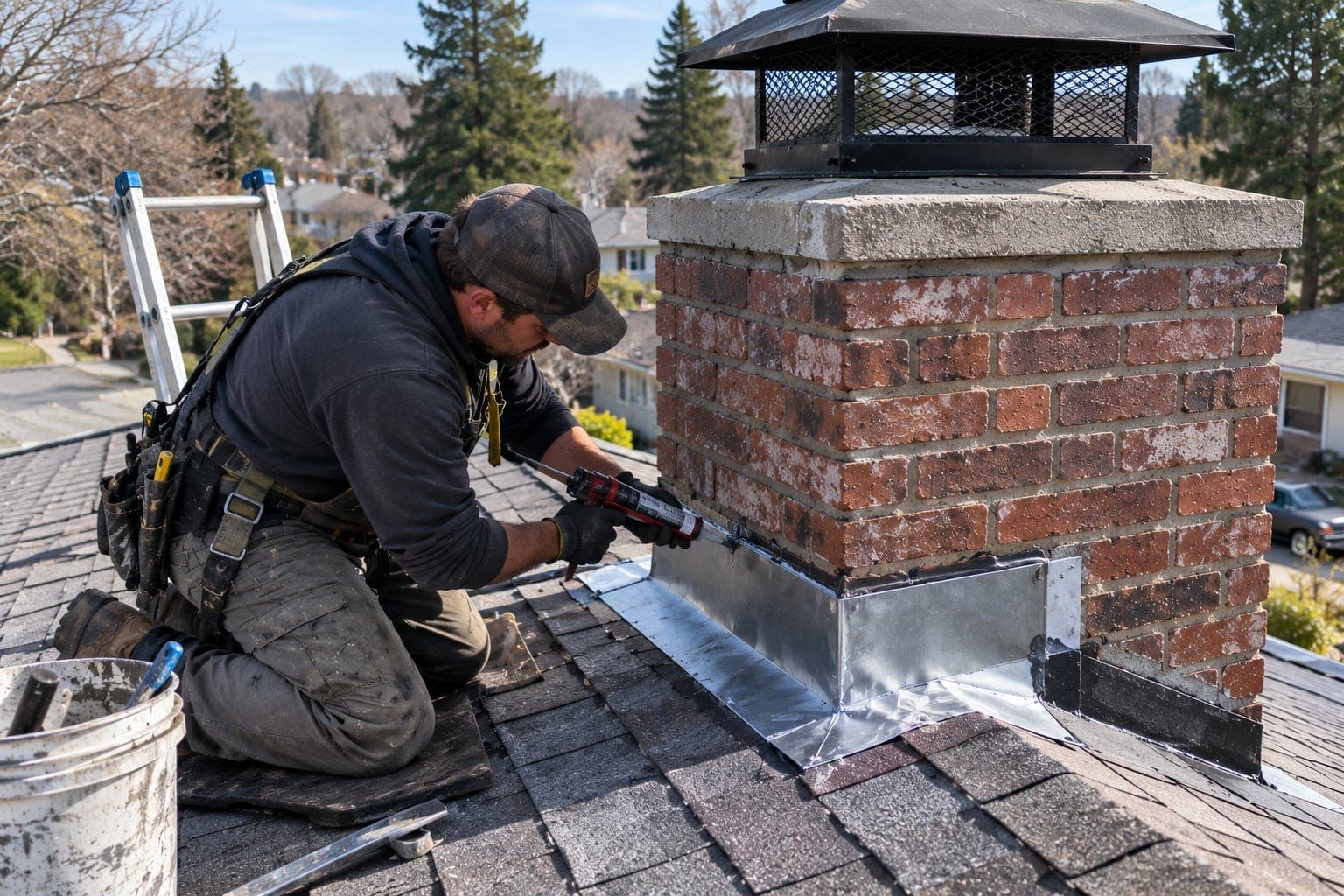
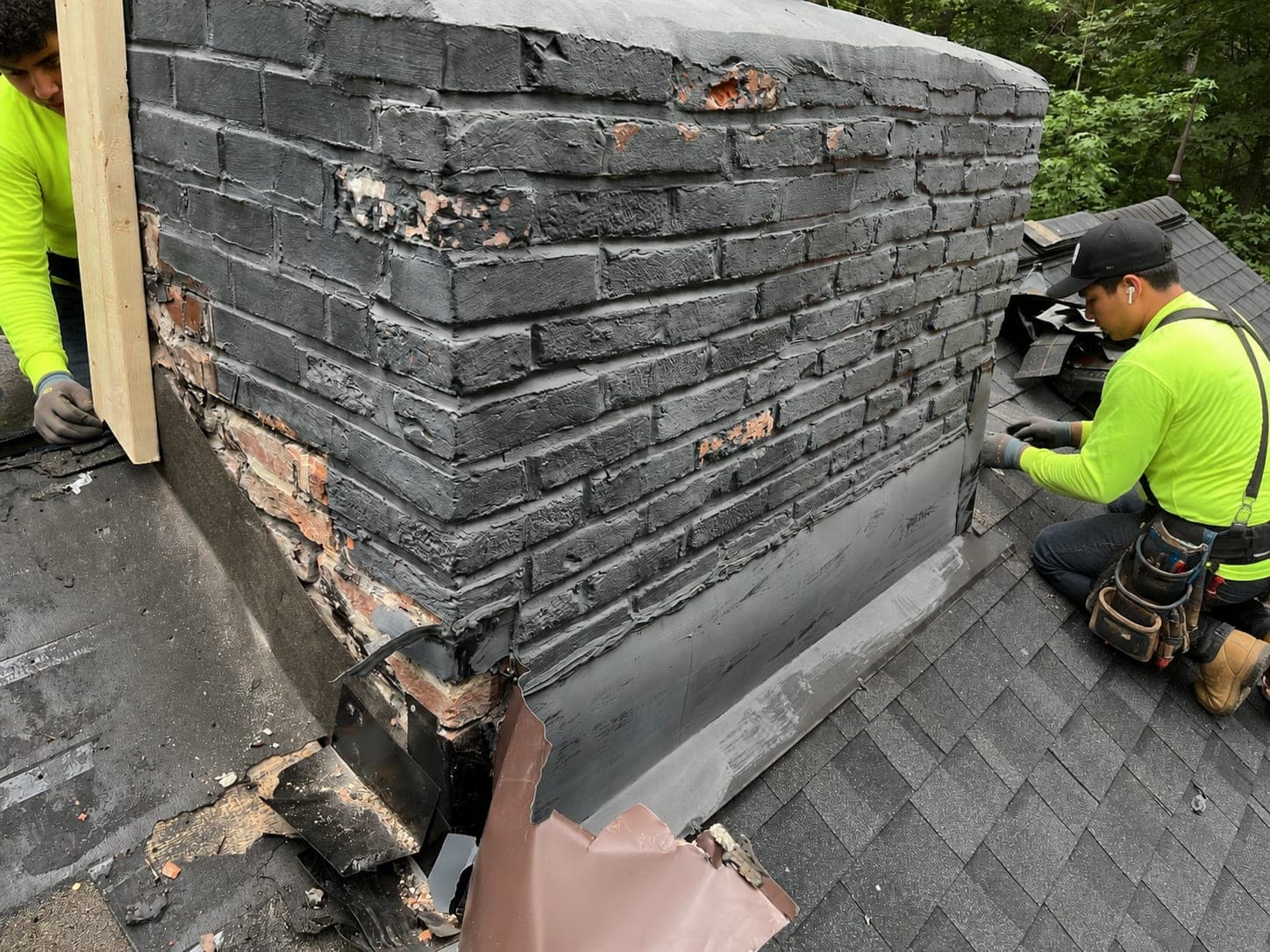
Flashing is the metal that seals the joint between the chimney and the roof. Properly done, it's two layers: step flashing woven into the shingles, and counter flashing set into the brick and lapped over it. Flashing that is only caulked or tarred to the face of the chimney tends to crack and pull loose. Flashing repair replaces the failed sections so water sheds over the joint instead of running behind it.
Other common entry points include a missing or damaged chimney cap, cracks in the crown and masonry, and porous brick. Sometimes the problem is a deteriorated flue, which our guide to chimney liners explains.
When to book leaking chimney repair
- Rust on the damper or firebox
- A musty smell from the fireplace in wet weather
- Dripping or damp in the firebox after rain
- Water stains on the ceiling or wall beside the chimney
- White staining on the chimney's outside face