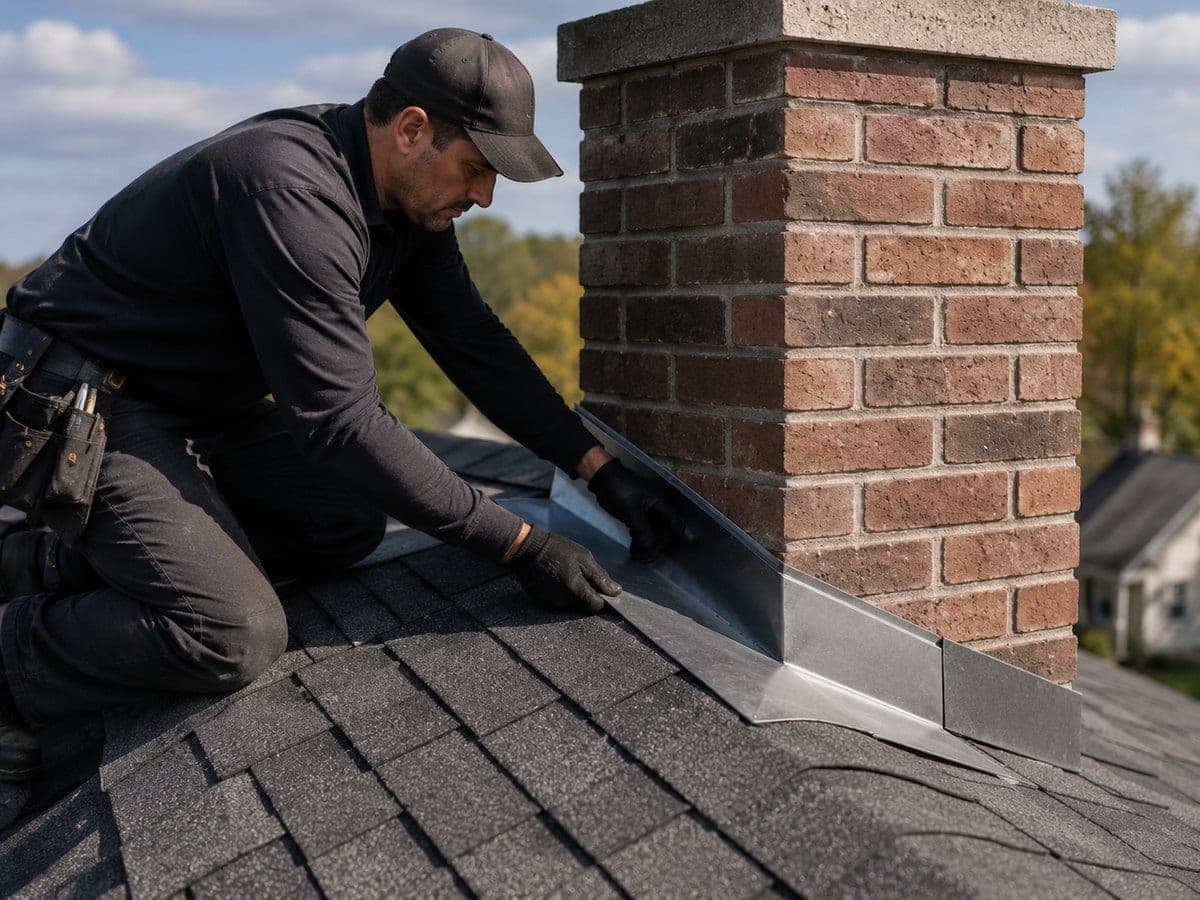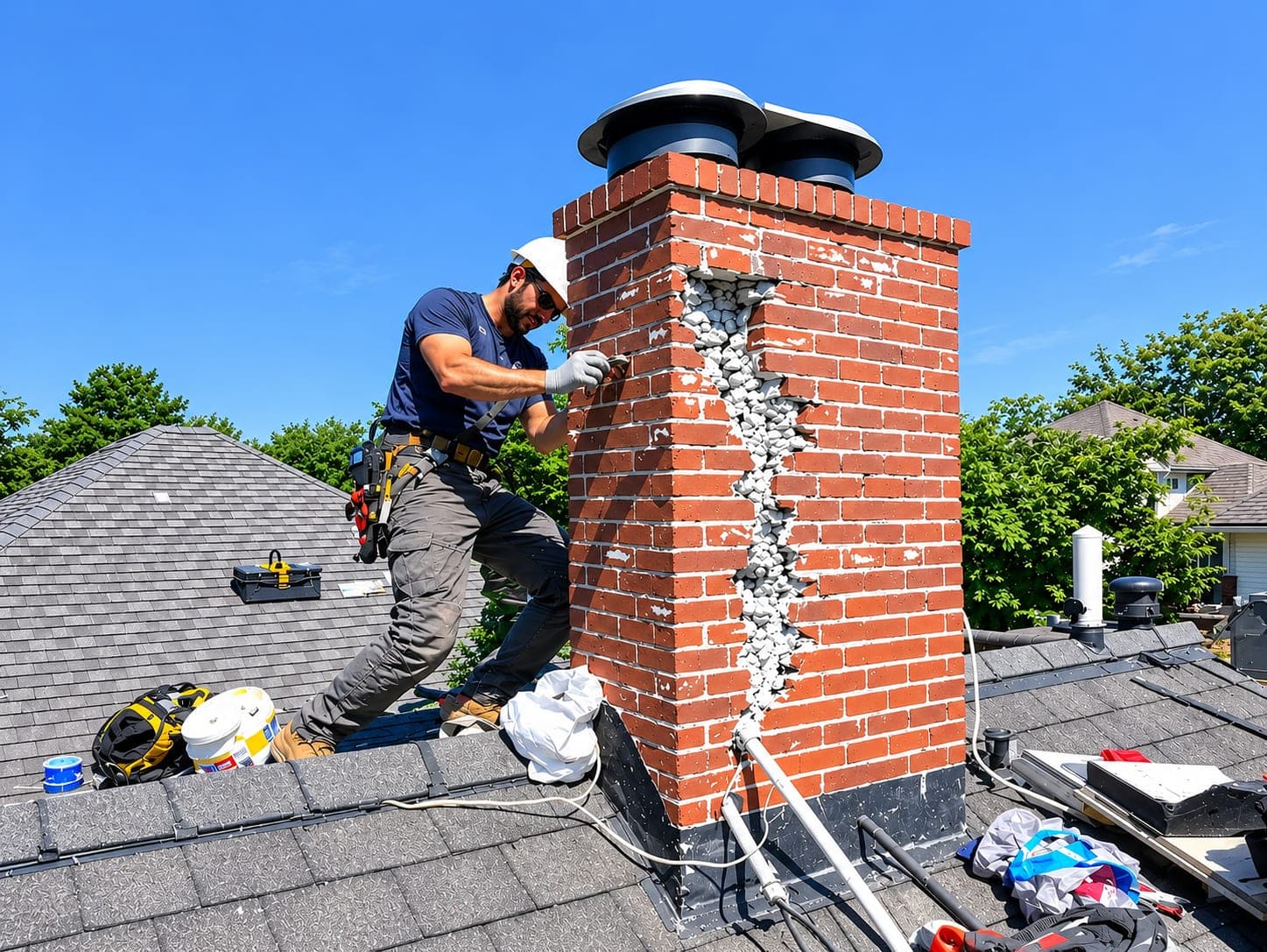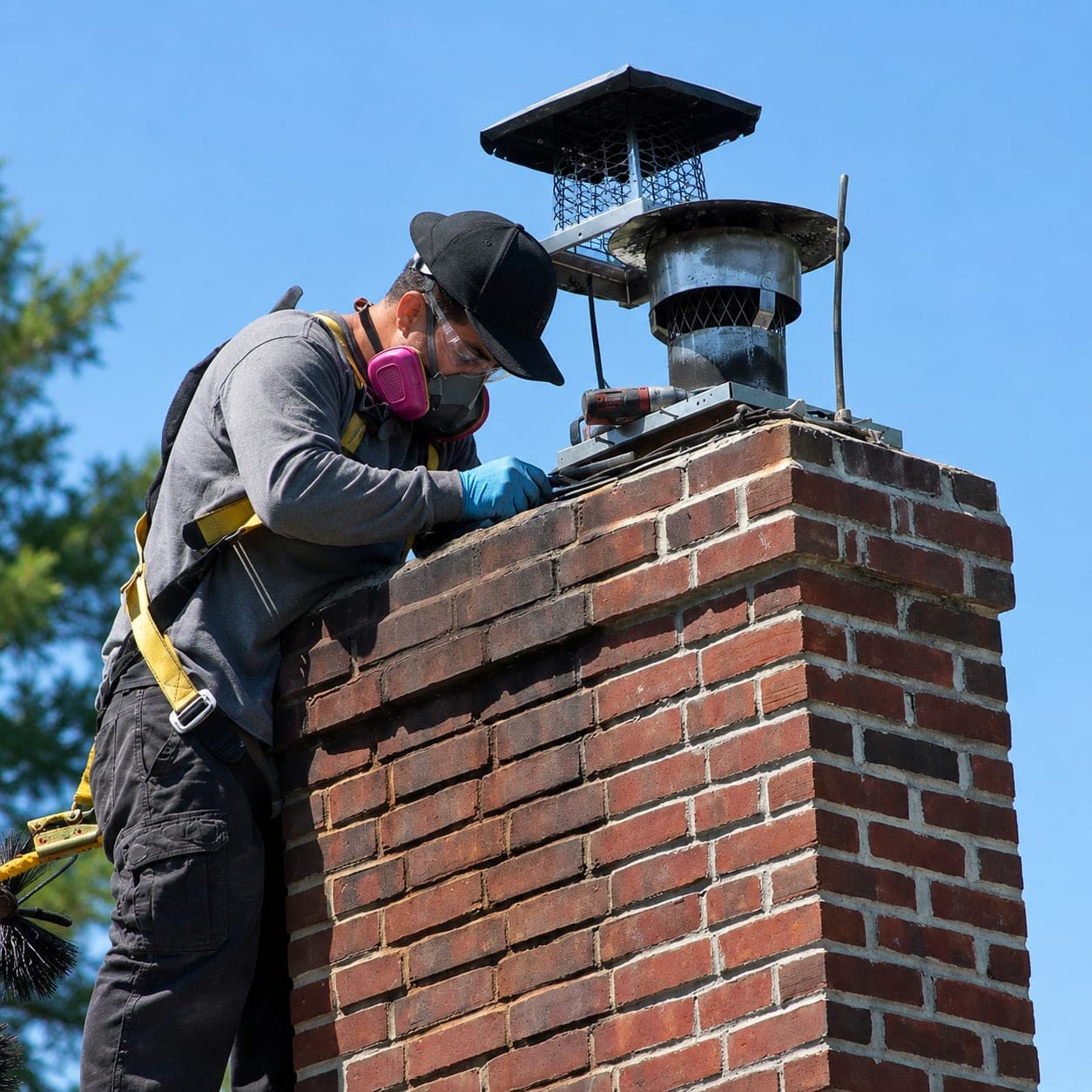
What goes wrong with screened chimney caps
A chimney cap does three jobs at once: it keeps rain out of the flue, it keeps animals and debris out, and on wood-burning chimneys it can help stop sparks from landing on the roof. The animal screen is the part that takes the most abuse. Common failures include:
- Rusted mesh on older galvanized caps, which eventually opens holes large enough for birds and squirrels
- Bent or pushed-in screens where a raccoon or squirrel has forced its way through
- Loose or missing fasteners that let the whole cap shift or blow off in high wind
- Mesh clogged with creosote or soot, which can choke the draft on wood-burning fireplaces
- A cap that never fit, leaving gaps between the screen and the flue tile
If you already hear scratching or chirping, the animal needs to come out before any cap work. See getting animals out of a chimney and our safe animal removal guide.
How cap work is done
Without a cap, rain runs straight into the flue and the damper, and rusts or soaks what's below. The mesh keeps birds, squirrels and raccoons out and stops embers from leaving the chimney.
Measure the flue
Flue size, how far the tile sticks up, and whether a single-flue or a full-width cap suits the chimney.
Check the top
The crown and flue tile the cap mounts to, and any damage from water or animals.
Fit and fasten
The cap and mesh are secured to the flue or crown so wind can't lift them.
Confirm
Draft is checked and you see what was installed.
Animals in the flue
Don't light a fire to drive an animal out. Keep the fireplace cold and closed off and have the animal removed first.
What the technician checks
- Fasteners and mounting
- Clearance between the hood and the flue
- Mesh size and condition
- Rust or corrosion
- Flue size and tile condition
- Crown under the cap
Signs it's time for animal screen chimney cap repair
- Mesh that's torn, rusted through or clogged with creosote
- A cap that's missing, bent, rusted or leaning
- Rain dripping into the firebox
- Rust stains running down the chimney
- Animals or nesting material in the flue
Repair the screen or replace the cap?
| Feature | Screen repair | Cap replacement |
|---|---|---|
| Best when | The cap is solid and only the mesh is loose or slightly bent | Mesh is rusted through, the cap is damaged, or it's missing |
| Fit | The existing cap already covers the flue properly | An undersized or poorly fitting cap needs to be resized |
| Material | Matching mesh can be refastened | A more durable material can be chosen |
| After animals got in | Flue must be cleared first | Flue must be cleared first |
Best when
- Screen repair
- The cap is solid and only the mesh is loose or slightly bent
- Cap replacement
- Mesh is rusted through, the cap is damaged, or it's missing
Fit
- Screen repair
- The existing cap already covers the flue properly
- Cap replacement
- An undersized or poorly fitting cap needs to be resized
Material
- Screen repair
- Matching mesh can be refastened
- Cap replacement
- A more durable material can be chosen
After animals got in
- Screen repair
- Flue must be cleared first
- Cap replacement
- Flue must be cleared first
Either way, our chimney cap service includes checking what the cap is mounted on. A cap fastened to a cracked crown won't stay secure, and those cracks are covered on the chimney crack repair page.
Installing chimney accessories like caps, screens and spark arrestors
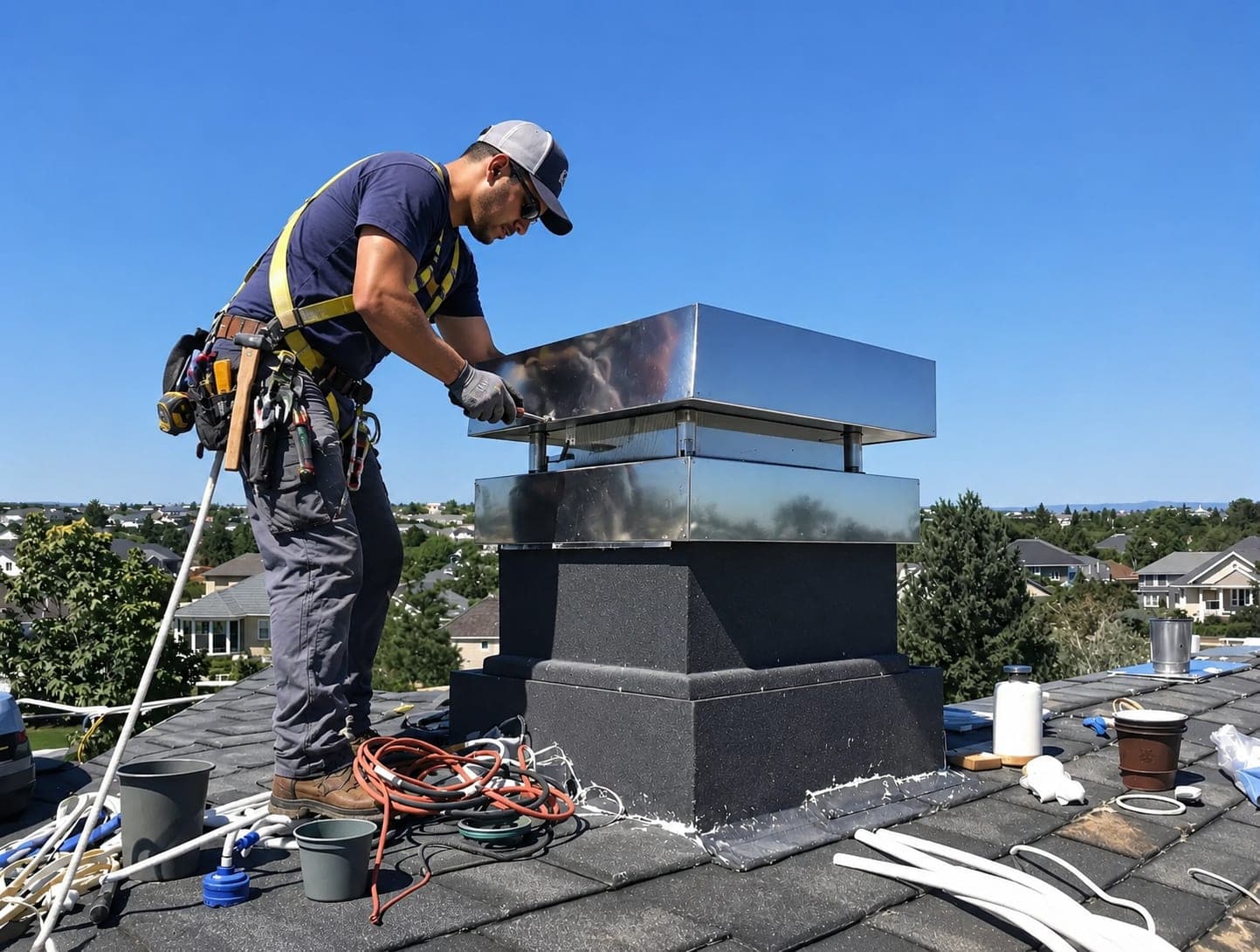
A good cap is sized to the flue or crown, fastened so wind can't lift it, and fitted with mesh small enough to stop animals while still letting the chimney breathe. Chimneys with more than one flue may need a single cap covering the whole crown. Wood-burning chimneys can add a spark arrestor, and prefab chimneys rely on a chase cover, which we also repair and replace.
Chimney cap installation and repair across Connecticut
We install, repair and replace caps and animal screens for homeowners throughout Connecticut. Estimates are free, and if a cap has blown off with rain on the way or an animal is inside the chimney, emergency calls are accepted 24 hours a day, Sunday through Friday. Damper or flue damage found along the way is handled through our broader chimney and fireplace repair.