On this page
- What a level 2 chimney inspection is and who needs it
- Level 1 vs level 2 chimney inspection
- Signs you need a level 2 chimney inspection
- Camera inspection: What the visit involves
- Level 2 chimney inspection checklist
- Enhanced safety: Why the extra detail matters
- When your level 2 chimney inspection is completed
- What affects level 2 chimney inspection cost and scope
- How to prepare for the inspection
- Level 2 chimney inspection services across Connecticut
- Need a level 2 chimney inspection?
What a level 2 chimney inspection is and who needs it
Chimney inspections are commonly grouped into three levels, following the framework in the NFPA 211 standard. A Level 2 chimney inspection covers everything in a basic visual check. It adds a video scan of the flue interior and a look at chimney sections that run through attics, crawl spaces and basements, wherever those can be reached without removing walls or permanent finishes.
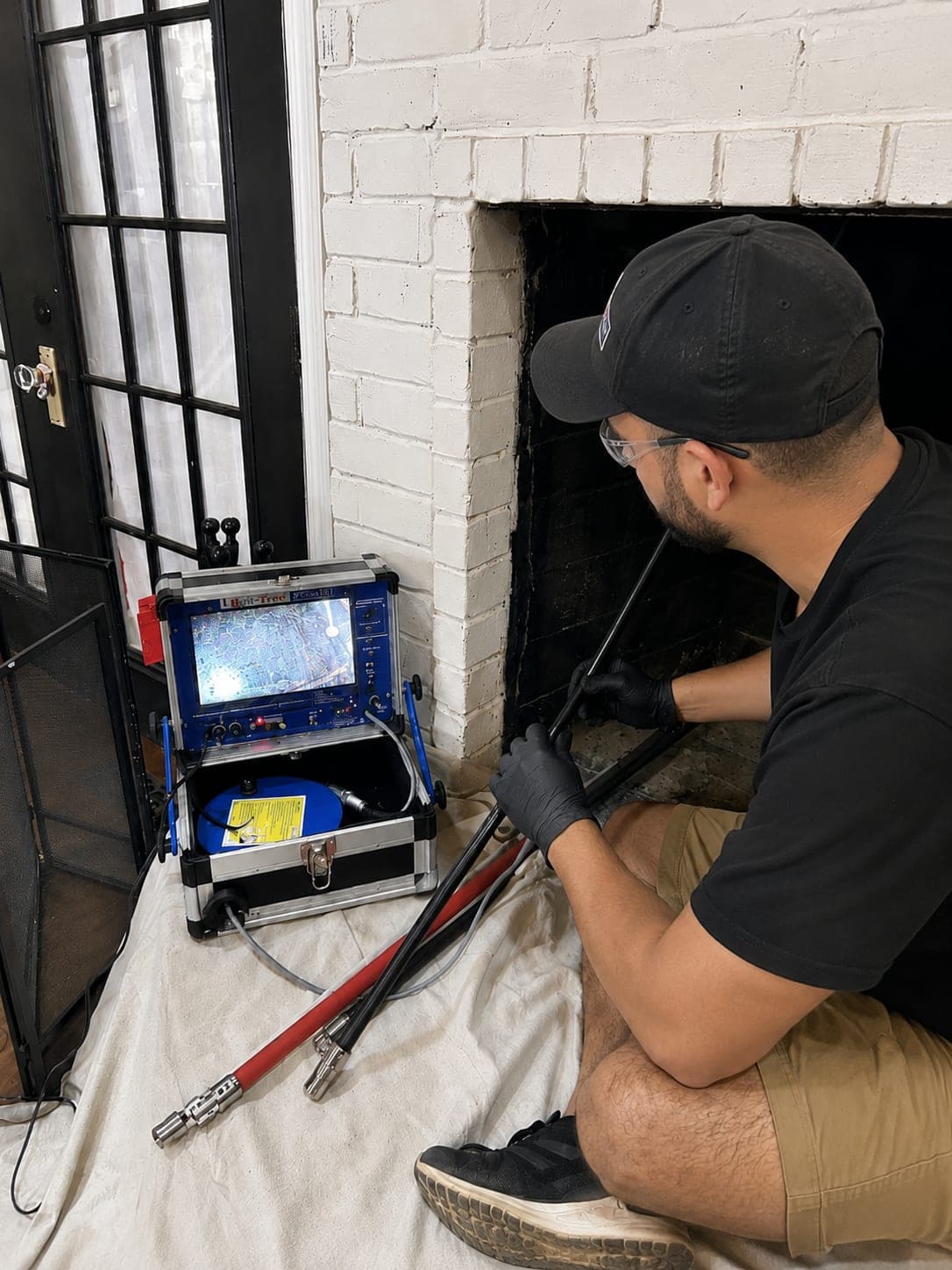
Homeowners usually need this level when they are buying or selling a house, switching fuel types, or installing a new insert, stove or liner. It also applies after a chimney fire, a severe storm, a lightning strike or anything else that may have damaged the structure. Landlords and anyone taking over a fireplace that hasn't been used in a long while often choose one as well, so they can start from a known condition. For a broader look at how we approach these visits, see our chimney inspection service overview.
Level 1 vs level 2 chimney inspection
A Level 1 chimney inspection suits a chimney that is in regular use, has had no changes and shows no new symptoms. It checks the readily accessible parts of the chimney, firebox and connection. Level 2 is the next step up. It is called for when conditions have changed or when the hidden interior of the flue needs to be confirmed. If you mainly want a basic yearly check, our budget chimney inspection page explains that option.
| Feature | Level 1 | Level 2 |
|---|---|---|
| Best for | Unchanged system in regular use | Sales, fuel or appliance changes, chimney fires, storms |
| Flue interior | Visual check of accessible areas | Full-length video camera scan |
| Attic, basement, crawl space | Not typically included | Accessible sections examined |
| Roof and exterior | Readily accessible portions | Exterior, crown, cap and flashing reviewed |
| Removes walls or finishes | No | No |
Best for
- Level 1
- Unchanged system in regular use
- Level 2
- Sales, fuel or appliance changes, chimney fires, storms
Flue interior
- Level 1
- Visual check of accessible areas
- Level 2
- Full-length video camera scan
Attic, basement, crawl space
- Level 1
- Not typically included
- Level 2
- Accessible sections examined
Roof and exterior
- Level 1
- Readily accessible portions
- Level 2
- Exterior, crown, cap and flashing reviewed
Removes walls or finishes
- Level 1
- No
- Level 2
- No
If a Level 2 inspection finds a sign of damage hidden behind walls or other permanent construction, a Level 3 inspection may be the logical next step. A Level 3 involves opening up parts of the structure, so it is only recommended when the evidence points that way.
Signs you need a level 2 chimney inspection
- You are buying or selling a home with a fireplace, stove or chimney-vented appliance.
- You plan to add or replace an insert, wood stove, gas logs or a liner, or to change fuel type.
- There was a chimney fire. Signs include a loud roaring sound, puffy or flaky creosote, warped metal or cracked tiles. If you hear roaring or see flames or sparks from the top of the chimney, get everyone out and call 911.
- A storm, high winds, lightning or a fallen limb hit the roof near the chimney.
- Smoke is spilling into the room, odors persist, or water is getting in around the fireplace.
- Debris, nesting material or animal sounds suggest something got into the flue. See our page on animal removal from a chimney.
- A previous inspection or sweep flagged something that couldn't be seen fully.
Camera inspection: What the visit involves
How a Level 2 Visit Usually Goes
Talk through the history
We ask what you burn, how often you use it, any recent changes, and what prompted the call.
Protect the room
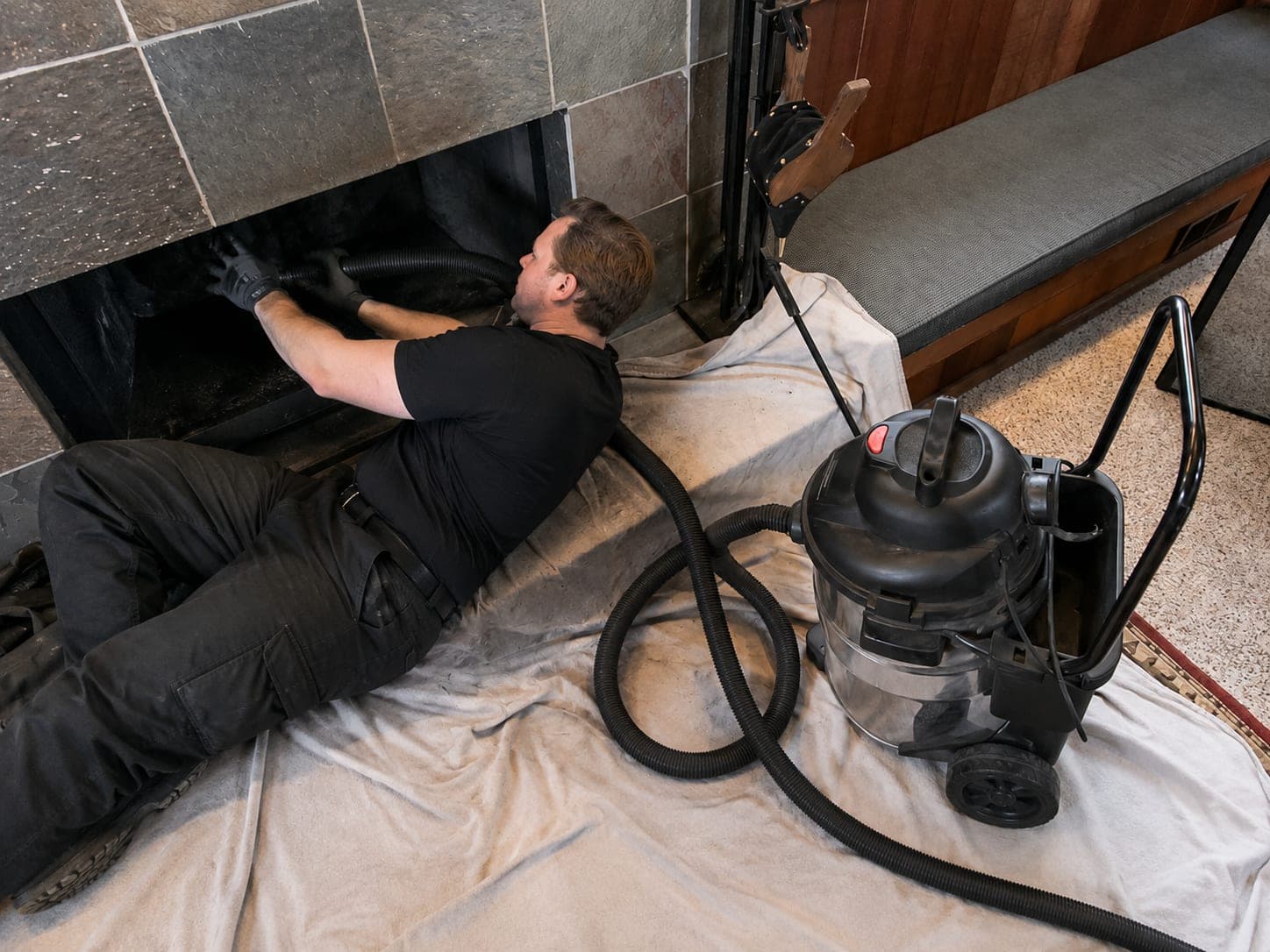
Drop cloths go down around the hearth before anything is opened.
Check firebox, damper and smoke chamber
The visible interior is examined from below, including the damper and smoke shelf.
Run the camera through the flue
A video camera travels the length of the flue to record liner condition, joints, deposits and obstructions.
Check accessible spaces
Attic, basement and crawl-space sections of the chimney are examined where they can be reached.
Review the exterior and roof
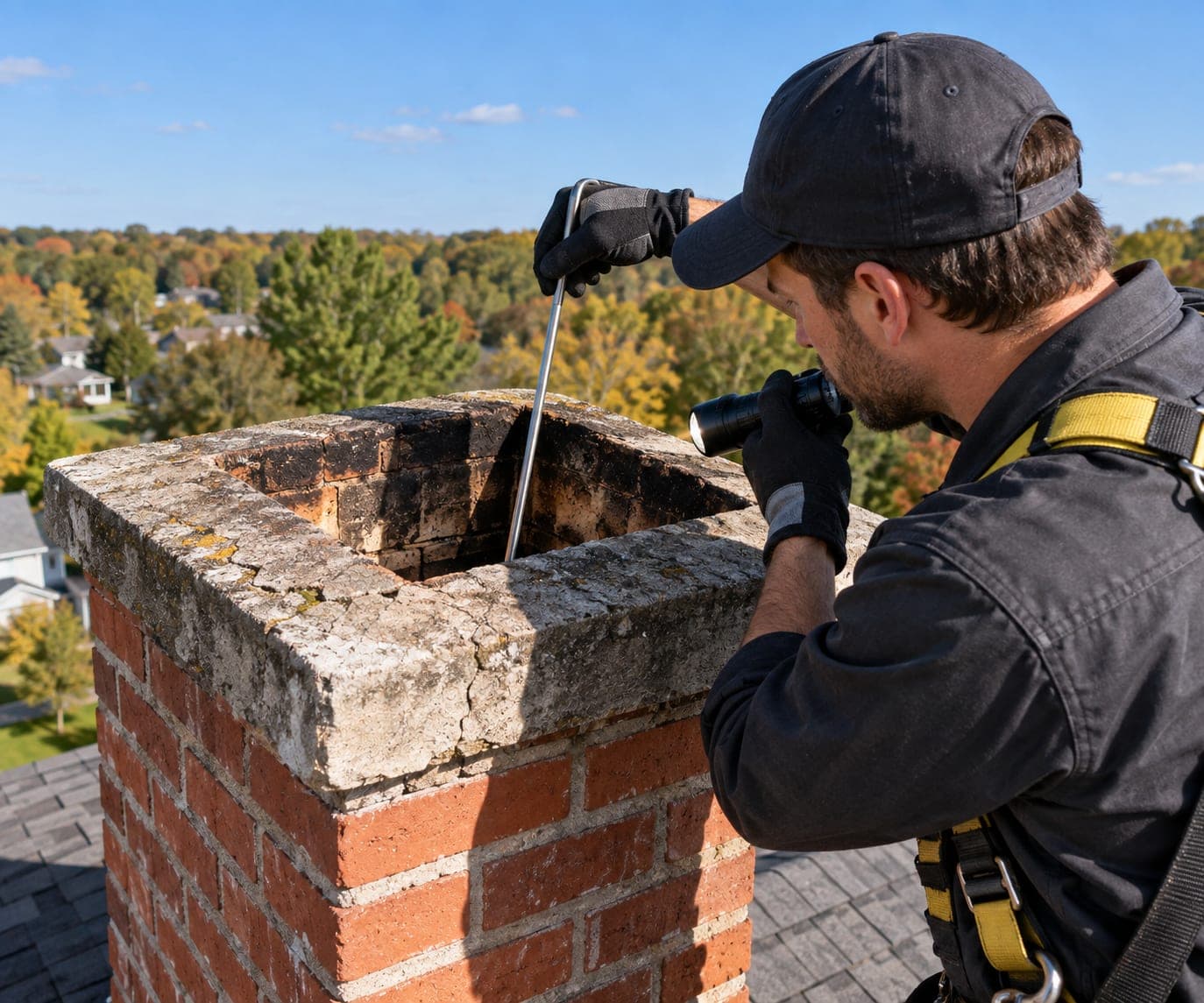
The crown, cap, flashing and masonry or chase are checked from outside when conditions allow safe access.
Go over findings
We show you what the camera found, explain what it means and outline recommended next steps.
Level 2 chimney inspection checklist
What a Detailed Level 2 Chimney Inspection Looks At
- Flue liner condition: cracks, gaps, missing mortar joints, spalling or deterioration
- Creosote and soot buildup, including glazed deposits that are hard to remove
- Obstructions such as nests, debris or collapsed material
- Smoke chamber and smoke shelf condition
- Damper operation and seal
- Firebox walls, floor and joints
- Clearances to combustible framing where accessible
- Chimney sections in the attic, basement and crawl space
- Appliance connection, connector pipe and thimble where present
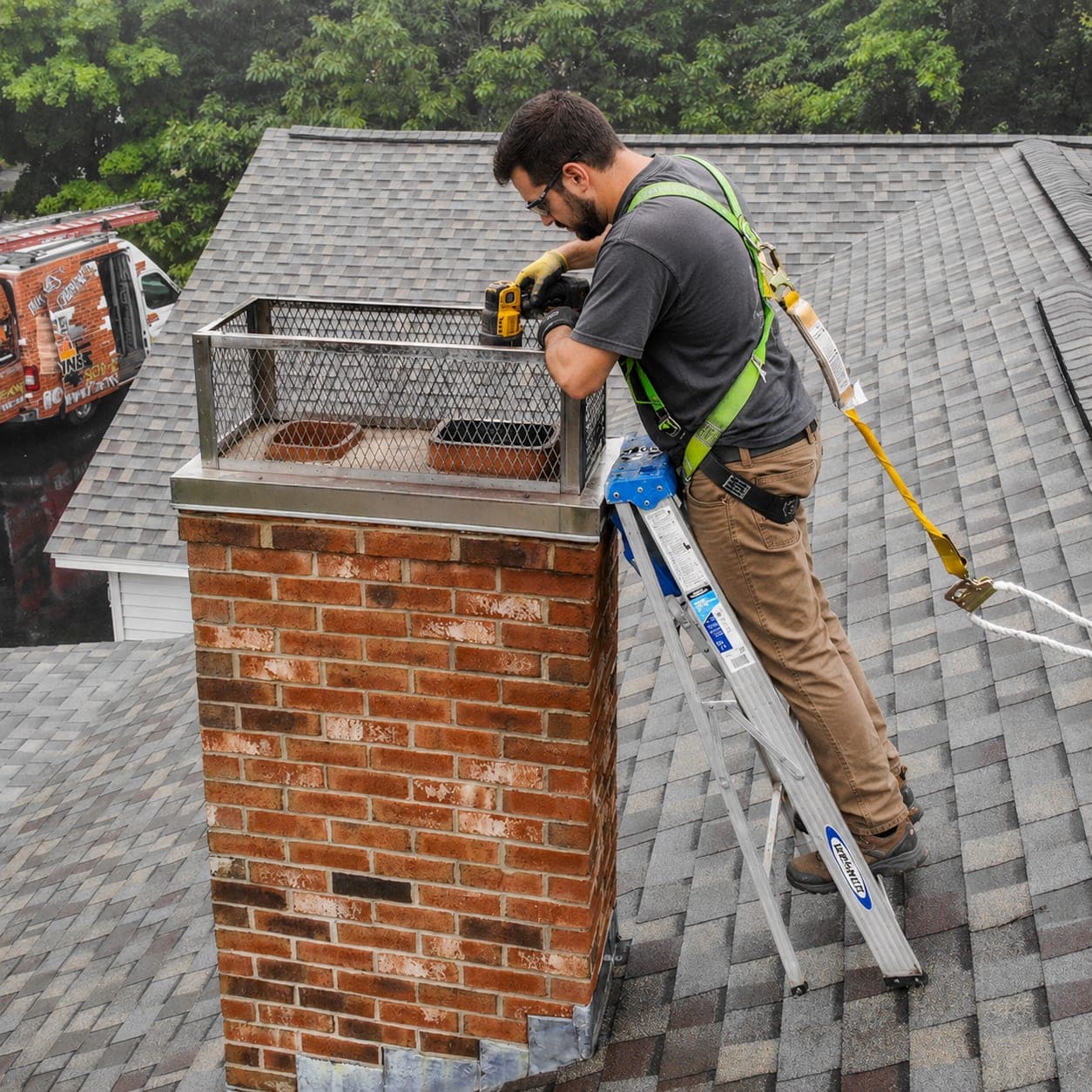
- Crown, cap, spark arrestor or animal screen
- Flashing and the roof-to-chimney joint
- Exterior masonry, mortar joints or prefab chase and chase cover
Liner damage is one of the most common hidden findings. Our page on cracked chimney flue tile explains why it matters and how it is usually addressed.
Enhanced safety: Why the extra detail matters
Most serious chimney problems start where no one can see them. A cracked tile or open joint can let heat reach nearby framing. Combustion gases, including carbon monoxide, can leak into living space. Heavy creosote can ignite. A Level 2 inspection is designed to find these conditions before the next fire, not after.
Stop using the fireplace if you suspect a chimney fire
Do not relight a fireplace or stove after a suspected chimney fire, storm damage or a strong smoke smell until it has been inspected. Make sure working smoke and carbon monoxide alarms are installed. If there is active fire or smoke in the house, leave and call 911.
When your level 2 chimney inspection is completed
At the end of the visit we walk you through what we found and share the camera footage. We sort the findings into issues that affect safe use and items worth planning for. If the chimney needs nothing, you'll know that too. When work is needed, such as cleaning, liner repair or crown and flashing work, we explain the options and give you a free estimate. For background on typical findings, our guide to common chimney problems is a helpful read.
What affects level 2 chimney inspection cost and scope
We don't publish set prices, because the scope depends on the chimney itself. These factors make the biggest difference:
- Number of flues and appliances connected to the chimney
- Chimney height, roof pitch and how safely the top can be reached
- Whether heavy creosote or debris must be cleared before the camera can see the liner
- Access to attic, basement and crawl-space sections
- Masonry versus prefab construction
- Whether the inspection is tied to a sale timeline or an urgent safety concern
For how sweeping and related work is usually priced, see our article on what a chimney sweep costs.
How to prepare for the inspection
- Stop burning at least 24 hours before so the firebox and flue are cool.
- Clear a path to the fireplace and move furniture, rugs and decor away from the hearth.
- Make attic hatches, basement areas and crawl-space entries reachable.
- Keep pets and children out of the work area.
- Have any past inspection notes, appliance manuals or sale paperwork ready.
Level 2 chimney inspection services across Connecticut
We serve homeowners in Hartford and across Connecticut. Our technicians do the inspection work themselves, from the camera scan to the rooftop check. During a chimney fire, get everyone out and call 911 first. We take emergency calls and are available 24 hours, Sunday through Friday, which helps after a chimney fire or storm.
Need a level 2 chimney inspection?
If your chimney has had a change, a scare or a sale on the calendar, call or request an estimate and tell us what's going on. We'll help you confirm whether Level 2 is the right fit and get you on the schedule.