On this page
Level 1 chimney inspection: the basic level explained
The NFPA 211 standard describes three levels of chimney inspection, and Level 1 is the baseline. It covers the readily accessible portions of the chimney exterior, interior and connected appliance, meaning what can be reached without removing panels, walls or permanent fixtures. It also confirms the flue is free of obstructions and combustible deposits such as creosote. No special tools are required and nothing is taken apart.
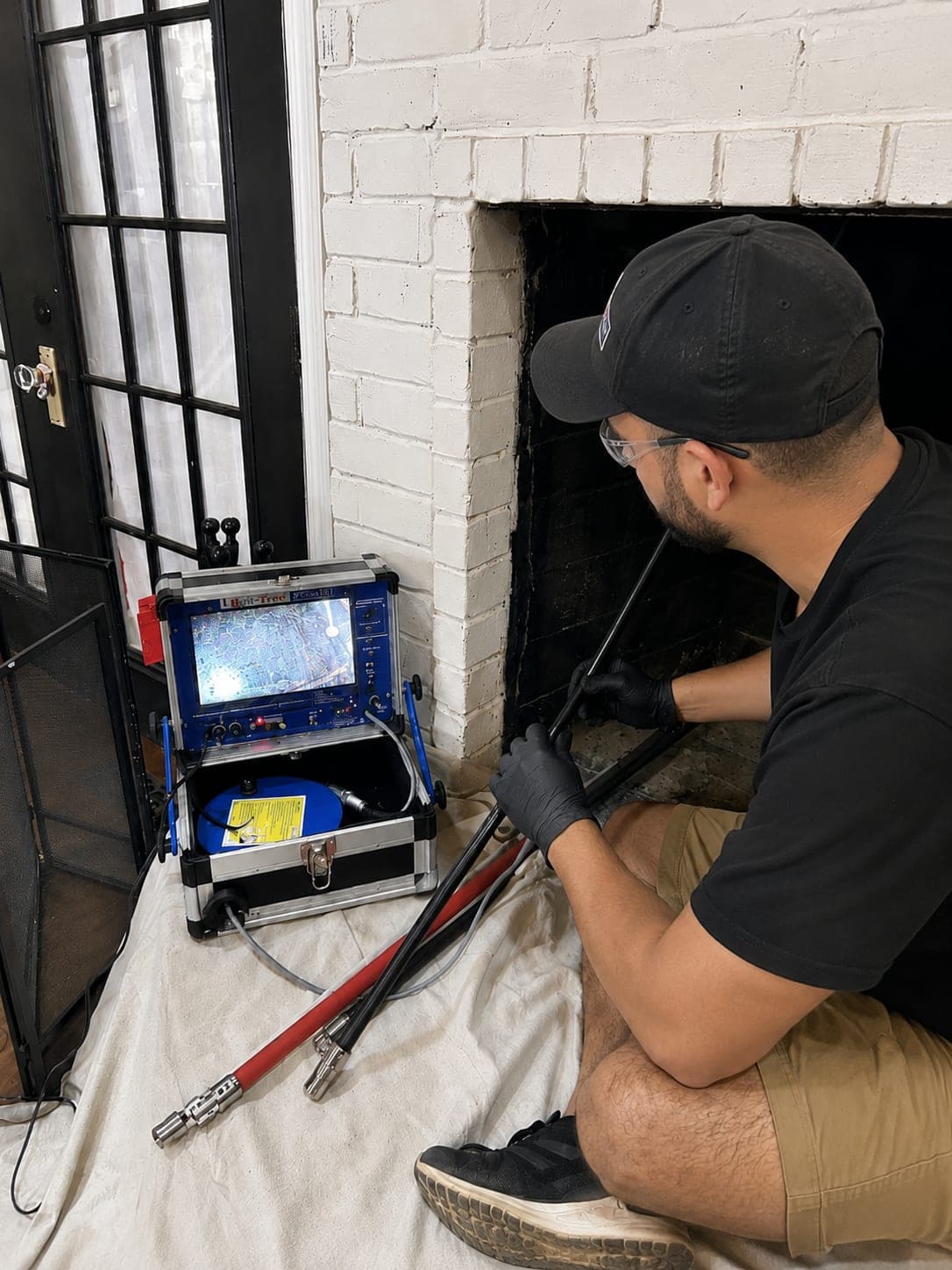
An annual safety check for chimneys in steady use
Level 1 fits when your fireplace or stove hasn't changed, you aren't planning to change it, and there's been no chimney fire, storm damage or sale. In that case a yearly Level 1, often paired with a sweep, is usually enough. If any of those conditions change, step up to a level 2 chimney inspection.
Level 1 chimney inspection checklist
Every chimney is a little different, but a Level 1 generally covers these points:
What a Level 1 typically looks at
- Firebox walls, floor and mortar joints for cracks or gaps
- Damper operation and the smoke shelf above it
- Visible flue liner for creosote, debris and obvious cracks
- Hearth and nearby combustibles in the room
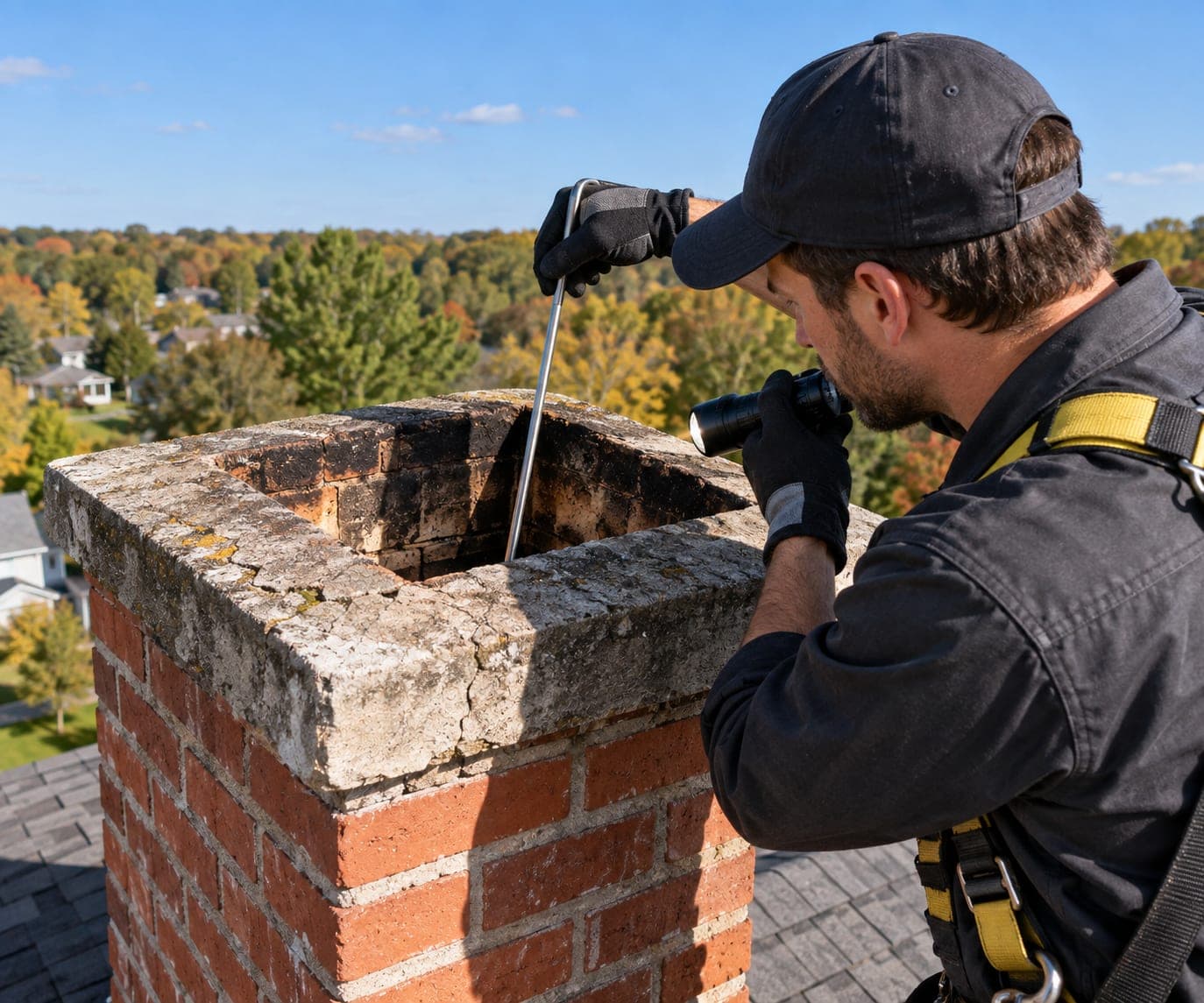
- Chimney exterior: brick, mortar, crown and cap
- Flashing where the chimney meets the roof, where accessible
- Connector pipe on wood stoves and inserts
- Accessible attic or basement areas for clearances and stains
What it doesn't include: a full camera scan of the flue, a look into concealed spaces, or removal of any part of the structure. Those belong to the deeper levels, which our chimney inspection page compares side by side.
When your level 1 chimney inspection is completed
You'll hear plainly what we saw. Results usually fall into one of four outcomes:
- All clear. No obstructions, no notable deposits, no visible damage.
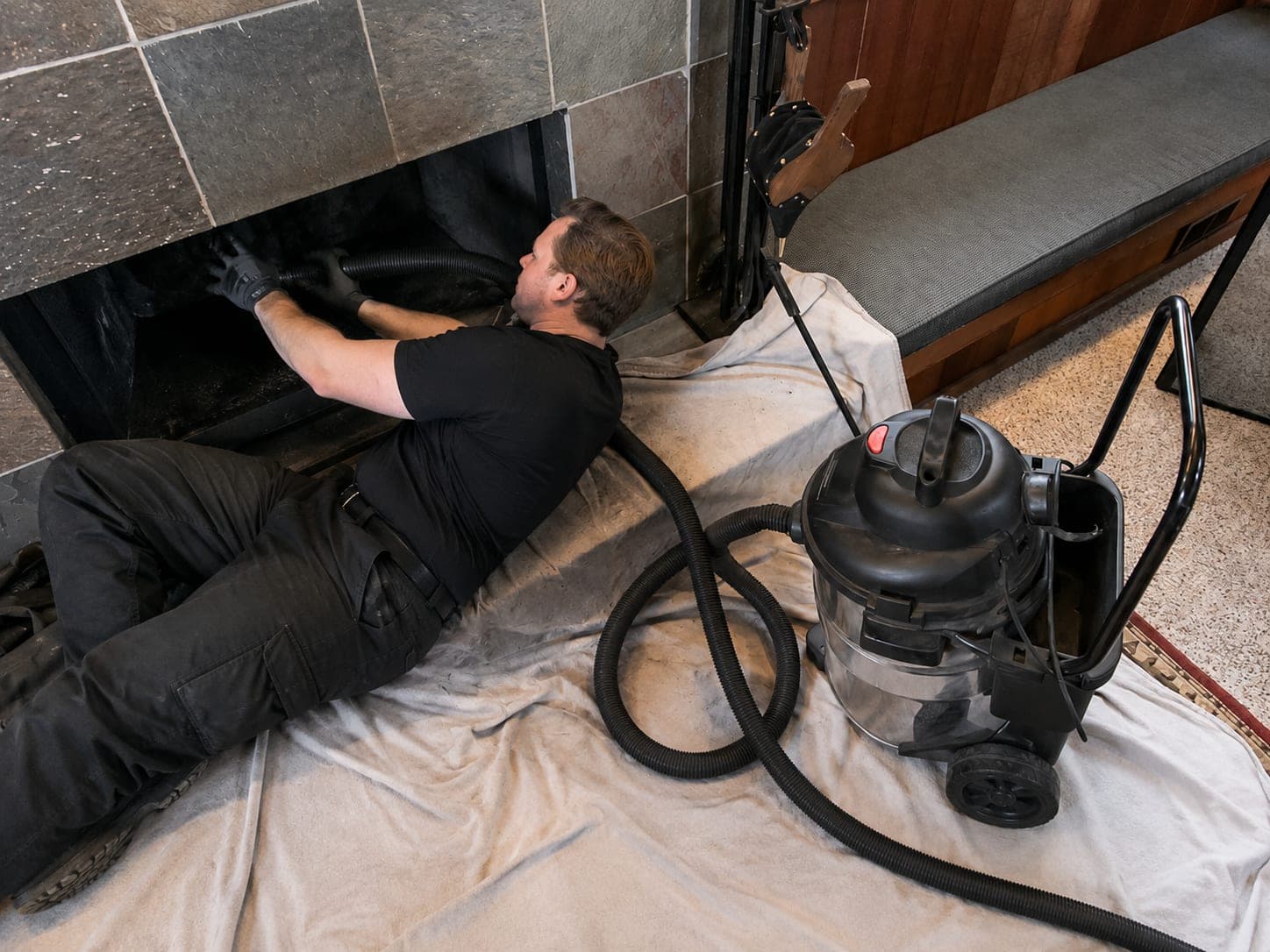
- Needs cleaning. Creosote or debris to remove before the next fire.
- Needs repair. A visible defect such as a cracked crown, missing cap or broken damper.
- Needs a closer look. Signs of hidden damage that justify a Level 2.
If we recommend going further, we explain what prompted it: staining that suggests a leak behind the liner, tile fragments that point to cracking, or a stretch of flue we couldn't see. A recommendation should always come with a reason you can check for yourself.
Any repair is estimated free of charge. To understand findings before or after your visit, read about common chimney problems or browse our guide to common chimney issues.
What happens during the visit
Cracks in a liner or crown are often invisible from the room but let heat and water through. Buying or selling a home is a common reason to document the chimney's condition.
Ask about the system
What you burn, how often, and anything you've noticed sets what to look at closely.
Check from the room
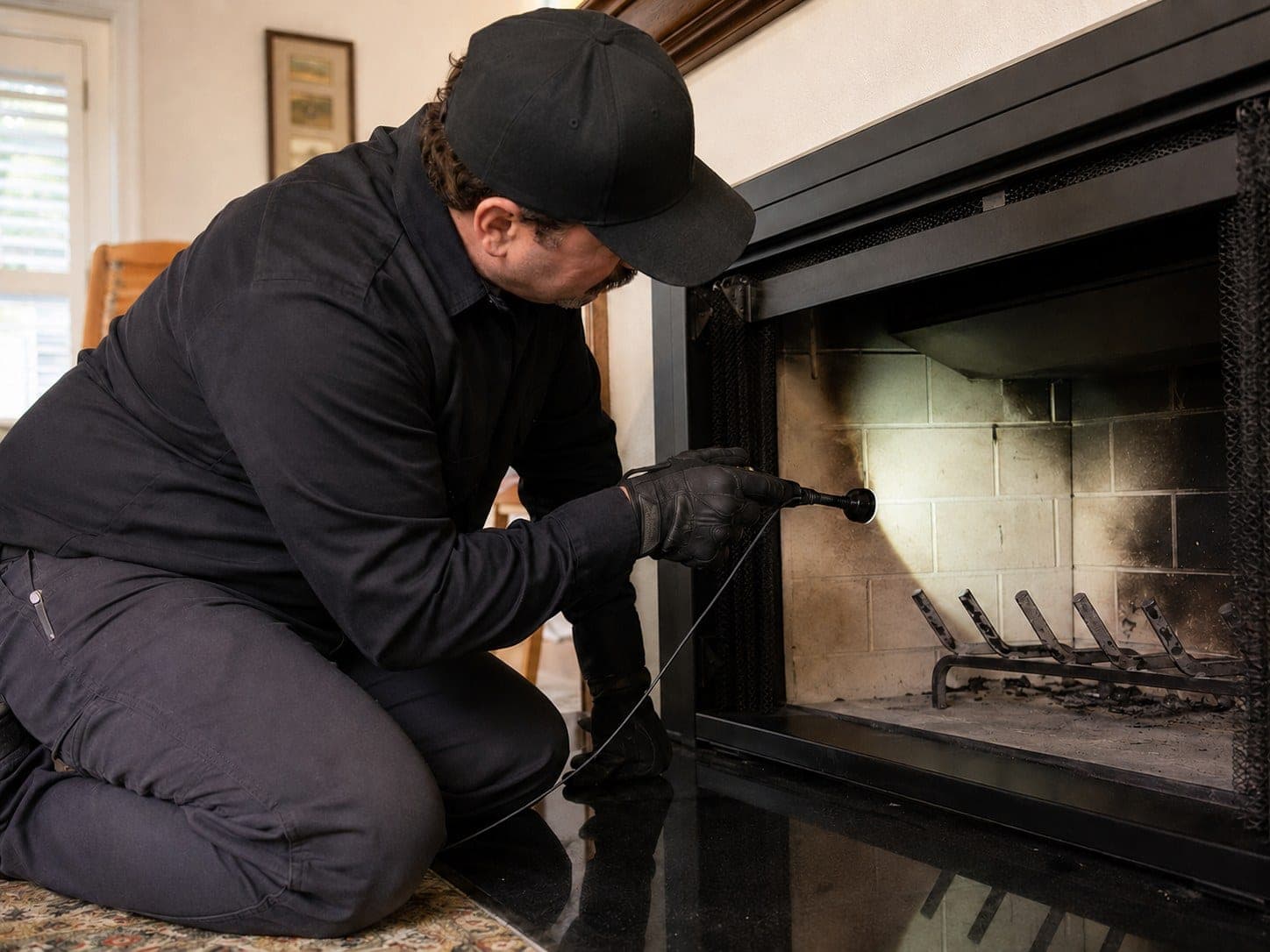
Firebox, damper, smoke chamber and the lower flue are examined with a light.
Check from outside
Crown, cap, flashing and the masonry above the roof are looked at where it is safe to reach.
Go further where needed
A camera can be run up the flue when the liner can't be seen any other way.
Report
You get the findings in plain terms: what's urgent, what can wait, and what's fine.
How to prepare
- Note the make and model of any insert, stove or gas unit if you have it.
- Make sure the technician can reach the roof or attic access if it's needed.
- Keep pets in another room while the work area is open.
- Write down what you've noticed and when it happens — smells, smoke, sounds or stains.
What the technician checks
- Damper operation and seal
- Cap, screen and spark arrestor
- Firebox walls, floor and joints
- Flashing where the chimney meets the roof
- Flue liner for cracks, gaps and missing mortar
- Crown for cracks and pooling water
Carbon monoxide
A blocked or damaged flue can push carbon monoxide into the home. If an alarm sounds or anyone feels dizzy or sick near the fireplace, get everyone outside and call 911.
Signs to watch for
- Smoke in the room or a fire that won't draw
- You've just bought the home or are about to sell it
- Water stains, a damp smell or flaking brick near the chimney
- A storm, earthquake or chimney fire may have damaged it
- You're switching fuel or adding an insert or stove