On this page
What a gas fireplace installation can look like
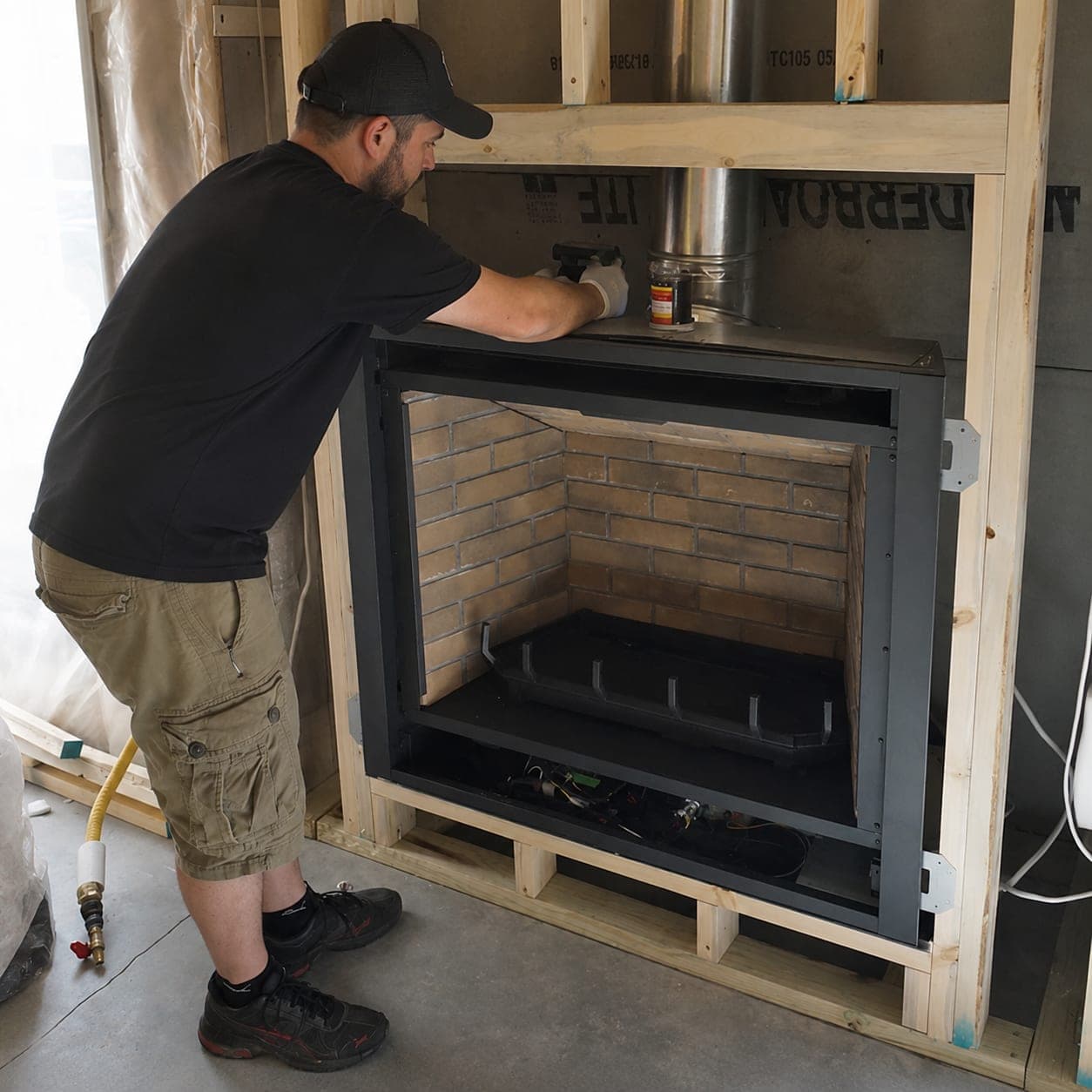
Most projects take one of four forms. The first is a new built-in unit framed into a wall or chase. The second is a sealed insert set into an existing masonry opening. The third is a burner and log set added to a working wood fireplace, and the fourth is an outdoor unit on a patio. Built-in units are usually factory-built designs, so our guide to zero clearance fireplaces is worth reading before you pick a wall.
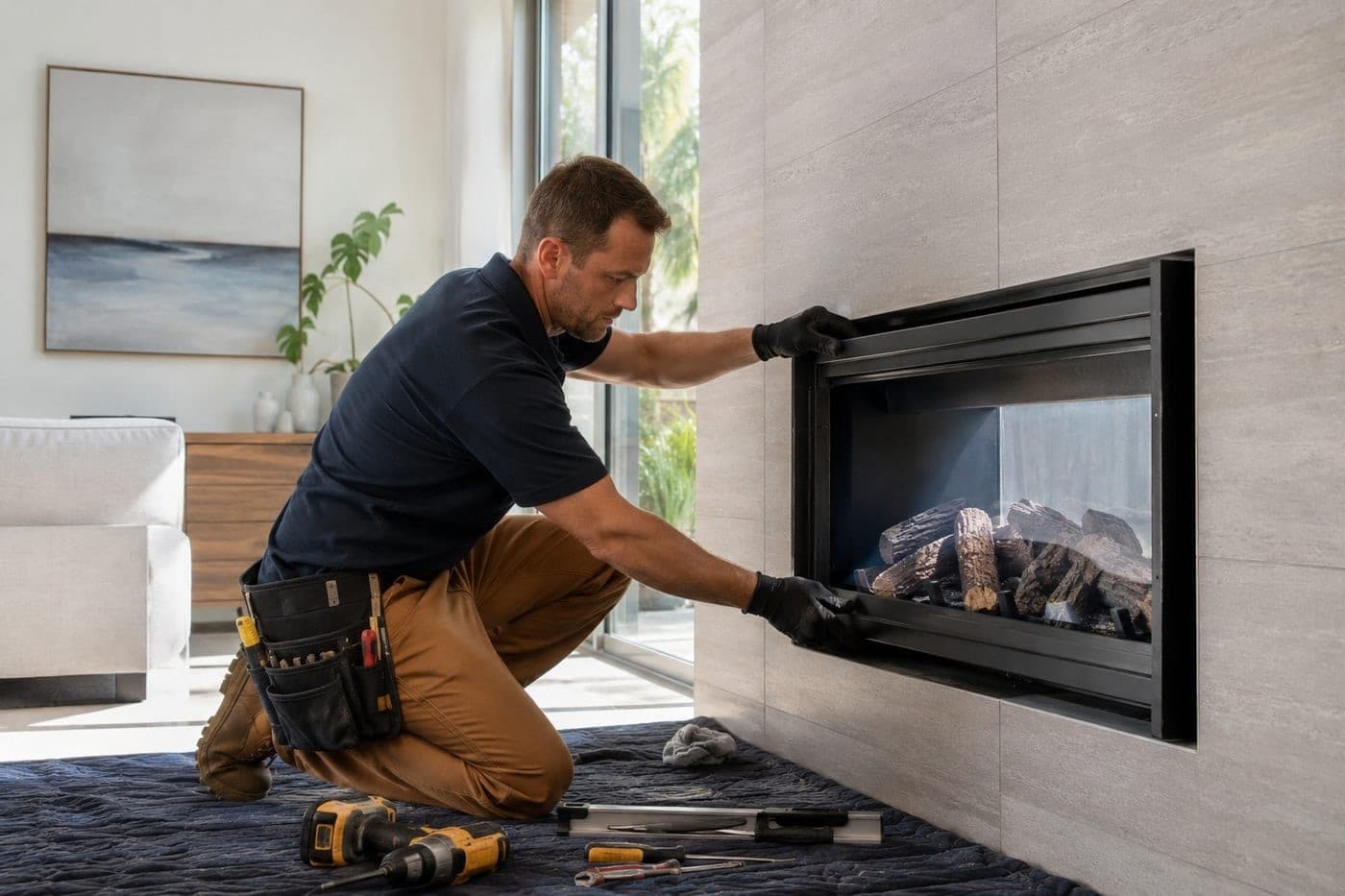
Fireplace gas burner installation
If you already like your masonry fireplace, a gas burner with a matched log set is the least invasive way to switch fuels. The burner pan sits on the firebox floor and a gas line comes in through the side or floor. The fire still vents up the existing chimney, so the flue has to be clean and sound. The damper also has to be fixed open or fitted with a stop so it can never close on a lit set. If your damper is rusted or missing, we can include a damper installation in the same job.
Our gas fireplace installation guide for homeowners
Having a few answers ready before you request an estimate helps. None of them need to be final. They just let the first visit focus on real options.
Essential items for gas fireplace installation
- Fuel type: natural gas from a utility line, or propane from a tank
- A rough location, and what sits on the other side of that wall or above that ceiling
- Venting approach: direct vent through a wall or roof, up an existing chimney, or vent-free where the unit and local code allow it
- A nearby outlet if the unit has a blower, electronic ignition or a remote
- Mantel, TV and shelving plans, since clearances come from the unit's listing
- Finish materials for the surround and hearth
- The model number and owner's manual, if you have already bought a unit
If there is no gas pipe near the spot, we install the line as part of the project. If heat matters more than looks, read our notes on choosing an efficient fireplace. Decorative units and heating units are rated very differently.
Wood gas fireplace installation guide: converting what you have
Many homeowners don't want a new fireplace. They want the one they have to run on gas, and there are three common routes. A vented burner and log set keeps the open look. A sealed gas insert, vented through a new liner, turns an open hearth into a real heater. A worn-out factory-built wood unit can sometimes be replaced with a gas unit sized to the same framing. The right route depends on the chimney, the firebox and how the parts connect. Our page on how a fireplace is put together explains the pieces we look at.
If you are leaning toward a particular product line, see our gas fireplace installation service or the page on installing vent-free gas fireplaces.
What happens during the visit
Venting must match the appliance's listing or it won't draft or pass inspection. Clearances to combustibles are set by the manufacturer and the building code.
Look at the space
The opening, wall or chase, the chimney and the fuel available are checked.
Choose the unit
Size, fuel and style are matched to the room and the venting.
Install
The unit and its venting are installed to the manufacturer's instructions and local code.
Test
The unit is fired and checked, and you're shown how to use it.
Carbon monoxide
A blocked or damaged flue can push carbon monoxide into the home. If an alarm sounds or anyone feels dizzy or sick near the fireplace, get everyone outside and call 911.
How to prepare
- Keep pets in another room while the work area is open.
- Move rugs, photos and anything fragile away from the work area.
- Note the make and model of any insert, stove or gas unit if you have it.
- Let the fireplace or stove cool completely — ideally no fire for 24 hours before the visit.
What gets checked
- Permit requirements
- Hearth extension and protection
- Required clearances to combustibles
- Opening or framing dimensions
- Gas supply or electrical needs
- Vent or liner route and length
Signs to watch for
- A damaged factory-built unit past repair
- A worn-out insert or stove
- An open fireplace that sends most of its heat up the chimney
- A switch from wood to gas or electric
- A remodel that adds or moves a fireplace