On this page
- What a fireplace inspection is and who needs one
- Signs it's time for a fireplace inspection
- The fireplace myth, and why an annual fireplace inspection is the fix
- Conducting a thorough fireplace inspection: What the visit involves
- Fireplace inspection checklist
- Inspection options and what decides between them
- What affects the scope of the inspection
- Quick DIY fireplace inspection between visits
- How to prepare for your inspection
- Safety notes
What a fireplace inspection is and who needs one
A fireplace inspection is a hands-on safety check of the parts that hold the fire and move smoke out of your home. Those parts are the firebox, the damper, the smoke chamber, the flue and, for gas units, the burner and venting. We look for damage, buildup and anything that could let heat, sparks or combustion gases end up where they shouldn't. In the Hartford area and across Connecticut, we inspect wood-burning masonry fireplaces, factory-built (prefab) units, fireplace inserts and gas fireplaces.
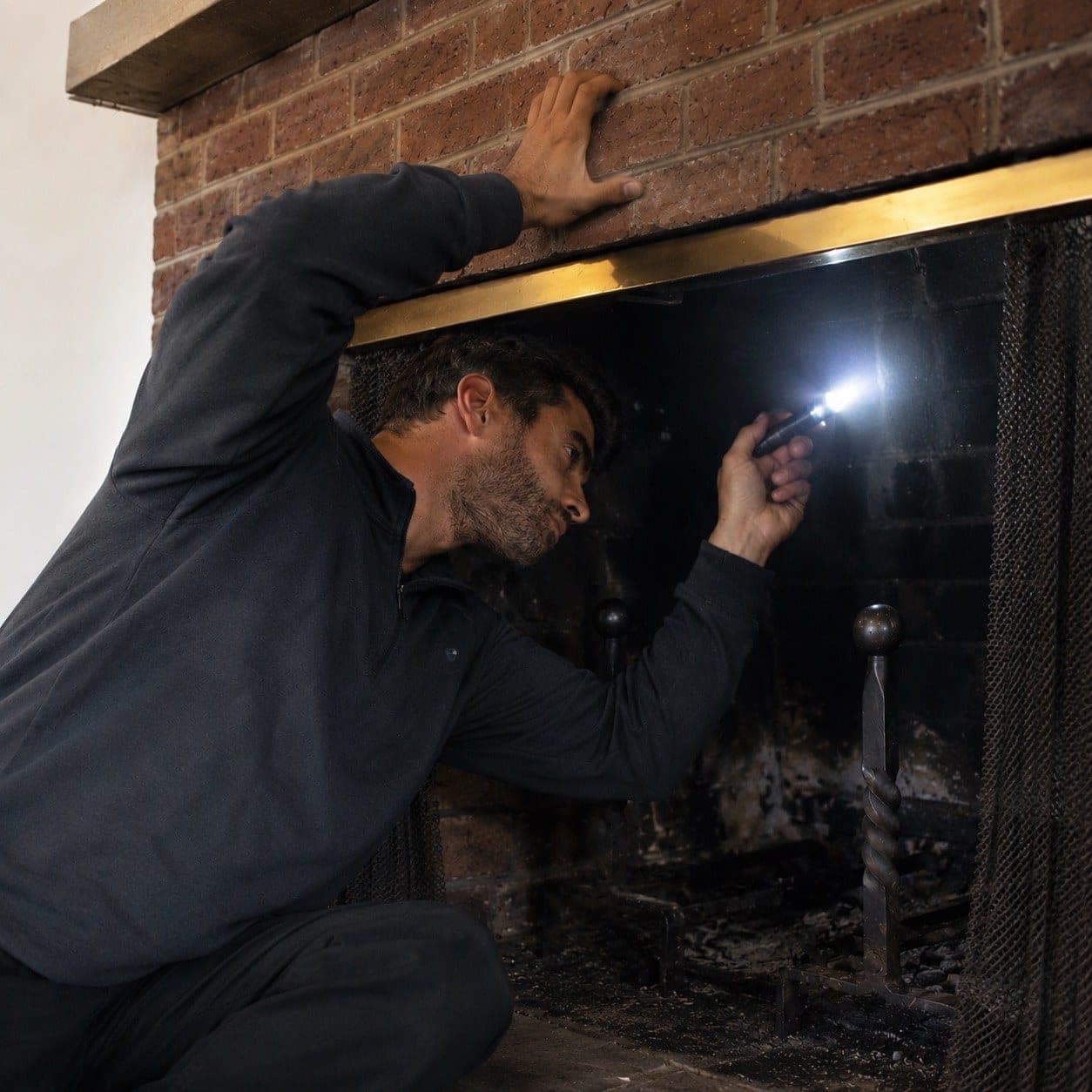
You need one if you use your fireplace regularly, if you're about to light it for the first time in a while, if you just bought or are selling a home, or if something seems off. When the whole system needs evaluating from the hearth to the top of the stack, our chimney inspection service covers the chimney structure in more depth.
Signs it's time for a fireplace inspection
- Smoke rolls back into the room instead of going up the flue
- A strong smoky or musty odor, especially on humid days or after rain
- Cracked, missing or crumbling bricks or mortar inside the firebox
- Cracked or broken refractory panels in a prefab fireplace
- A damper that is stuck, won't seal or won't stay open
- Black, flaky or shiny glazed deposits above the fireplace opening
- Water stains, rust or debris falling into the firebox
- Gas fireplace pilot problems, sooty glass or an unusual flame color
- A chimney fire, a storm or a home sale, even with no visible damage
Many of these trace back to the issues covered in our guide to common chimney problems, so it's worth a read if you're trying to make sense of a symptom.
The fireplace myth, and why an annual fireplace inspection is the fix
The most common myth is "I barely use it, so it doesn't need checking." Light use doesn't protect a fireplace. Animals nest in flues that sit idle. Moisture breaks down mortar and rusts dampers whether or not you burn wood. Gas units collect dust and spider webs in their burners and vents. Another myth is that a gas fireplace never needs inspecting because it doesn't make creosote. It still produces combustion gases that need a clear, sound path outside.
The fix is simple: an annual fireplace inspection. The national fire safety standard, NFPA 211, recommends inspecting chimneys, fireplaces and vents once a year. A yearly check catches small problems while they're still small. Scheduling it before the heating season means any cleaning or repair is done before you need the fireplace.
Conducting a thorough fireplace inspection: What the visit involves
How the inspection visit works
Talk through your concerns
We ask how you use the fireplace, what fuel it burns and anything you've noticed, such as smells, smoke or drafts.
Protect the room
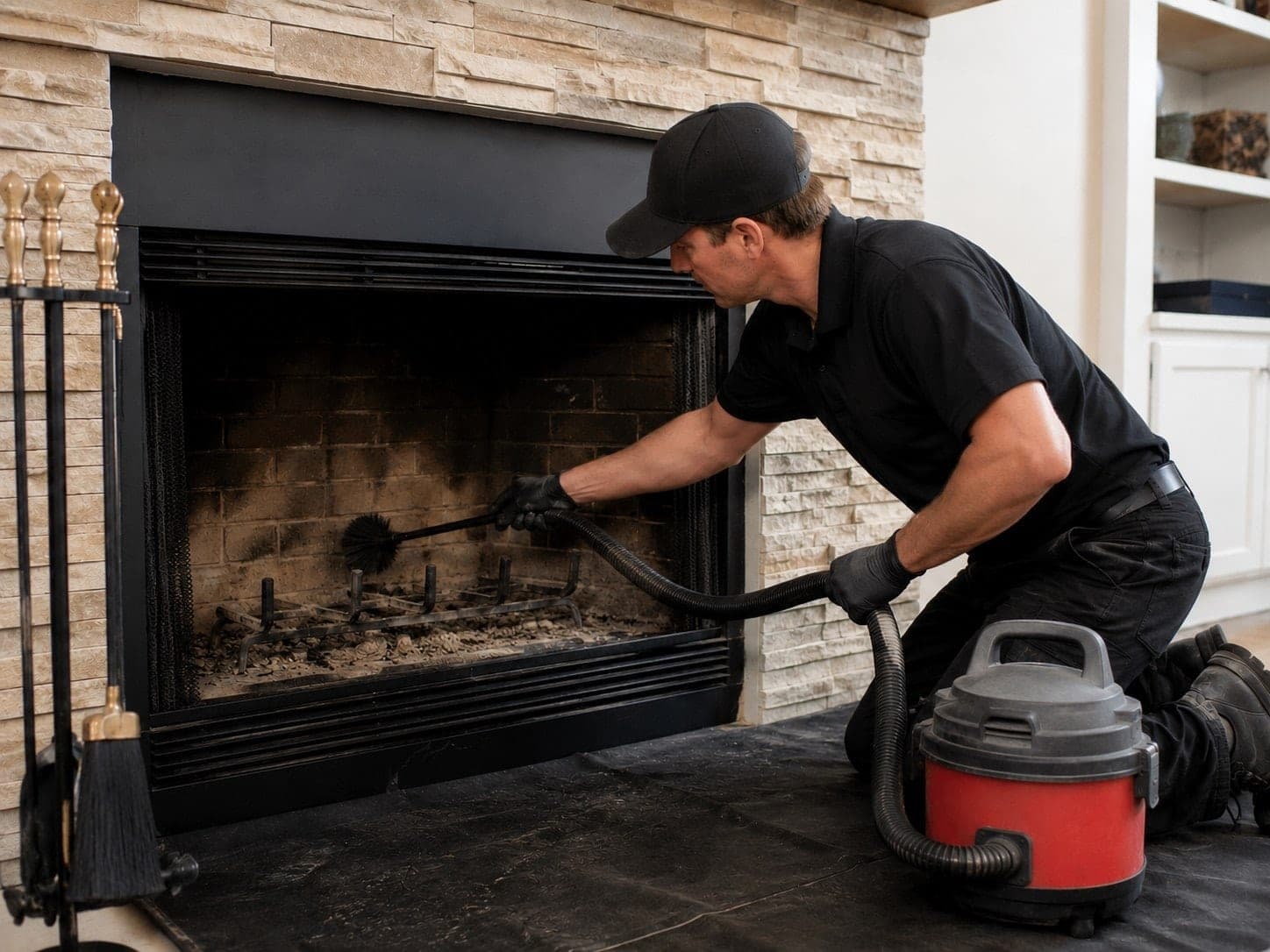
Drop cloths go down around the hearth before we open anything up.
Check the firebox and hearth
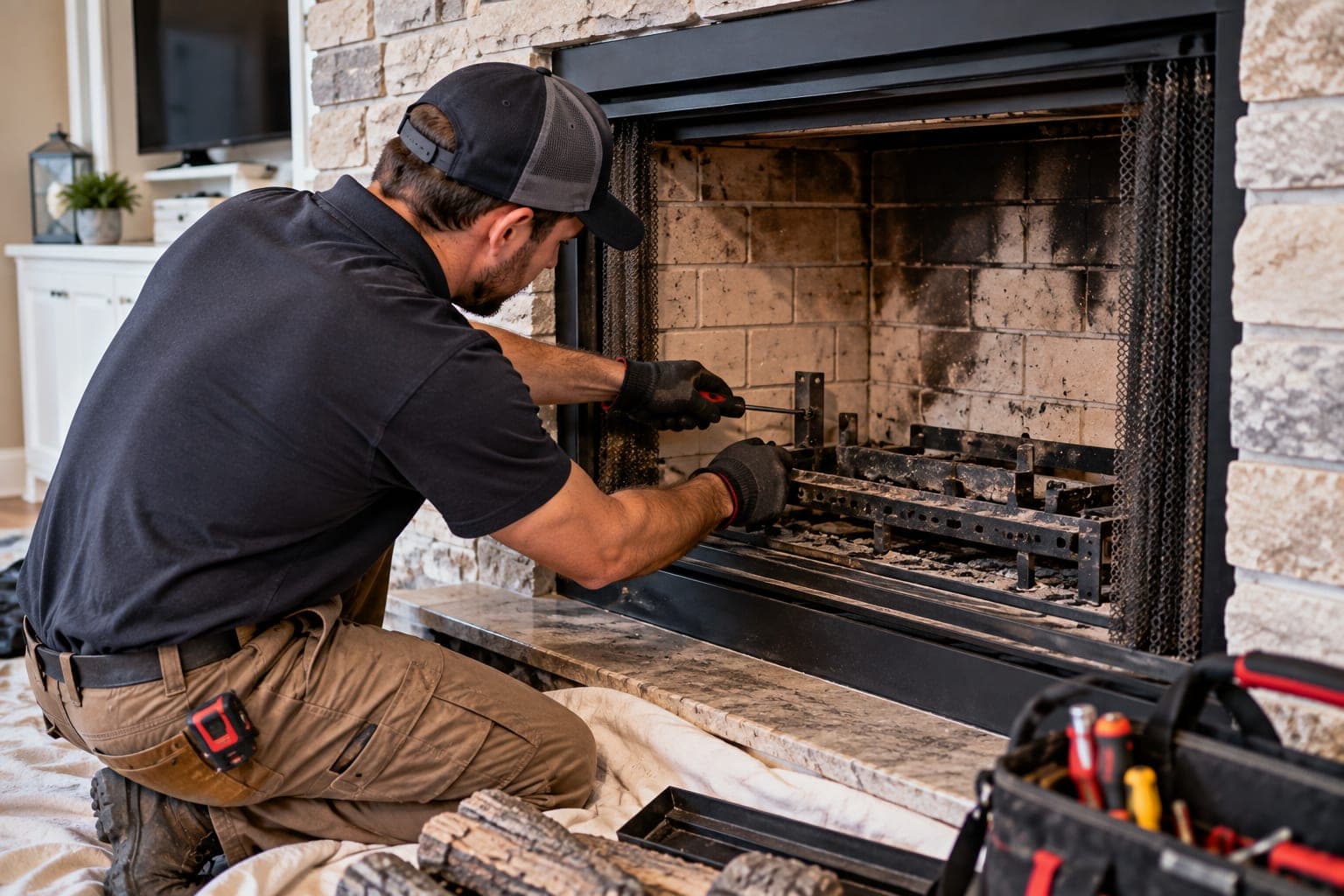
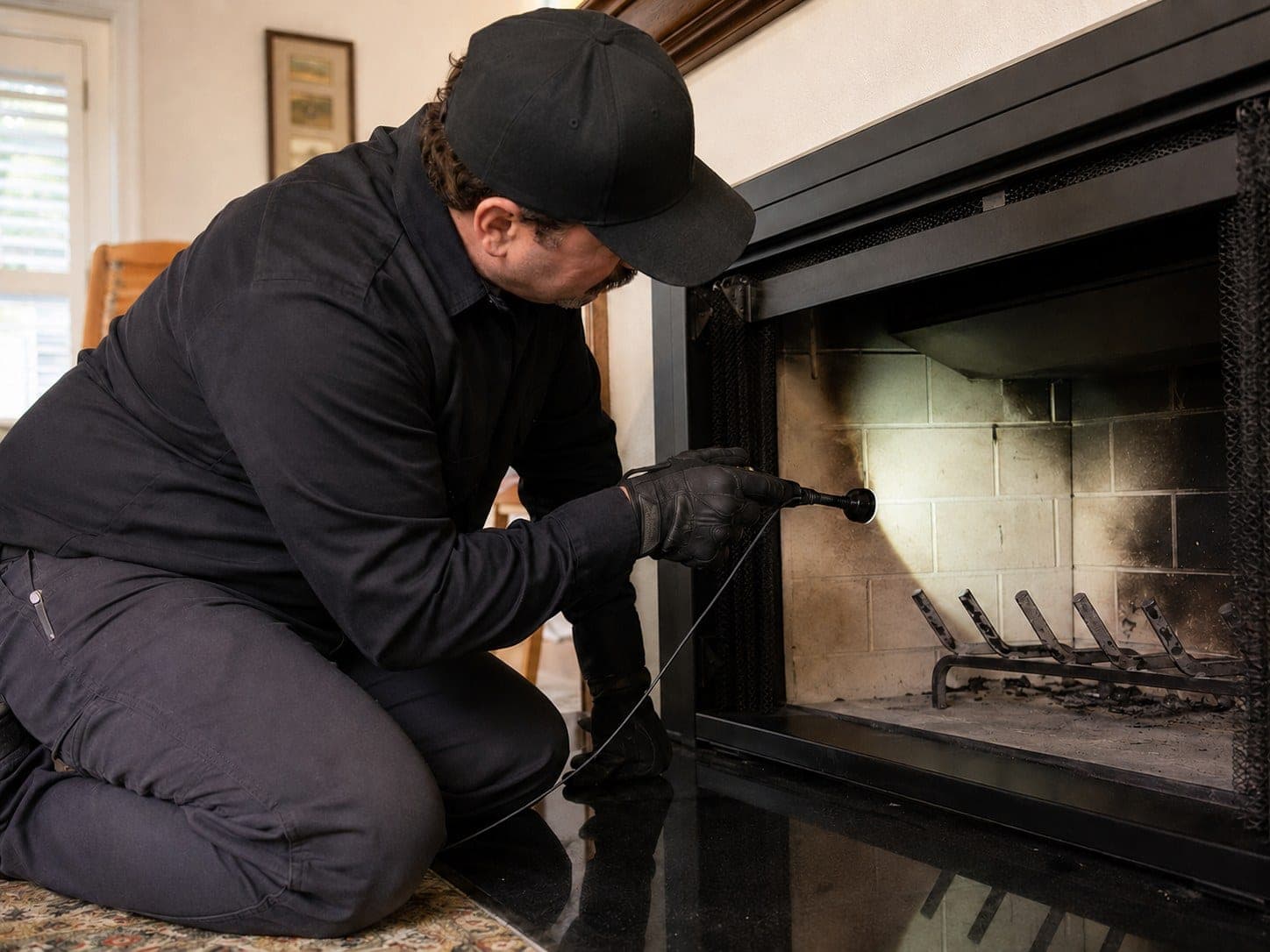
We inspect the firebox walls, floor, joints and hearth extension with a strong light.
Test the damper and look up
We operate the damper, then examine the smoke shelf, smoke chamber and the lower flue for buildup and damage.
Add a camera where it's needed
If the flue can't be seen well enough by eye, we can recommend a chimney camera inspection to view the full length of the liner.
Explain the findings
We show you what we found, explain what matters most for safety, and give a free estimate for any cleaning or repair.
Fireplace inspection checklist
Every inspection is adjusted to the type of fireplace, but these are the core fireplace inspection and safety checks we work through.
Interior fireplace inspection checklist
Inside the room and firebox
- Firebox brick, mortar joints or refractory panels for cracks and gaps
- Hearth and hearth extension for cracks and safe clearance
- Mantel and nearby trim for safe distance from the opening
- Glass doors, screens and gaskets for fit and damage
- Damper operation, seal and condition
- Smoke shelf and smoke chamber for debris, creosote and cracked parging
- Signs of draft trouble, such as soot staining on the face of the fireplace
Flue, venting and gas components
- Visible flue liner for cracks, gaps and creosote buildup
- Blockages from nests, leaves or debris
- Insert connection to the flue liner
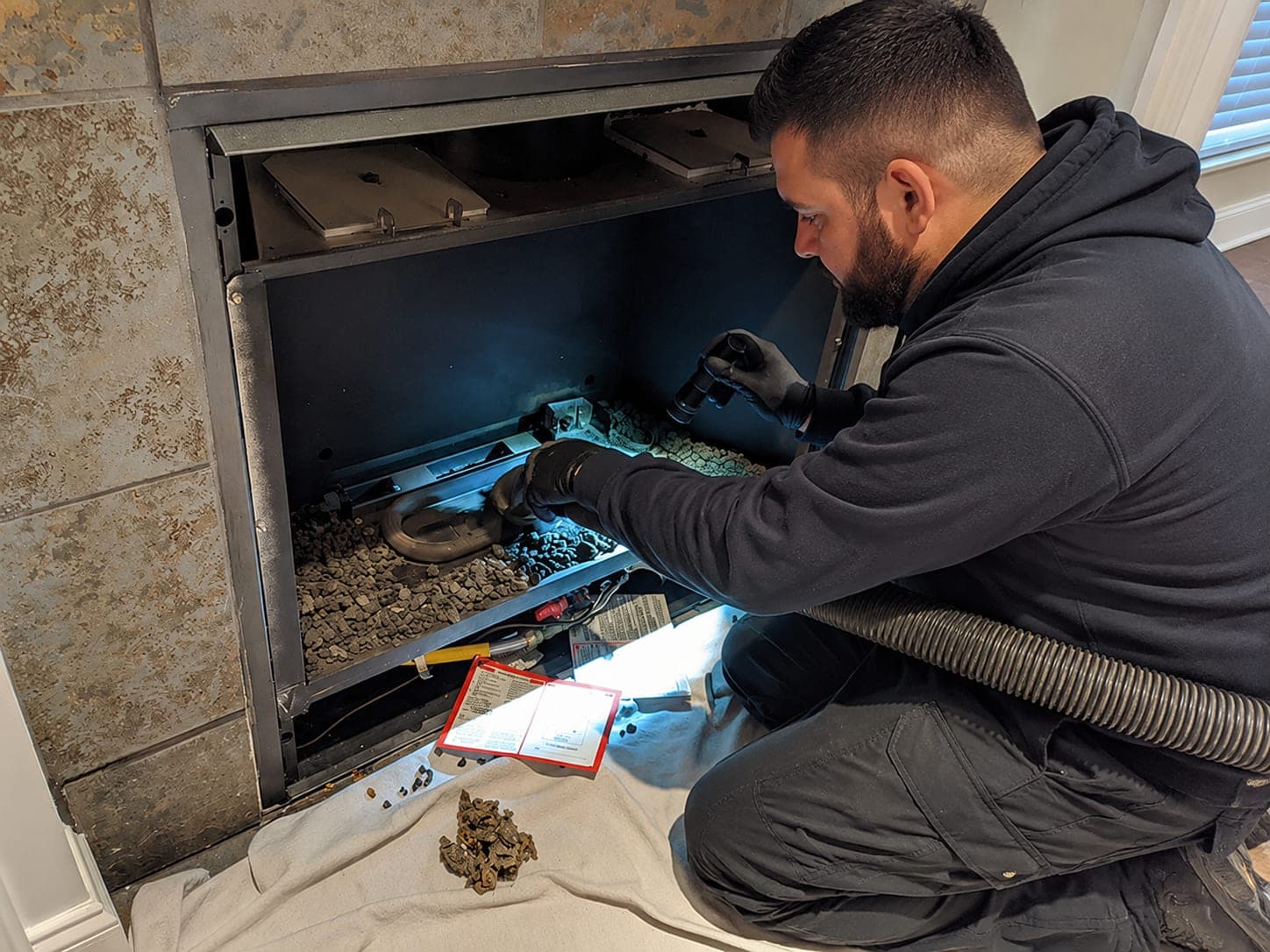
- Gas burner, logs, pilot assembly and glass condition
- Vent termination and signs of combustion gas spillage
- Evidence of water entry, such as rust or staining
Inspection options and what decides between them
| Feature | Standard fireplace inspection | Expanded or camera inspection |
|---|---|---|
| Best for | Routine yearly checks on a fireplace with no changes or known problems | Home sales, after a chimney fire or storm, or when a problem is suspected |
| What's examined | Readily accessible parts: firebox, damper, smoke chamber, visible flue | Adds a camera view of the full flue and closer review of hidden areas |
| Typical trigger | Start of heating season | A fuel change, new insert, odor, draft trouble or visible damage |
Best for
- Standard fireplace inspection
- Routine yearly checks on a fireplace with no changes or known problems
- Expanded or camera inspection
- Home sales, after a chimney fire or storm, or when a problem is suspected
What's examined
- Standard fireplace inspection
- Readily accessible parts: firebox, damper, smoke chamber, visible flue
- Expanded or camera inspection
- Adds a camera view of the full flue and closer review of hidden areas
Typical trigger
- Standard fireplace inspection
- Start of heating season
- Expanded or camera inspection
- A fuel change, new insert, odor, draft trouble or visible damage
We also offer real estate chimney inspections for buyers and sellers, and storm damage chimney inspections after high winds or a fallen limb. We'll recommend the level that fits what's actually happening with your fireplace.
What affects the scope of the inspection
- Fireplace type: masonry, prefab, insert or gas units each have different parts to check
- Access: a tight attic, a locked chase or a blocked hearth can change what's reachable
- Buildup: heavy soot or creosote may need cleaning before the surfaces can be judged
- History: a past chimney fire, water leak or recent storm calls for a closer look
- Purpose: a pre-sale or pre-purchase inspection usually needs fuller documentation
Quick DIY fireplace inspection between visits
A homeowner's quick look doesn't replace a professional inspection, but it helps you spot changes early. With the fireplace cold, shine a flashlight around the firebox for new cracks or loose mortar. Open and close the damper to make sure it moves freely and seals. Check the glass doors and screen. Look for fresh water stains or debris on the firebox floor. Watch how a fire burns, too. Smoke in the room or a fire that struggles to stay lit is worth reporting. For burning habits that cut down on buildup, see our guide to an efficient fireplace.
How to prepare for your inspection
- Let the fireplace go cold beforehand; don't burn the night before or the morning of
- Clear furniture, rugs and decorations away from the hearth
- Note any symptoms you've seen, including when they happen
- Have any manuals for an insert or gas unit on hand if you have them
- Keep pets in another room while the fireplace is open
Safety notes
If you smell gas or see smoke inside
Don't use a fireplace that's leaking smoke into the room, has a visibly cracked firebox, or has been through a chimney fire until it's been inspected. If you smell gas, leave the house and call your gas utility or 911 from outside. Keep working smoke and carbon monoxide alarms on every level of the home.
Emergency calls are accepted, and our line is available 24 hours, Sunday through Friday. For homes across the river, see our page on fireplace inspection in East Hartford. To learn what tends to go wrong above the firebox, read about common chimney issues. When you're ready, get in touch to request a free estimate.