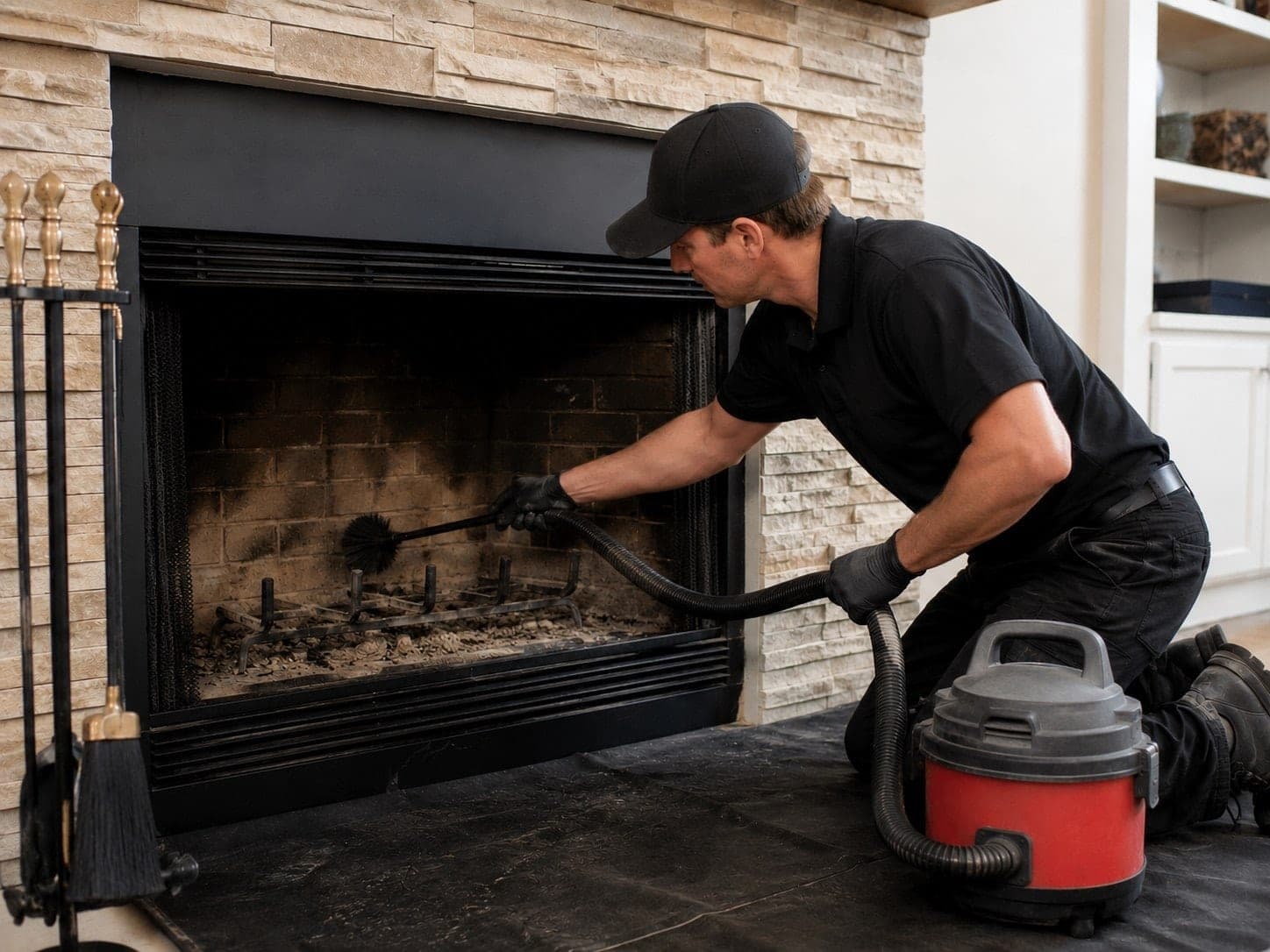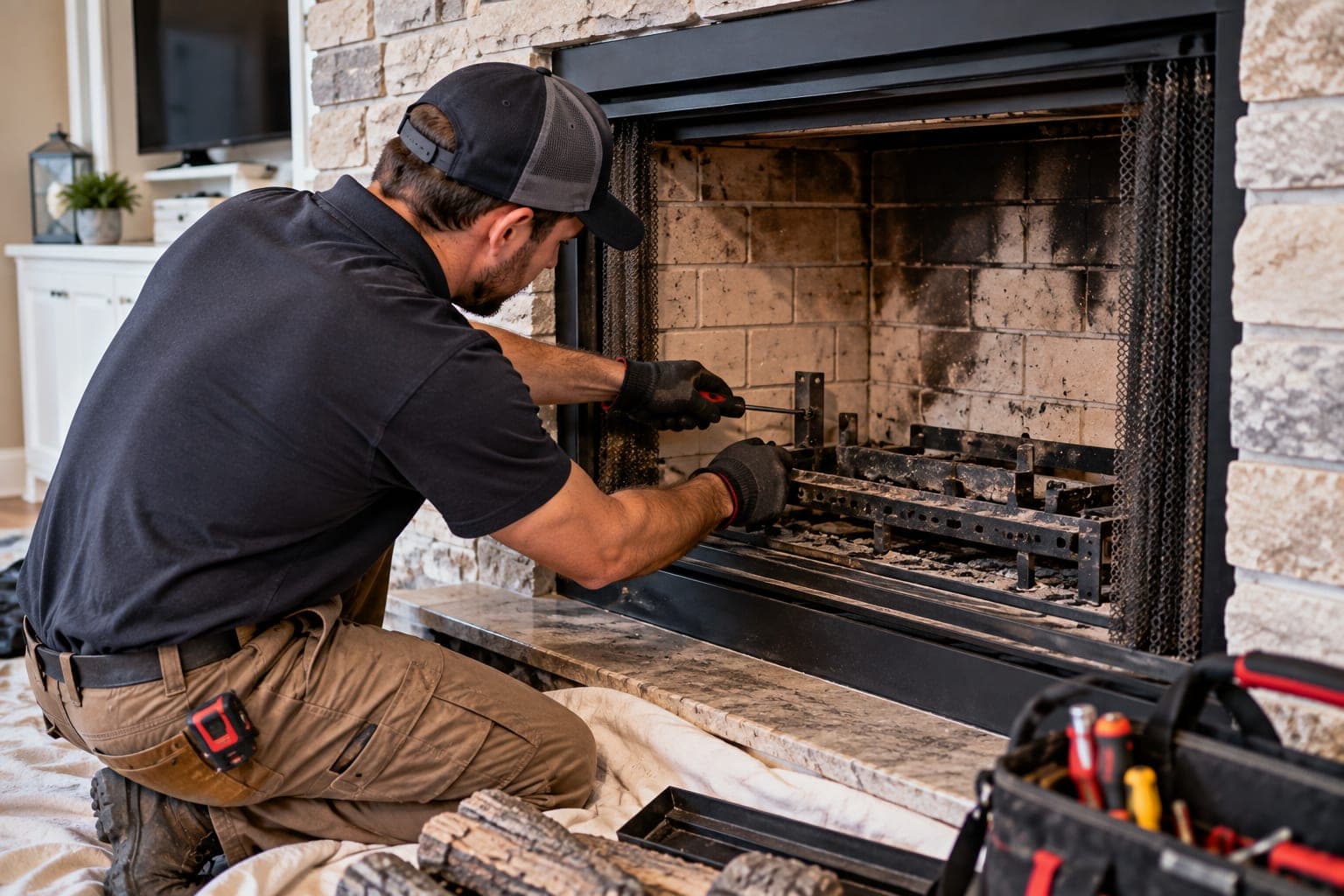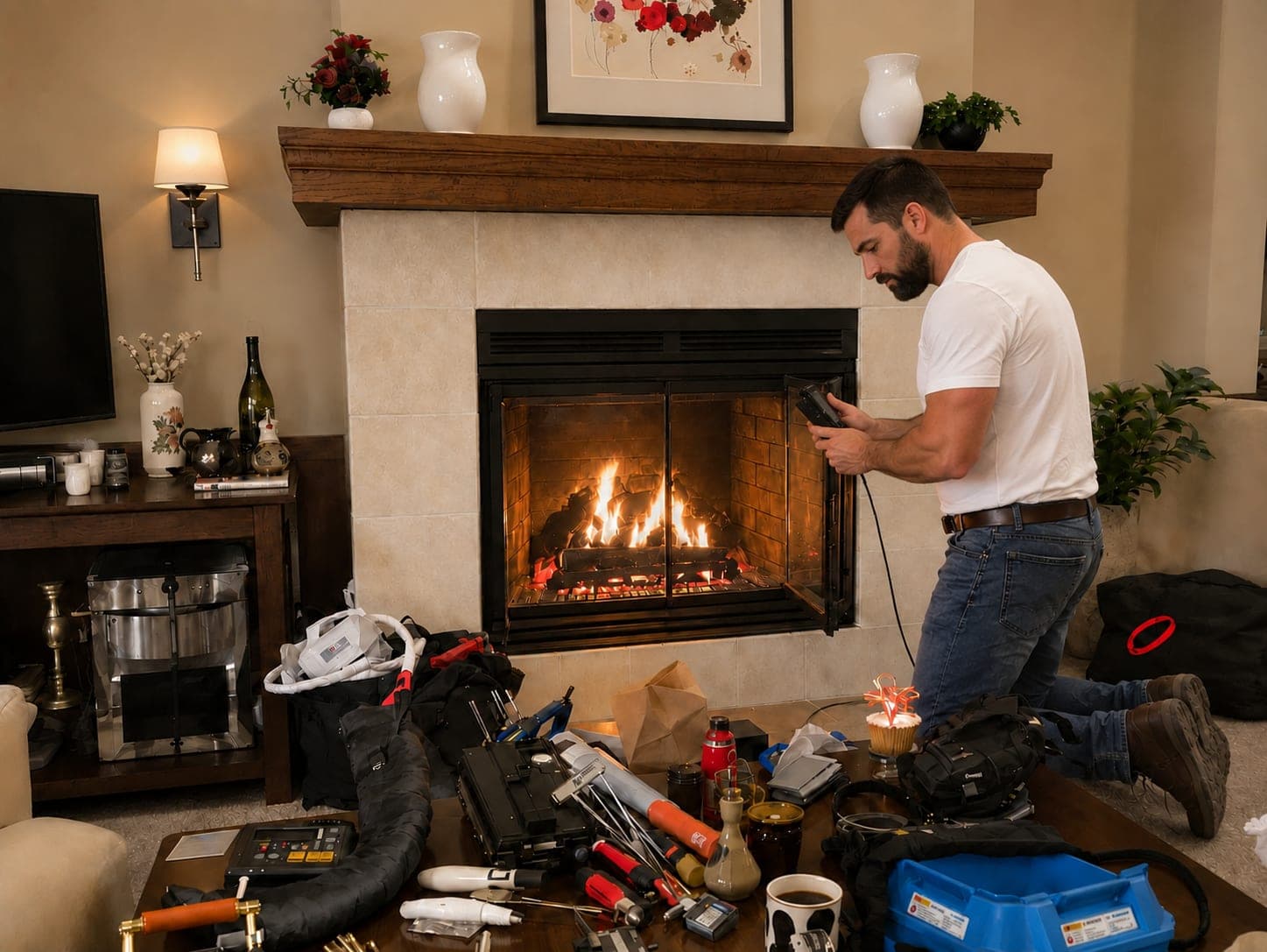
A fire in the living room is one of the best parts of cold weather, and it is also an open flame inside a wooden house. Good fireplace safety isn't complicated. It comes down to a few habits: checking the system before you use it, burning only what belongs in a firebox, handling ashes carefully, and keeping people, pets and decorations at a sensible distance. The sections below walk through each of these. They also cover the questions homeowners ask most once children, cats or the holidays come into the picture.
A fireplace safety checklist for the start of each season
Run through this list before the first fire of the year, and again any time the fireplace has sat unused for months. Most of it takes a flashlight and about fifteen minutes.
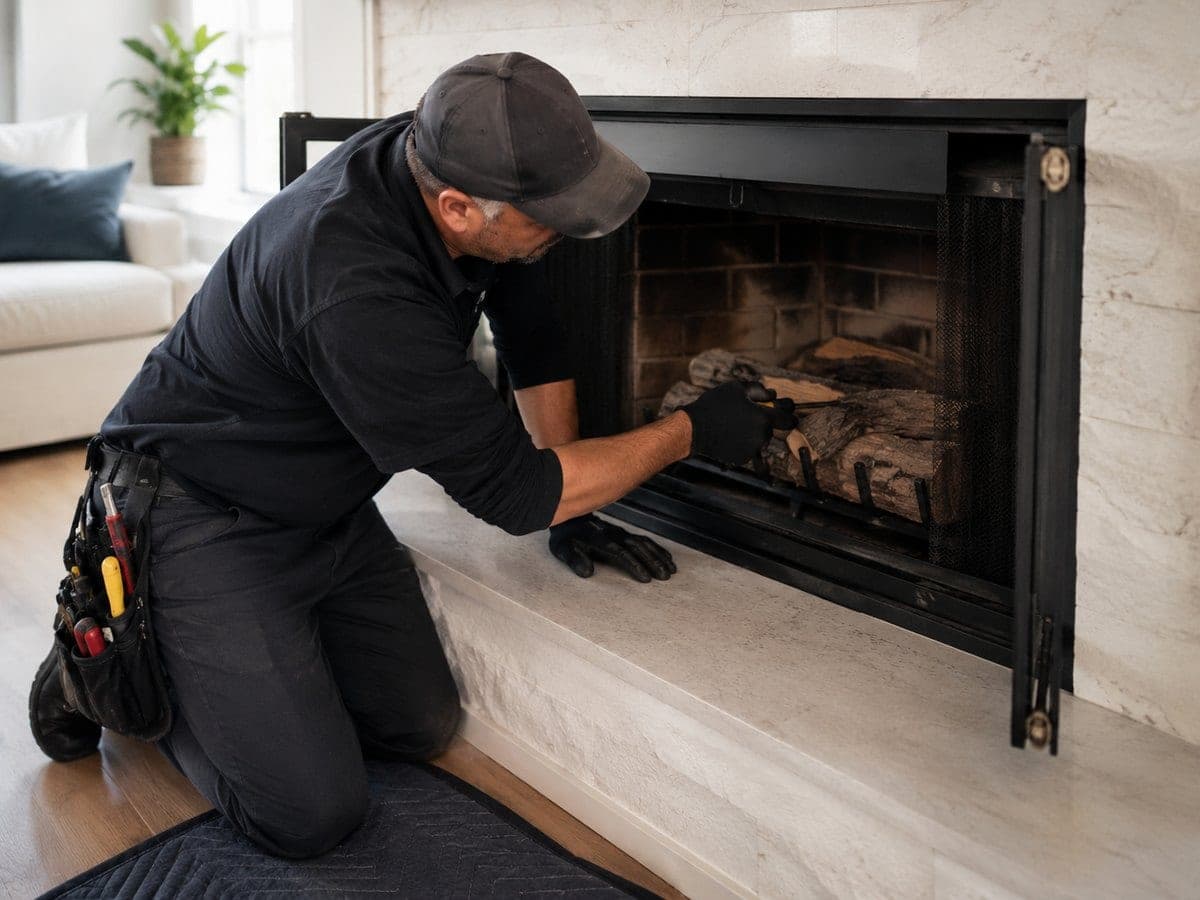
Pre-season fireplace safety checklist
- Open the damper and look up the flue with a flashlight. You should see the cap or a patch of daylight, not leaves, nesting material or fallen debris.
- Work the damper handle through its full range. It should open completely and close without sticking.
- Inspect the firebox walls and floor for cracked bricks, gaps in the mortar joints or pieces that have fallen out.
- Check that the screen or glass doors are in place, the glass is not cracked, and door gaskets are intact.
- Test smoke alarms and carbon monoxide alarms and replace batteries. Make sure there is a CO alarm on each level and near sleeping areas.
- Clear at least three feet in front of the hearth of rugs, furniture, kindling baskets, toys and newspapers.
- Keep a fire extinguisher within reach and make sure every adult in the house knows where it is.
- Set out a metal ash bucket with a tight-fitting lid and a metal shovel.
- Use firewood that is split, dry and seasoned, and stack the main woodpile away from the house.
- For gas units, confirm the pilot lights normally, there is no gas odor, and the logs sit in their correct positions.
What a professional fireplace safety check adds
A homeowner walkthrough catches the obvious problems. It can't show you the inside of the flue, the condition of the liner, how much creosote has built up, or what's happening in the smoke chamber above the damper. A professional inspection looks at those hidden areas. When a closer look is needed, a chimney camera can follow the full length of the flue. Annual inspection is the widely recommended baseline for any fireplace that gets regular use. It's also worth booking one after a chimney fire, a storm, a period of heavy use, or before buying a home. If you notice any of the signs below, schedule a check before lighting another fire.
Warning signs that call for a closer look
01Cracked or loose firebox brick
- What you may notice
- Hairline or open cracks, crumbling mortar, or pieces of brick on the hearth floor.
- How it’s confirmed
- The firebox is inspected for cracks that could let heat reach the framing behind the wall.
02Smoke spilling into the room
- What you may notice
- Smoke rolls out of the opening even with the damper open, or there are soot stains above the fireplace face.
- How it’s confirmed
- The damper, smoke chamber and flue are checked for damage, rough surfaces or blockages that disrupt draft.
3 blunders homeowners make with fireplace safety
Most safety blunders homeowners make with their fireplace aren't dramatic. They are small shortcuts that feel harmless. These three come up again and again.
1. Burning the wrong things
Wrapping paper, cardboard, trash, painted or treated lumber, pallet wood and green, unseasoned logs all cause trouble. Glossy paper and cardboard can flare suddenly and send burning pieces up the flue. Treated and painted wood releases fumes you don't want in your home. Wet wood smolders, which leaves more creosote on the flue walls. Creosote is the fuel behind most chimney fires. Stick to dry, seasoned hardwood, or to manufactured logs used exactly as the package directs.
2. Getting rid of ashes too soon
Ashes that look cold can hide live embers for days. Dumping them into a paper bag, a plastic trash can, a cardboard box or a mulch bed is how many ash-related fires begin. The same goes for leaving the bucket on a wooden deck or in the garage. Shovel ashes into a metal container with a lid. Set it outside on a noncombustible surface, well away from the house, and let it sit for several days before final disposal.
3. Assuming it's fine because it worked last year
Creosote builds up gradually, mortar cracks slowly, and animals can nest in a flue over the summer. None of these is obvious from the living room. Skipping cleaning and inspection because the fireplace drew well last winter is the blunder that lets small problems grow into a chimney fire or a carbon monoxide leak.
- Closing the damper too early. Smoldering embers still produce carbon monoxide, so leave the damper open until the fire is completely out.
- Using accelerants. Gasoline, lighter fluid and similar liquids can cause explosive flare-ups in a firebox.
- Overloading the firebox. A fire that is too large can overheat the firebox and the flue.
- Leaving a fire unattended. Put the fire out before you leave the house or go to bed.
Where fireplace safety breaches usually begin
When news stories reveal fireplace safety breaches, such as a house fire or a carbon monoxide scare, the cause is usually ordinary rather than exotic. The same handful of gaps shows up again and again, and each one has a simple preventive step.
| Breach | How it happens | Prevention |
|---|---|---|
| Chimney fire | Creosote deposits in the flue ignite | Burn dry wood and have the flue cleaned and inspected regularly |
| Ash fire | Hot embers are discarded in combustible containers | Use a lidded metal bucket stored outside, away from the house |
| Heat transfer to framing | Cracked firebox brick or a damaged smoke chamber lets heat escape | Repair masonry damage before using the fireplace again |
| Carbon monoxide buildup | A blocked flue or early damper closing pushes gases back indoors | Keep the flue clear, install CO alarms, and leave the damper open until the fire is out |
| Sparks on the roof | An open flue with no cap lets embers escape | Install a chimney cap with a spark arrestor screen |
| Decoration fire | Stockings, garland or paper hang too close to the flame | Keep combustibles clear of the opening whenever a fire is lit |
Fireplace safety for children and pets
Children and animals don't understand that a hearth stays hot long after the flames die down. The glass front on a gas fireplace or insert can stay hot enough to burn skin well after the unit is switched off. Stone hearth edges are also a common spot for bumps and falls.
- Use a sturdy hearth gate or freestanding safety gate that keeps small children several feet from the opening.
- Add cushioned edge guards to raised stone or brick hearths.
- Store matches, lighters, long-reach lighters and gas fireplace remotes out of reach.
- Never leave a child alone in a room with a lit fireplace, even for a moment.
- Keep the fireplace tools in a stand that can't be easily tipped over or carried off.
How to teach children fireplace safety
Teaching fireplace safety by age
Toddlers: one simple rule
Mark a clear boundary, such as the edge of a rug, and treat it as a firm no-go line whenever the fireplace is in use or still warm.
Preschoolers: hot means hurt
Explain that the glass, screen, tools and hearth stones can burn even when there is no visible flame.
School-age kids: why the rules exist
Show them the screen, the ash bucket and the alarms, and explain what each one does. Practice what to do if an alarm sounds.
Older kids: supervised responsibility
Teach them to bring in wood or check the screen with an adult present. Lighting fires and handling ashes should stay adult jobs.
Fireplace safety with a cat or dog
Cats are drawn to warmth and will curl up on the hearth, the mantel or the top of a wood stove or insert. Tails and whiskers can get singed against a screen. A cat that jumps onto a hot stove top can burn its paws, and a cat walking along the mantel can knock things onto the hearth. Choose a screen that stands firmly and won't tip if a pet leans on it. Keep the mantel free of breakable or flammable items, and give your cat a warm bed away from the firebox. Dogs bring their own risks: wagging tails near the opening, and curiosity about pine cones or kindling left on the floor.
Christmas fireplace safety tips for the holidays
The holidays are when the fireplace gets the heaviest use and the mantel gets the most decoration. That is a combination worth planning for.
- Take stockings down, or move them well away from the opening, before you light a fire.
- Keep garland and greenery on top of the mantel, not draped down the sides toward the flame.
- Keep the Christmas tree at least three feet from the fireplace, and keep it watered.
- Never burn wrapping paper, boxes, ribbon or tree branches in the fireplace.
- Avoid lit candles on the mantel above an active fire.
- When the house is full of guests, put one adult in charge of the fire and the screen.
- Put the fire out completely before everyone goes to bed.
Wrapping paper and evergreens are not kindling
Wrapping paper can flare intensely and send burning pieces up the flue. Dry evergreen branches can go up almost instantly. Bag them for the trash or recycling instead.
Is your fireplace safe to use? A quick Pre-Fire check
Before the first fire of the season, and any time the fireplace has sat unused for a while, walk through this list. It won't replace a professional inspection, but it will catch the obvious problems.
Before you light a fire
- The damper opens fully and closes smoothly
- With a flashlight, you can see daylight or open space looking up the flue (no nests, debris or heavy black buildup)
- No cracked, missing or crumbling brick or mortar inside the firebox
- No shiny, tar-like or flaky black deposits on the damper or smoke shelf
- Glass doors or the spark screen are intact and close properly
- Smoke detectors and carbon monoxide alarms on each level have been tested
- Nothing flammable sits within a few feet of the opening: rugs, baskets, kindling piles, decorations
- You have a metal ash container with a tight lid and a fire extinguisher nearby
Stop and get out if this happens
If a carbon monoxide alarm sounds, or you hear a loud roaring or rumbling from the chimney and see dense smoke or flames from the top, leave the house and call 911. Those are signs of a CO problem or a chimney fire, and both need emergency responders first.
Wood, gas and electric: How the safety picture differs
| Feature | Wood-burning | Gas |
|---|---|---|
| Biggest risk | Creosote and chimney fires | Carbon monoxide, gas leaks |
| What needs regular attention | Flue sweeping, firebox, damper, cap | Burner, pilot, venting, glass seal |
| Hot surfaces | Firebox, doors, hearth | Glass front can get very hot |
| Venting | Requires a working chimney | Vented models need clear vents; vent-free models need proper room ventilation |
Biggest risk
- Wood-burning
- Creosote and chimney fires
- Gas
- Carbon monoxide, gas leaks
What needs regular attention
- Wood-burning
- Flue sweeping, firebox, damper, cap
- Gas
- Burner, pilot, venting, glass seal
Hot surfaces
- Wood-burning
- Firebox, doors, hearth
- Gas
- Glass front can get very hot
Venting
- Wood-burning
- Requires a working chimney
- Gas
- Vented models need clear vents; vent-free models need proper room ventilation
Wood stoves and inserts sit in between: they are more efficient than an open fireplace but still need clean flues and tight door gaskets. If you own one of these units, see how wood fireplace repair works for the kinds of issues worth addressing. Some households decide an electric unit fits their situation better, especially with young children; the electric fireplace installation service page covers that option, and existing units that trip breakers or stop heating are covered under electric fireplace repair.
Fireplace alternatives and additional safety measures
If an open wood fire no longer suits your household, there are options that change the safety picture. These include young children, a curious cat or simply less time for upkeep. The comparison below is general. The right choice depends on your home and how you use the fireplace.
| Feature | Open wood-burning | Wood insert or stove |
|---|---|---|
| Exposed flame | Yes, behind a screen | Behind a closed door |
| Creosote and sweeping | Regular cleaning needed | Regular cleaning needed |
| Carbon monoxide risk | Yes, if draft fails | Yes, if venting fails |
| Hot surfaces | Firebox, screen, hearth | Door glass and body |
Exposed flame
- Open wood-burning
- Yes, behind a screen
- Wood insert or stove
- Behind a closed door
Creosote and sweeping
- Open wood-burning
- Regular cleaning needed
- Wood insert or stove
- Regular cleaning needed
Carbon monoxide risk
- Open wood-burning
- Yes, if draft fails
- Wood insert or stove
- Yes, if venting fails
Hot surfaces
- Open wood-burning
- Firebox, screen, hearth
- Wood insert or stove
- Door glass and body
An electric unit removes combustion entirely, which is why many families with small children consider electric fireplace installation. If you already own one that isn't heating or displaying properly, repairing an electric unit is often simpler than replacing it. A closed wood insert or stove keeps the flame behind a door. For owners of those units, wood stove and insert repair covers problems like worn door gaskets that let smoke and sparks escape. If heat output matters as much as safety, our guide to getting more heat from your fireplace explains how the two often go together.
- Chimney cap with spark arrestor: keeps embers from landing on the roof and keeps animals and debris out of the flue.
- Glass fireplace doors: add a barrier between the fire and the room, and can be closed as the fire dies down.
- Intact chimney liner: protects the surrounding structure from heat and corrosive combustion byproducts.
- Carbon monoxide alarms: the only reliable way to detect a gas you can't see or smell.
If anything on this checklist raises a question, you can request a free estimate. Same-day visits are available when the schedule allows, and emergency calls are taken 24 hours a day, Sunday through Friday.