On this page
Top tips for fall gas fireplace maintenance
A gas fireplace that sat unused from spring to fall has had months to collect dust on the burner, insects in the pilot area and leaves against the outside vent. None of that is dramatic. It is, however, the usual reason a unit that worked fine in March won't light in October, or lights with a lazy, sooty flame. A few minutes of looking before the first fire catches most of it.
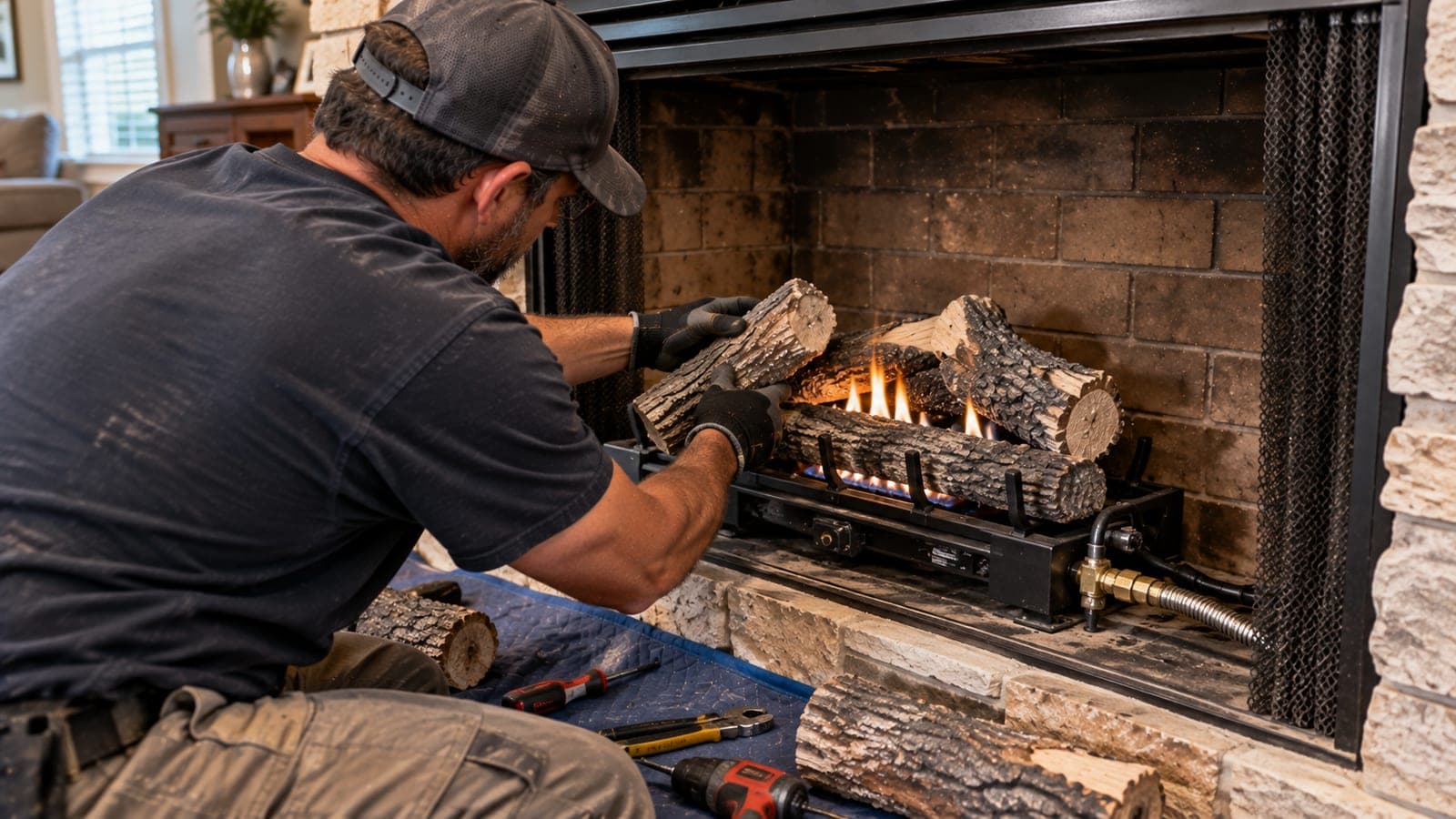
Before the first fire of the season
- Check the outside vent cap for leaves, nests, overgrown plants or anything stored against it
- Look at the logs through the glass. If they've shifted, flames can hit them and make soot
- Clean any white or gray film off the glass with a cleaner your manufacturer approves
- Replace the batteries in the remote and the wall switch or receiver
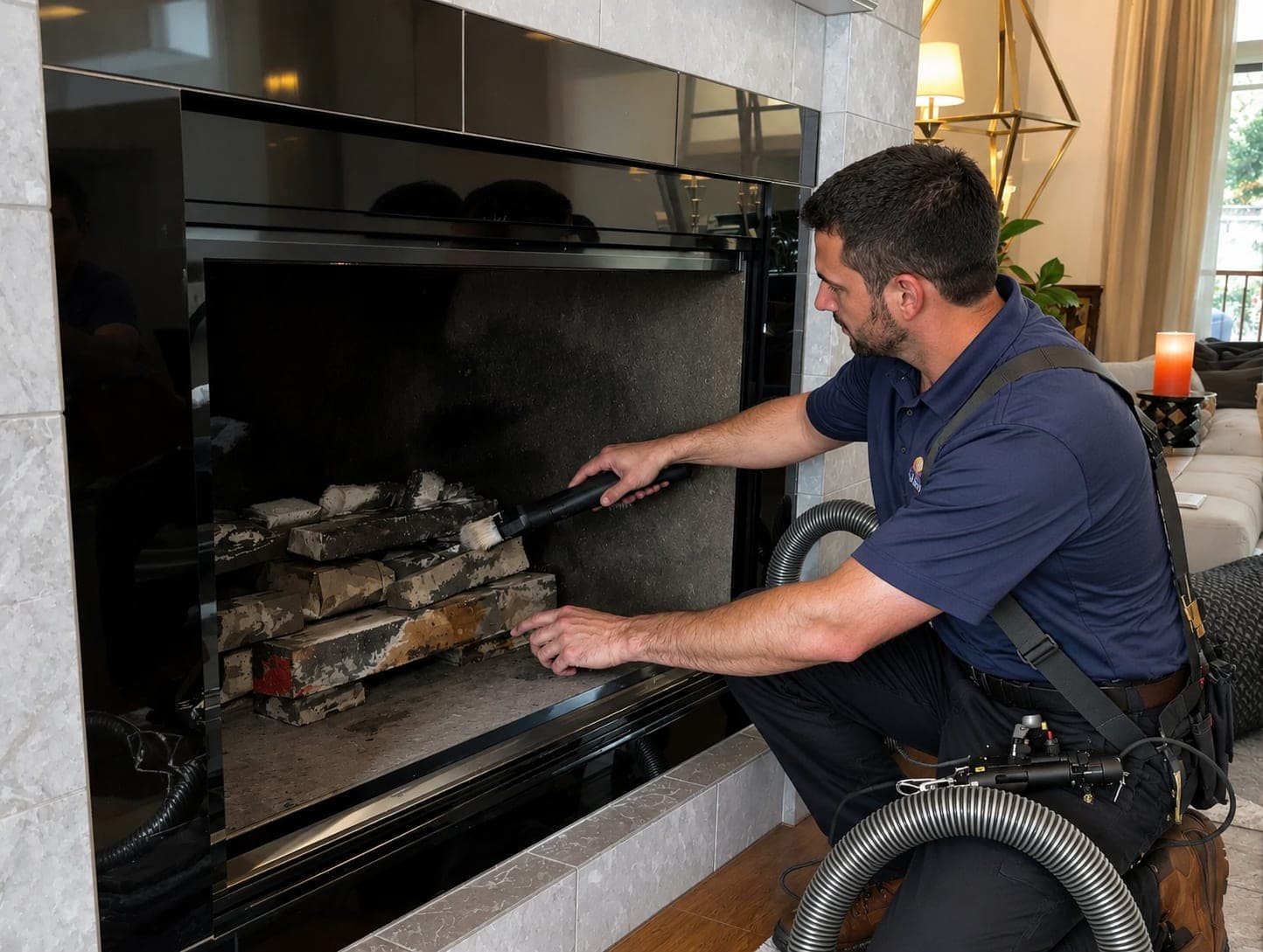
- Vacuum dust from the louvers and blower intake while the unit is off and cool
- On the first lighting, watch for a flame that looks lazy, smoky or lifts off the burner
What a professional fall visit adds
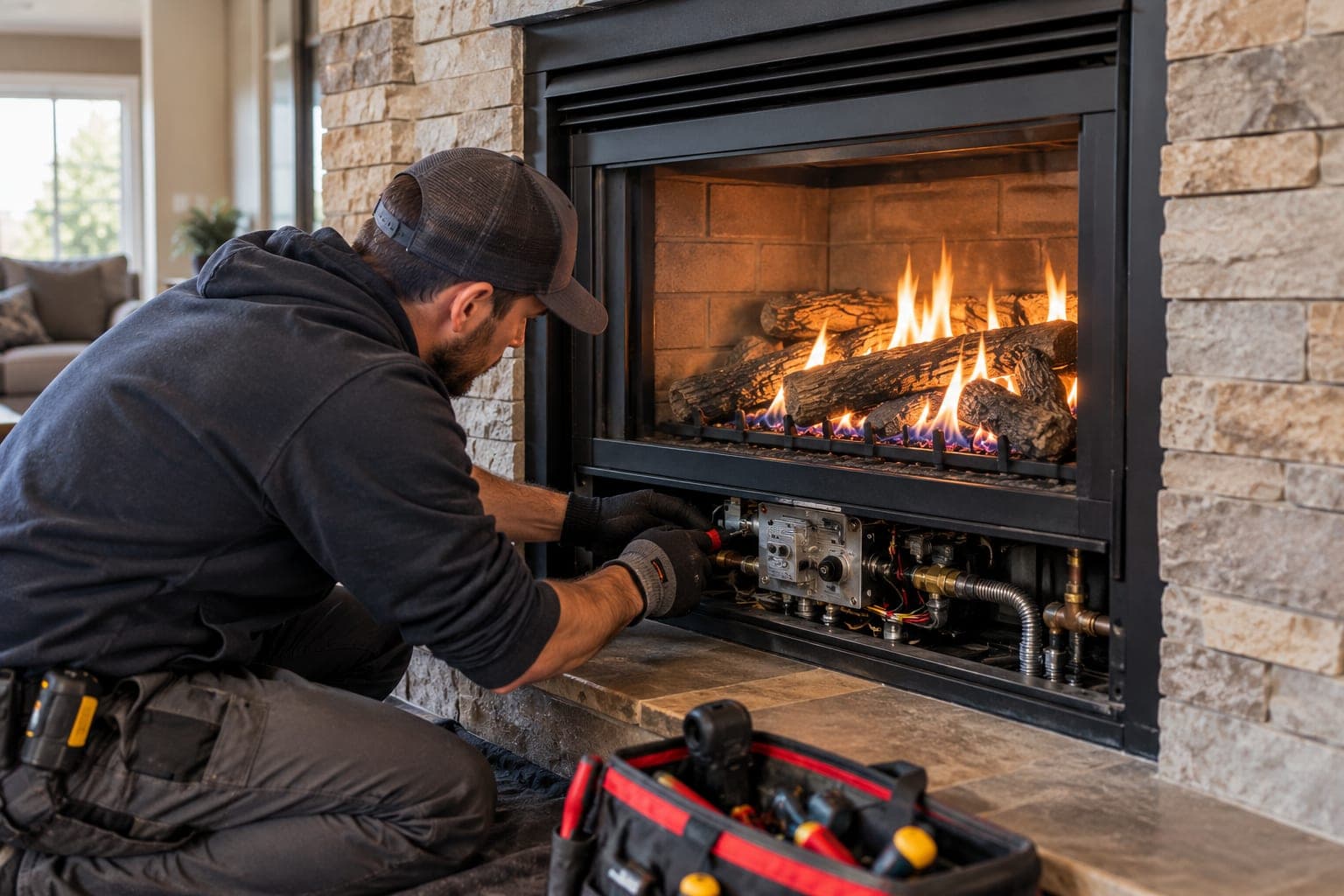
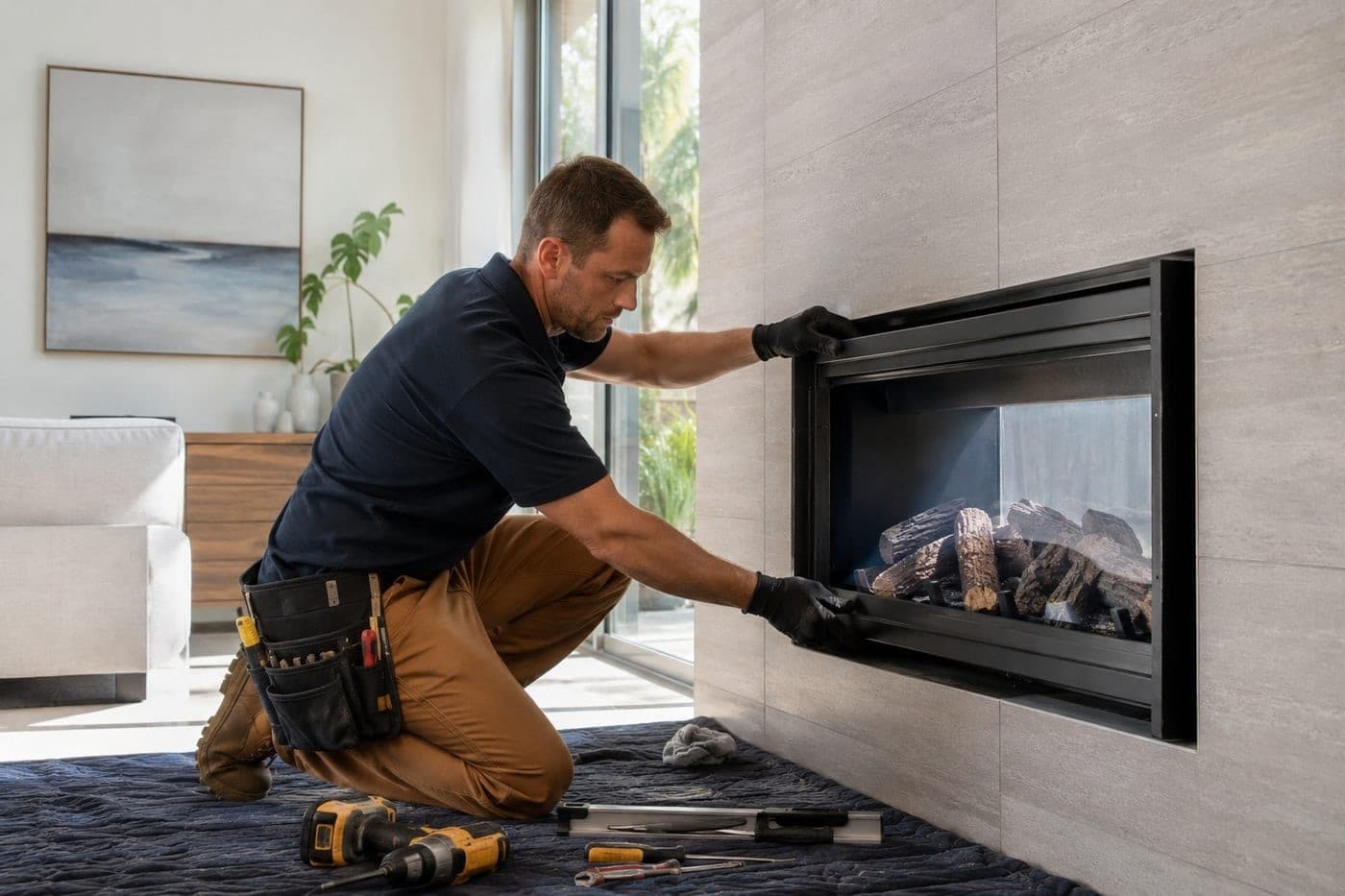
Some checks require taking the glass off and opening the unit up. These include cleaning the burner and pilot assembly, checking the thermocouple or thermopile, inspecting the glass gasket and confirming the venting is intact. That's the work in our gas fireplace maintenance service. Doing it in fall means any part that needs ordering arrives before you depend on the fireplace.
Fall fireplace safety
Fall brings its own risks around the hearth, mostly from things that weren't there in summer.
- Decorations. Dried leaves, garlands and candles look good on a mantel and burn easily. Keep them away from the glass and the hot area above it.
- Carbon monoxide alarms. Test them now, and replace any alarm past the date printed on the back.
- Hot glass. The front of a gas fireplace stays hot long after it's switched off. If young children are around, a safety screen is worth having.
- Odors. A faint dusty smell for a few minutes on the first burn is common. A smell of gas is not.
If you smell gas
Don't light anything or flip any switches. Get everyone out of the house, then call your gas utility or 911 from outside. Once the line has been declared safe, get in touch and we'll look at the fireplace itself.
For more household habits around the hearth, see our guide to fireplace safety.
Fall fireplace tips and tricks
- Use the blower. If your unit has one, it moves heat into the room instead of letting it collect behind the firebox. Keep the intake clean so it isn't pulling in dust.
- Keep the manual handy. It has the lighting steps, the log placement diagram and the approved glass cleaner, plus the model number we'll ask for.
- Run a test burn early. A short fire on a mild day reveals problems while there's still time to fix them.
- Think about heat, not just looks. Our efficient fireplace guide explains where heat goes and how to keep more of it in the room.
If you also have a wood-burning fireplace, our fireplace maintenance service covers sweeping and the masonry side. For a closer look at the parts named above, see the anatomy of a fireplace.
How gas fireplace service works
Logs set in the wrong place cause soot and incomplete burning. Blocked or damaged venting can push exhaust into the room.
Check ignition
Pilot, thermocouple or thermopile and igniter are tested.
Clean the burner
Burner ports, pilot assembly and logs are cleaned and logs placed per the manual.
Check venting
The vent and termination are checked for blockage and damage.
Test
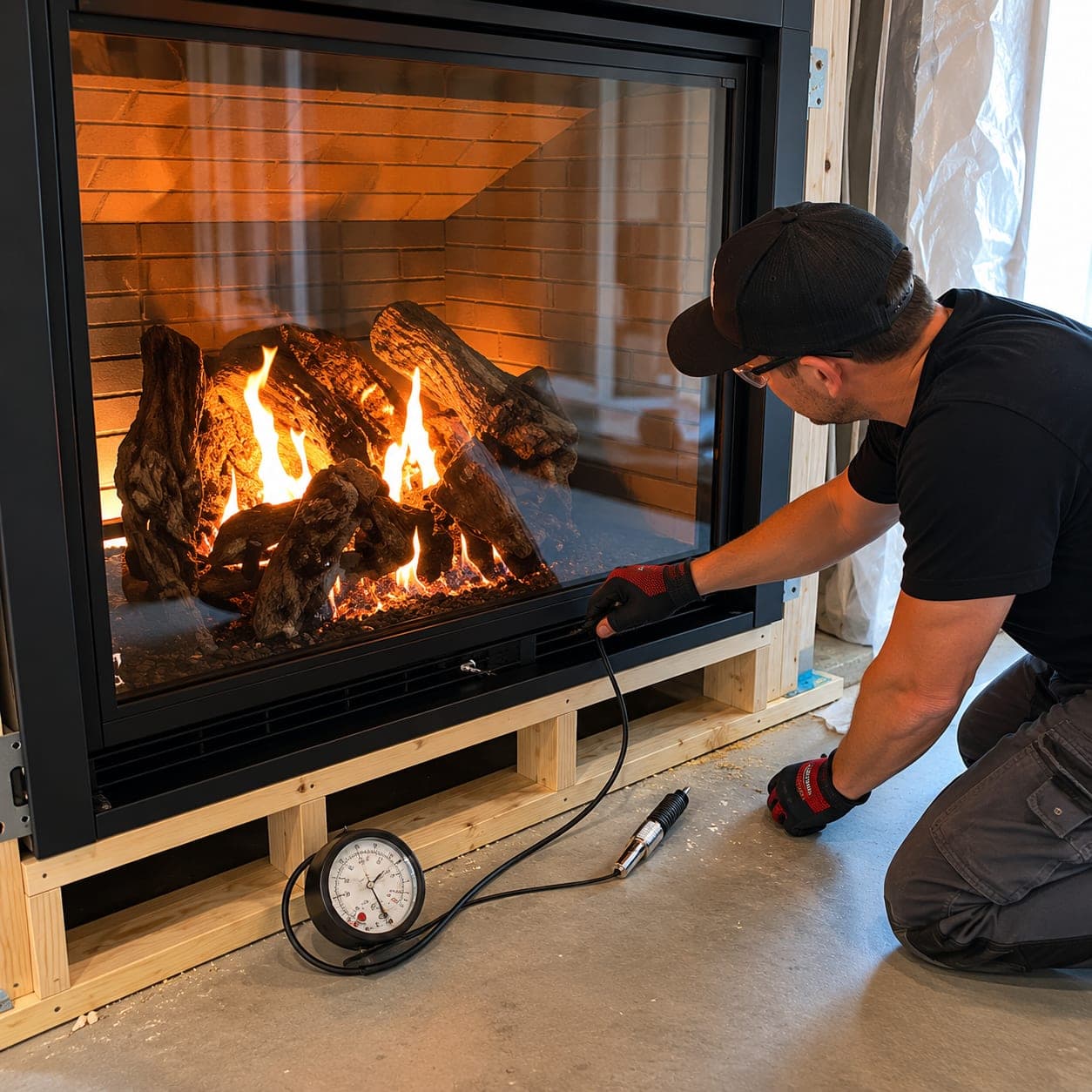
The unit is run and the flame and controls are checked.
What gets checked
- Burner ports
- Controls and remote
- Thermocouple or thermopile output
- Glass and gasket seal
- Vent and termination cap
- Pilot assembly and flame
If you smell gas
Leave the home right away, don't use switches or phones inside, and call your gas utility or 911 from outside.
Signs it's time for gas fireplace service & maintenance
- A gas smell (leave and call the utility first)
- The pilot won't light or keeps going out
- Yellow, lazy or uneven flames
- Soot on the glass or logs
- Glass that is cloudy, cracked or loose
Before the technician arrives
- Find the model number, usually on a plate under the lower grille.
- Note what happens when you try to light it.
- Turn the unit off and let it cool.
- Have the remote or wall switch working.