On this page
Reading your gas fireplace pilot light
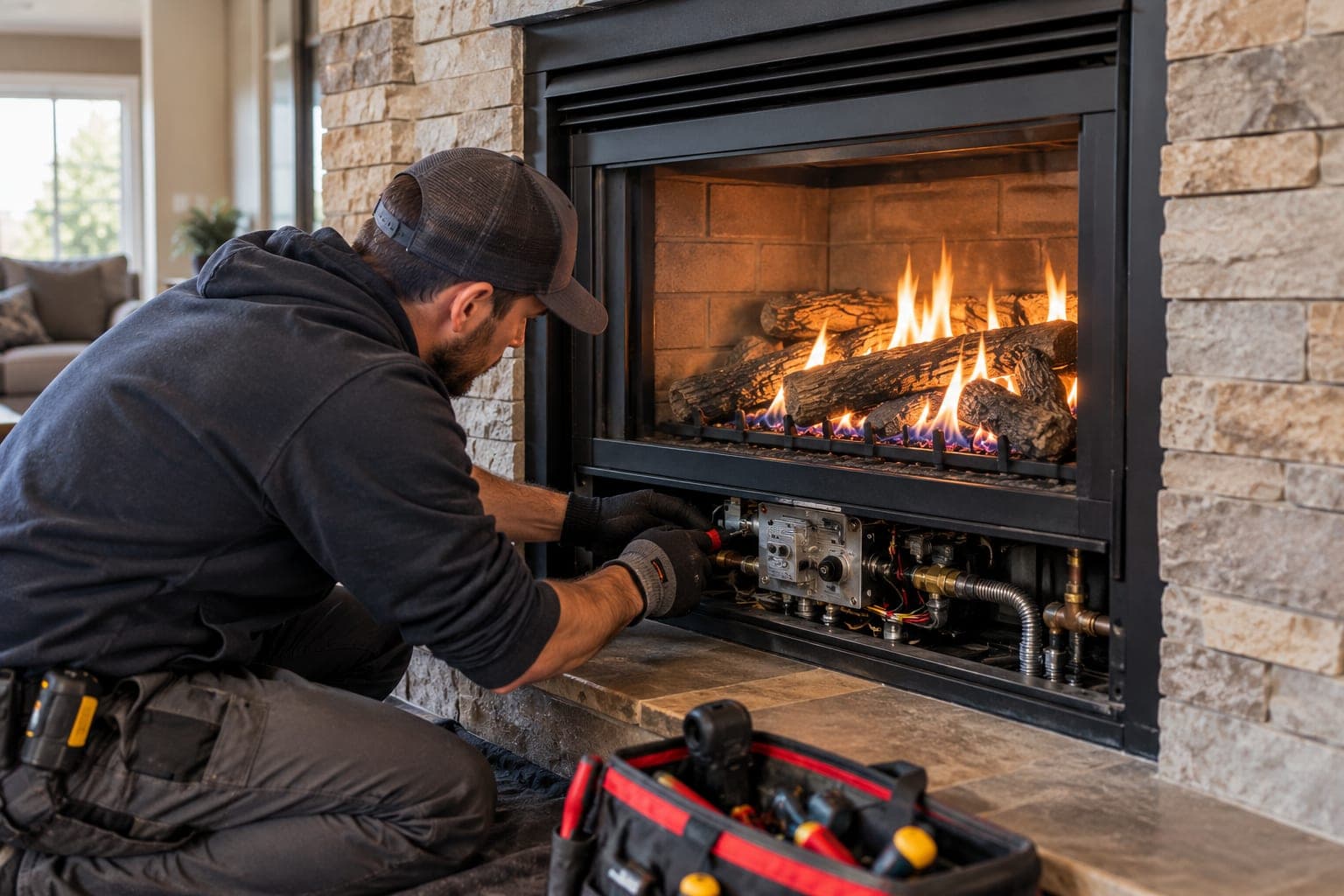
The pilot is a small flame with a big job. It heats a thermocouple or thermopile, which produces the tiny electrical signal that tells the gas valve it's safe to stay open. When that chain weakens anywhere, the fireplace shuts itself down. That shutdown is the safety system working, not failing. Our fireplace anatomy guide shows where these parts sit.
| What you see | Likely cause | What we check |
|---|---|---|
| Pilot lights, then goes out when you let go of the knob | Weak thermocouple or pilot flame not reaching it | Millivolt output and flame contact |
| No spark, or a spark but no flame | Igniter, electrode gap, dead battery or air in the line | Spark path, battery pack, gas reaching the pilot |
| Pilot stays lit but the main burner won't come on | Low thermopile output, wall switch or remote fault | Millivolts under load, switch wiring, receiver |
| Small, yellow or lifting pilot flame | Dirty orifice, spider webs, debris in the pilot hood | Pilot assembly cleaning and inspection |
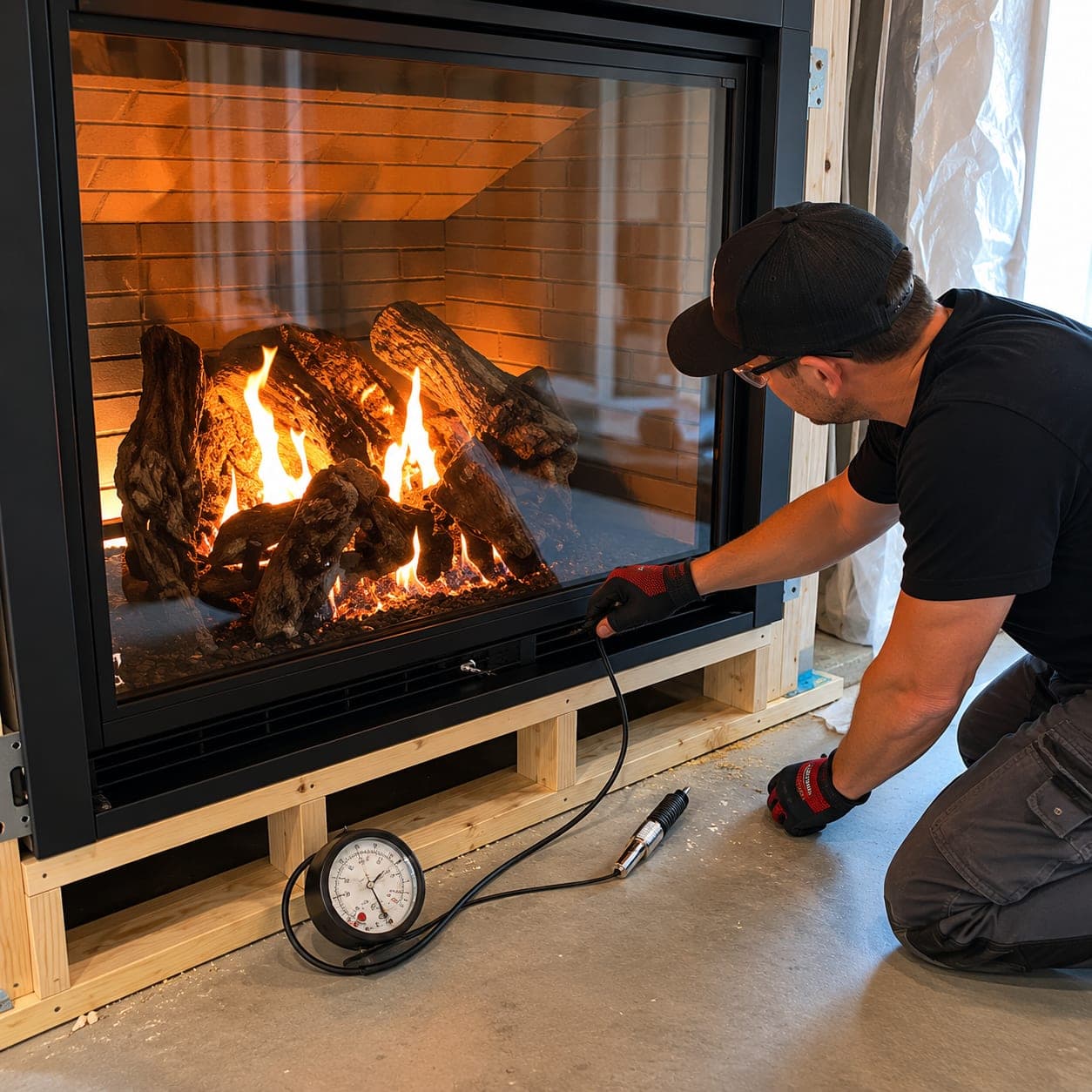
| Pilot drops out when the burner fires | Low gas pressure or a venting problem | Supply pressure and vent condition |
Gas fireplace won't light? Start here
A few causes take thirty seconds to rule out. Check that the gas shutoff near the fireplace is open, that the wall switch is on, and that the remote and receiver batteries are fresh. Then follow the lighting instructions printed on the label inside the unit, step by step. If the pilot still won't hold, the problem is inside the valve, sensor or ignition circuit. That's where a repair visit makes sense.
Smell gas? Stop.
Don't try to relight anything, and don't flip switches. Leave the house and call your gas utility or 911 from outside. Our fireplace safety guide covers more warning signs.
TS8CB gas fireplace pilot light issues
If you searched a model number like TS8CB, you already know the most useful fact: exactly which unit you have. Pilot assemblies, thermocouples and igniters vary from model to model, so we confirm the number on the rating plate and work from that unit's manual instead of guessing at a generic part. One more thing worth knowing: electric units have no pilot at all. If yours is electric, see our electric fireplace repair page instead.
Gas fireplace pilot light repair in Connecticut
A typical repair might mean cleaning the pilot hood and orifice, replacing a thermocouple or thermopile, re-gapping or replacing an igniter, or tracing a wiring fault between the switch and the valve. Estimates are free, and same-day service is offered where the schedule allows. We take calls 24 hours a day, Sunday through Friday, including emergencies. A clean, correctly adjusted pilot also helps the burner run the way it should, which our efficient fireplace guide explains.
What the visit covers
Blocked or damaged venting can push exhaust into the room. Logs set in the wrong place cause soot and incomplete burning.
Check ignition
Pilot, thermocouple or thermopile and igniter are tested.
Clean the burner
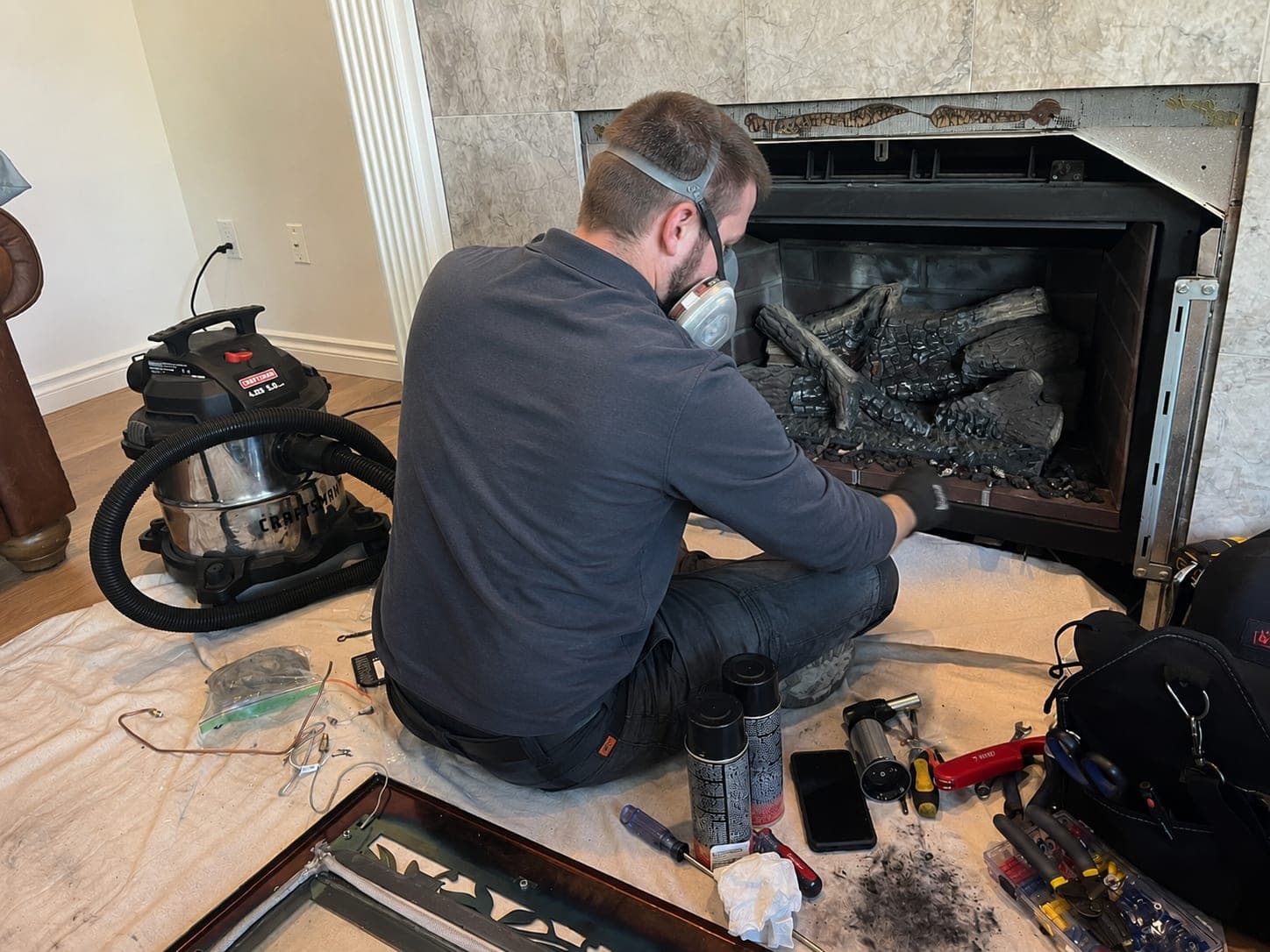
Burner ports, pilot assembly and logs are cleaned and logs placed per the manual.
Check venting
The vent and termination are checked for blockage and damage.
Test
The unit is run and the flame and controls are checked.
What the technician checks
- Glass and gasket seal
- Burner ports
- Controls and remote
- Vent and termination cap
- Log placement
Signs it's time for gas fireplace repair
- The pilot won't light or keeps going out
- The unit clicks but won't ignite
- Soot on the glass or logs
- Yellow, lazy or uneven flames
- A gas smell (leave and call the utility first)
Getting ready for the visit
- Note what happens when you try to light it.
- Turn the unit off and let it cool.
- Find the model number, usually on a plate under the lower grille.
- Have the remote or wall switch working.
Carbon monoxide
A blocked or damaged flue can push carbon monoxide into the home. If an alarm sounds or anyone feels dizzy or sick near the fireplace, get everyone outside and call 911.