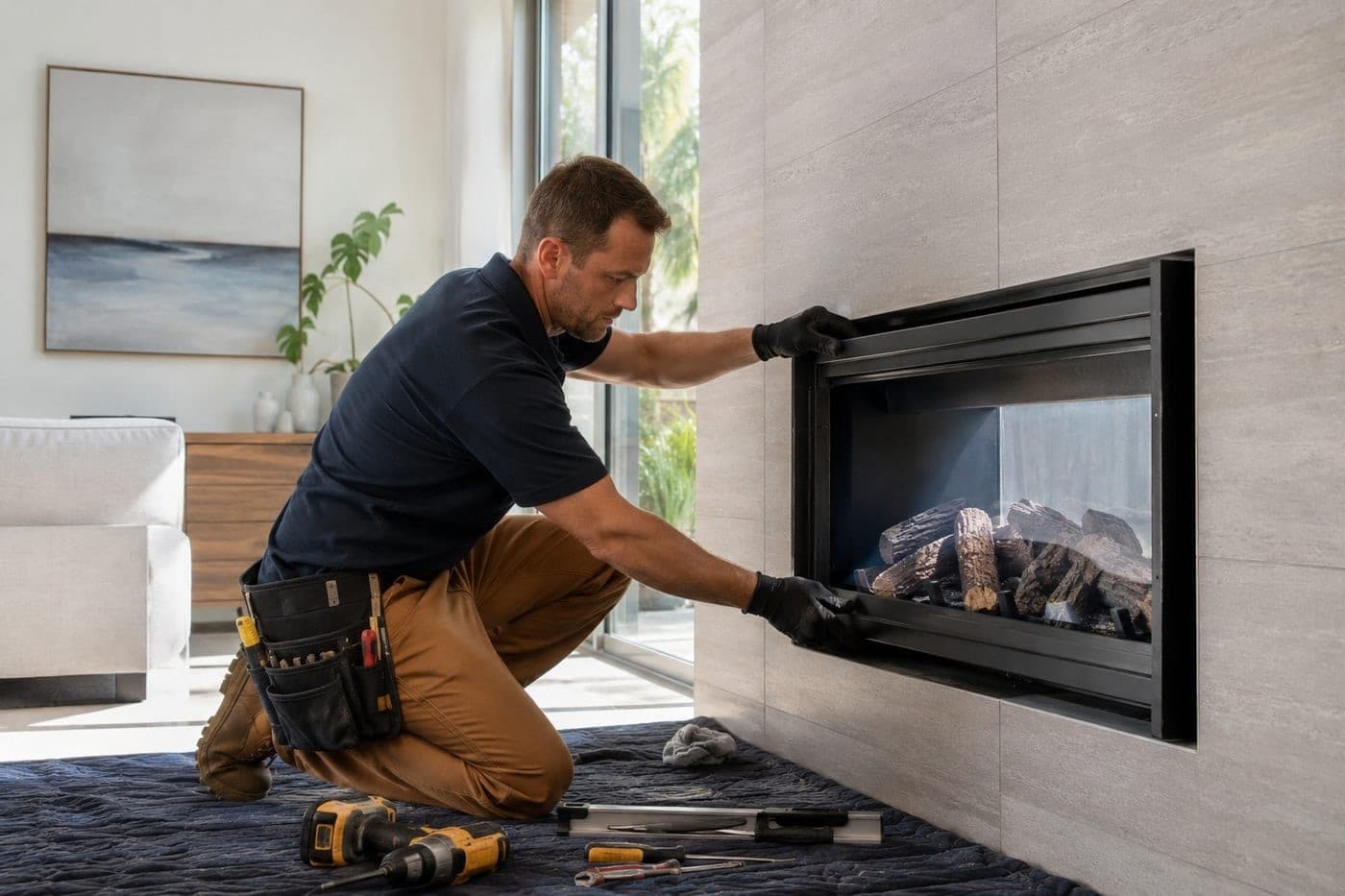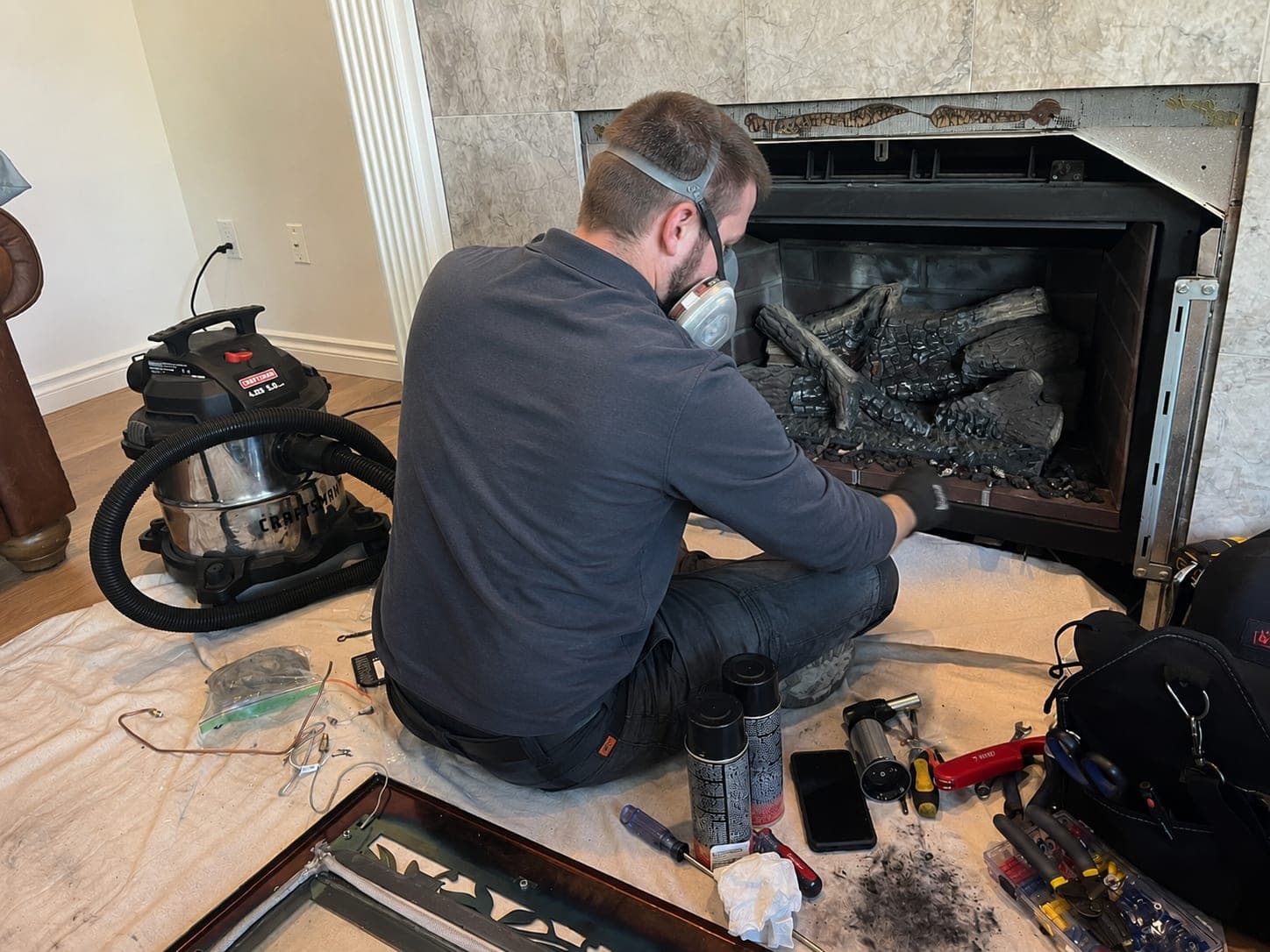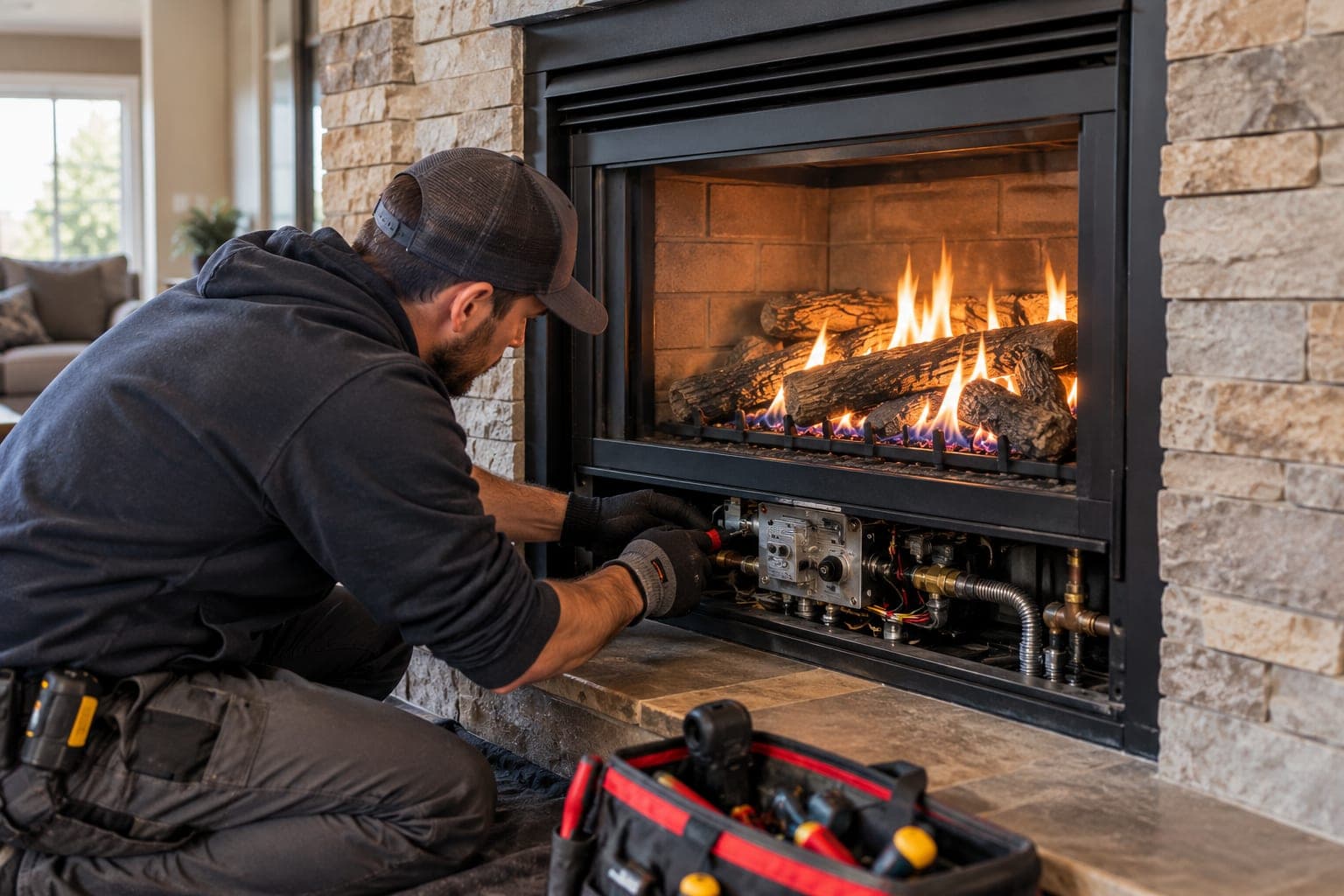
Most people searching gas fireplace vs something are making one of three decisions. They want to know whether to keep burning wood or switch to gas, whether gas is worth it over a simpler electric unit, or which kind of gas setup fits the fireplace they already have. Each choice depends on your existing chimney, how much heat you want, and how much routine care you are willing to do.
If some terms below are unfamiliar, like firebox, smoke chamber, damper or flue, our guide to how a fireplace is put together explains each part and what it does.
Quick comparison: Gas, Wood-Burning and electric
| Factor | Gas fireplace | Wood-burning fireplace | Electric fireplace |
|---|---|---|---|
| Starting a fire | Switch, wall control or remote | Build and tend a fire by hand | Switch or remote |
| Real heat output | Moderate to strong, depending on unit and venting | Open fireplaces lose much of their heat up the chimney | Small supplemental heat from a built-in heater |
| Venting required | Yes, except vent-free models | Yes, a working chimney and flue | No |
| Fuel | Natural gas or propane | Seasoned firewood | Household electricity |
| Routine upkeep | Annual inspection and service | Regular sweeping, ash removal, creosote control | Occasional cleaning, little else |
| Works in a power outage | Many models can, check yours | Yes | No |
| Flame realism | Good, but not a wood fire | The real thing, sound and smell included | Simulated flame effect |
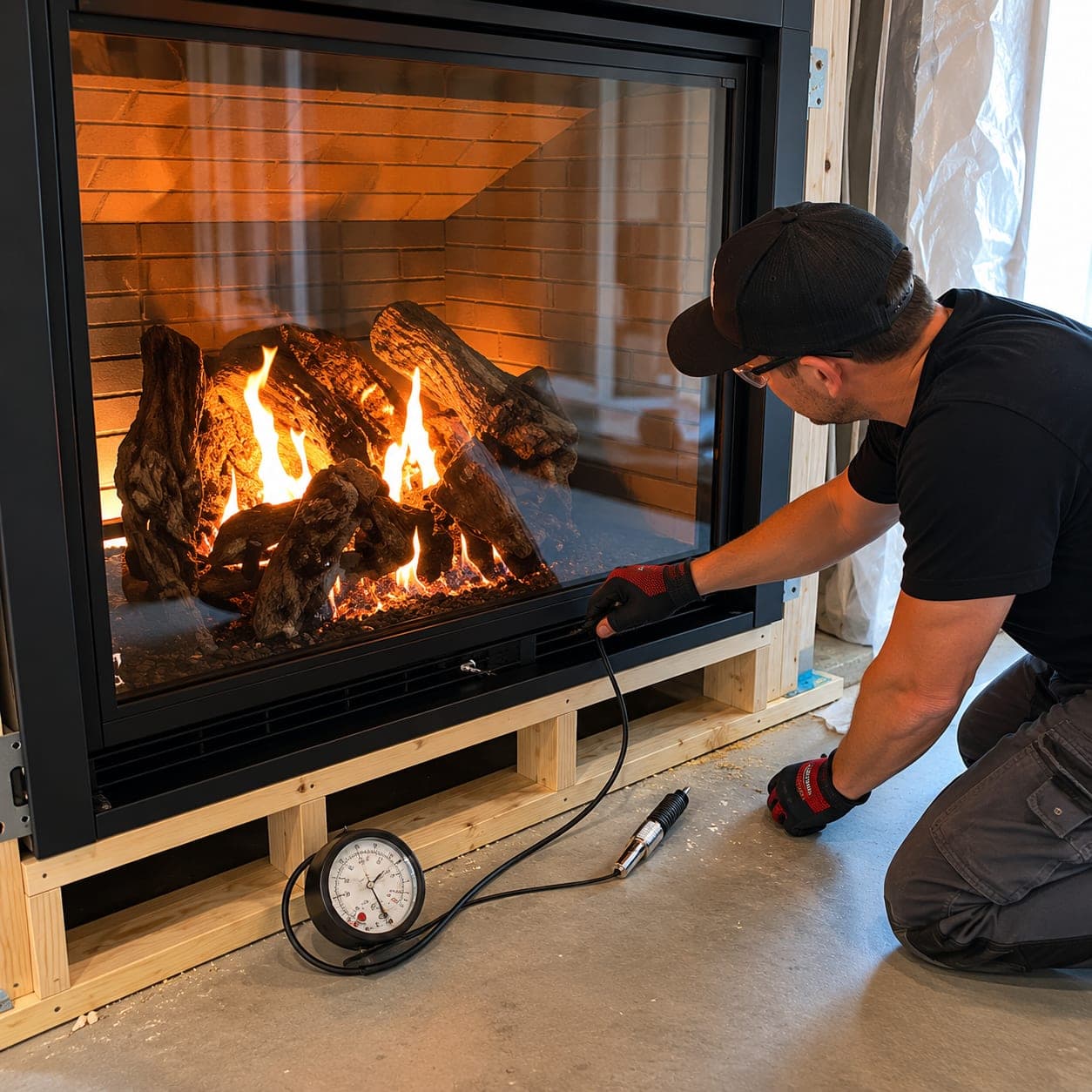
Gas fireplace vs Wood-Burning fireplace
This is the most common comparison. A wood fire gives you the sound, the smell and the satisfaction of building it yourself. It also comes with chores: hauling and storing wood, cleaning out ash, and keeping the chimney swept so creosote does not build up in the flue. An open wood-burning fireplace also pulls warm room air up the chimney, so it often adds less heat than people expect.
Gas trades some of that experience for convenience. You get a steady flame at the push of a button, no ash, and far less creosote. A sealed gas unit with glass in front typically heats a room much better than an open wood fire. For a deeper look at heat loss and output, see our guide to getting more heat from an efficient fireplace.
| Feature | Wood-burning | Gas |
|---|---|---|
| Ambiance | Crackle, scent, real embers | Clean, consistent flame |
| Effort per fire | Build, tend and clean up | Turn it on, turn it off |
| Chimney care | Sweeping to manage creosote | Inspection of venting and components |
| Biggest risk to watch | Chimney fires from creosote | Gas leaks and carbon monoxide from poor venting |
Ambiance
- Wood-burning
- Crackle, scent, real embers
- Gas
- Clean, consistent flame
Effort per fire
- Wood-burning
- Build, tend and clean up
- Gas
- Turn it on, turn it off
Chimney care
- Wood-burning
- Sweeping to manage creosote
- Gas
- Inspection of venting and components
Biggest risk to watch
- Wood-burning
- Chimney fires from creosote
- Gas
- Gas leaks and carbon monoxide from poor venting
Converting an existing wood fireplace to gas
If you already have a masonry fireplace, a conversion is often the path of least resistance. Before any gas appliance goes in, the firebox, smoke chamber and chimney should be inspected. Damage that may have gone unnoticed with occasional wood fires can matter a lot once a gas appliance is venting through that space. Watch for cracked firebox brick and what causes it, as well as a deteriorating smoke chamber that needs repair, since both are usually addressed before conversion work starts.
Gas fireplace vs electric fireplace
Electric fireplaces are the simplest to install. Most need only an outlet or a dedicated circuit, with no chimney, no gas line and no venting. That makes them a good fit for apartments, condos, bedrooms and rooms where running a vent is impractical. Their heater is modest, though, and the flame is a visual effect rather than a fire.
Gas makes more sense when you want meaningful heat, a real flame, or a fireplace that may still run when the power is out. Electric makes more sense when venting is impossible or the fireplace is mainly decorative. If you are leaning electric, it helps to see what an electric fireplace installation involves. If you already own one that has stopped working, read about electric fireplace repair before you replace it.
Power outages
Gas units with a standing pilot or millivolt valve can often run without household power. Many units with electronic ignition need a battery backup to light during an outage. Check your owner's manual instead of assuming.
Gas fireplaces vs each other: Inserts, logs and Built-In units
Gas fireplaces are not one product. The type you choose affects heat, cost of installation and how much of your existing fireplace gets reused.
| Option | What it is | Best for | Trade-offs |
|---|---|---|---|
| Gas logs | Ceramic logs and a burner set into an existing open fireplace | Keeping the look of a traditional fireplace | Mostly decorative; vented logs need the damper open, so much of the heat goes up the chimney |
| Gas insert | A sealed firebox with glass that slides into an existing fireplace and vents through a liner | Turning a drafty masonry fireplace into a real heat source | Changes the look of the opening; needs a properly sized liner |
| Built-in gas fireplace | A complete factory-built unit framed into a wall | New construction, additions or rooms with no fireplace | More framing and venting work; needs a gas line run |
Direct vent vs B-vent vs vent-free
- Direct vent: A sealed unit that draws combustion air from outside and sends exhaust back out, usually through a coaxial pipe. It keeps room air out of the combustion process and is the most common choice for inserts and built-ins.
- B-vent (natural vent): Uses room air for combustion and vents exhaust vertically. It is simpler in some layouts but less efficient, because it uses air you have already heated.
- Vent-free: No flue at all, so nearly all the heat stays in the room, but combustion byproducts and moisture stay there too. Many are limited in run time, include oxygen depletion sensors, and are restricted in some jurisdictions. Ask your local building department before choosing one.
Gas still needs a working vent
Gas burns cleaner than wood, but a blocked, disconnected or undersized vent can push carbon monoxide into the home. Keep working CO alarms near sleeping areas and on every level, and have venting checked once a year.
Gas inserts vs wood stoves and wood inserts
If heat is your main goal, the real contest is often a gas insert vs a wood-burning insert or freestanding wood stove. A modern wood stove can heat a large area and works without electricity or a gas supply, but it needs firewood, regular cleaning and sweeping. A gas insert gives steady, controllable heat with less work. Owners of existing wood units sometimes find a repair is all they need. Read about repairing a wood stove or insert if that is your situation.
Upkeep compared over a year
| Task | Gas | Wood | Electric |
|---|---|---|---|
| Chimney or flue sweeping | Rarely needed, but vent is checked | Based on use and creosote buildup | Not needed |
| Annual inspection | Yes: burner, pilot, valve, venting, glass seal | Yes: chimney, flue, firebox, damper | Not usually |
| Glass cleaning | Film builds up over time | On stoves and doors | Occasional dusting |
| Common repairs | Pilot, thermocouple or thermopile, igniter, glass gaskets | Firebox brick, damper, crown, liner | Heater, lights, control board |
Which one fits your home? A decision checklist
Answer these before you choose
- Do you want real heat, or mostly the look of a fire?
- Do you have an existing chimney, and has it been inspected recently?
- Is natural gas available, or would you rely on propane?
- Can a vent run outside from the location you want?
- How do you feel about hauling wood and cleaning ash?
- Do you need heat during a power outage?
- Is the fireplace for a main living area or a secondary room?
A sensible order of operations
Inspect what you have
Find out the condition of the firebox, smoke chamber, damper and flue before deciding anything.
Pick the fuel
Choose gas, wood or electric based on heat needs, effort and venting options.
Pick the format
For gas, choose logs, an insert or a built-in unit, then the venting type.
Plan the work
Account for repairs, a liner, a gas line or electrical work before installation begins.
If you would like a second opinion on your existing fireplace before you choose, get in touch to request a free estimate.