On this page
Cleaning a direct vent fireplace
A direct-vent gas fireplace is sealed behind glass and vents through a pipe inside a pipe. The inner pipe carries exhaust out, and the outer one brings combustion air in. Both run to a termination cap on an outside wall or the roof. Fireplace vent cleaning for these units covers that whole path: the termination, the vent pipe and the firebox at the other end. A problem anywhere along it shows up at the flame.
These are common signs that the vent or burner needs attention:
- Flames that turn tall, yellow and lazy instead of crisp
- Black soot on the glass or the logs
- A pilot that won't stay lit, or a burner that shuts off by itself
- An unusual smell when the fireplace runs
- Leaves, wasp nests or bird nests visible at the outside cap
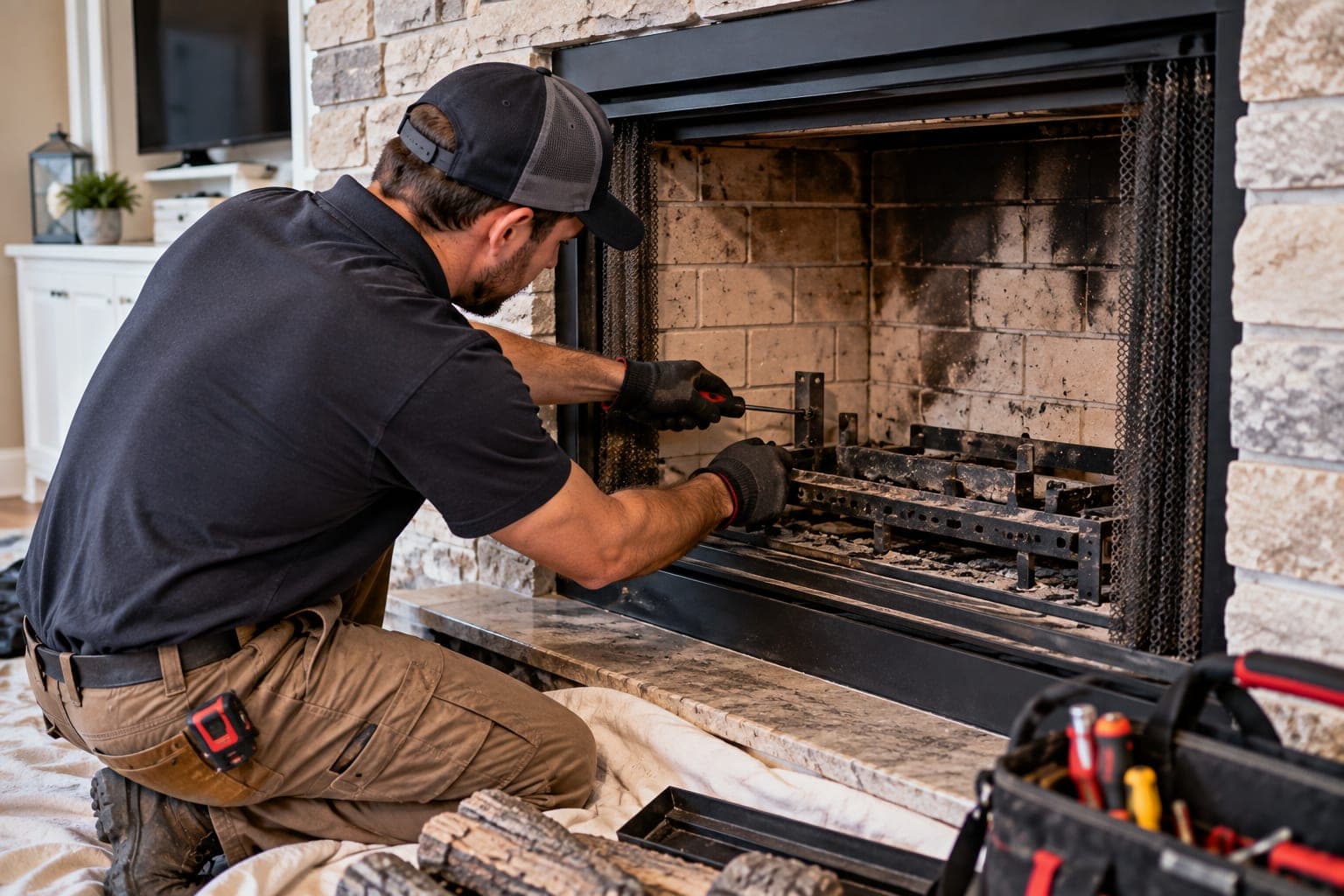
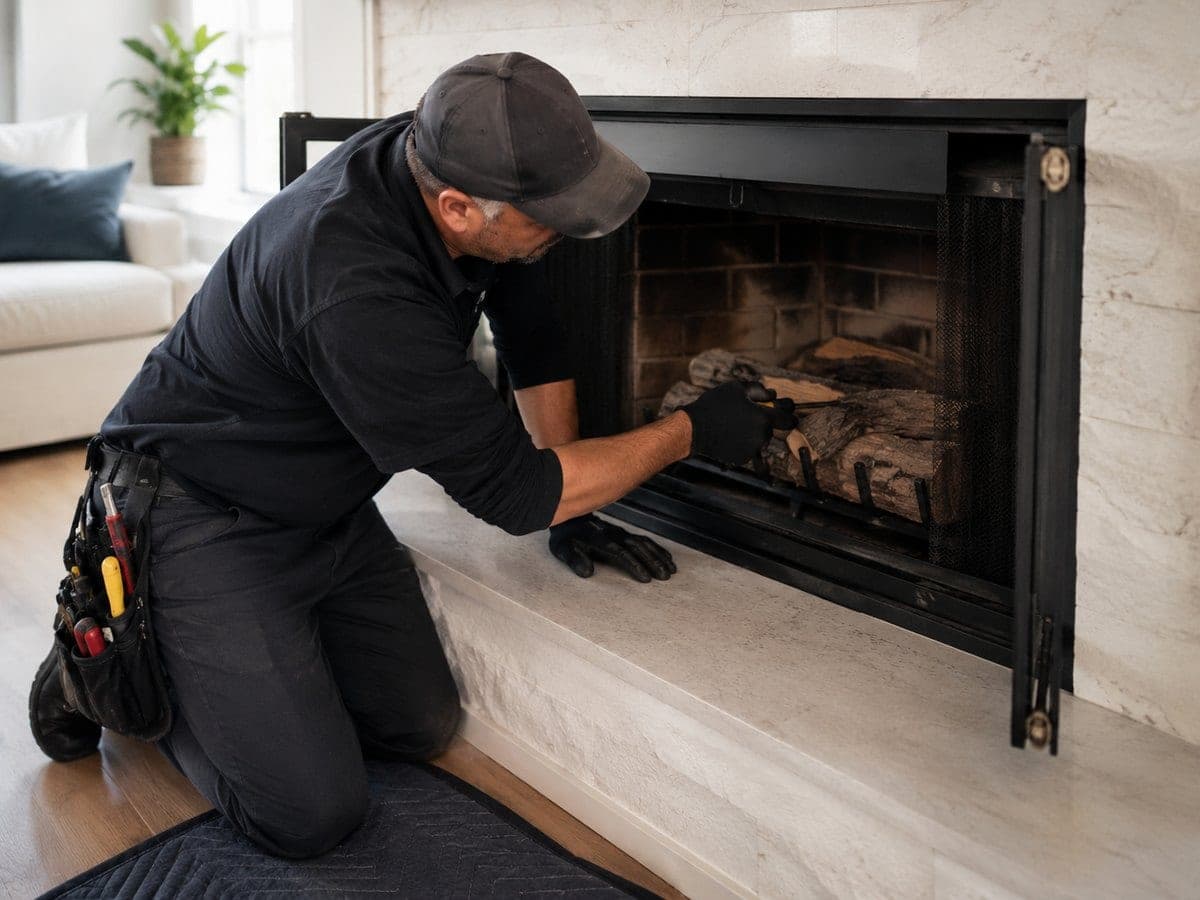
Inside the fireplace, cleaning covers the burner ports, pilot assembly, log set and glass. Outside, the termination is cleared of nests and debris. Glass with a white or gray film is cleaned on the same visit, which is explained further in how gas fireplace cleaning works.
Soot is a warning sign
Soot on a gas fireplace's glass means the gas isn't burning cleanly. It can come from a blocked vent, logs that have shifted or a dirty burner. Stop using the fireplace and have it checked. Any home with a gas fireplace should also have a working carbon monoxide alarm near the room.
Direct-vent fireplace cleaning in Connecticut homes
In Hartford homes we service direct-vent fireplaces the same way whether the termination is low on a side wall or up on the roof. The outside cap and the inside unit are cleaned on the same visit, so the whole vent path is covered.
Fireplace vent cleaners vs. a quick wipe-down
Some upkeep is reasonable for a homeowner to do. You can wipe cool glass with a cleaner made for fireplace glass and gently clear leaves away from a ground-level termination. Anything beyond that is work for professional fireplace vent cleaners. Logs have to go back exactly where the manufacturer specifies, burner ports clog in ways that aren't obvious, and vent joints need to stay sealed.
Gas fireplaces that vent up an existing masonry chimney instead of a sealed pipe also need the flue checked. There's more on that in gas fireplace vent cleaning. Wood-burning fireplaces need a different job focused on ash and creosote, so see the fireplace cleaning service for those.
Vent cleaning across Connecticut
We clean fireplace vents in Hartford and the surrounding towns in Connecticut, and we do the work from the first look to the final test-fire. Estimates are free, and same-day service is offered when the schedule allows.
How the visit works
Debris and nests can block the flue completely and trap carbon monoxide. Creosote is flammable: a thick layer is the usual fuel for a chimney fire.
Protect the room
Drop cloths go down around the hearth and the opening is sealed so soot stays out of the house.
Look first
The firebox, damper and visible flue are checked before cleaning, so you know the condition things were in.
Brush the flue
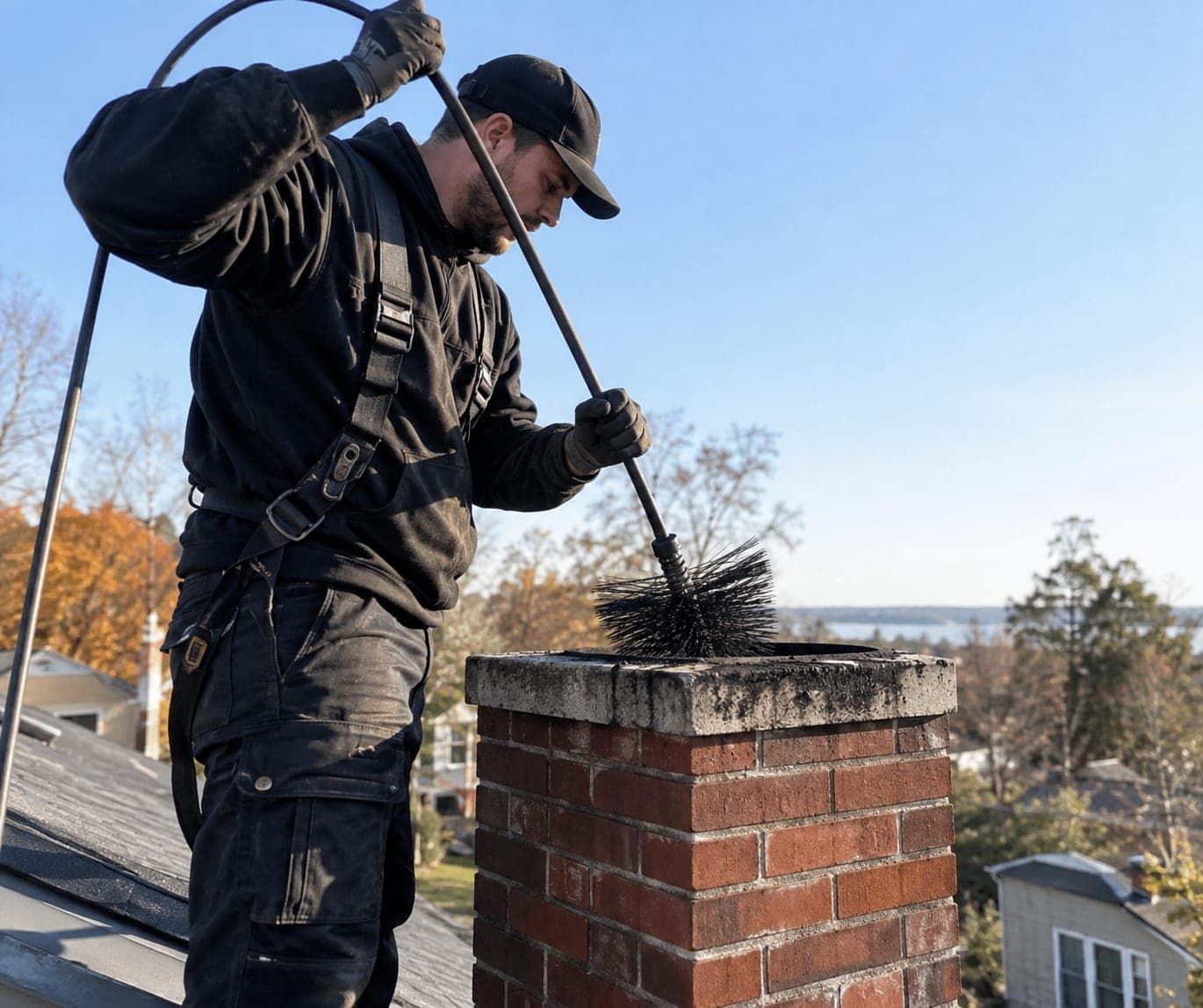
Rods and brushes sized to the flue clear soot and loose creosote from top to bottom.
Clean the smoke chamber and firebox
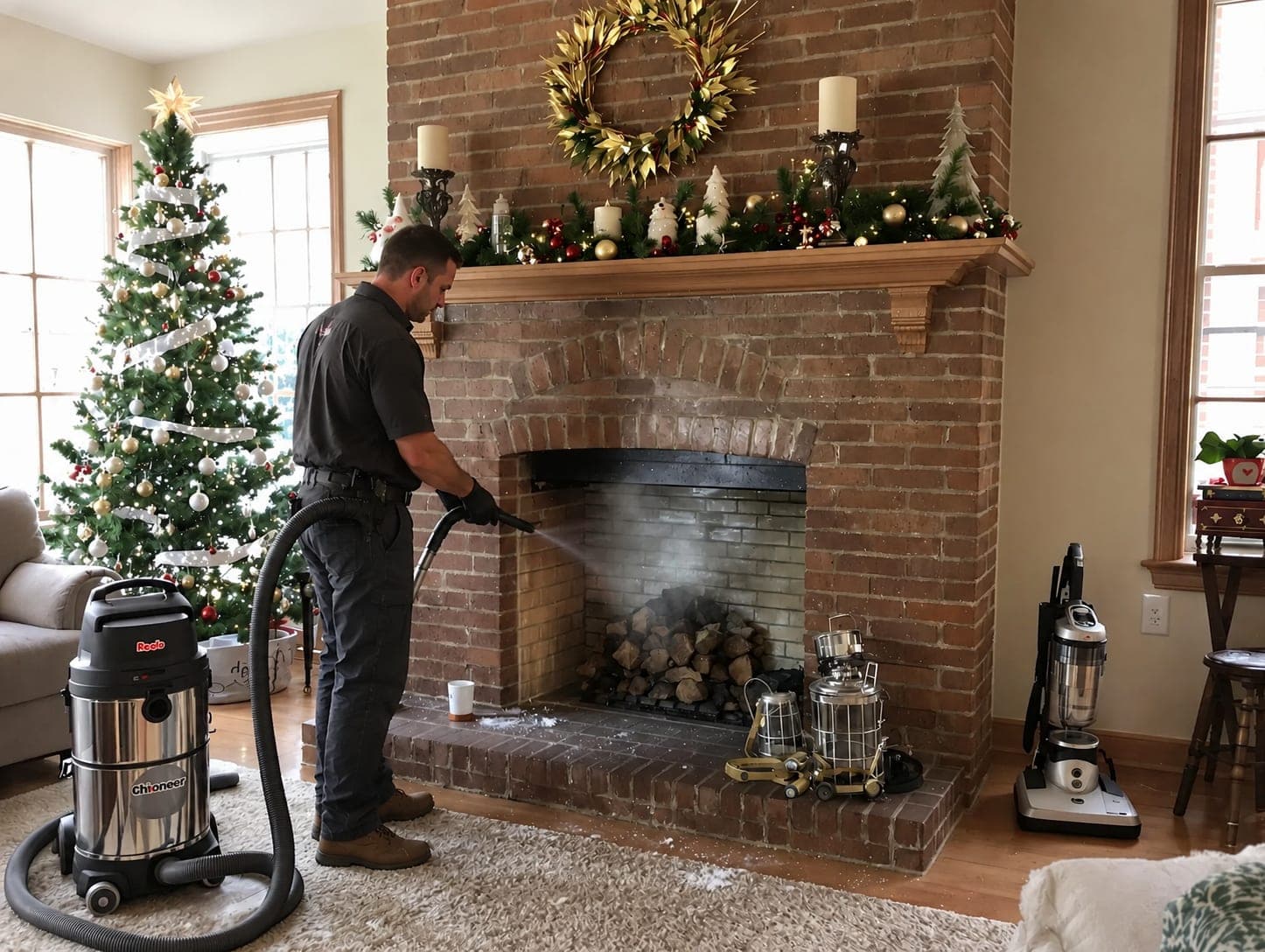
The areas just above the fire, where buildup collects fastest, are cleaned and vacuumed.
Explain what was found
You hear what was cleaned and anything that needs watching or repair, before anything else is suggested.
Signs to watch for
- A campfire or tar smell from the fireplace, especially on warm or damp days
- Fires that are hard to start or keep going
- A full burning season since the last cleaning
- Soot marks on the face of the fireplace above the opening
- Black, flaky or shiny glazed deposits inside the firebox or flue
Carbon monoxide
A blocked or damaged flue can push carbon monoxide into the home. If an alarm sounds or anyone feels dizzy or sick near the fireplace, get everyone outside and call 911.
How to prepare
- Let the fireplace or stove cool completely — ideally no fire for 24 hours before the visit.
- Make sure the technician can reach the roof or attic access if it's needed.
- Move rugs, photos and anything fragile away from the work area.
- Keep pets in another room while the work area is open.
What the technician checks
- Cap and screen condition, where it can be seen safely
- Smoke shelf and smoke chamber
- Creosote level and type in the flue
- Damper opening, closing and seal
- Firebox brick or panels and mortar joints
- Visible liner sections for cracks or gaps
- Draft — how readily smoke moves up the flue