How to clean creosote off the surfaces you can reach
Visible creosote is usually a thin, sticky film, so you want to dissolve it, not grind it off. Always start with a cold appliance, because cleaner sprayed on hot glass can crack it.
Surface by surface
Fireplace and stove glass
Use a cleaner labeled for fireplace or stove glass and a soft cloth. Skip razor blades and abrasive pads on ceramic glass. They leave scratches that catch residue next time.
Firebox brick or panels
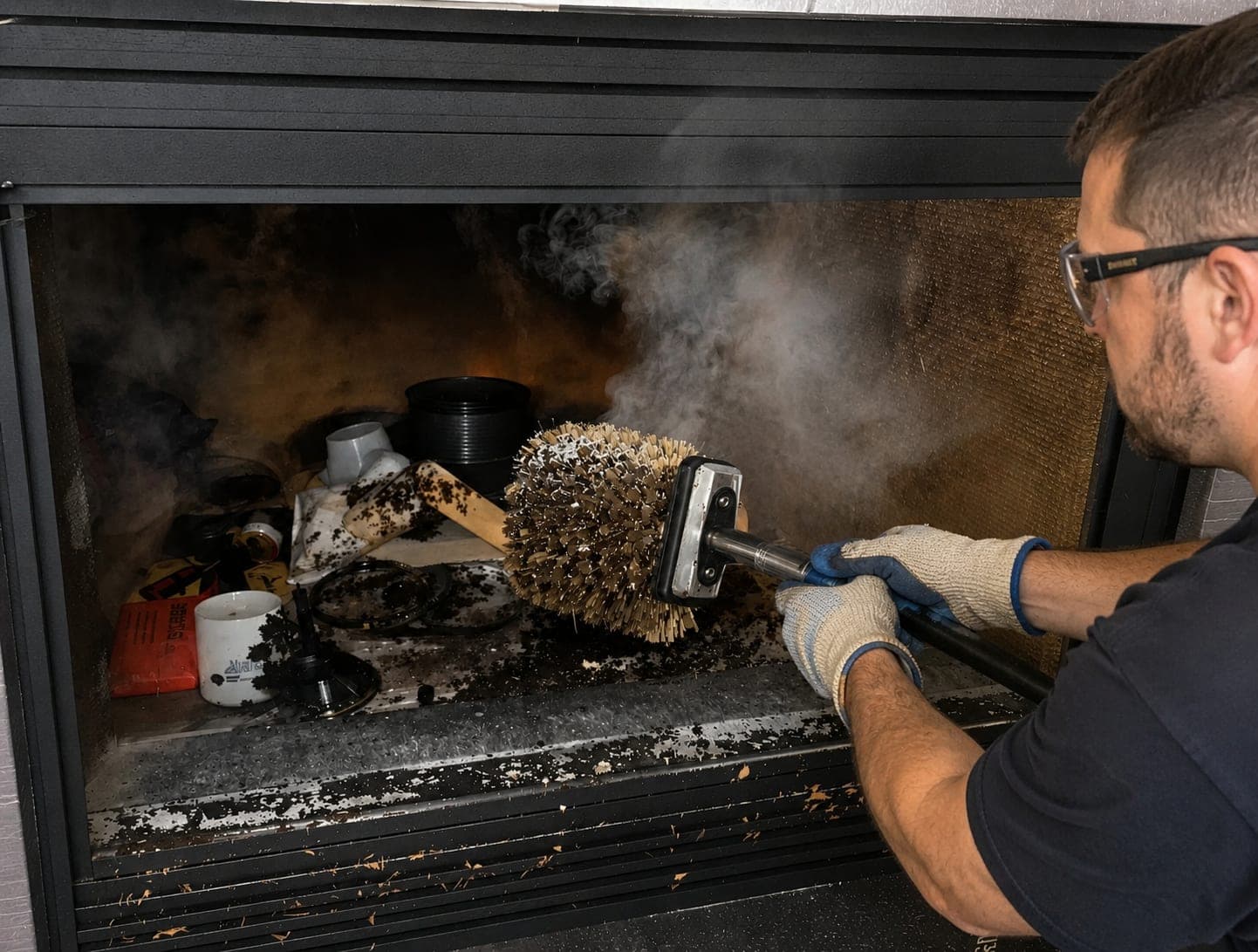
Vacuum loose ash first, then work in a masonry-safe cleaner with a stiff nylon brush. Wire brushes can chip refractory panels.
Stove and insert surfaces
Follow the manufacturer's care instructions for painted or enameled finishes. Harsh solvents can strip them.
Door frames and gaskets
Wipe gaskets gently. A flattened or worn gasket lets air leak in, which can cause smoky burns and more staining.
If the glass won't come clean or the doors no longer seal, that's a repair job. We also handle fireplace glass replacement and door repair.
Clean burn and reduced creosote
Creosote on the glass means smoke cooled before it left the appliance, and the same thing is happening inside the chimney. A cleaner, hotter burn produces less of it:
- Burn seasoned hardwood that's dry enough to show cracked ends and sound hollow when knocked together
- Give the fire plenty of air while it gets going instead of turning it down right away
- Build smaller, hotter fires instead of one big smoldering load overnight
- Never burn trash, cardboard, painted wood or pressure-treated lumber
- Keep the damper fully open while the fire burns
Good habits slow buildup but don't stop it. Knowing the warning signs that a chimney is due for cleaning helps you catch it early. To understand why the stain keeps coming back, read about what drives creosote to build up.
When to clean creosote out of the flue, not just off the glass
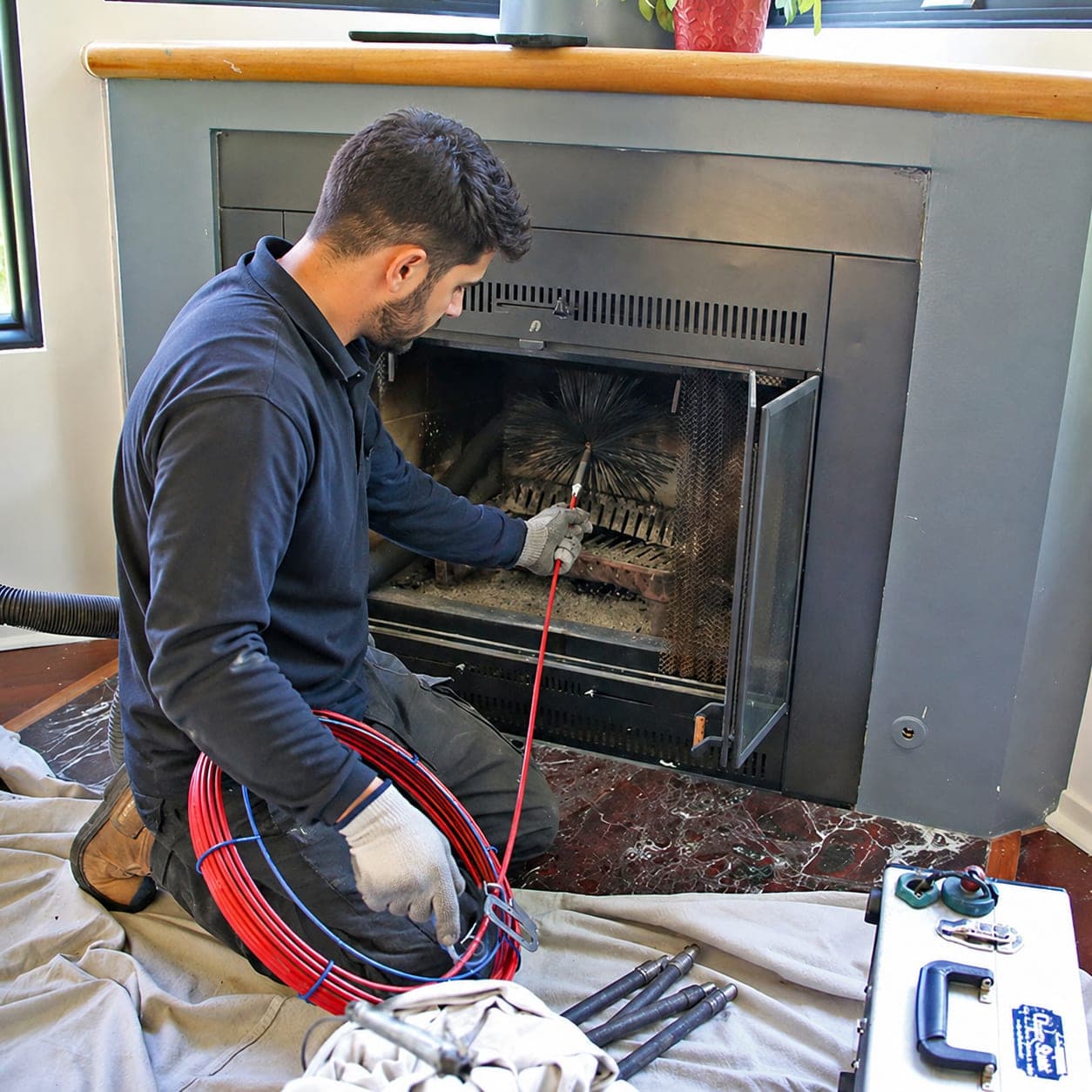
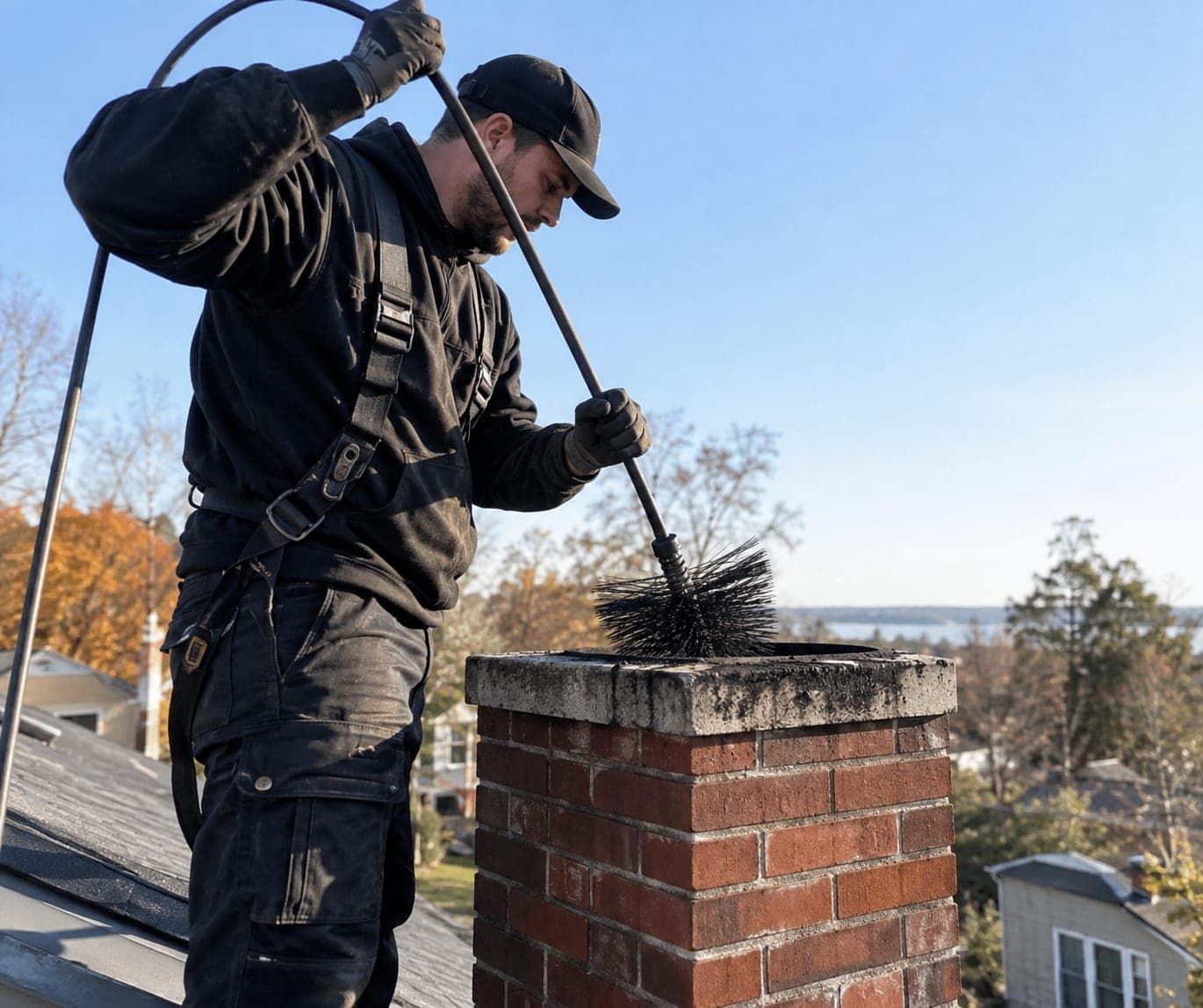
Surface cleaning only reaches what you can see. If you're wiping heavy residue off the glass every few fires, the flue almost certainly holds more. We do fireplace cleaning, wood stove cleaning and fireplace insert cleaning for homes in Hartford and across Connecticut, and a full chimney cleaning clears the liner from the smoke chamber to the top. For homes that burn often, scheduling a cleaning every year is the easiest way to stay ahead of it. It also helps to know the visible signs of heavy creosote buildup.