What creosote is made of
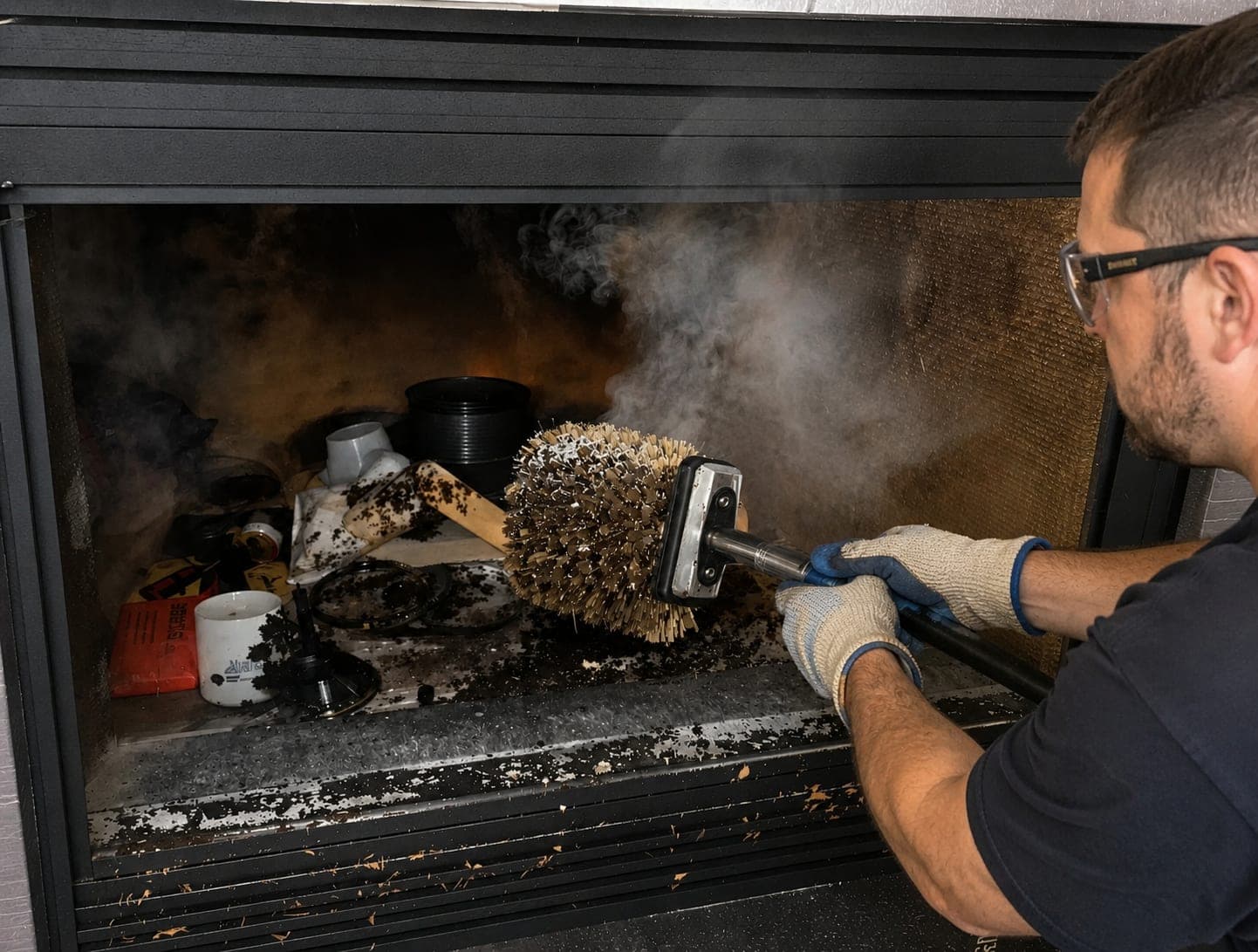
Wood never burns completely. Part of it leaves the fire as smoke made up of water vapor, unburned wood gases, tars and fine particles. As that mix rises and cools, it condenses on the chimney walls, much like steam beading on a cold window. That residue is creosote.
It takes three general forms, and one flue often has more than one:
- Sooty and powdery: dull black and easy to brush away
- Flaky and crunchy: porous flakes backed by tar that cling harder
- Glazed: a hard, shiny, tar-like coating that can drip and puddle
Regular cleaning aims to keep deposits in that first, easy form. For residue you can already see on doors and brick, here's how to clean creosote residue off glass and masonry.
Why creosote is a fire hazard
Creosote is fuel. Once a layer coats the flue, a hot fire or a stray ember can ignite it, and a chimney fire can get much hotter than the chimney is built to handle. Some chimney fires are loud and dramatic. Others smolder quietly and are only discovered later as cracked flue tiles or warped metal.
Signs of a chimney fire
Watch for a loud roaring or rumbling, dense smoke, a strong hot smell, or flames or sparks from the chimney top. Get everyone out and call 911. Don't use the fireplace again until the chimney has been inspected.
Creosote also causes slower problems. It gives off a sharp, smoky odor that lingers in the house, and it narrows the flue, which weakens draft. Our guides to common chimney problems homeowners run into and other chimney issues worth knowing about cover these related symptoms.
Keeping creosote under control
If you burn wood, you can't avoid creosote entirely, but you can limit how much forms and how long it stays:
- Burn dry, seasoned hardwood and avoid long, smoldering fires
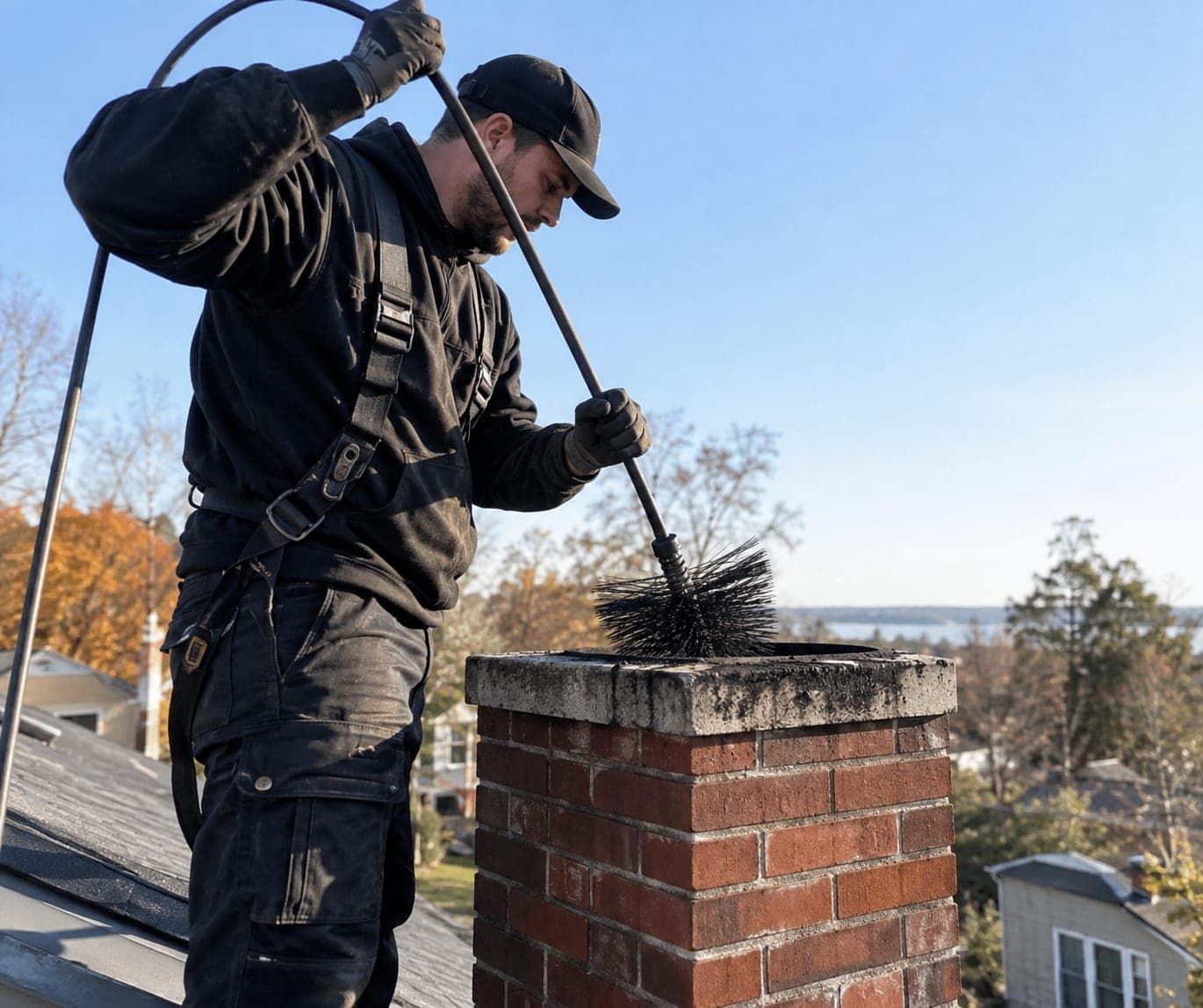
- Get the chimney swept on a schedule that matches how much you burn. An annual sweep and cleaning suits most regular wood burners.
- Have it inspected if you notice odors, draft trouble or flakes in the firebox
- Watch for early signs that creosote is building up
We handle creosote removal, chimney and flue cleaning, and inspections for homes in Hartford and across Connecticut. Estimates are free, and same-day service is available when the schedule allows.