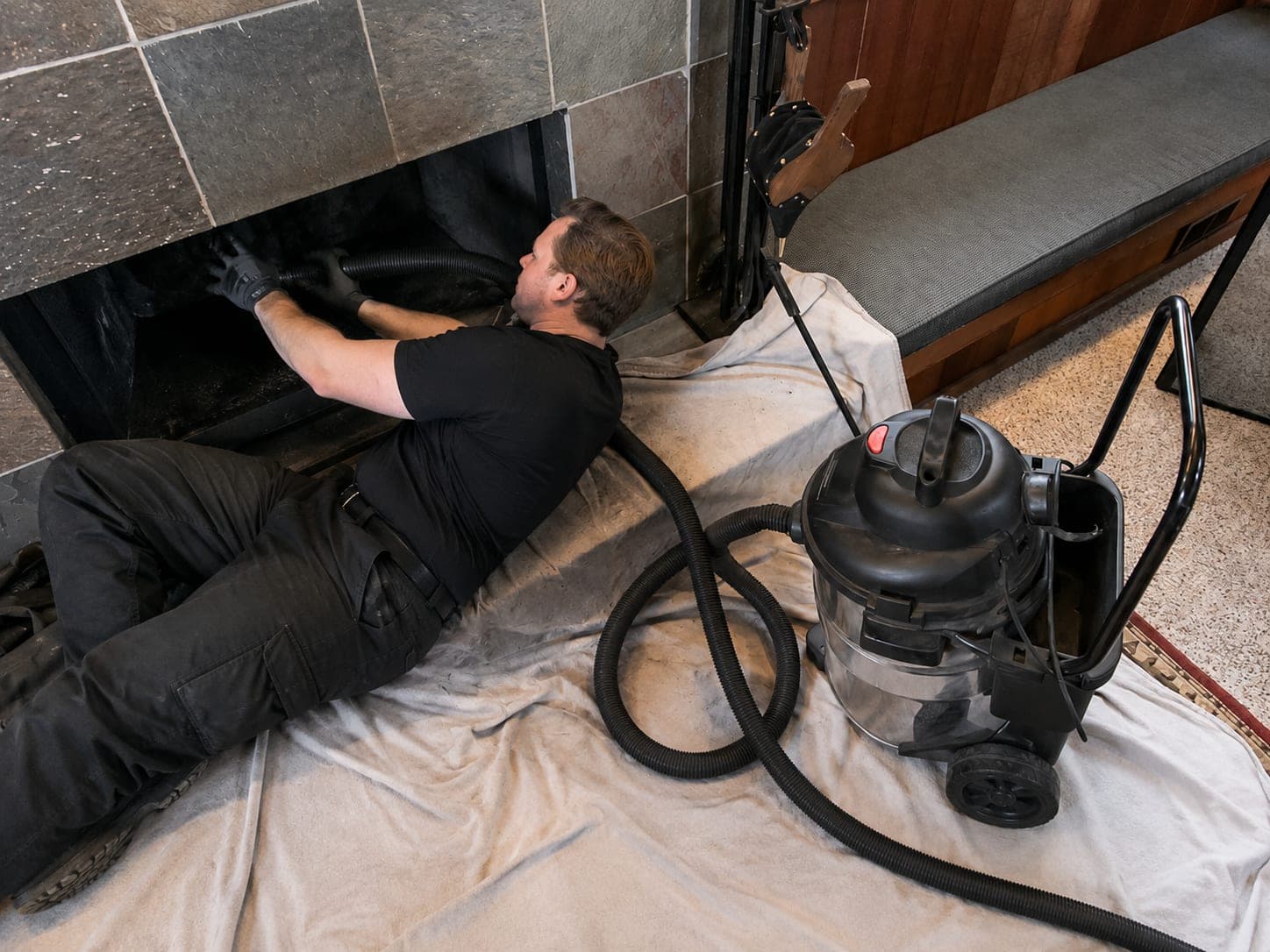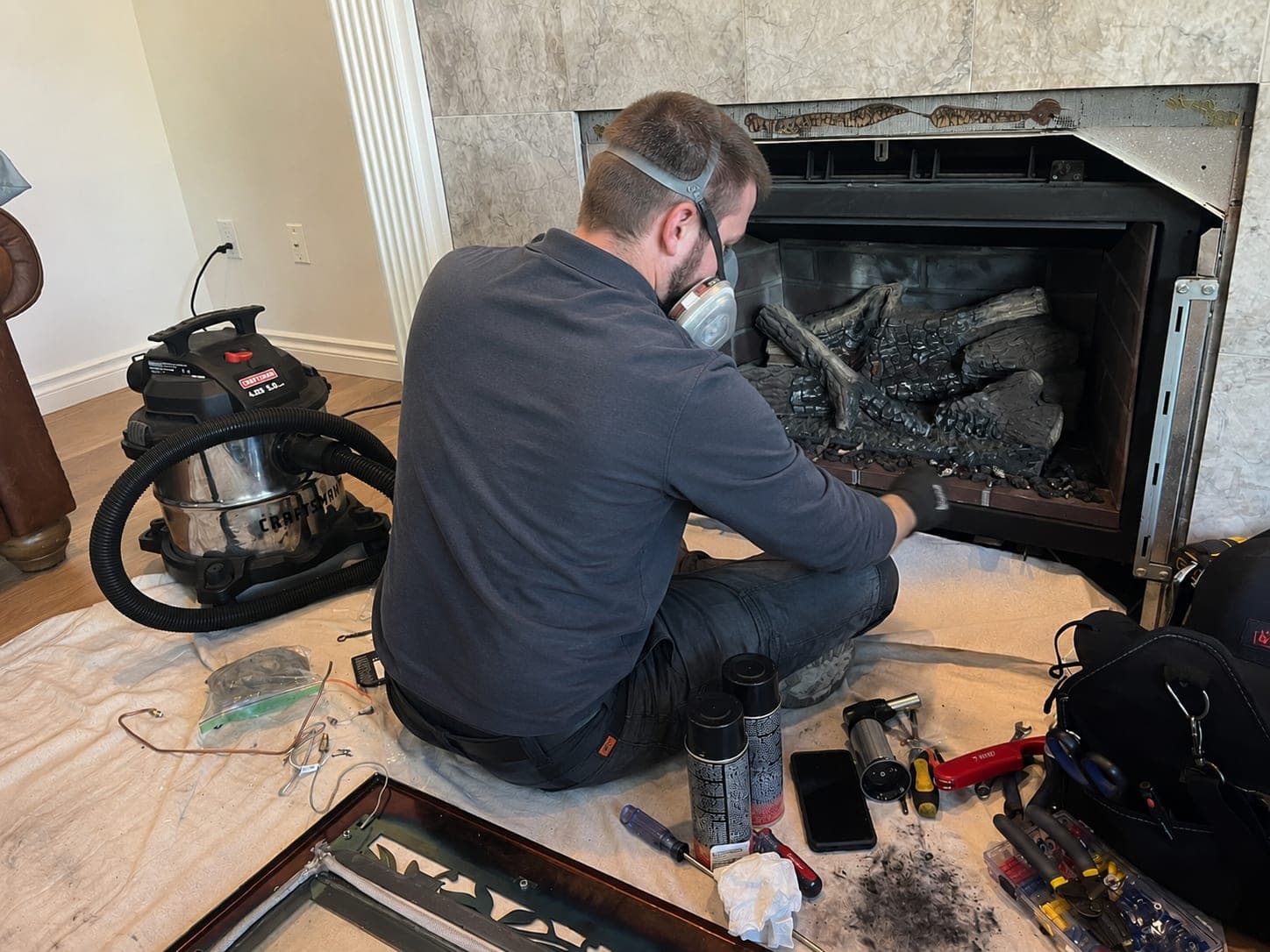
Every fire leaves residue behind. Soot, ash and creosote, a sticky byproduct of wood smoke, condense on the cooler walls of the flue. A thin layer is normal. A thick one narrows the passage smoke needs to escape and gives a chimney fire something to burn. Knowing the signs that your chimney needs cleaning lets you deal with buildup while it is still routine maintenance instead of a repair.
Ten common signs your chimney needs cleaning
No single sign proves the flue is dirty. Two or three together, especially in the middle of a heavy burning season, are a strong hint that it is time for a sweep.
| What you notice | What it usually means | Sensible next step |
|---|---|---|
| Smoke drifts into the room instead of going up | Draft is restricted by buildup, a blockage or a partly closed damper | Confirm the damper is fully open, then hold off on fires until the flue is checked |
| A strong campfire or tar smell, worse in humid weather or with the air conditioning on | Creosote deposits in the flue or smoke chamber | Schedule a cleaning. If the odor remains afterward, ask about odor removal |
| Black flakes or crumbs falling into the firebox | Flaky creosote breaking loose from the flue walls | Schedule a cleaning |
| Fires are hard to start or keep burning | Weak draft from a narrowed flue or a blockage | Have the chimney cleaned and inspected |
| Thick black residue on the damper or smoke shelf | Buildup collecting low in the system | Schedule a cleaning |
| Scratching, chirping, or twigs and nesting material in the firebox | An animal or nest blocking the flue | Do not light a fire. Have the blockage removed |
| Soot stains on the fireplace face or around the top of the chimney | Smoke is spilling or the flue is coated heavily | Have the chimney cleaned and inspected |
| Shiny, tar-like black drips or patches | Glazed creosote, the hardest type to remove | Call a professional. Do not try to scrape it yourself |
| You burned a lot of soft, wet or unseasoned wood | Smoky, cool fires build creosote faster | Plan a cleaning sooner than usual |
| A year or more has passed since the last sweep | Buildup you cannot see is likely | Book an inspection and cleaning |
If falling debris or noises suggest wildlife, see our page on getting animals out of a chimney safely. If the residue looks glossy or tarry, our page on removing stubborn creosote buildup explains why that stage needs more than a brush.
A safe look you can take yourself (fireplace completely cold)
- Wait at least a full day after the last fire and make sure there are no warm embers in the ash.
- Open the damper and shine a strong flashlight up into the flue. Look for black crust, shiny patches, nesting material or daylight blocked by debris.
- Run a fireplace poker or a pencil tip lightly along the smoke chamber wall above the damper. A layer about 1/8 inch thick is a common rule of thumb for scheduling a sweep.
- If the residue is glossy, hard or tar-like, stop. That type of creosote needs professional removal.
- Look at the top of the chimney from the ground. Note any missing cap, heavy staining, leaning or loose bricks.
- Write down what you saw so you can describe it when you request an estimate.
Your chimney may need immediate attention if...
Signs of a chimney fire or carbon monoxide
A loud roaring or rumbling sound, crackling and popping in the flue, intense heat from the chimney wall, thick dense smoke or flames coming out the top all point to a chimney fire. Get everyone out of the house and call 911. If a carbon monoxide alarm sounds, leave the house and call 911 or the fire department. Do not reuse the fireplace after a suspected chimney fire until the full flue has been inspected, because the heat can crack liners and masonry.
Less dramatic but still urgent: smoke backing up every time you light a fire, a blocked flue you know of, or a chimney damaged in a storm. In these situations the right move is to stop using the fireplace or stove and get it checked before the next fire.
Signs your chimney needs professional attention
Some problems are easy to spot but not something a homeowner should fix with a brush and a ladder. Call a professional when you notice:
- Puffy, honeycomb-like or glazed creosote that does not come off with light scraping.
- A damper that sticks, will not close, or has rusted through.
- Water in the firebox, rust on the damper or stains on the ceiling or wall near the chimney.
- Cracked, crumbling or missing mortar and bricks, or a cracked crown on top.
- A strong odor that returns even after the fireplace has been cleaned.
- Any sign of a past chimney fire, such as cracked flue tiles or warped metal parts.
Signs your chimney liner may need attention
The liner is the protective inner wall of the flue. You rarely see it, so damage tends to show up as indirect clues:
- Pieces of clay tile or flaking metal falling into the firebox.
- Smoke or odor showing up in other rooms, the attic or behind walls.
- Draft problems that remain after a thorough cleaning.
- A history of a chimney fire, or a switch to a new appliance such as a fireplace insert or wood stove.
- An older masonry chimney where no one is sure a liner was ever installed.
A camera inspection is the usual way to see the full length of the liner. Depending on what it shows, the fix may be a liner repair or a new liner installation.
What older chimneys need
As a general rule, the older a masonry chimney is, the more its condition matters as much as its cleanliness. Mortar joints wear away over decades, crowns crack, and some older chimneys were built without a liner or with one that has since deteriorated. For an older home, pair the cleaning with a detailed inspection, and ask specifically about the liner, the crown and the mortar joints. Tuckpointing, crown repair or a new liner can keep an old chimney usable without a full rebuild.
Your chimney also needs more than a sweep
Cleaning removes fuel for a fire. It does not keep water or animals out, and it does not fix worn parts. A complete check of the system usually looks at these areas:
| Feature | Cleaning | Inspection |
|---|---|---|
| Main purpose | Remove soot, creosote and debris | Find damage, wear and safety problems |
| Areas covered | Flue, smoke chamber, smoke shelf, damper, firebox | Liner, crown, cap, flashing, masonry, damper, clearances |
| What it prevents | Chimney fires, poor draft, odors | Leaks, hidden cracks, carbon monoxide leaks, costly surprises |
| How often | As buildup requires, often yearly for regular wood burning | Once a year is the widely recommended baseline |
Main purpose
- Cleaning
- Remove soot, creosote and debris
- Inspection
- Find damage, wear and safety problems
Areas covered
- Cleaning
- Flue, smoke chamber, smoke shelf, damper, firebox
- Inspection
- Liner, crown, cap, flashing, masonry, damper, clearances
What it prevents
- Cleaning
- Chimney fires, poor draft, odors
- Inspection
- Leaks, hidden cracks, carbon monoxide leaks, costly surprises
How often
- Cleaning
- As buildup requires, often yearly for regular wood burning
- Inspection
- Once a year is the widely recommended baseline
The top of the chimney deserves attention too. A cap with an animal screen keeps out rain, birds and squirrels, the crown sheds water away from the flue, and flashing seals the joint where chimney meets roof. For more on how these parts fail, read our overview of frequent chimney issues and a closer look at typical chimney problems.
Assessing your chimney's needs
A simple way to decide what to schedule
Think about how you burn
Count roughly how many fires you have each season and what you burn. Frequent fires, wood stoves and unseasoned wood all build creosote faster than occasional fires with dry hardwood.
Match your signs to the table above
One mild sign usually means plan a sweep. Several signs, or any sign in the immediate-attention section, means stop using it until it is checked.
Do the cold, safe visual check
Use the checklist to see how thick the buildup looks and whether anything is blocking the flue.
Schedule cleaning and inspection together
Pairing them means the technician can see the flue walls clearly once the soot is gone. Our page on what a full chimney sweep includes walks through the process.
Put it on the calendar
Many homeowners book a sweep before the burning season starts. Here is why a yearly chimney cleaning makes sense if you use your fireplace regularly.
| Appliance | Typical buildup | What to watch |
|---|---|---|
| Open wood-burning fireplace | Moderate creosote and heavy ash | Smoke spillage, odor, flakes in the firebox |
| Wood stove or fireplace insert | Often faster creosote buildup because of slower, cooler burns | Glass blackening quickly, weaker draft, tar-like deposits |
| Gas fireplace | Little creosote, but debris and nests still collect | Odd odors, soot on logs or glass, pilot or flame problems |
Do not forget the firebox itself. Ash, debris that falls from above and soot on the inner walls all collect low in the system, and a thorough fireplace cleaning clears that area so you can spot cracks or damper problems early.
If you have spotted any of these signs, get in touch to request a free estimate. Same-day service is offered where the schedule allows, and emergency calls are accepted around the clock, Sunday through Friday.